Cocoa Market: Weather Remains a Key Driver
- Cocoa futures ended the week of 19 September near prior levels, with the market focused on the start of the 2025/26 main crop in October.
- Weather conditions in major producing regions, especially West Africa, remain central to price movements after two consecutive crop cycles with below-average rainfall.
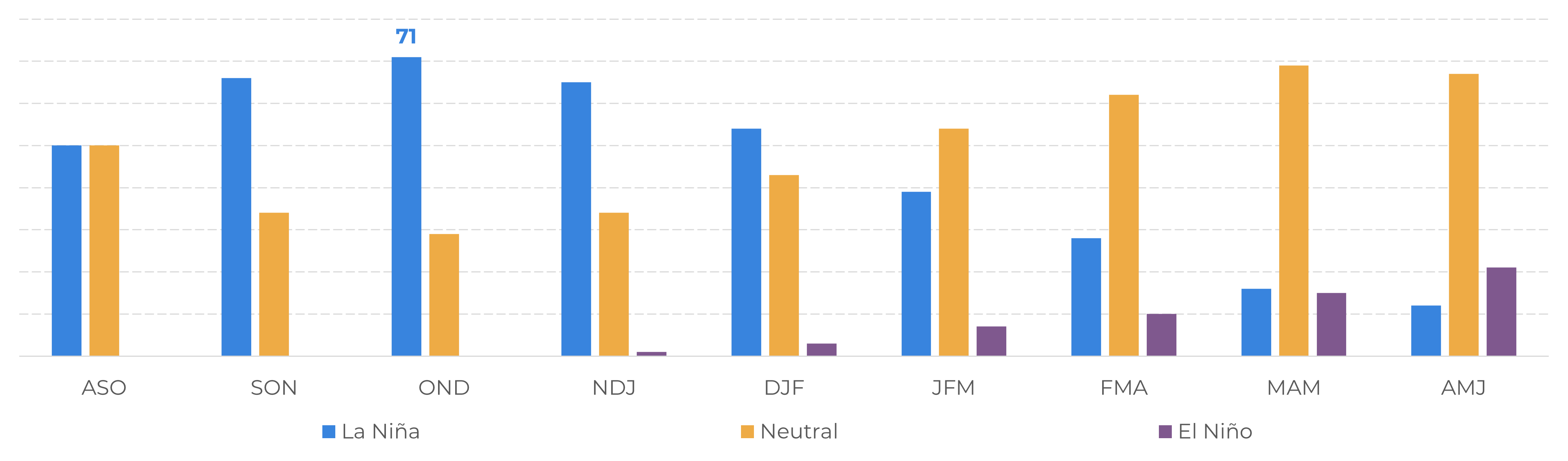
- The U.S. CPC raised the probability of a La Niña transition in October–December to 71%. La Niña can bring relatively higher humidity and milder temperatures to West Africa, and reduce rainfall along Ecuador’s coast, which warrants attention to soil moisture and pod filling.
- Continuous weather monitoring remains essential to anticipate supply impacts and price moves in a market that is still volatile.
Cocoa Market: Weather Remains a Key Driver
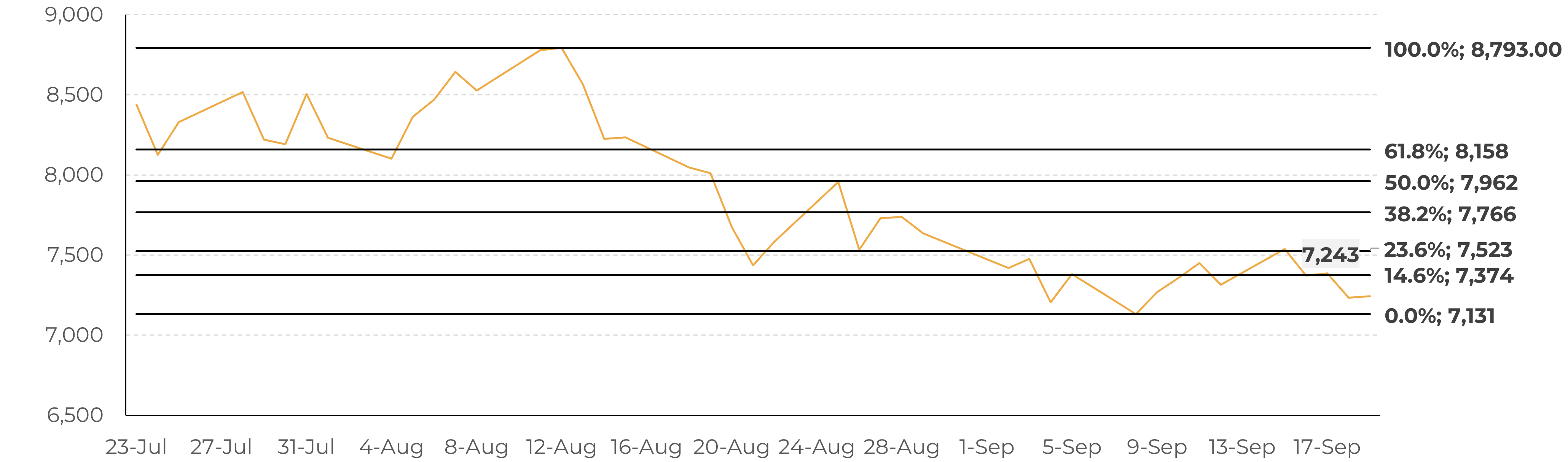
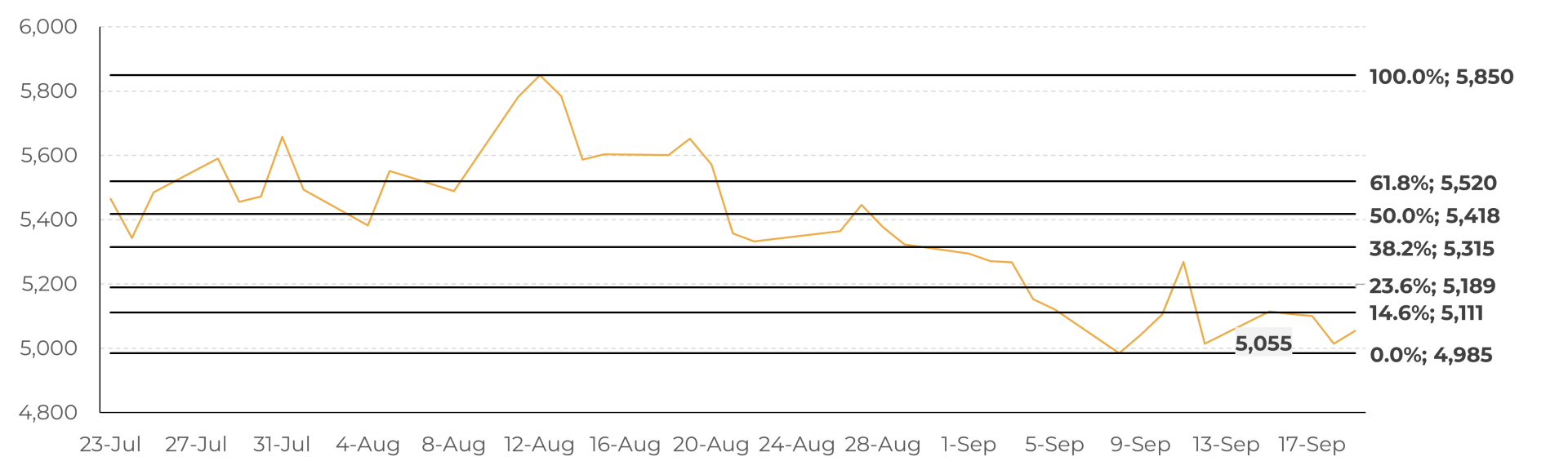
After recent swings, cocoa futures finished the week of 19 September close to the previous week’s levels. In New York, the Dec/25 contract settled at 7,243 USD/t, and in London at 5,055 GBP/t. In both markets, values remained above their respective support levels, and further fluctuations remain on the radar as the market awaits new information with the main crop season beginning in October. In this context, attention turns to factors that may influence prices in the coming weeks.
NY Cocoa first contract (USD/t)
Source: LSEG
LND Cocoa first contract (GBP/t)
Source: LSEG
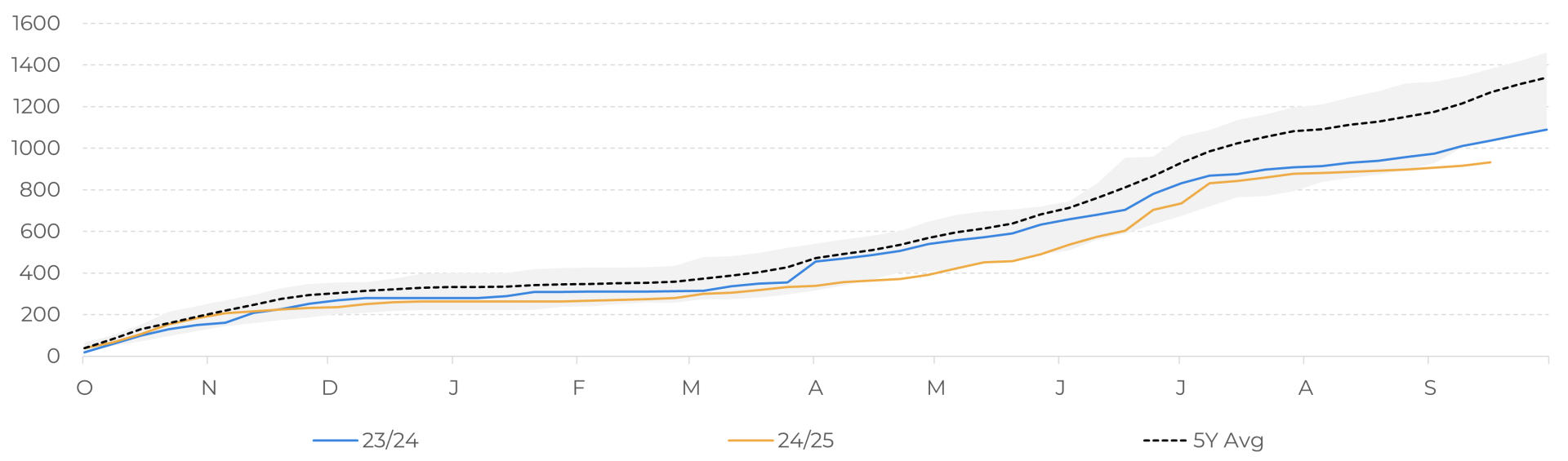
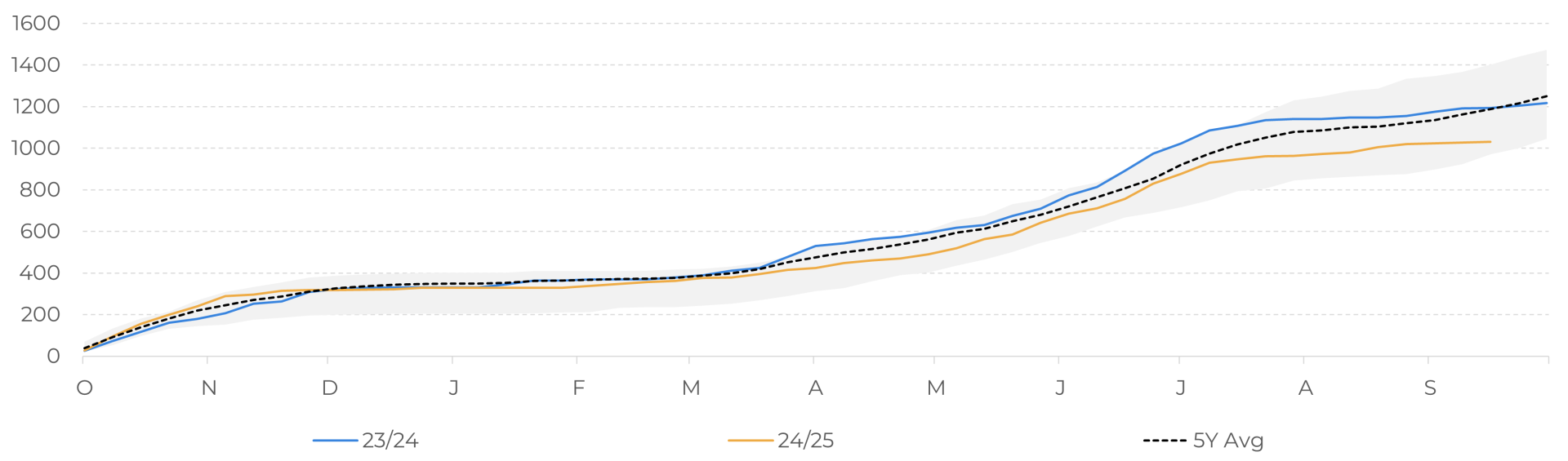
In that sense, weather in the major producing regions remains one of the most closely watched drivers. Despite light rains in some key areas last week, accumulated rainfall in Ivory Coast and Ghana is on track to finish the 2024/25 cycle (Out/24 to Sep/25) below average, as in the previous season.
Cumulative Rainfall Estimated for Ivory Coast’s Cocoa Districts (mm)
Source: CPC Gadas, Hedgepoint
Cumulative Rainfall Estimated for Ghana’s Cocoa Regions (mm)
Source: CPC Gadas, Hedgepoint
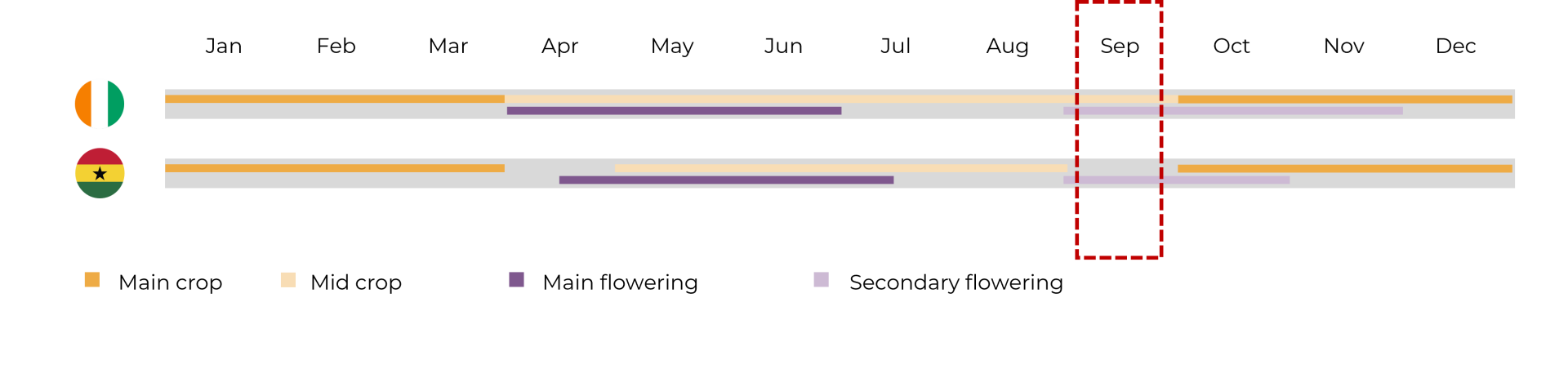
Considering the cocoa crop calendar, a balanced climate with adequate periods of sunlight and rains is essential for the proper development of the fruits and for the flowering of the mid-crop. Thus, weather conditions in the coming months will have a direct influence on both the final performance of the 2025/26 main crop, which begins in October, and the start of the next mid- crop season (April/26 to September/26). The latter has already been significantly affected by the lack of rainfall during the critical period of fruit development.
West Africa crop calendar
Source: Hedgepoint
For the coming months, the US NOAA - Climate Prediction Center (CPC ) has raised the probability to 71% of a transition from neutral conditions to La Niña for the period from October to December 2025. In West Africa, this climatic phenomenon tends to favor higher relative humidity and slightly milder temperatures, which may contribute to a lower chance of water stress in cocoa crops during the approaching dry season. It is important to be aware of the effects of La Niña in December, a period that marks the beginning of the Harmattan winds, which can compromise the integrity of the fruits.
Official NOAA CPC ENSO Probabilities (September 2025)
Source: NOAA
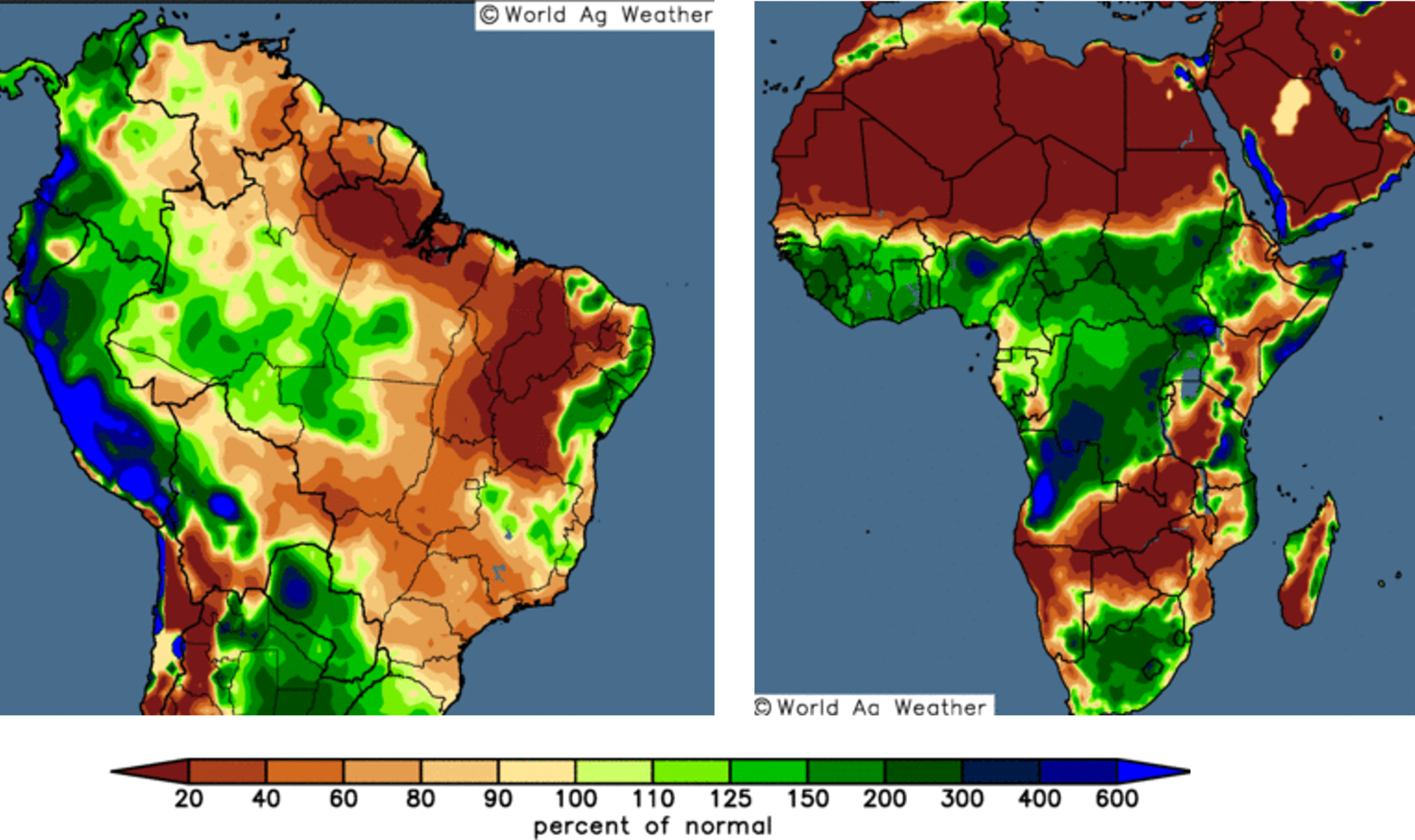
In Ecuador, the third largest cocoa producer, The La Niña tends to reduce rainfall in the coastal areas at the beginning of the rainy season, which could influence soil moisture levels and consequently the rate of pod development between October and December. For the coming days, climate models indicate above-average rainfall for the region, as well as for West Africa.
EC precipitation anomaly - next 14 days (% of normal)
Source: World Ag Weather
Given this scenario, continuous climate monitoring remains essential to anticipate price movements and adjust supply expectations in a market still marked by volatility.
In Summary
Cocoa futures ended the week of September 19 close to previous levels, with the market focused on the main 2025/26 season, which begins in October. Weather conditions in the main producing regions, such as West Africa, remain a key factor, especially after two consecutive cycles with below-average rainfall. The weather in the coming months is expected to directly influence the performance of the 2025/26 main crop and the start of the next mid-crop.
The US CPC has raised the probability of a transition to La Niña between October and December to 71%, a phenomenon that could bring more moisture and mild temperatures to West Africa, reducing the risk of water stress. However, attention must be paid to the Harmattan winds, which begin in December and can compromise the fruits. In Ecuador, La Niña tends to reduce rainfall at the beginning of the rainy season, requiring attention to soil moisture and fruit development. Continuous climate monitoring remains essential to anticipate price movements and adjust supply expectations.
Weekly Report — Cocoa
carolina.frança@hedgepointglobal.com
laleska.moda@hedgepointglobal.com
Disclaimer
This document has been prepared by Hedgepoint Schweiz AG and its affiliates (“Hedgepoint”) solely for informational and instructional purposes, without intending to create obligations or commitments to third parties. It is not intended to promote or solicit an offer for the sale or purchase of any securities, commodities interests, or investment products. Hedgepoint and its associates expressly disclaim any liability for the use of the information contained herein that directly or indirectly results in any kind of damages. Information is obtained from sources which we believe to be reliable, but we do not warrant or guarantee the timeliness or accuracy of this information. The trading of commodities interests, such as futures, options, and swaps, involves substantial risk of loss and may not be suitable for all investors. You should carefully consider wither such trading is suitable for you in light of your financial condition. Past performance is not necessarily indicative of future results. Customers should rely on their own independent judgment and/or consult advisors before entering into any transactions. Hedgepoint does not provide legal, tax or accounting advice and you are responsible for seeking any such advice separately. Hedgepoint Schweiz AG is organized, incorporated, and existing under the laws of Switzerland, is filiated to ARIF, the Association Romande des Intermédiaires Financiers, which is a FINMA-authorized Self-Regulatory Organization. Hedgepoint Commodities LLC is organized, incorporated, and existing under the laws of the USA, and is authorized and regulated by the Commodity Futures Trading Commission (CFTC) and a member of the National Futures Association (NFA) to act as an Introducing Broker and Commodity Trading Advisor. HedgePoint Global Markets Limited is Regulated by the Dubai Financial Services Authority. The content is directed at Professional Clients and not Retail Clients. Hedgepoint Global Markets PTE. Ltd is organized, incorporated, and existing under the laws of Singapore, exempted from obtaining a financial services license as per the Second Schedule of the Securities and Futures (Licensing and Conduct of Business) Act, by the Monetary Authority of Singapore (MAS). Hedgepoint Global Markets DTVM Ltda. is authorized and regulated in Brazil by the Central Bank of Brazil (BCB) and the Brazilian Securities Commission (CVM). Hedgepoint Serviços Ltda. is organized, incorporated, and existing under the laws of Brazil. Hedgepoint Global Markets S.A. is organized, incorporated, and existing under the laws of Uruguay. In case of questions not resolved by the first instance of customer contact (client.services@Hedgepointglobal.com), please contact internal ombudsman channel (ombudsman@hedgepointglobal.com – global or ouvidoria@hedgepointglobal.com – Brazil only) or call 0800-8788408 (Brazil only). Integrity, ethics, and transparency are values that guide our culture. To further strengthen our practices, Hedgepoint has a whistleblower channel for employees and third-parties by e-mail ethicline@hedgepointglobal.com or forms Ethic Line – Hedgepoint Global Markets. “HedgePoint” and the “HedgePoint” logo are marks for the exclusive use of HedgePoint and/or its affiliates. Use or reproduction is prohibited, unless expressly authorized by HedgePoint. Furthermore, the use of any other marks in this document has been authorized for identification purposes only. It does not, therefore, imply any rights of HedgePoint in these marks or imply endorsement, association or seal by the owners of these marks with HedgePoint or its affiliates.