
Cocoa market reacts to mixed grinding data
- Cocoa futures retreated last week, with losses of 1.85% in New York and 1.28% in London, following sessions marked by sharp fluctuations driven by first-quarter grinding data.
- Malaysia reported an 8.7% increase in grinding, exceeding market expectations and sustaining a positive price reaction early in the week, while also contributing to the 5.2% rise in Asian grinding.
- In Europe, the main processing region, the 7.8% decline in grind was larger than expected and led to a partial reversal of recent gains, despite isolated signs of recovery in the most recent net imports.
- North America also saw a decline, with a 3.8% drop, in contrast to high imports of cocoa butter and cocoa paste, which may have reduced the need for processing cocoa beans.
Cocoa market reacts to mixed grinding data
Cocoa futures ended the week of April 17 with a slight weekly decline of 1.85% in New York and 1.28% in London, following a week of sharp fluctuations. The volatility was caused by the release of grinding results for the first quarter of 2026, which showed varying figures among the main processing regions and sent mixed signals regarding demand for cocoa beans. This Monday, April 20, cocoa prices moved higher again, likely influenced by the macroeconomic backdrop and developments in the conflict between the US and Iran, although the market remains cautious in light of the recent demand data, which is the focus of this analysis.
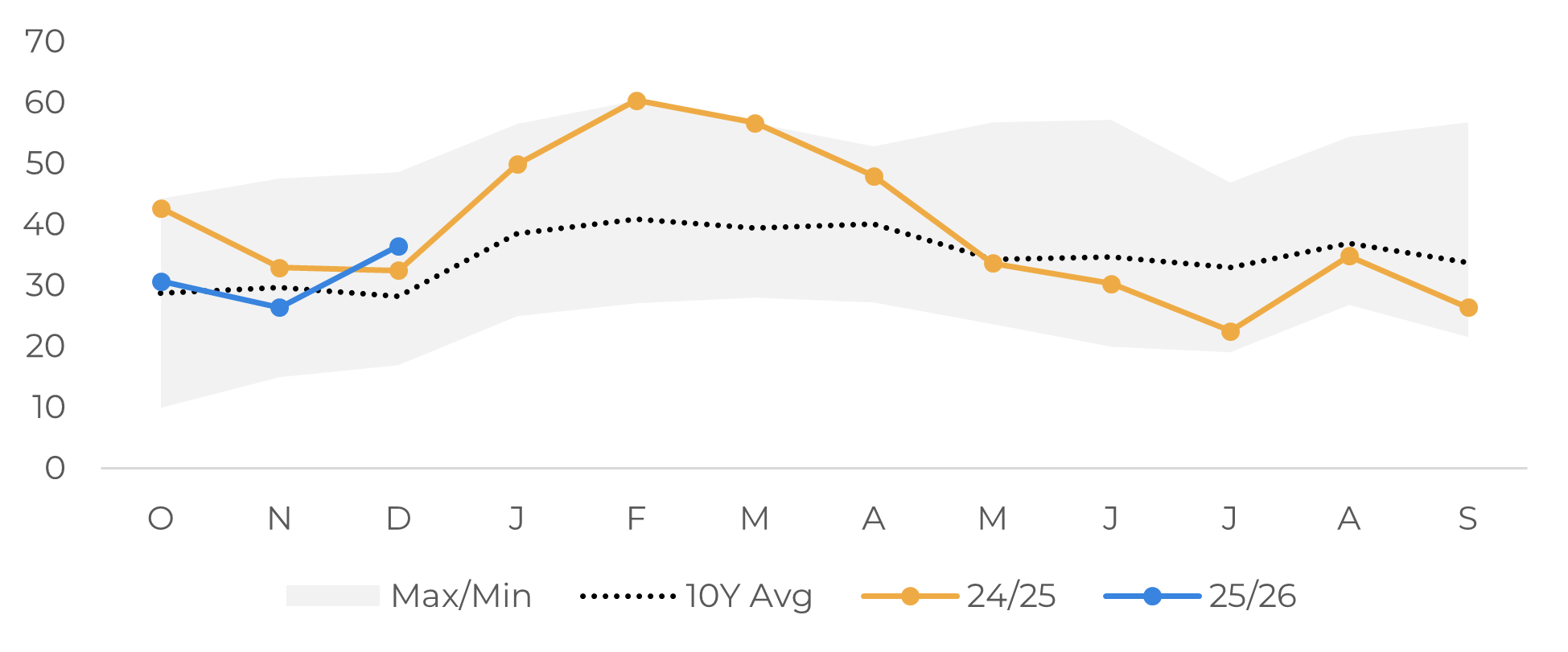
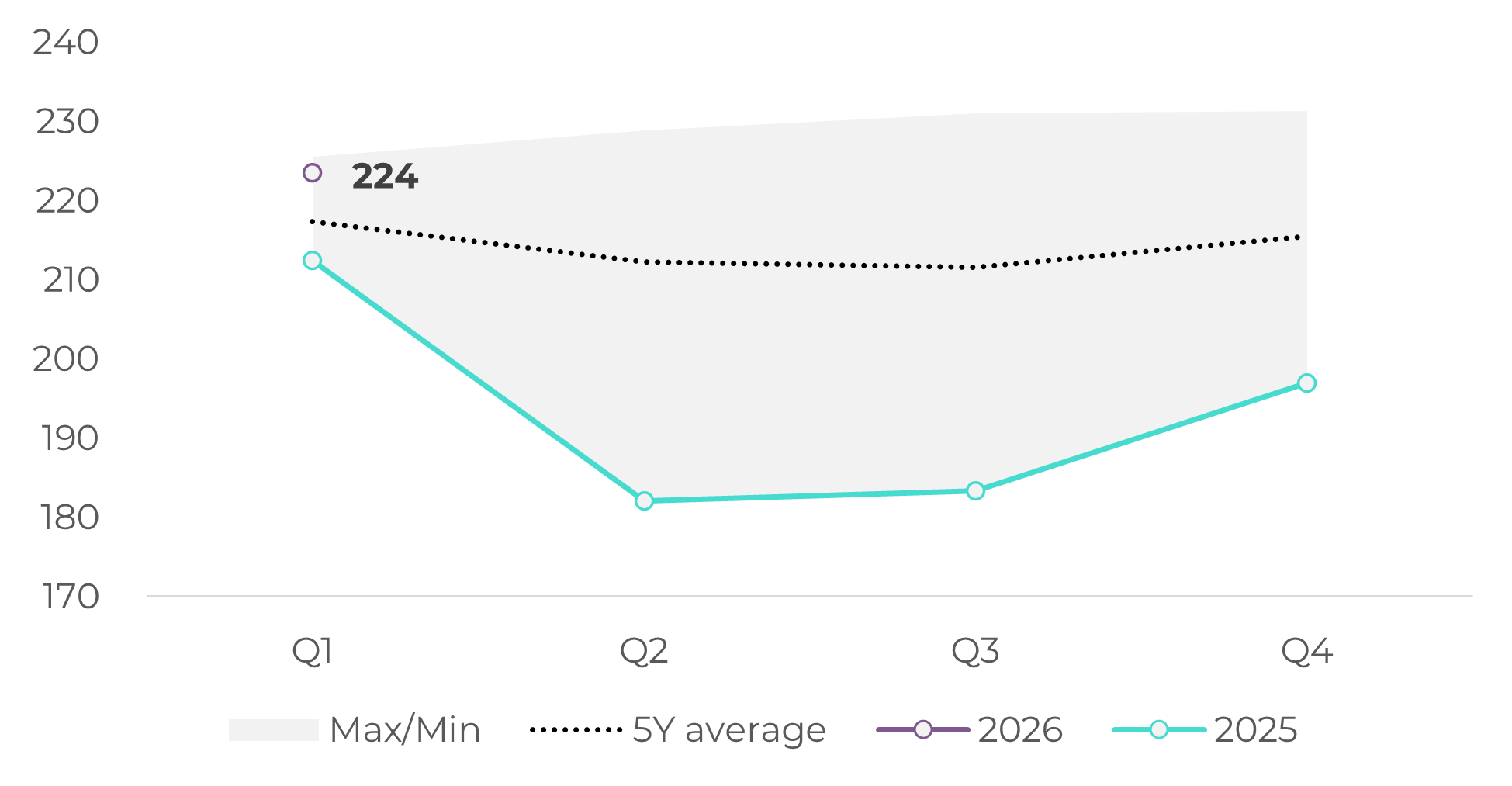
The first data released came from Malaysia, which accounts for 32% of Asia’s processing volume, showing an 8.7% increase for the period in question, a figure above market expectations and supporting an 8.51% recovery in New York and a 6.70% recovery in London during the April 14 session. The country’s net cocoa import data, although not directly related to grinding given the significant role of stocks, indicates a recovery between November and December, which may signal some support for industrial activity in the region. This performance was reflected in a 5.2% increase in Asian grinding, which accounts for approximately 23% of global processing.
Malaysia: net cocoa beans imports (‘000 tons)
Source: ITC Trade Map, Hedgepoint
Cocoa grinding: Asia (‘000 tons)
Source: Cocoa Association of Asia
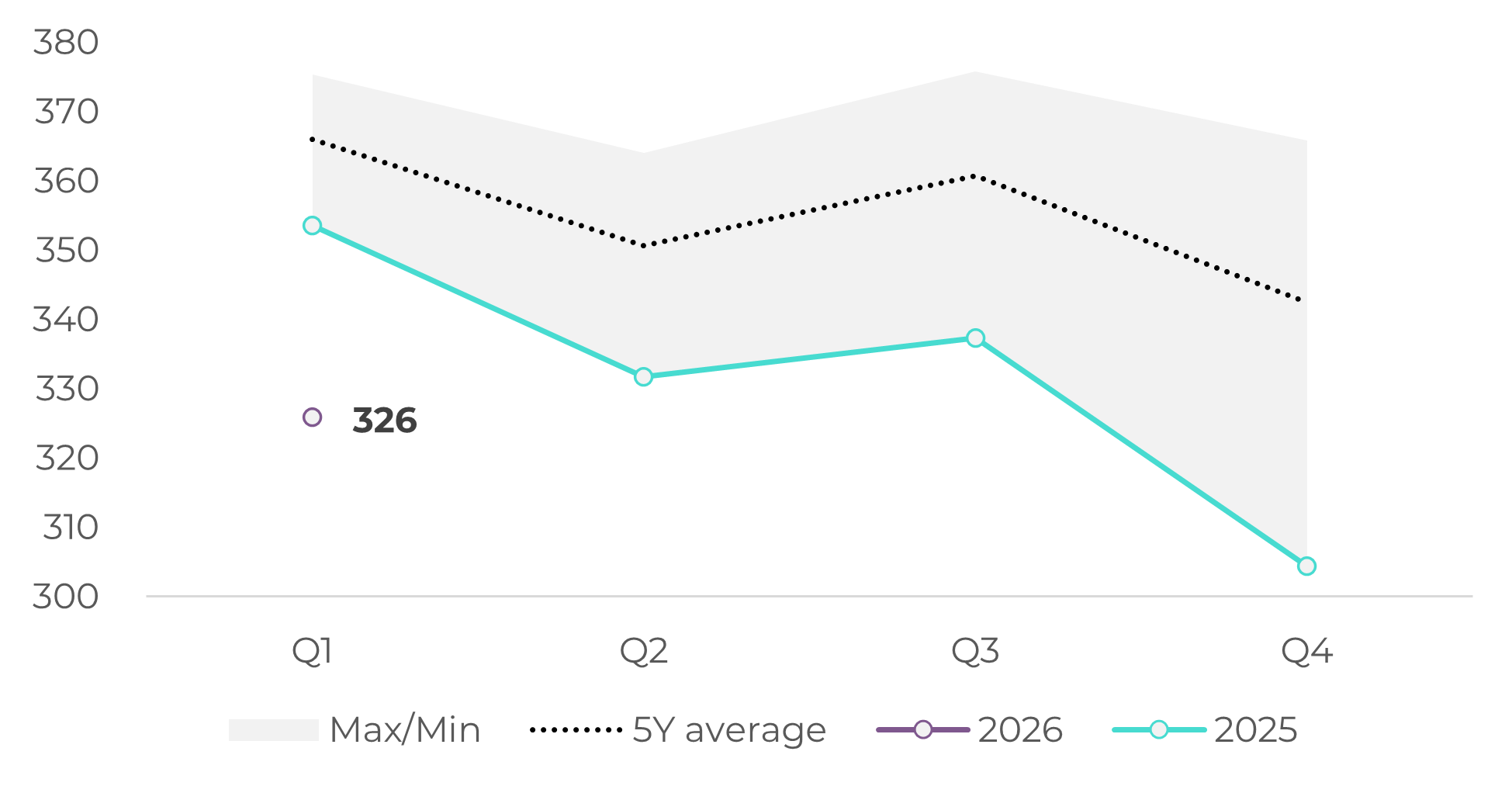
However, the recovery observed in cocoa futures did not hold. Looking at Europe, the main processing region accounting for about 35% of global grinding, data from the European Cocoa Association shows a 7.8% drop in cocoa bean grinding for the period under review.
Cocoa grinding: Europe (‘000 tons)
Source: European Cocoa Association
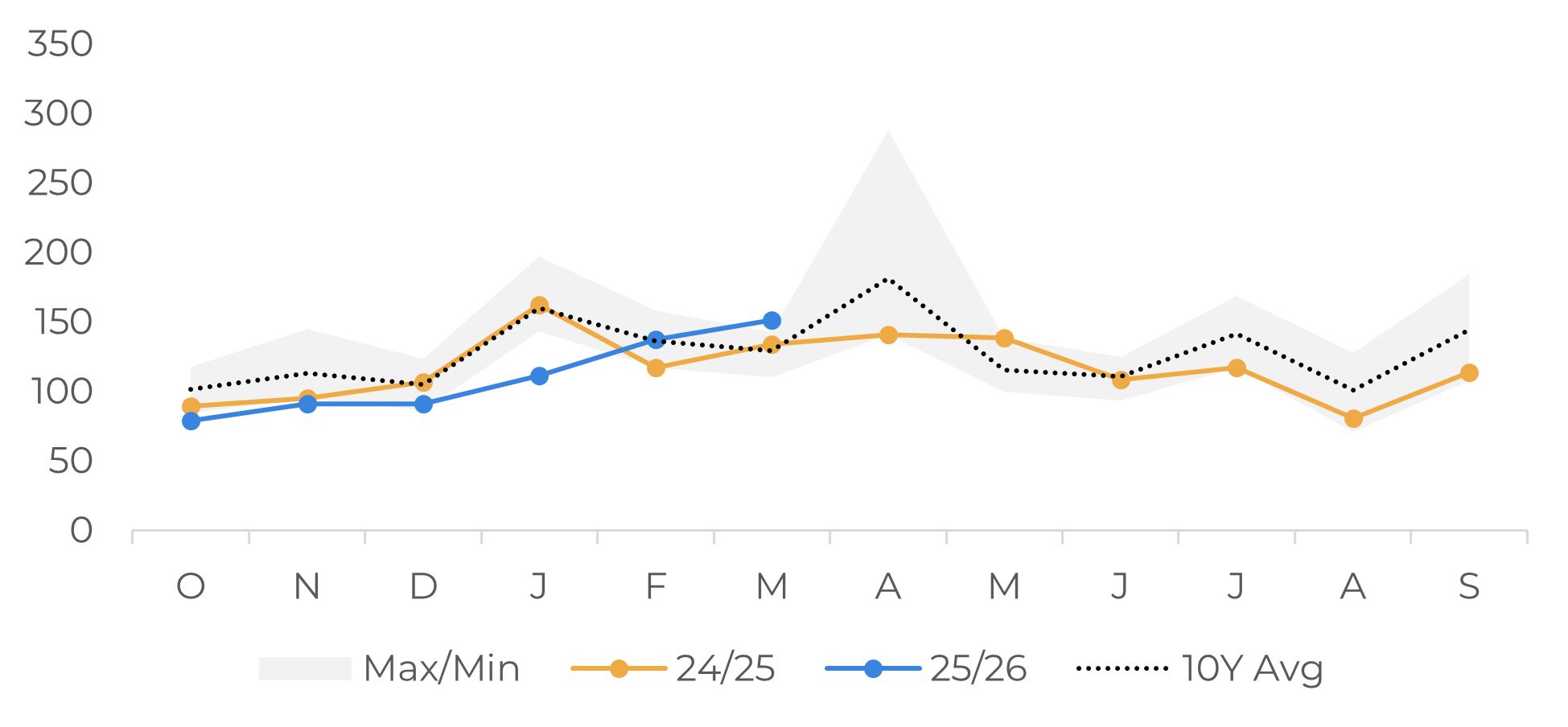
The result, although slightly above market expectations, contributed to prices returning part of the gains recorded in the previous session. The region’s net cocoa beans imports fell to historically low levels between December 2025 and January 2026, which may reflect industrial activity. However, a recovery in net imports was observed in February and March, suggesting a possible normalization of the flow that may be reflected in the next quarter’s grinding data.
EU: net cocoa beans imports (‘000 tons)
Source: European Commission
A decline was also observed in North America. Data from the National Confectioners Association indicate a 3.8% drop in grinding during the period analyzed. Considering the US’s net cocoa beans imports, which for the current crop year (October 2025 to January 2026) remain above last year levels and close to the historical average, part of the market had expected greater stability or even a slight recovery in activity during the quarter.
Cocoa grinding: North America (‘000 tons)
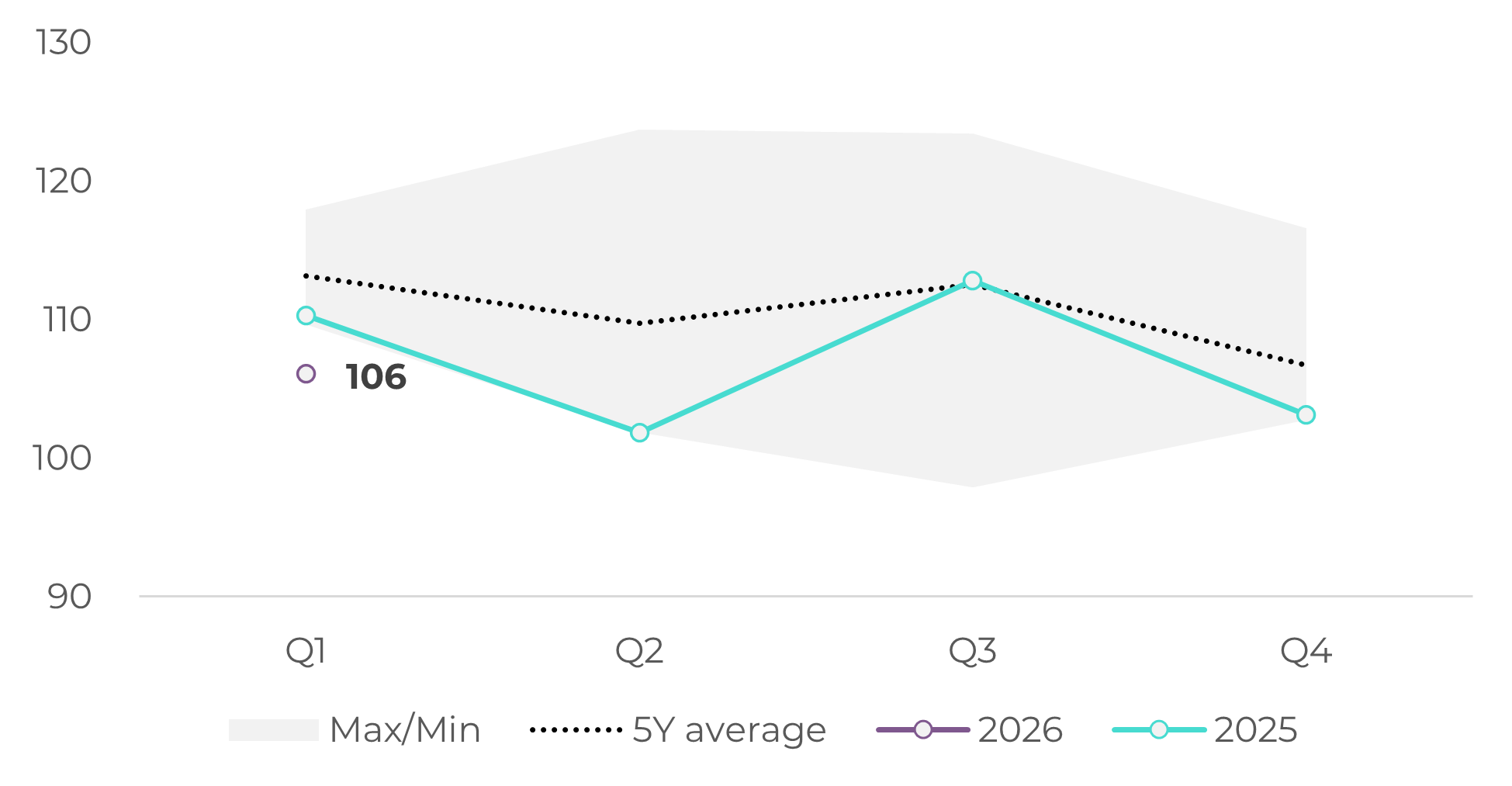
Source: National Confectioners Association
However, cumulative net imports of cocoa butter and cocoa paste rose by 23.7% and 49.1%, respectively, compared to the previous crop year, which may have reduced the need for processing cocoa beans. Consequently, as the results were released after the market closed, the data impacted the following session, when contracts fell 5.38% in New York and 4.08% in London.
US: Net cocoa butter imports (‘000 tons)
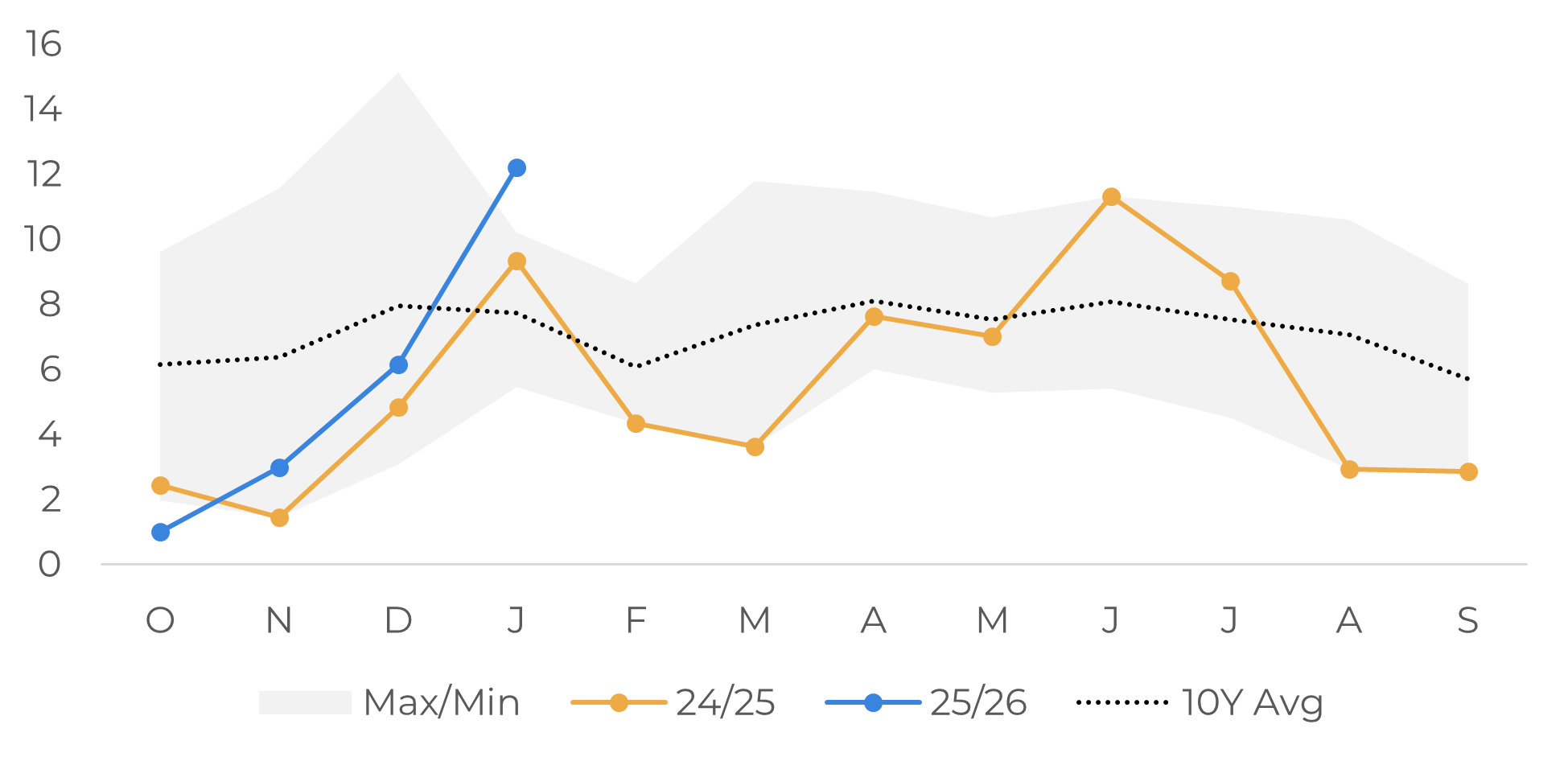
Source: United States International Trade Commission (USITC)
US: Net cocoa paste imports ('000 tons)
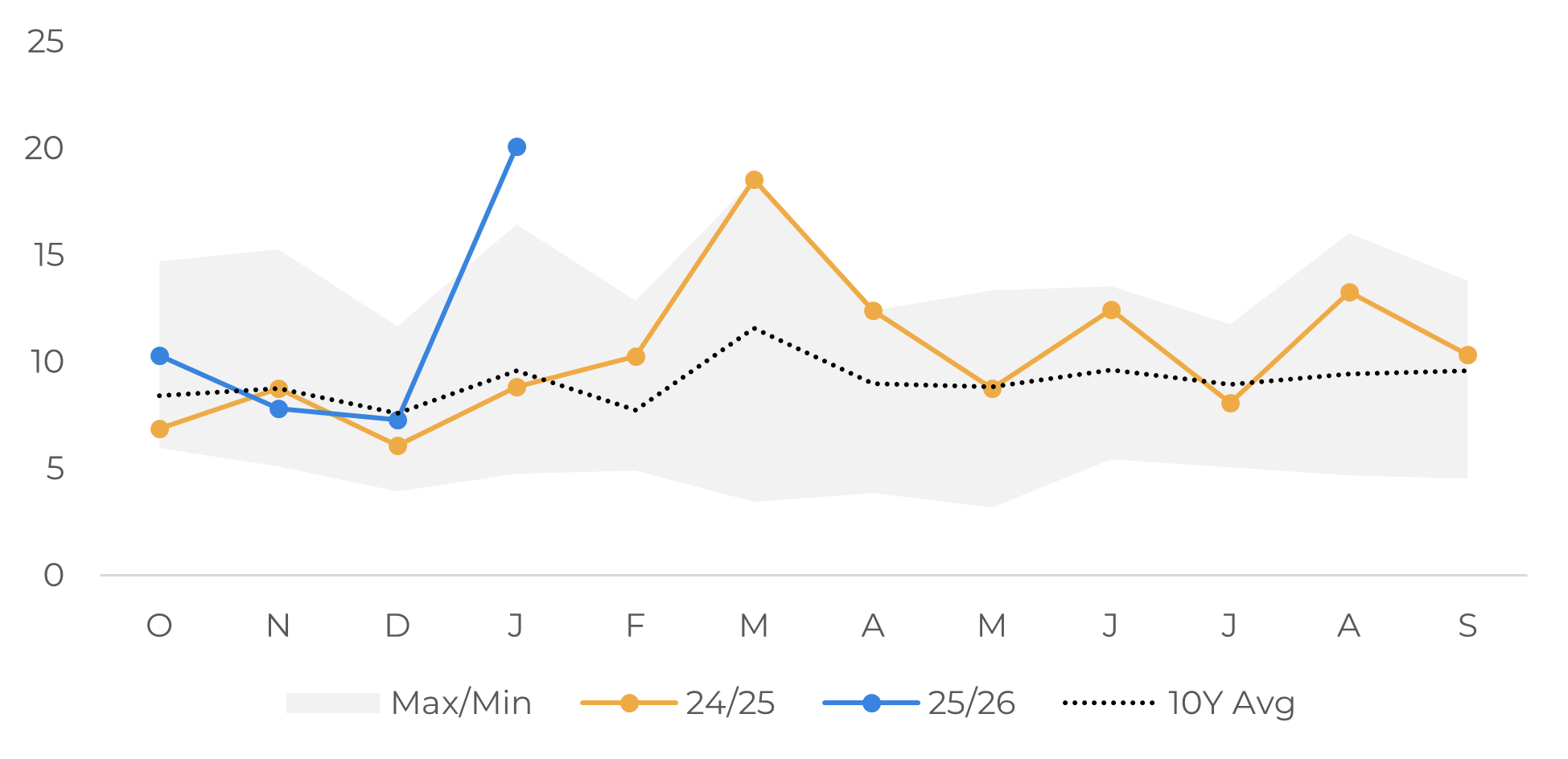
Source: United States International Trade Commission (USITC)
In addition to the performance of the main regions, the financial results reported by major processors in the sector continue to point to a decline in sales volumes in recent months, reinforcing the view that demand for cocoa remains under pressure. In the coming quarters, the sharp price corrections observed recently may begin to influence grinding activity. However, this potential effect remains uncertain and will depend on the consolidation of a more consistent improvement in the demand environment, meaning that signs of recovery in the medium term remain contingent on these developments.
In Summary
Cocoa futures ended the week of April 17 slightly lower, despite the high volatility observed throughout the period, reflecting the release of first-quarter 2026 grinding data that provided mixed signals regarding global demand. While Asia posted positive performance, driven mainly by Malaysia, Europe and North America recorded a decline in grinding, putting pressure on prices following the market’s initial reactions. These figures, combined with the still-weak sales volumes reported by major processors, maintain a cautious outlook for the short term and keep the market alert for the potential impacts of the more intense price corrections observed recently on grinding dynamics in the coming quarters.
Weekly Report — Cocoa
carolina.frança@hedgepointglobal.com
laleska.moda@hedgepointglobal.com
Disclaimer
This document has been prepared by Hedgepoint Schweiz AG and its affiliates (“Hedgepoint”) solely for informational and instructional purposes, without intending to create obligations or commitments to third parties. It is not intended to promote or solicit an offer for the sale or purchase of any securities, commodities interests, or investment products. Hedgepoint and its associates expressly disclaim any liability for the use of the information contained herein that directly or indirectly results in any kind of damages. Information is obtained from sources which we believe to be reliable, but we do not warrant or guarantee the timeliness or accuracy of this information. The trading of commodities interests, such as futures, options, and swaps, involves substantial risk of loss and may not be suitable for all investors. You should carefully consider wither such trading is suitable for you in light of your financial condition. Past performance is not necessarily indicative of future results. Customers should rely on their own independent judgment and/or consult advisors before entering into any transactions. Hedgepoint does not provide legal, tax or accounting advice and you are responsible for seeking any such advice separately. Hedgepoint Schweiz AG is organized, incorporated, and existing under the laws of Switzerland, is filiated to ARIF, the Association Romande des Intermédiaires Financiers, which is a FINMA-authorized Self-Regulatory Organization. Hedgepoint Commodities LLC is organized, incorporated, and existing under the laws of the USA, and is authorized and regulated by the Commodity Futures Trading Commission (CFTC) and a member of the National Futures Association (NFA) to act as an Introducing Broker and Commodity Trading Advisor. HedgePoint Global Markets Limited is Regulated by the Dubai Financial Services Authority. The content is directed at Professional Clients and not Retail Clients. Hedgepoint Global Markets PTE. Ltd is organized, incorporated, and existing under the laws of Singapore, exempted from obtaining a financial services license as per the Second Schedule of the Securities and Futures (Licensing and Conduct of Business) Act, by the Monetary Authority of Singapore (MAS). Hedgepoint Global Markets DTVM Ltda. is authorized and regulated in Brazil by the Central Bank of Brazil (BCB) and the Brazilian Securities Commission (CVM). Hedgepoint Serviços Ltda. is organized, incorporated, and existing under the laws of Brazil. Hedgepoint Global Markets S.A. is organized, incorporated, and existing under the laws of Uruguay. In case of questions not resolved by the first instance of customer contact (client.services@Hedgepointglobal.com), please contact internal ombudsman channel (ombudsman@hedgepointglobal.com – global or ouvidoria@hedgepointglobal.com – Brazil only) or call 0800-8788408 (Brazil only). Integrity, ethics, and transparency are values that guide our culture. To further strengthen our practices, Hedgepoint has a whistleblower channel for employees and third-parties by e-mail ethicline@hedgepointglobal.com or forms Ethic Line – Hedgepoint Global Markets. “HedgePoint” and the “HedgePoint” logo are marks for the exclusive use of HedgePoint and/or its affiliates. Use or reproduction is prohibited, unless expressly authorized by HedgePoint. Furthermore, the use of any other marks in this document has been authorized for identification purposes only. It does not, therefore, imply any rights of HedgePoint in these marks or imply endorsement, association or seal by the owners of these marks with HedgePoint or its affiliates.