
Cocoa June Live with Experts: main highlights
- The macroeconomic backdrop remains volatile, with geopolitical tensions influencing energy prices, inflation, and risk perception across global markets, with potential indirect impacts on cocoa demand and costs.
- Demand shows regional divergence, with Asia maintaining relatively stable activity supported by processing growth in Indonesia and Malaysia, while Europe remains under pressure despite temporary increases in imports.
- The US continues to show more resilient imports, with strong inflows of cocoa by-products, including an increasing role for Malaysia in the supply of cocoa paste.
- Supply conditions are improving in Ivory Coast, with an increase in cocoa port arrivals and potential for further gains, while Ghana remains stable due to higher cumulative rainfall. Ecuador is facing a decline in production due to adverse weather conditions.
- Despite a projected surplus for the 25/26 season, the market remains cautious with commercial players adjusting positions amid weather risks and uncertainty, while awaiting key demand data updates in mid-July.
Cocoa June Live with Experts: main highlights
The cocoa market remains volatile, reflecting a combination of macroeconomic uncertainties, adjustments in global supply and demand flows, and looming weather risks. In this context, this analysis aims to consolidate the main points discussed during the Live with Experts: Cocoa, held on June 17, bringing together highlights of the macroeconomic view, cocoa supply and demand dynamics, weather factors, and the global market balance, in order to contextualize recent price movements and the future associated risks.
Macroeconomic overview
The macroeconomic environment remains uncertain, shaped by geopolitical tensions between the United States and Iran, which have increased risk premiums and pushed energy prices higher, while driving investors toward safer assets such as gold, influencing the commodities market. Although the announcement of a possible peace agreement and the reopening of the Strait of Hormuz brought some relief, markets remain cautious given broader regional risks. In the United States, inflation remains pressured by energy costs alongside resilient labor data, which led Fed to maintain stable interest rates.
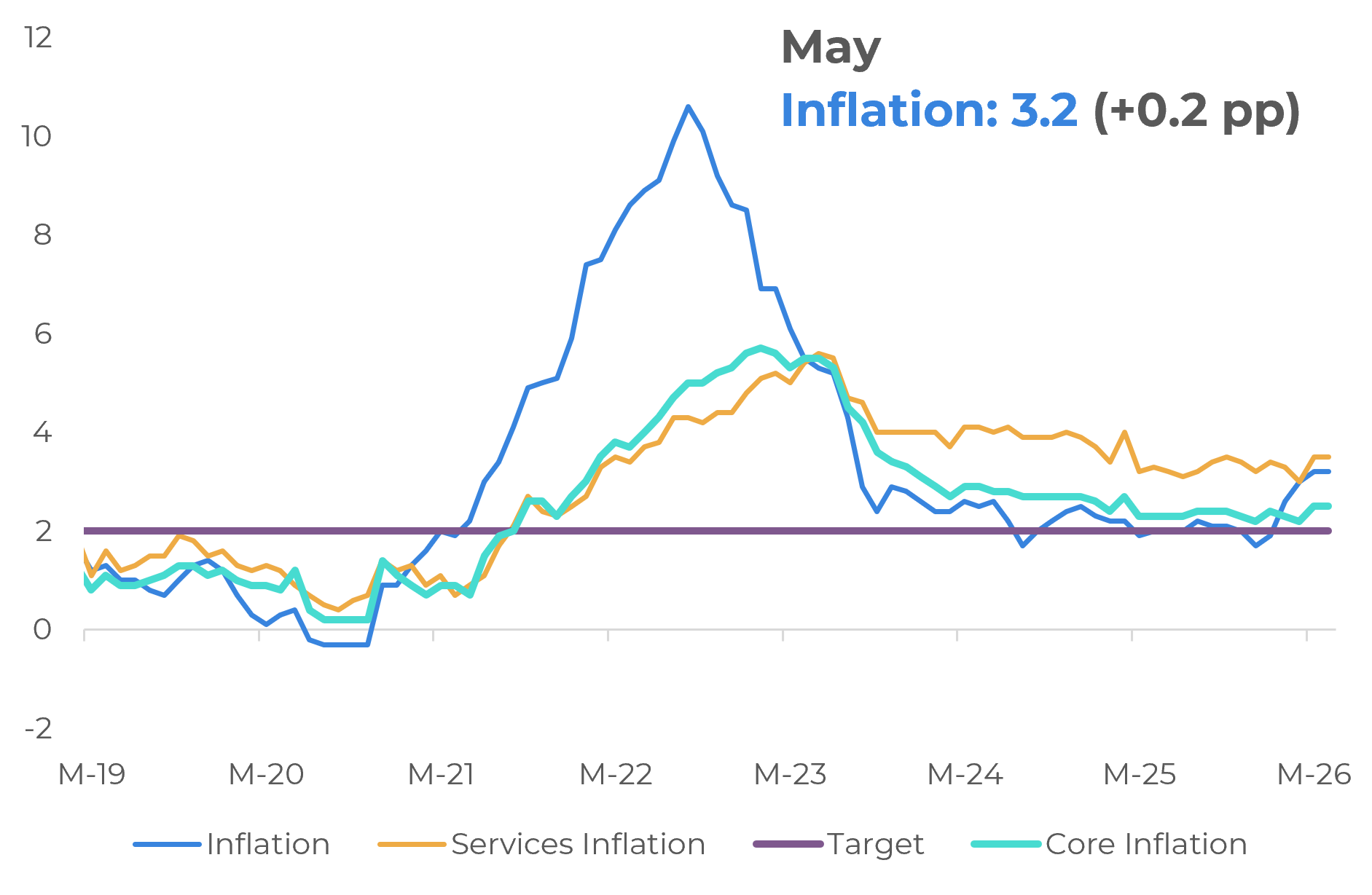
Regarding Europe, due to higher exposure to energy prices oscillation and increasing inflation, even with signs of pressured demand, the BCE increased interest rates in June. The measure tries to curb inflation driven by energy costs before it spreads further throughout the eurozone economy. Considering that Europe is the leading cocoa-processing region, the situation needs attention, as the consequences may have an impact on industrial activity, trade, and cocoa demand.
Euro Zone inflation
Source: Bloomberg
Cocoa beans and by-products demand
On the demand side, the global picture is heterogeneous and could reflect both regional shifts and price sensitivity. In Indonesia, which accounts for around 37% of Asia’s grinding, cumulative net imports of beans (Oct 25 – Apr 26) have declined, but this has been partly offset by expectations of an increase in domestic production, probably reducing reliance on external supply. At the same time, steady exports of cocoa powder, particularly toward markets such as India and China, suggest a more stable demand environment in the region.
In Malaysia, which represents around 32% of Asia’s grinding, a similar reduction in net bean imports (Oct 25 – Feb 26) has been observed. However, this dynamic has been accompanied by solid performance in cocoa paste and powder flows, which could have supported higher processing activity. This has contributed to the overall increase in grinding seen in Asia, reinforcing the region’s growing role in the global cocoa market, even as demand remains sensitive to price movements and external conditions.
In the United States, cumulative bean imports (Oct 25 – Apr 26) remain broadly aligned with historical averages despite some monthly declines, with a notable shift toward Ivory Coast as the main origin, while Ecuador continues to hold a significant share. At the same time, imports of cocoa products such as butter and paste remain elevated and even reached record levels in some months, maybe suggesting more resilient by-products demand but also a substitution effect favoring imports over domestic processing. In this context, Malaysia has increased its share in US cocoa paste imports compared to the previous crop year, reinforcing the growing role of Asian supply in this segment.
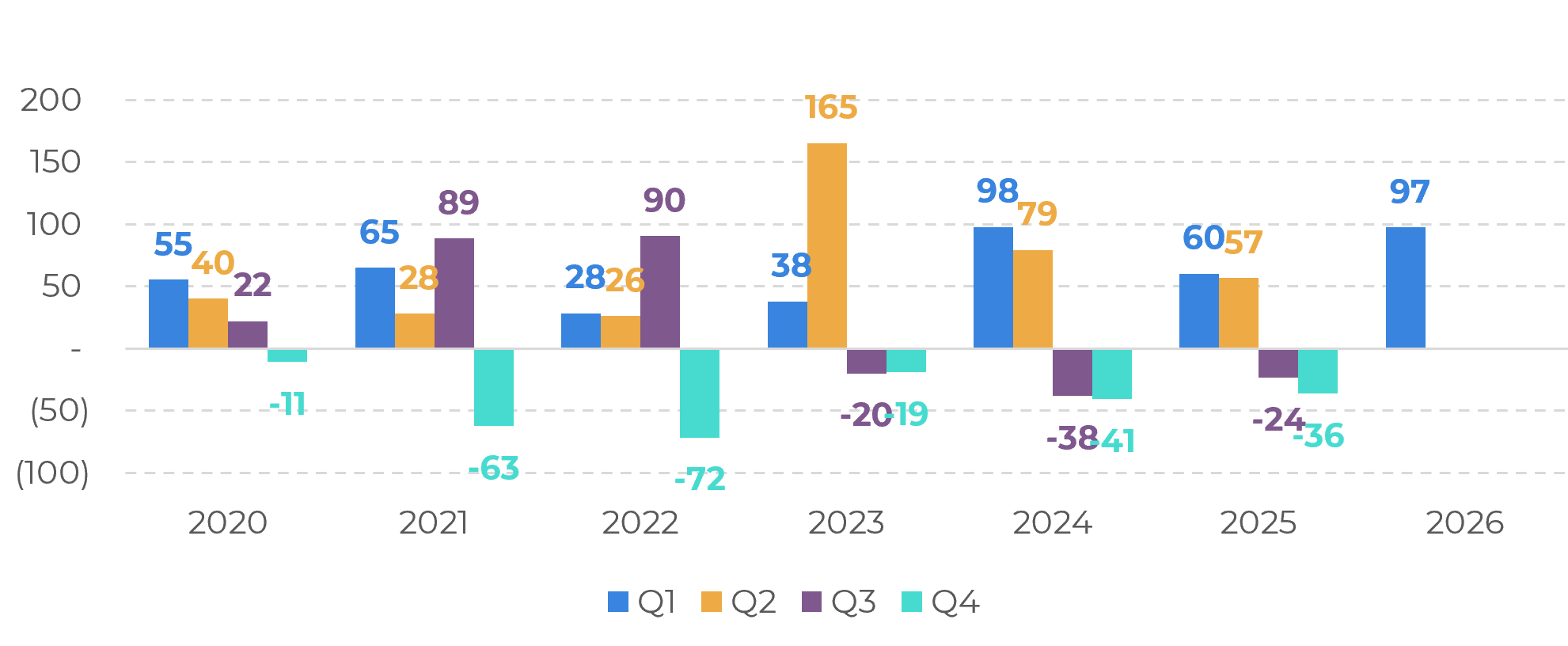
In Europe, the peak in net imports observed in March, combined with a decline in grinding activity, may have contributed to a stronger inflow into stocks during the first quarter of 2026. Despite this temporary increase, cumulative net imports (Oct 25 – May 26) for the crop year remain below the levels seen in the previous cycle, which could indicate a more moderate demand environment overall. The main exception is cocoa butter, whose imports have increased 11.2%, largely supplied by the Ivory Coast.
EU: quarterly stock flows (‘000 tons)
Source: European Commission, ECA, Hedgepoint
Lower prices for by-products, particularly butter, may have supported higher imports in both Europe and the United States, potentially influencing global trade flows by shifting part of the processing toward Asia, where margins and growth prospects appear more favorable. In Brazil, the industry continues to face structural challenges related to partial import dependence and regulatory changes, which may weigh on its competitiveness going forward.
Supply and weather
On the supply side, Ivory Coast is experiencing more favorable weather conditions compared to the previous crop, particularly in terms of cumulative precipitation levels, now closer to the historical average. Based on this, we have maintained our current 25/26 production estimate at 1.753 kt, although there is potential for an upward revision given the increase in cocoa port arrivals, which are 11.8% higher than last year. This improvement also supports expectations for exports, which faced commercialization challenges earlier in the season but are now likely to recover toward more average levels.
In Ghana, cumulative precipitation is above average, and we are closely monitoring its impact on crop dynamics, particularly regarding harvest conditions and the potential development of diseases. This assessment is being conducted in conjunction with temperature trends, as both factors are key for crop health. Despite these uncertainties, we have maintained our production estimate for the country around 650 kt.
The main adjustment comes from Ecuador, where below-average cumulative rainfall combined with significantly higher temperatures has led us to revise production estimates downward from 615 kt to 600 kt. We remain attentive to how these conditions may affect not only the current crop but also expectations for the 26/27 season, especially given the country’s growing relevance in global supply.
Finally, the development of El Niño represents a key risk factor for the months ahead. The phenomenon may lead to contrasting weather patterns across producing regions, including drier conditions in parts of West Africa but also excessive rainfall in Ecuador and some areas of West Africa. These shifts can affect flowering, crop development, and disease pressure, although impacts tend to be uneven and dependent on regional climate interactions, factors such as the West African Monsoon and Harmattan. The West African monsoon typically occurs between May and October, while the Harmattan prevails from December to February; El Niño events can alter these patterns, delay the start of the rainy season, and prolong the dry season by influencing the atmospheric systems that regulate the monsoon and the Harmattan. Given this complexity, close monitoring will be essential as the next crop cycle evolves.
Global balance and market
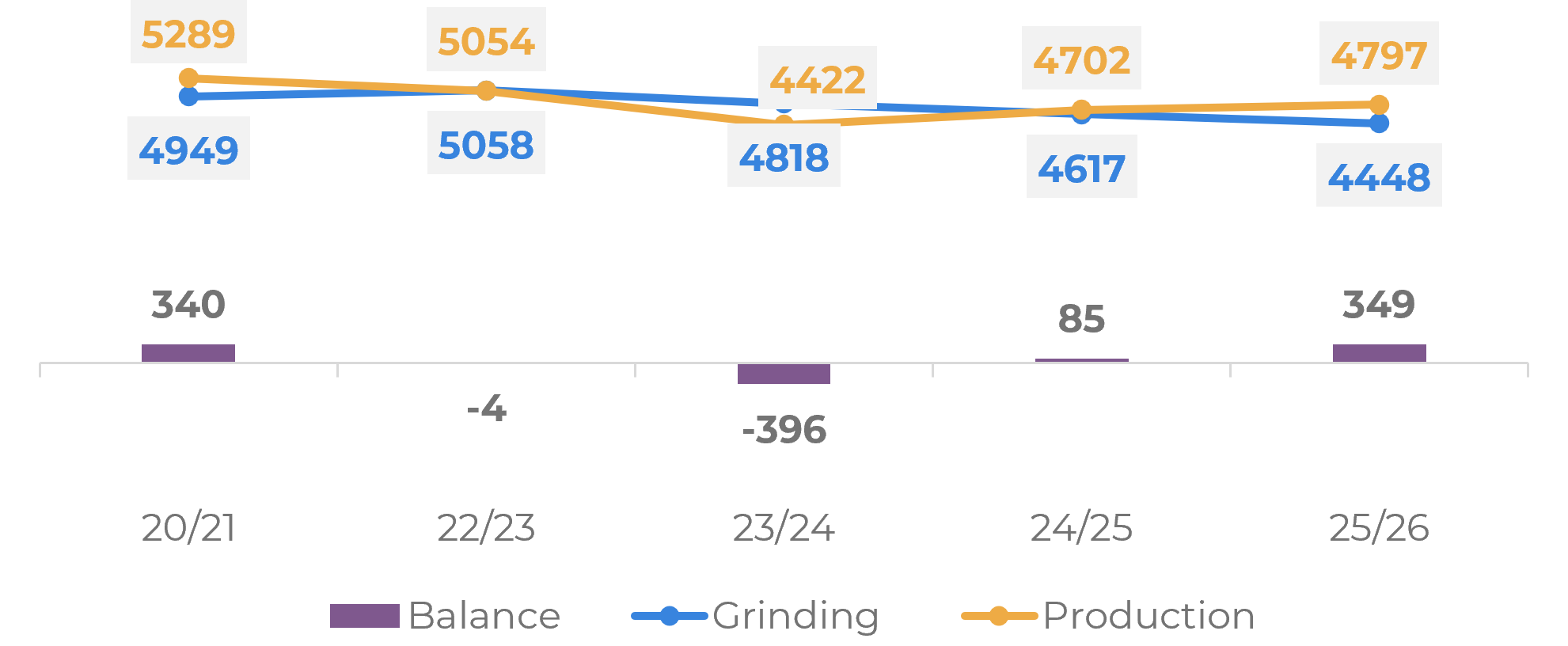
Considering the weather scenario and weak demand, we have adjusted our surplus estimate to 349 kt for the 2025/26 season. This result is mainly due to a projected increase in production of around 2% and an estimated reduction of approximately 4% in global grinding.
Global Supply and Demand for Cocoa (‘000 tons)
Source: ICCO, Hedgepoint
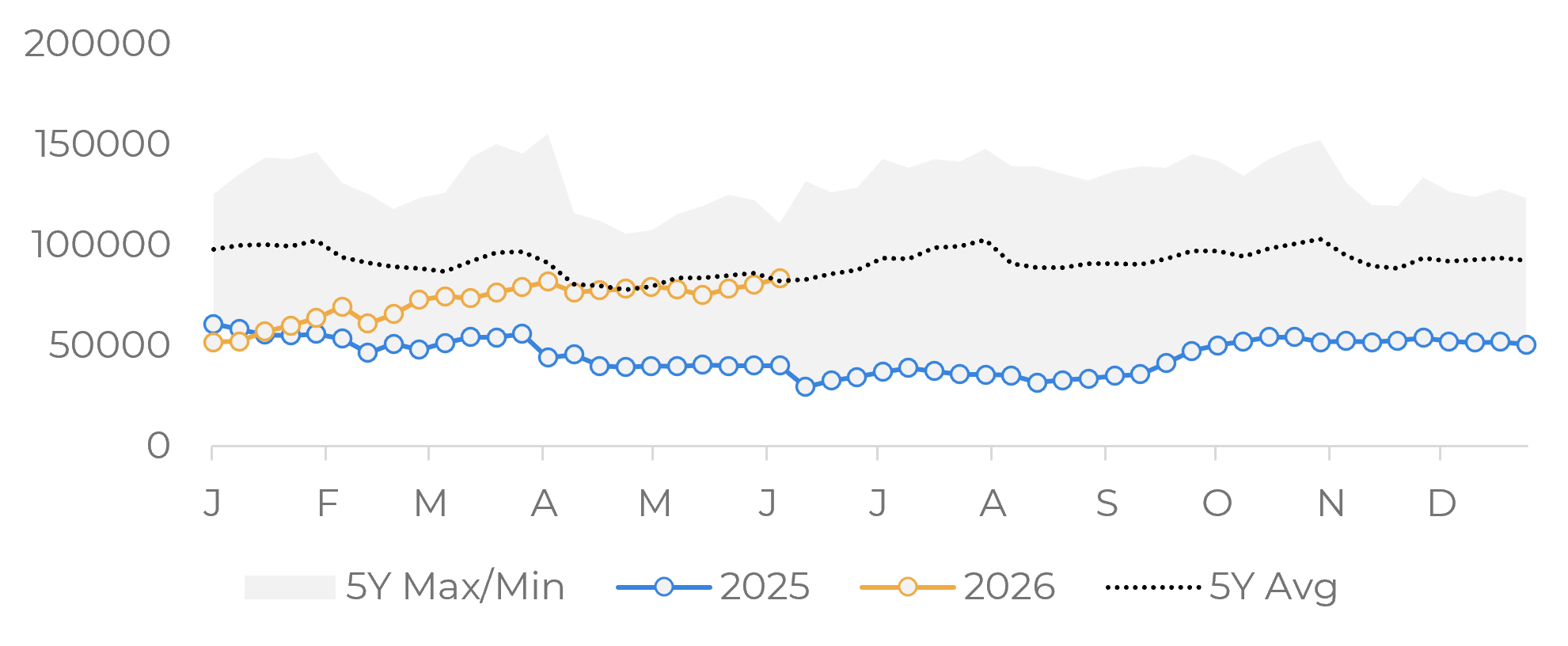
However, even in a projected surplus scenario, the positioning of commercials suggests greater attention to the risks and uncertainties associated with this volume, mainly for 26/27 crop, as reflected in an increase in long positions and a reduction in short positions, which could support technical upward movements and favor an environment of volatility without a clear direction. As a result, price dynamics have remained volatile and largely driven by technical factors in the short term, mainly supported by weather risk sentiment. Looking ahead, the market continues to await more concrete fundamental data, particularly on demand, with key updates expected around mid-July.
Commercials: cocoa long fund position (lots)
Source: CFTC
Commercials: cocoa short fund position (lots)
Source: CFTC
In Summary
The macroeconomic environment remains uncertain, influenced by geopolitical tensions that have pressured energy prices and reinforced inflation globally, with indirect effects on cocoa through costs and demand. While recent developments suggest some easing of risk, caution persists, particularly in Europe, where higher exposure to energy prices and tighter monetary policy may weigh on industrial activity and cocoa consumption, while the United States shows more resilience supported by stable interest rates and strong labor market results.
On the fundamentals, demand remains distinct across regions, with Asia showing relatively stronger processing activity supported by Indonesia and Malaysia, while Europe continues to reflect softer demand despite some temporary recovery in flows. On the supply side, Ivory Coast presents improved conditions with potential upside to production, Ghana requires monitoring due to above-average rainfall, and Ecuador has seen downward revisions due to adverse weather. The confirmation of El Niño adds uncertainty to the outlook, and although a surplus is expected for the 25/26 season, the market remains sensitive, with commercial positioning reflecting caution and prices driven by technical factors as participants await clearer demand signals expected in mid-July.
Weekly Report — Cocoa
carolina.frança@hedgepointglobal.com
laleska.moda@hedgepointglobal.com
Disclaimer
This document has been prepared by Hedgepoint Schweiz AG and its affiliates (“Hedgepoint”) solely for informational and instructional purposes, without intending to create obligations or commitments to third parties. It is not intended to promote or solicit an offer for the sale or purchase of any securities, commodities interests, or investment products. Hedgepoint and its associates expressly disclaim any liability for the use of the information contained herein that directly or indirectly results in any kind of damages. Information is obtained from sources which we believe to be reliable, but we do not warrant or guarantee the timeliness or accuracy of this information. The trading of commodities interests, such as futures, options, and swaps, involves substantial risk of loss and may not be suitable for all investors. You should carefully consider wither such trading is suitable for you in light of your financial condition. Past performance is not necessarily indicative of future results. Customers should rely on their own independent judgment and/or consult advisors before entering into any transactions. Hedgepoint does not provide legal, tax or accounting advice and you are responsible for seeking any such advice separately. Hedgepoint Schweiz AG is organized, incorporated, and existing under the laws of Switzerland, is filiated to ARIF, the Association Romande des Intermédiaires Financiers, which is a FINMA-authorized Self-Regulatory Organization. Hedgepoint Commodities LLC is organized, incorporated, and existing under the laws of the USA, and is authorized and regulated by the Commodity Futures Trading Commission (CFTC) and a member of the National Futures Association (NFA) to act as an Introducing Broker and Commodity Trading Advisor. HedgePoint Global Markets Limited is Regulated by the Dubai Financial Services Authority. The content is directed at Professional Clients and not Retail Clients. Hedgepoint Global Markets PTE. Ltd is organized, incorporated, and existing under the laws of Singapore, exempted from obtaining a financial services license as per the Second Schedule of the Securities and Futures (Licensing and Conduct of Business) Act, by the Monetary Authority of Singapore (MAS). Hedgepoint Global Markets DTVM Ltda. is authorized and regulated in Brazil by the Central Bank of Brazil (BCB) and the Brazilian Securities Commission (CVM). Hedgepoint Serviços Ltda. is organized, incorporated, and existing under the laws of Brazil. Hedgepoint Global Markets S.A. is organized, incorporated, and existing under the laws of Uruguay. In case of questions not resolved by the first instance of customer contact (client.services@Hedgepointglobal.com), please contact internal ombudsman channel (ombudsman@hedgepointglobal.com – global or ouvidoria@hedgepointglobal.com – Brazil only) or call 0800-8788408 (Brazil only). Integrity, ethics, and transparency are values that guide our culture. To further strengthen our practices, Hedgepoint has a whistleblower channel for employees and third-parties by e-mail ethicline@hedgepointglobal.com or forms Ethic Line – Hedgepoint Global Markets. “HedgePoint” and the “HedgePoint” logo are marks for the exclusive use of HedgePoint and/or its affiliates. Use or reproduction is prohibited, unless expressly authorized by HedgePoint. Furthermore, the use of any other marks in this document has been authorized for identification purposes only. It does not, therefore, imply any rights of HedgePoint in these marks or imply endorsement, association or seal by the owners of these marks with HedgePoint or its affiliates.