
Another quarter of mixed results for cocoa demand
- European cocoa grinding fell 4.6% in the second quarter of 2026, a result consistent with the lower availability of cocoa beans observed in the region’s imports.
- European imports of cocoa butter and cocoa powder remain above the levels of the previous crop year, reinforcing a hypothesis previously discussed that cocoa derivatives may be contributing to the region’s processing output.
- Asia recorded a 25.1% increase in grinding, with Indonesia and Malaysia standing out, as their exports of cocoa products point to stronger regional and international demand.
- North America surprised on the upside with a 7.7% increase in processing, supported by strong growth in U.S. imports of beans and by-products, suggesting demand that is indeed more resilient and widespread across the region.
- Despite signs of a recovery in demand, the short-term supply outlook is more favorable, with an increase in Ivory Coast port arrivals and certified stocks above last year’s levels.
Another quarter of mixed results for cocoa demand
After a period of heightened volatility and significant price gains, cocoa futures posted a weekly loss in the week ending July 17. Unlike recent price movements, which were driven primarily by technical factors such as resistance breaks, short-covering, and the entry of new buyers, market dynamics were influenced by the release of grinding data from the main processing regions for the second quarter of 2026 on July 16. Thus, this analysis aims to assess the factors behind these results and discuss their implications for the balance of the cocoa market in the short and medium term
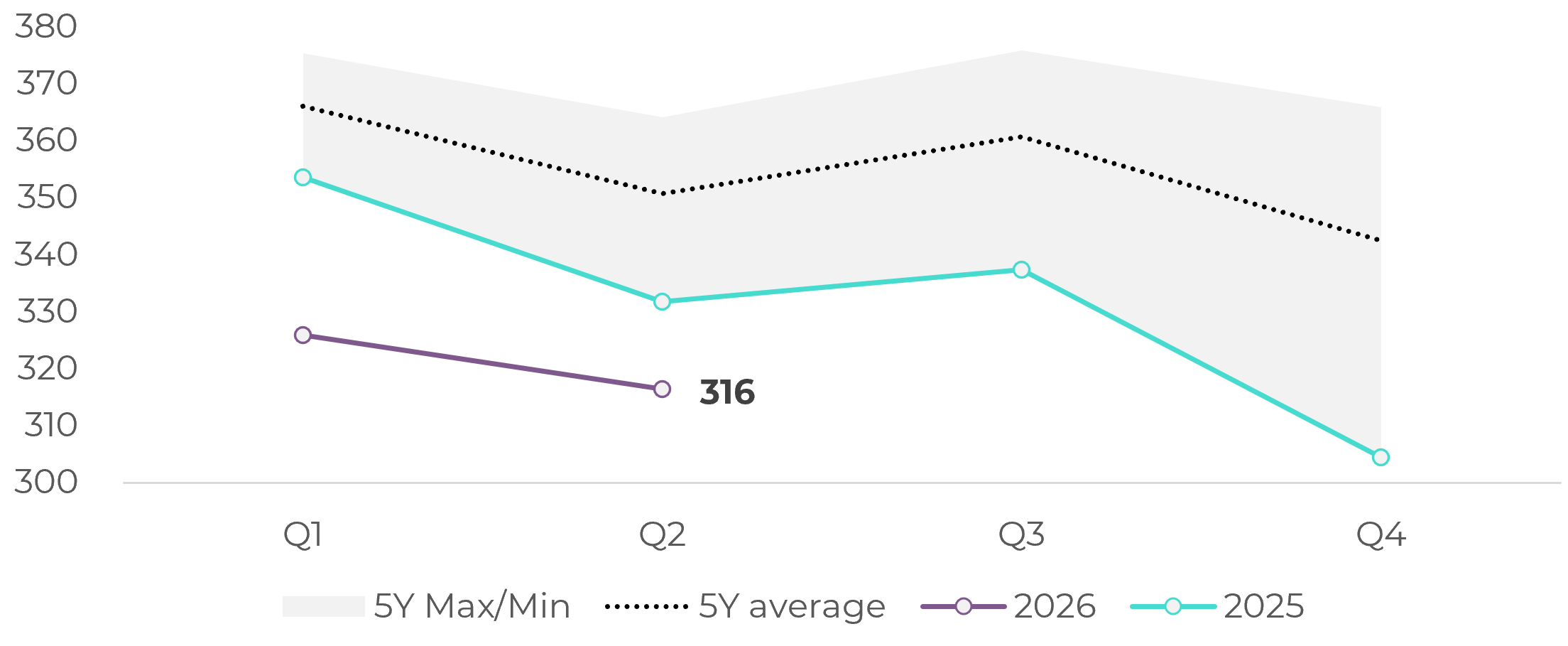
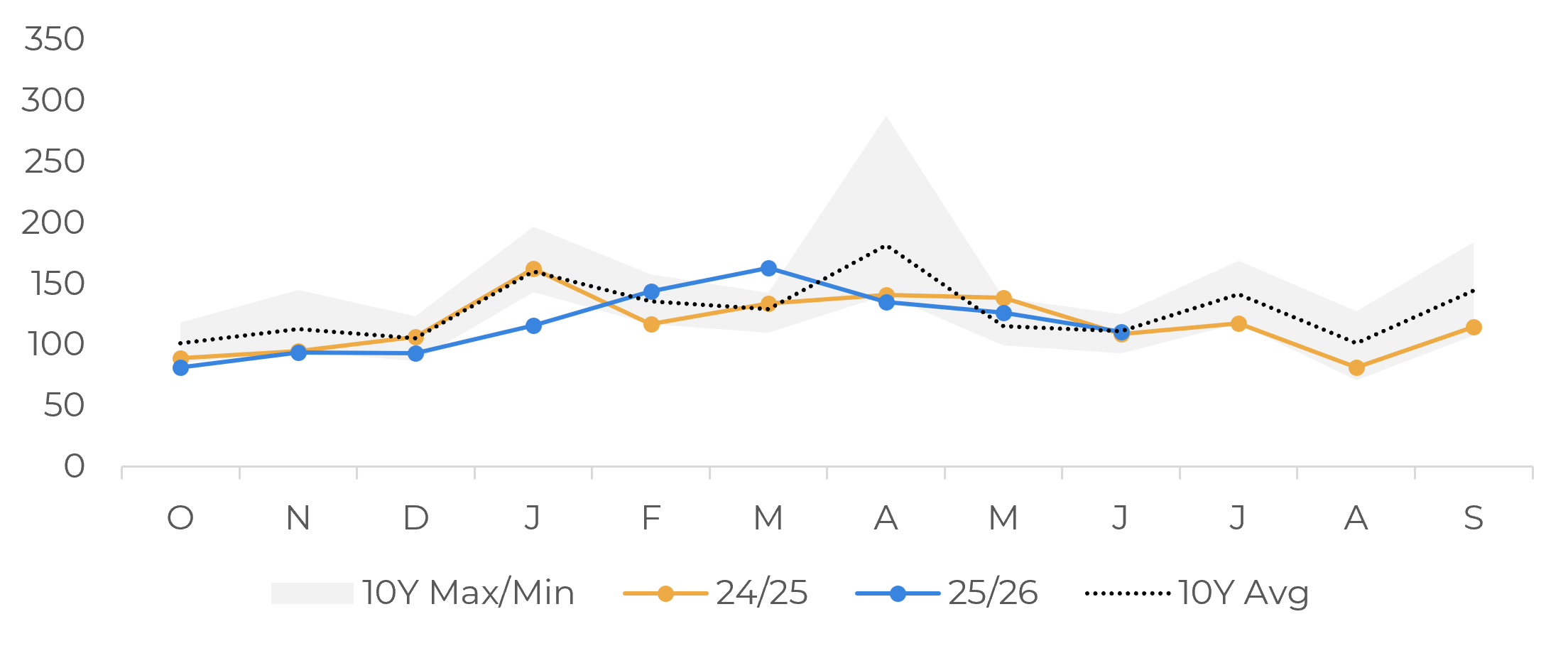
In line with our expectations, data released by the European Cocoa Association (ECA) indicated a 4.6% decline in the region’s cocoa grinding volume in the second quarter of 2026 compared to the same period of the previous year. This result, which was 9.8% below the historical average for the period, is consistent with data on the European Union’s cumulative net imports of cocoa beans between October 2025 and June 2026, which remain about 2.7% below the levels observed during the same period of the previous cycle.
Cocoa grinding: Europe (‘000 tons)
Source: European Cocoa Association
EU: net cocoa beans imports (‘000 tons)
Source: European Commission, Hedgepoint
In addition to cocoa beans, imports of cocoa byproducts also corroborate this figure. Cumulative net imports of cocoa butter and cocoa powder are, respectively, 16% and 6.4% higher than those recorded during the same period of the previous crop year. In a region where imports consist mainly of cocoa beans (on average 85%), and which accounts for the world’s primary cocoa processing capacity, this increase in byproduct imports may have contributed to the observed grinding results.
This is a hypothesis that had already been discussed in previous analyses, especially following the first-quarter results, when a possible effect of the increased flow of byproducts on European grinding was observed amid diverging regional performances. With the most recent data, this interpretation gains further support for the second quarter as well. In this regard, the increase in monthly grinding volumes in Ivory Coast, the main source of byproducts imported by the European market, stands out.
Thus, even in light of the positive processing results in Asia, which will be discussed below, the data from Europe, given the region’s weight, exerted a greater influence on the market. In response, cocoa futures contracts closed the July 16 session down 7.5% in New York and 9.3% in London. The dynamics of open interest reinforce this interpretation, maybe suggesting that the decline was accompanied by the closing of long positions, as market participants began to reassess the demand fundamentals implied by the second-quarter processing data.
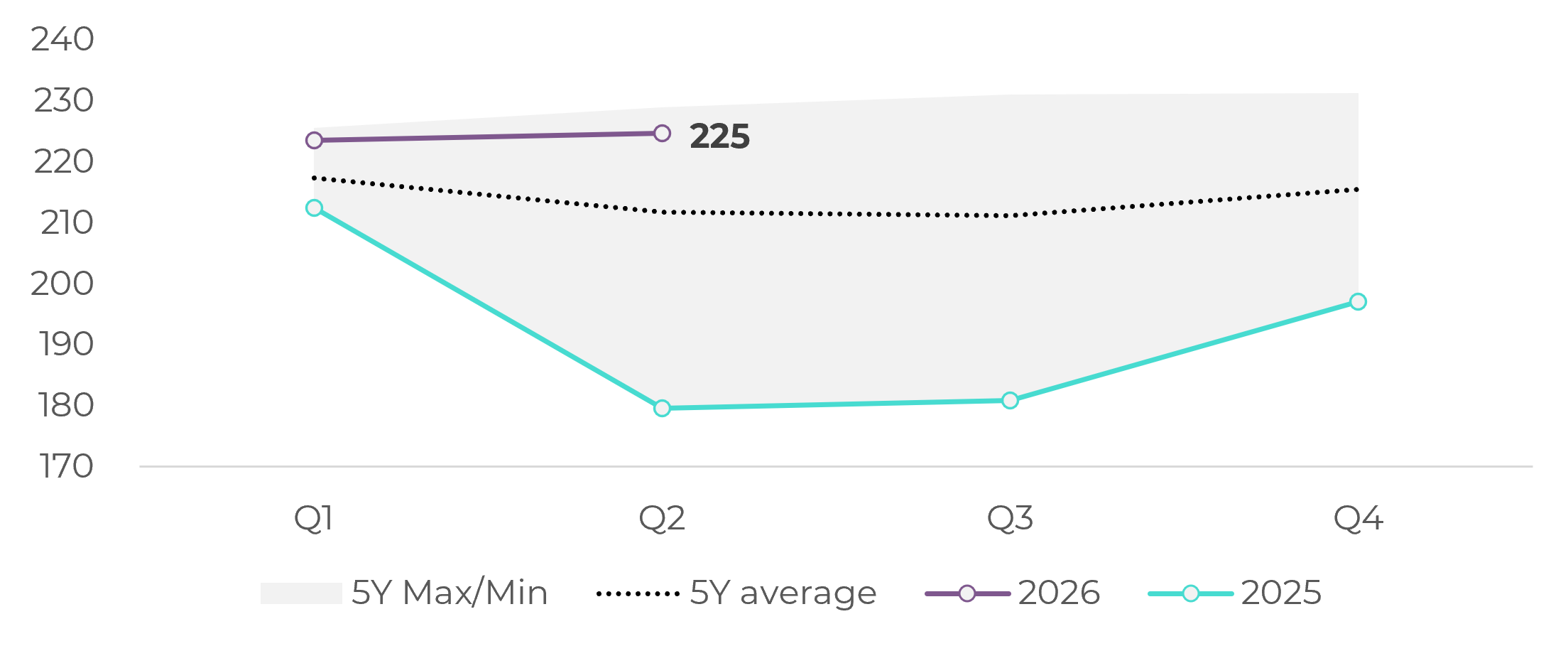
In contrast to Europe, Asian grinding performed significantly stronger, posting 25.1% growth over the same period last year. As previously highlighted in earlier analyses, this result is consistent with the trend in byproduct exports from the region’s major processors. Indonesia and Malaysia, which account for approximately 37% and 32% of Asian cocoa processing, respectively, have been showing consistent signs of increased industrial and commercial activity in the cocoa sector.
Cocoa grinding: Asia (‘000 tons)
Source: Asian Cocoa Association
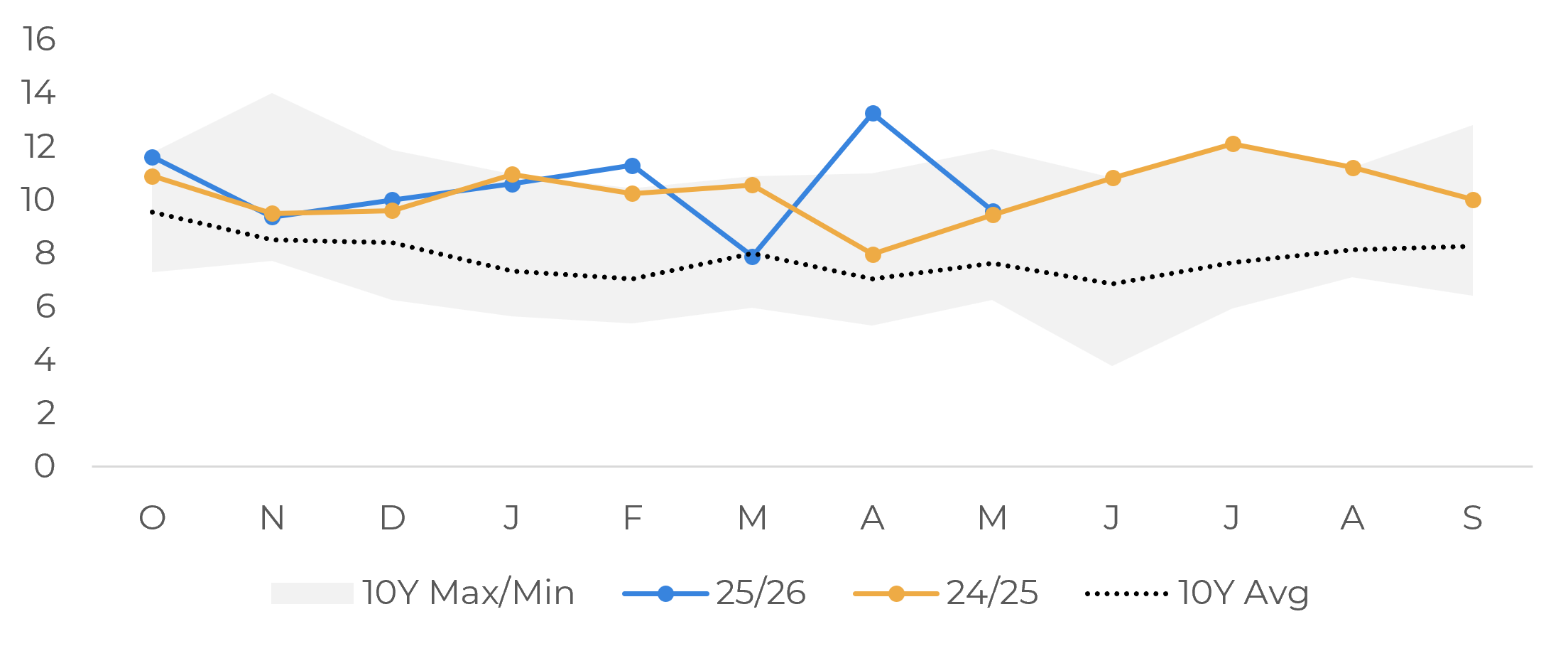
In Indonesia, cocoa powder exports stood out, with cumulative exports from October 2025 through May 2026 up 6% compared to the same period in the previous crop year. The breakdown of these export destinations underscores the strength of regional demand, with India and China ranking among the product’s top buyers and signaling increased activity in the Asian cocoa market.
Indonesia: cocoa powder exports (‘000 tons)
Source: BPS Indonesia
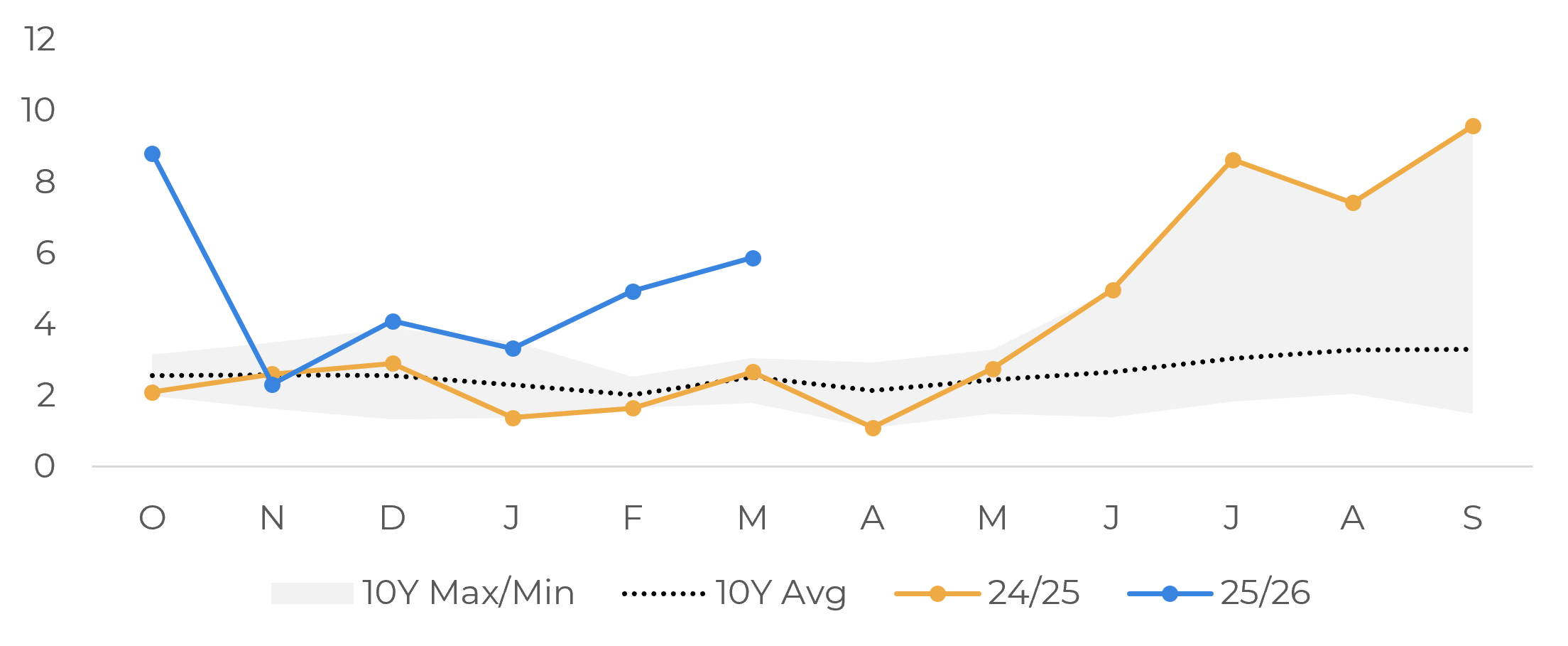
In Malaysia, the main highlight is the increase in cocoa paste exports. From October 2025 through March 2026, shipments exceeded the volumes recorded during the same period of the previous crop year by 120%. Among the main destinations, the growth in the United States’ share stands out, as it increased its share of Malaysian cocoa paste imports from 2% to 9% in the period from October 2025 to May 2026. In addition to the U.S., Russia, China, and Japan remain among the main destination markets, underscoring Malaysia’s growing importance in the global supply of cocoa products.
Malaysia: cocoa paste exports (‘000 tons)
Source: Trade Map, Hedgepoint
Thus, the trade data corroborate the results reported for Asian grinding, suggesting that growth in processing in the region has been accompanied by a consistent expansion in demand for cocoa byproducts in major consumer markets.
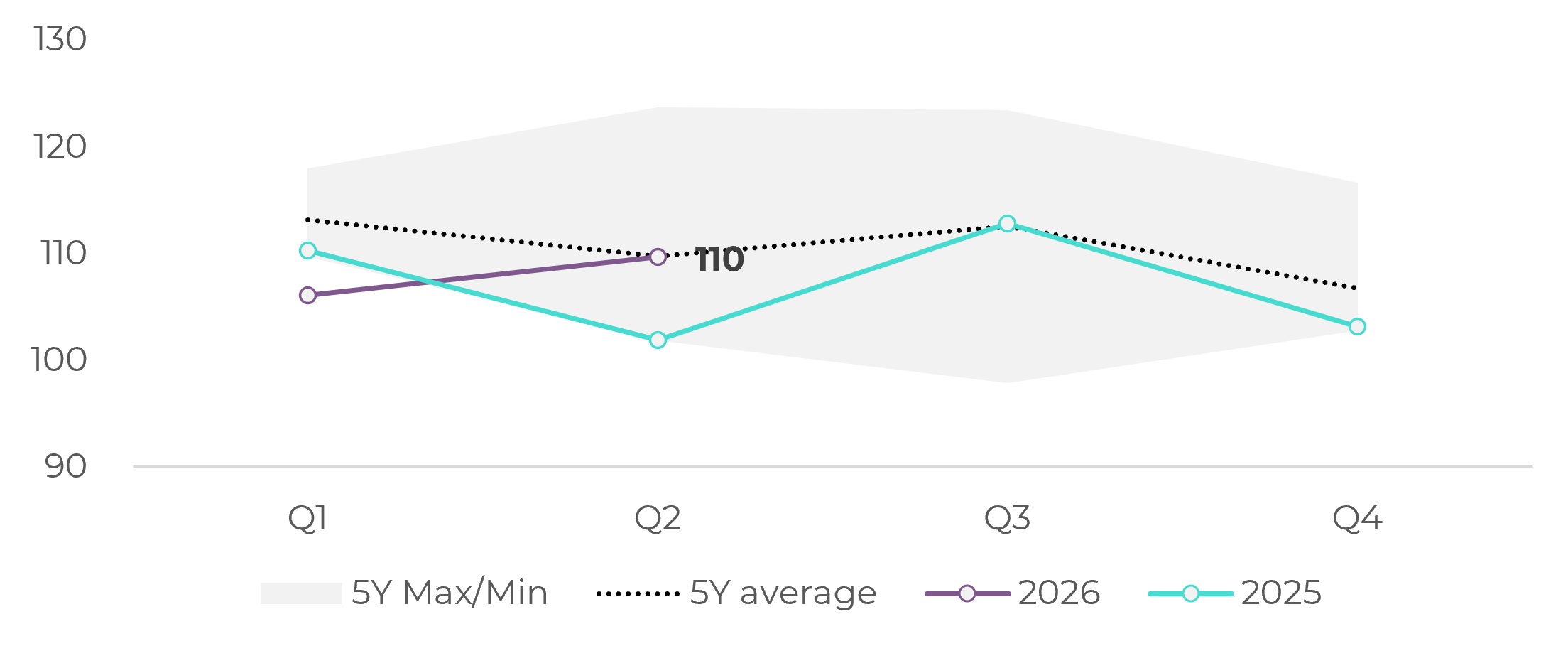
Finally, North American cocoa processing surprised the market the most by posting 7.7% growth compared to the same quarter of the previous year, a result above expectations. Since the data was released after the close of trading on July 16, it contributed to a partial recovery in prices on Friday, offsetting some of the losses observed following the release of the European figures. As a result, futures contracts closed the week at 5,533 USD/t in New York and 4,096 GBP/t in London.
Cocoa grinding: North America (‘000 tons)
Source: National Confectioners Association
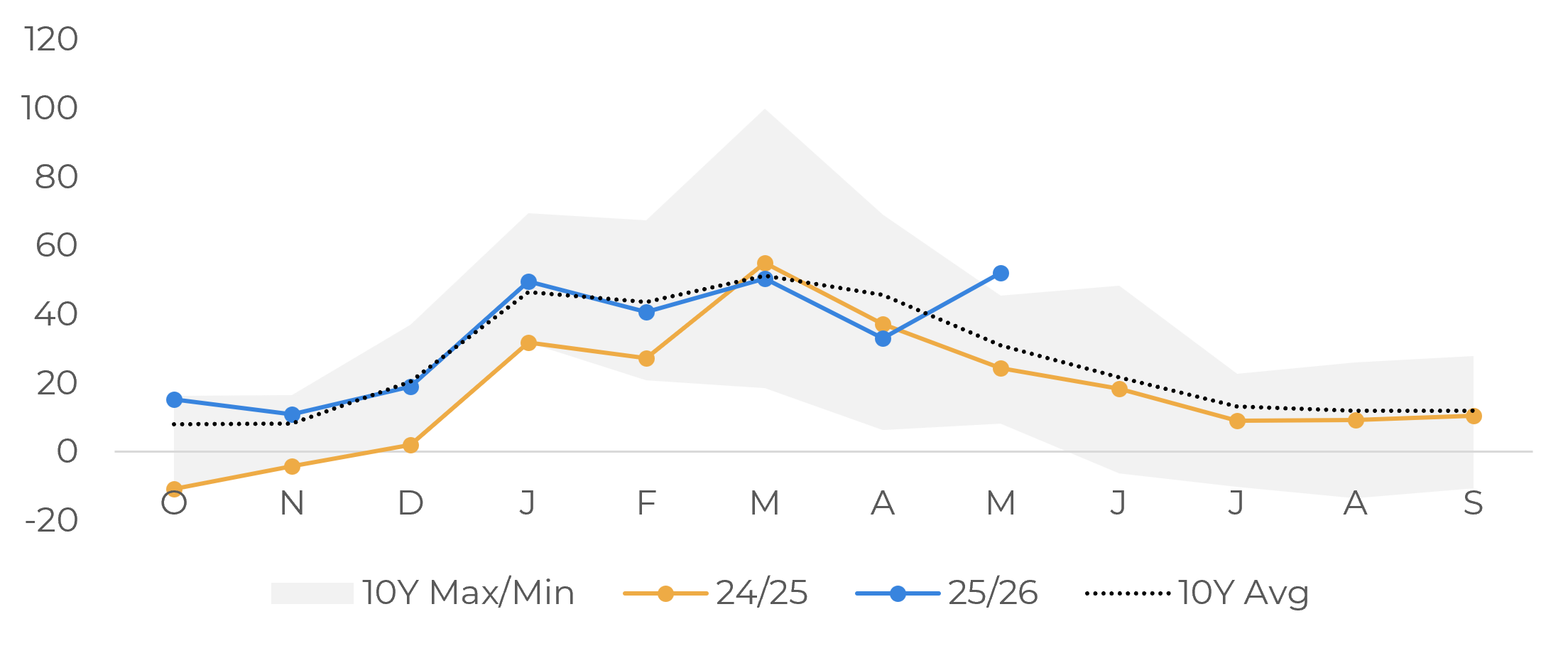
Among the region’s leading countries, the United States stands out, with cumulative net imports of cocoa beans between October 2025 and May 2026 up 66.7% compared to the same period in the previous crop year. In addition, imports of cocoa by-products also increased during the period, with a 19.6% rise for paste, 5.5% for powder, and 26.1% for butter. Unlike the situation in Europe, where the increase in imports of byproducts may have influenced processing results amid lower availability of cocoa beans, the United States’ import structure has historically been more balanced between cocoa beans and derivatives. Thus, the simultaneous growth in imports of both product groups suggests a more widespread strengthening of regional demand, rather than merely a substitution between raw materials and processed products.
U.S.: net cocoa beans imports (‘000 tons)
Source: United States International Trade Commission (USITC)
In addition, the number of survey participants remained unchanged at 14 companies, which reinforces the view that the increase in processing volume effectively reflects greater activity in the sector. Thus, the U.S. results point to a stronger consumer market.
Thus, a consolidated analysis of the results from the main processing regions points to a more resilient demand for cocoa than what the market has perceived in recent quarters, with the total processed volumes (ECA + NCA + CAA) showing a 6% increase compared to the same period last year. This trend had already been showing signs of strengthening and may have begun to be reflected in prices following the release of industry results that indicated a recovery in sales volumes among the sector’s processors. In this context, the release of results from other companies in the sector in the coming weeks will be crucial to confirming whether this recovery in demand is occurring more broadly across the supply chain.
On the other hand, the short-term supply outlook appears more favorable than that observed during the previous crop. Ivory Coast port arrivals remain above the levels recorded during the same period last year, while certified stocks on exchanges in the United States and Europe have also rebounded compared to levels from a year ago. Although these factors do not eliminate concerns about market balance in the medium term, they help reduce the perception of an immediate shortage of raw materials and may limit very sharp and sustained upward movements in prices.
Thus, volatility is expected to continue as the market seeks to balance signs of more resilient demand with more comfortable supply availability in the short term, as well as uncertainties related to the approaching 26/27 crop. In this environment, prices are likely to continue testing key support and resistance levels, ranging from 5,200 to 5,600 USD/t in New York and from 3,900 to 4,200 GBP/t in London, while market participants await new information on the development of the upcoming crop and the evolution of the global supply-demand balance.
In Summary
After weeks of strong gains driven mainly by technical factors, the cocoa market began to react to fundamentals following the release of second-quarter 2026 grinding data. While Europe recorded a 4.6% decline in processing, Asia and North America showed an upside, with increases of 25.1% and 7.7%, respectively, reinforcing signs of more resilient-than-expected demand. At the same time, short-term supply indicators, such as Ivory Coast port arrivals and the recovery of certified stocks in the United States and Europe, point to more comfortable product availability. Thus, although recent data supports a more positive outlook for demand, the balance between these two factors is likely to keep the market sensitive to new information about the upcoming crop and limit the formation of more defined trends in the short term.
Weekly Report — Cocoa
carolina.frança@hedgepointglobal.com
laleska.moda@hedgepointglobal.com
Disclaimer
This document has been prepared by Hedgepoint Schweiz AG and its affiliates (“Hedgepoint”) solely for informational and instructional purposes, without intending to create obligations or commitments to third parties. It is not intended to promote or solicit an offer for the sale or purchase of any securities, commodities interests, or investment products. Hedgepoint and its associates expressly disclaim any liability for the use of the information contained herein that directly or indirectly results in any kind of damages. Information is obtained from sources which we believe to be reliable, but we do not warrant or guarantee the timeliness or accuracy of this information. The trading of commodities interests, such as futures, options, and swaps, involves substantial risk of loss and may not be suitable for all investors. You should carefully consider wither such trading is suitable for you in light of your financial condition. Past performance is not necessarily indicative of future results. Customers should rely on their own independent judgment and/or consult advisors before entering into any transactions. Hedgepoint does not provide legal, tax or accounting advice and you are responsible for seeking any such advice separately. Hedgepoint Schweiz AG is organized, incorporated, and existing under the laws of Switzerland, is filiated to ARIF, the Association Romande des Intermédiaires Financiers, which is a FINMA-authorized Self-Regulatory Organization. Hedgepoint Commodities LLC is organized, incorporated, and existing under the laws of the USA, and is authorized and regulated by the Commodity Futures Trading Commission (CFTC) and a member of the National Futures Association (NFA) to act as an Introducing Broker and Commodity Trading Advisor. HedgePoint Global Markets Limited is Regulated by the Dubai Financial Services Authority. The content is directed at Professional Clients and not Retail Clients. Hedgepoint Global Markets PTE. Ltd is organized, incorporated, and existing under the laws of Singapore, exempted from obtaining a financial services license as per the Second Schedule of the Securities and Futures (Licensing and Conduct of Business) Act, by the Monetary Authority of Singapore (MAS). Hedgepoint Global Markets DTVM Ltda. is authorized and regulated in Brazil by the Central Bank of Brazil (BCB) and the Brazilian Securities Commission (CVM). Hedgepoint Serviços Ltda. is organized, incorporated, and existing under the laws of Brazil. Hedgepoint Global Markets S.A. is organized, incorporated, and existing under the laws of Uruguay. In case of questions not resolved by the first instance of customer contact (client.services@Hedgepointglobal.com), please contact internal ombudsman channel (ombudsman@hedgepointglobal.com – global or ouvidoria@hedgepointglobal.com – Brazil only) or call 0800-8788408 (Brazil only). Integrity, ethics, and transparency are values that guide our culture. To further strengthen our practices, Hedgepoint has a whistleblower channel for employees and third-parties by e-mail ethicline@hedgepointglobal.com or forms Ethic Line – Hedgepoint Global Markets. “HedgePoint” and the “HedgePoint” logo are marks for the exclusive use of HedgePoint and/or its affiliates. Use or reproduction is prohibited, unless expressly authorized by HedgePoint. Furthermore, the use of any other marks in this document has been authorized for identification purposes only. It does not, therefore, imply any rights of HedgePoint in these marks or imply endorsement, association or seal by the owners of these marks with HedgePoint or its affiliates.