U.S. x Iran Conflict: what could be the impacts for coffee?
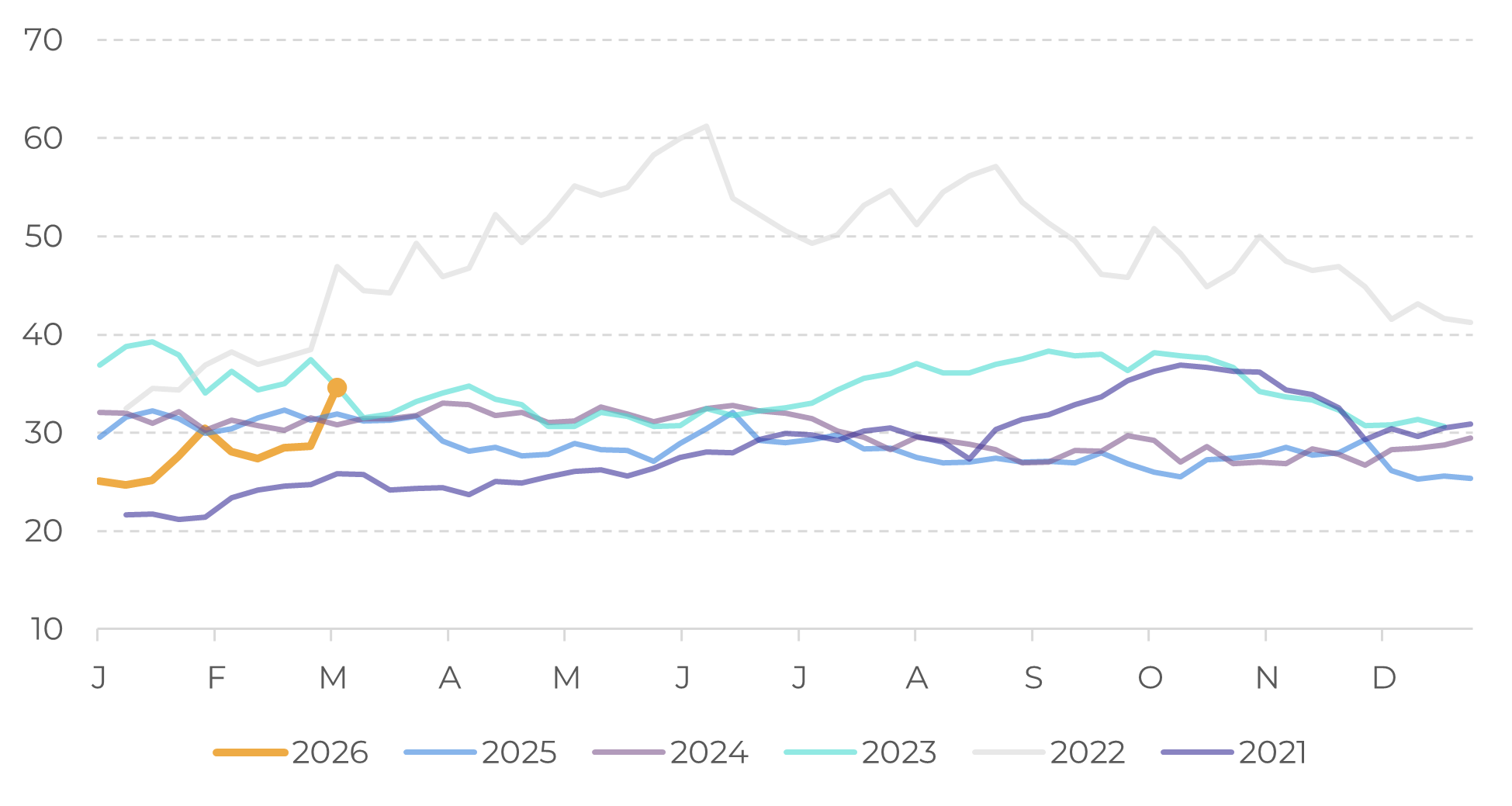
- In the past few days, the market has been swept by the escalation of the conflict between the U.S. (and its allies) and Iran, with major impacts in the oil sector and macroeconomic landscape. The size of the damage, however, will highly depends on the duration of the combat.
- The coffee market will also not escape unharmed from the increased tensions in the Middle East, as it is subjected to indirect (e.g increase in production costs, higher fuel prices and dollar fluctuation) in addition to the direct effects, such as the interruption of logistics routes.
- With the Strait of Hormuz closed by Iran and the ongoing conflicts, vessels are either anchored in the Persian Gulf or redirected to other routes, while also avoiding the Suez Canal, a key point for coffee maritime trade.
- This can directly affect the shipments of coffee from African and Southeast Asia, through the red sea, especially with destination to the European Union, and could also affect global trade – such as higher freight costs and fewer containers – if the war extends for longer periods.
U.S. x Iran conflict: what could be the impacts for coffee?
Bloomberg Energy Subindex
Source: LSEG
DXY Index
Source: LSEG
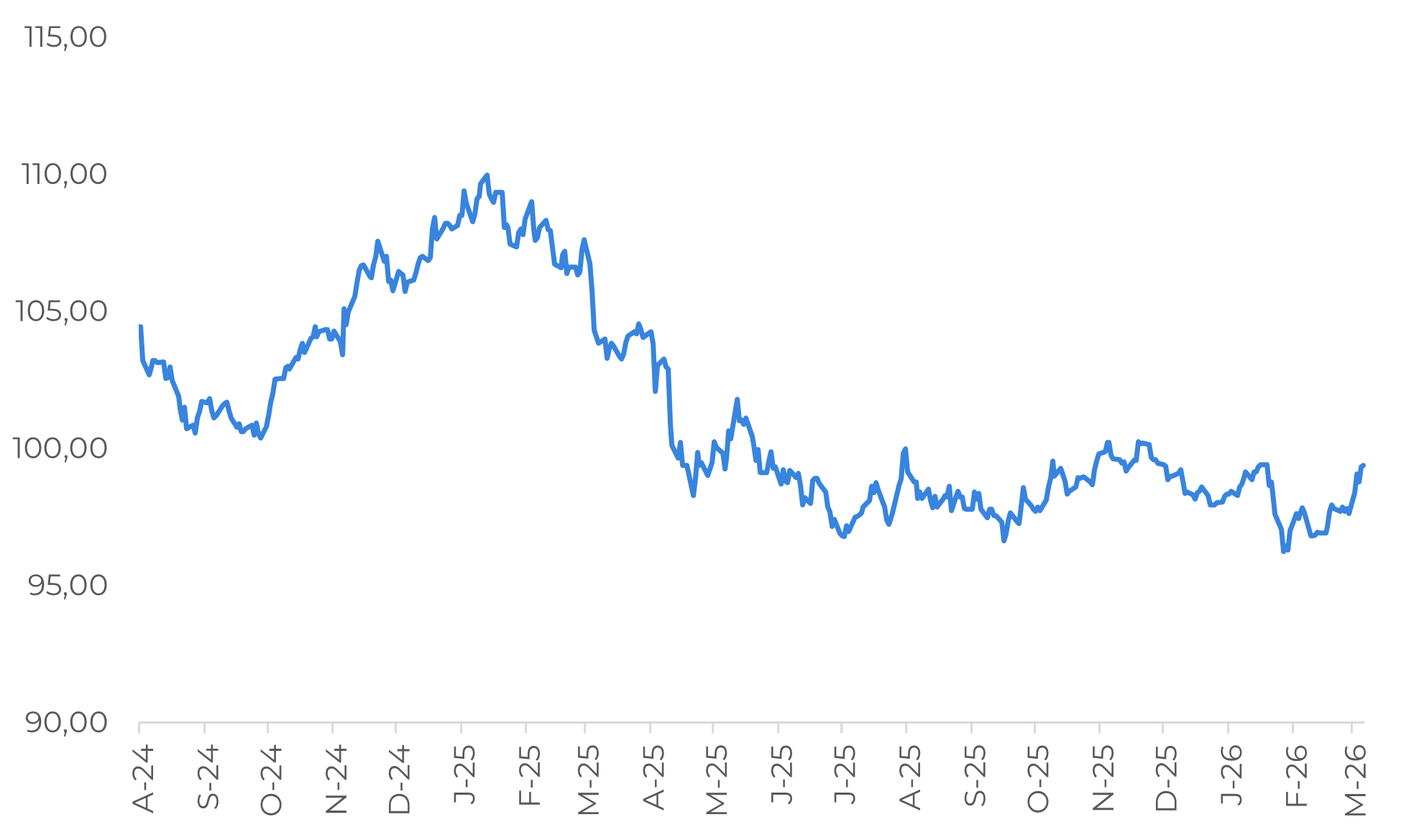
For the coffee market, the Iranian conflict could have indirect and direct effects. Firstly, the rise in fuel prices and dollar instability could lead to an increase in production costs, not only due to the direct use of fuel on the farms, but higher energetic costs are likely to increase input prices, such as fertilizers and defensives. On the other hand, the escalation of the tension could also bring challenges to the global coffee trade.
As of now, hundreds of ships, including tankers (for oil and liquefied natural gas transport) and even cargo ships remain anchored in the open sea or outside the Strait of Hormuz, unable to reach any ports. This will already impact coffee beans reaching Gulf roasters, especially UAE, and could reduce the availability of vessels globally.
In addition, there has also been a crescent attack on oil tankers, which has increased the risks of trade routes in the Gulf and even in the Suez Canal, with the fears of a return to Yemen attacks, leading many companies to suspend and redirect their services away from the region.
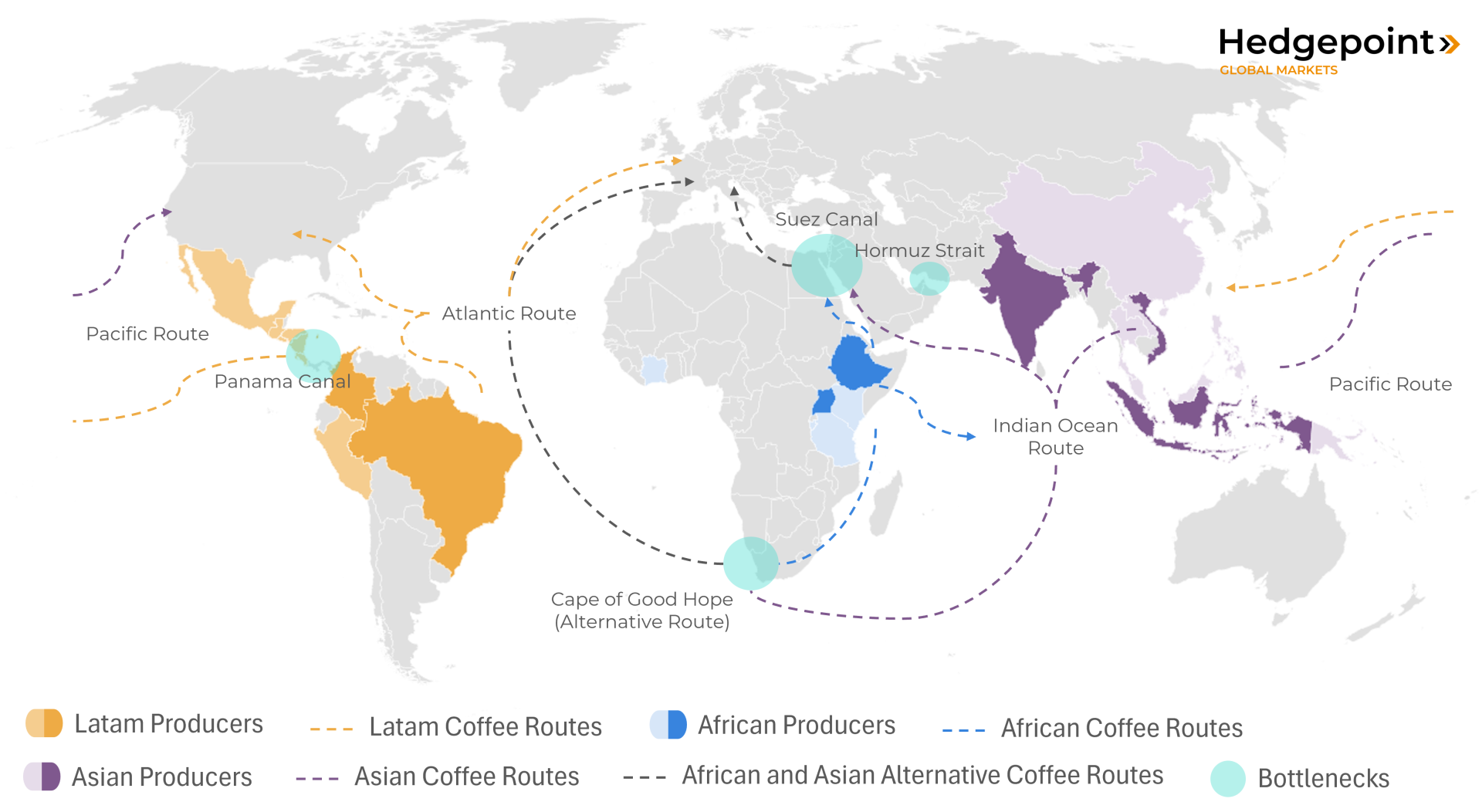
It is important to highlight that the Suez Canal is a key bottleneck for coffee trade, as it is the main and most efficient route for East African (e.g Uganda and Ethiopia) and Asian coffees to reach the European markets.
Global Maritime Routes for Coffee
Source: Hedgepoint
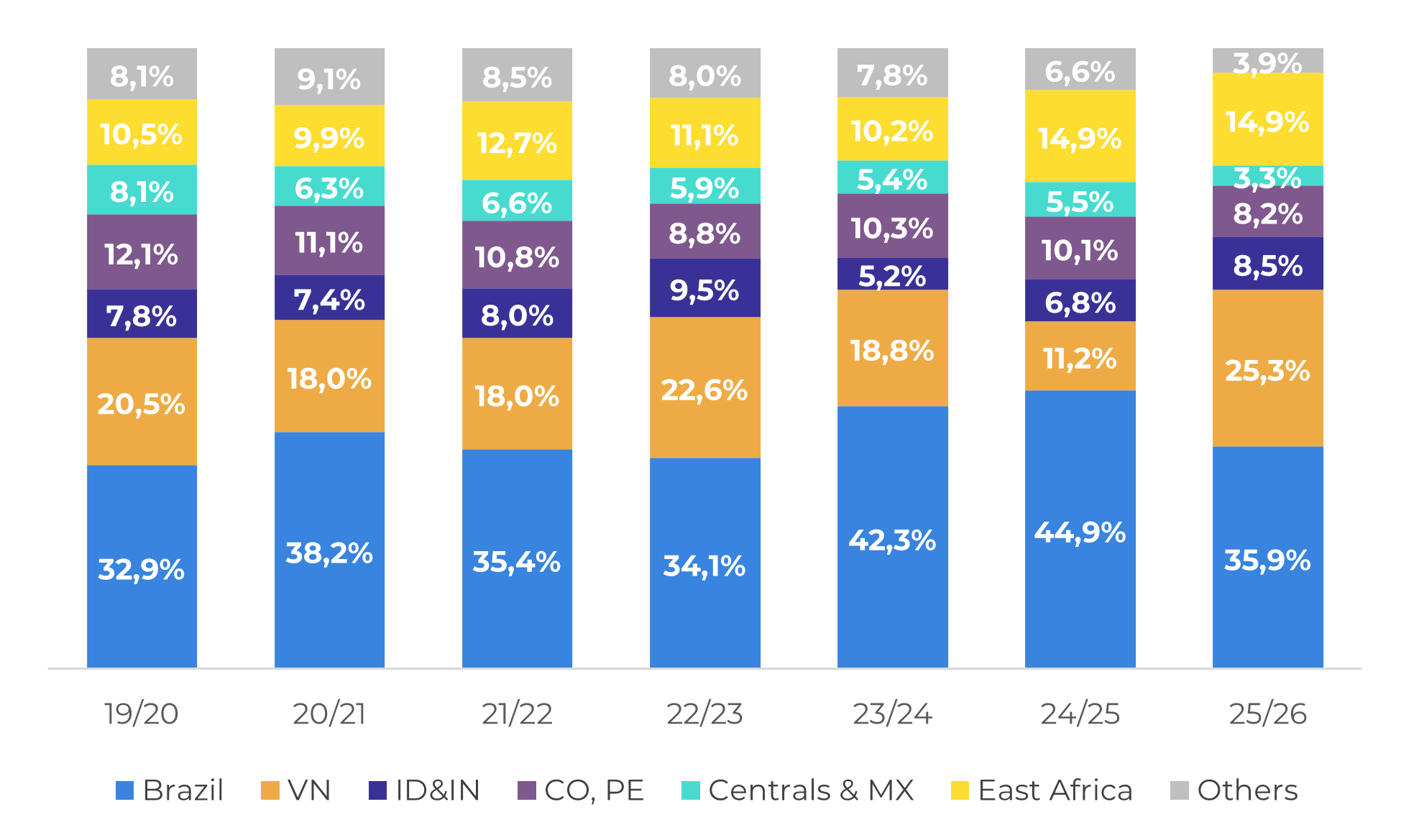
Therefore, these logistical issues have the potential to directly affect trade flows and differentials prices for coffee, as Europe is the biggest market for coffee in the world. In the past months, the EU has also increased its share in the use of coffee beans from Asian (especially from Vietnam) and continues to import more from East Africa, especially since Brazilian farmers remain more withdrew for the market.
As for now, traders in Vietnam reported that the routes are unaffected, but freight prices have increased heavily. Shipments for Europe have already halted in the country and are likely to continue muted until there is a clear view of the risks of the maritime route through Suez. Many freight companies have also suspended booking for the Gulf region redirecting ships to the Cape of Good Hope route, which implies not only rise in costs but also increase in shipping time.
While Europe could source its coffee from other countries, natural Arabica and Robusta beans are majorly exported from Asia, Uganda and Brazil. Brazilian farmers, however, are still reluctant to sell their remained beans, while the bulk of the country’s 26/27 harvest is expected to hit the market only from Jully on. This could impact differentials in Brazil but also on the import figures for the EU and potentially impact on the coffee stocks of the bloc, especially if the war extends itself.
EU: Share of Imports by Origins
Source: European Commission, Hedgepoint
In Summary
Weekly Report — Coffee
laleska.moda@hedgepointglobal.com
livea.coda@hedgepointglobal.com
Disclaimer
This document has been prepared by Hedgepoint Schweiz AG and its affiliates (“Hedgepoint”) solely for informational and instructional purposes, without intending to create obligations or commitments to third parties. It is not intended to promote or solicit an offer for the sale or purchase of any securities, commodities interests, or investment products. Hedgepoint and its associates expressly disclaim any liability for the use of the information contained herein that directly or indirectly results in any kind of damages. Information is obtained from sources which we believe to be reliable, but we do not warrant or guarantee the timeliness or accuracy of this information. The trading of commodities interests, such as futures, options, and swaps, involves substantial risk of loss and may not be suitable for all investors. You should carefully consider wither such trading is suitable for you in light of your financial condition. Past performance is not necessarily indicative of future results. Customers should rely on their own independent judgment and/or consult advisors before entering into any transactions. Hedgepoint does not provide legal, tax or accounting advice and you are responsible for seeking any such advice separately. Hedgepoint Schweiz AG is organized, incorporated, and existing under the laws of Switzerland, is filiated to ARIF, the Association Romande des Intermédiaires Financiers, which is a FINMA-authorized Self-Regulatory Organization. Hedgepoint Commodities LLC is organized, incorporated, and existing under the laws of the USA, and is authorized and regulated by the Commodity Futures Trading Commission (CFTC) and a member of the National Futures Association (NFA) to act as an Introducing Broker and Commodity Trading Advisor. HedgePoint Global Markets Limited is Regulated by the Dubai Financial Services Authority. The content is directed at Professional Clients and not Retail Clients. Hedgepoint Global Markets PTE. Ltd is organized, incorporated, and existing under the laws of Singapore, exempted from obtaining a financial services license as per the Second Schedule of the Securities and Futures (Licensing and Conduct of Business) Act, by the Monetary Authority of Singapore (MAS). Hedgepoint Global Markets DTVM Ltda. is authorized and regulated in Brazil by the Central Bank of Brazil (BCB) and the Brazilian Securities Commission (CVM). Hedgepoint Serviços Ltda. is organized, incorporated, and existing under the laws of Brazil. Hedgepoint Global Markets S.A. is organized, incorporated, and existing under the laws of Uruguay. In case of questions not resolved by the first instance of customer contact (client.services@Hedgepointglobal.com), please contact internal ombudsman channel (ombudsman@hedgepointglobal.com – global or ouvidoria@hedgepointglobal.com – Brazil only) or call 0800-8788408 (Brazil only). Integrity, ethics, and transparency are values that guide our culture. To further strengthen our practices, Hedgepoint has a whistleblower channel for employees and third-parties by e-mail ethicline@hedgepointglobal.com or forms Ethic Line – Hedgepoint Global Markets. “HedgePoint” and the “HedgePoint” logo are marks for the exclusive use of HedgePoint and/or its affiliates. Use or reproduction is prohibited, unless expressly authorized by HedgePoint. Furthermore, the use of any other marks in this document has been authorized for identification purposes only. It does not, therefore, imply any rights of HedgePoint in these marks or imply endorsement, association or seal by the owners of these marks with HedgePoint or its affiliates.