Rains in Brazil: a new challenge for the coffee market
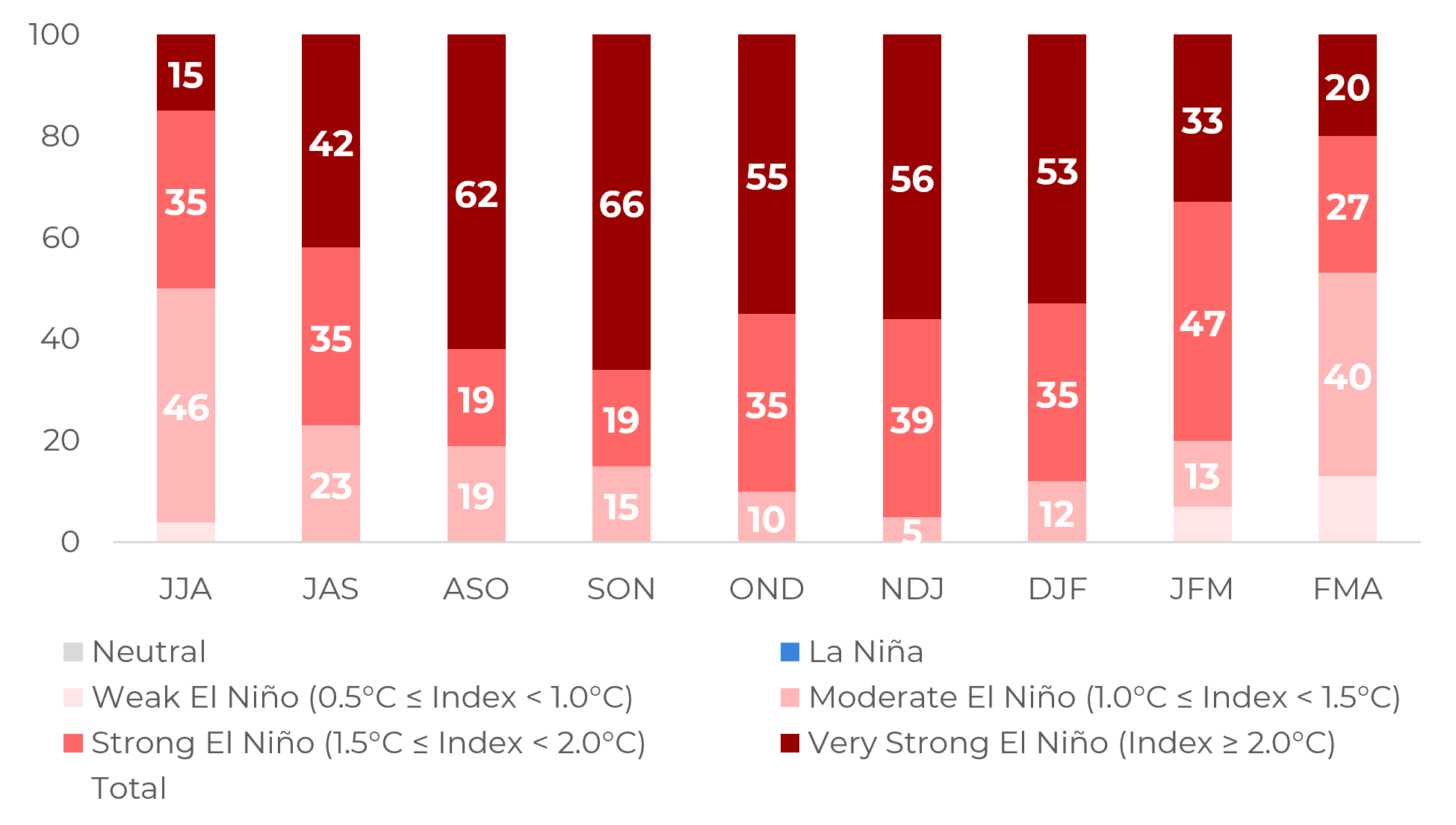
- With El Niño now active and gaining strength, the coffee market faces a new challenge. Beyond the potential impacts in regions such as Central America and Southeast Asia, the event is also likely to bring increased rainfall to Brazil during the winter.
- Rainfall has already picked up in Brazil in June, not only delaying the harvest but also affecting bean quality, which could trigger movements in differentials in the coming weeks.
- Fears of limited supply from Brazil – especially at a time when other origins are in their offseason – have supported prices and widened the September–December spreads.
- While short-term supply remains a concern, stocks at destination markets are still low. ICE-certified stocks also continue to decline, particularly for Arabica.
Rains in Brazil: a new challenge for the coffee market
In Brazil, higher precipitation levels are likely to persist throughout the winter, while spring and summer could be hotter, potentially putting pressure on the development of the 2027/28 crop.
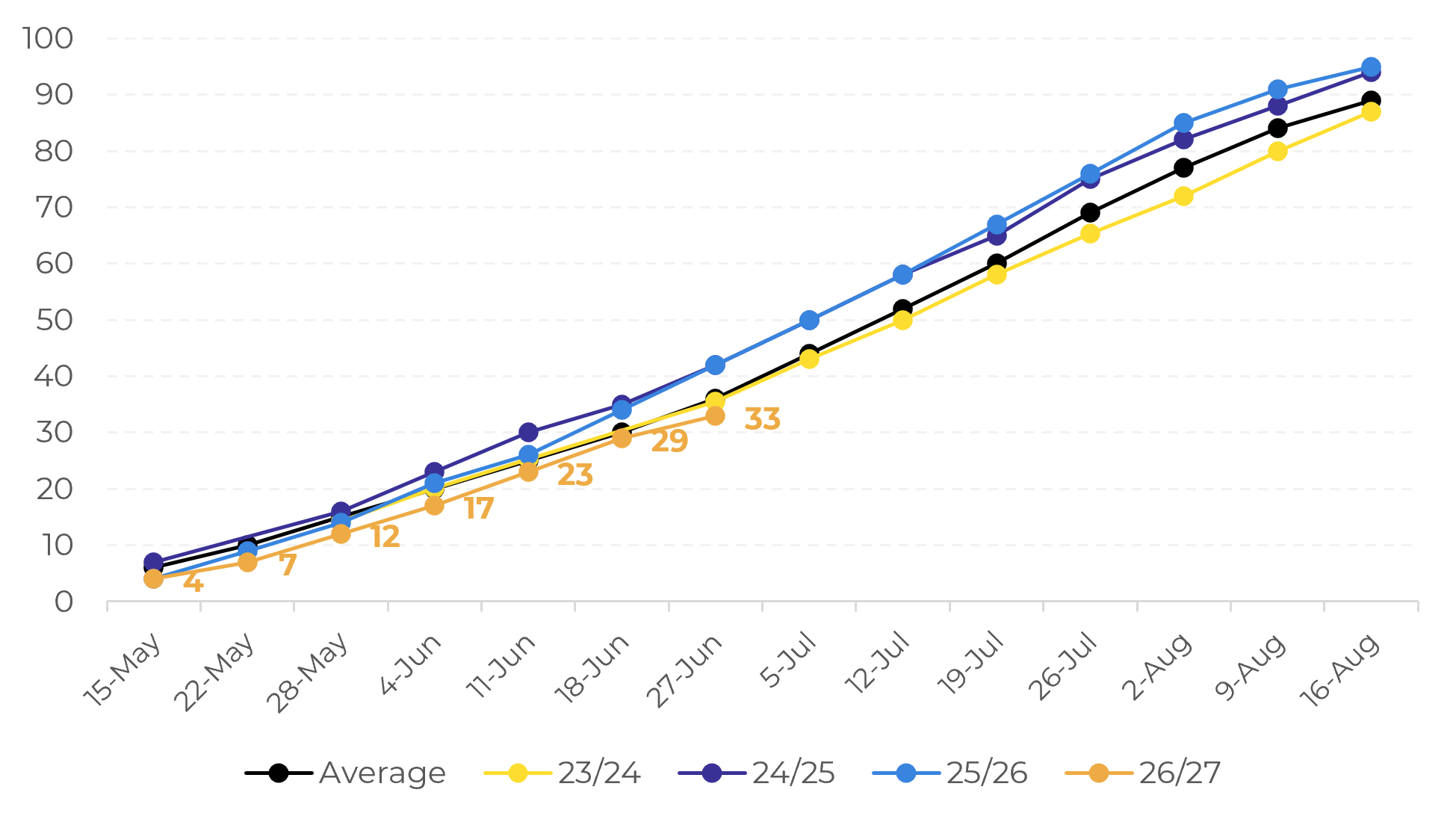
Brazil: Arabica Harvest Pace (%)
Source: Safras & Mercado
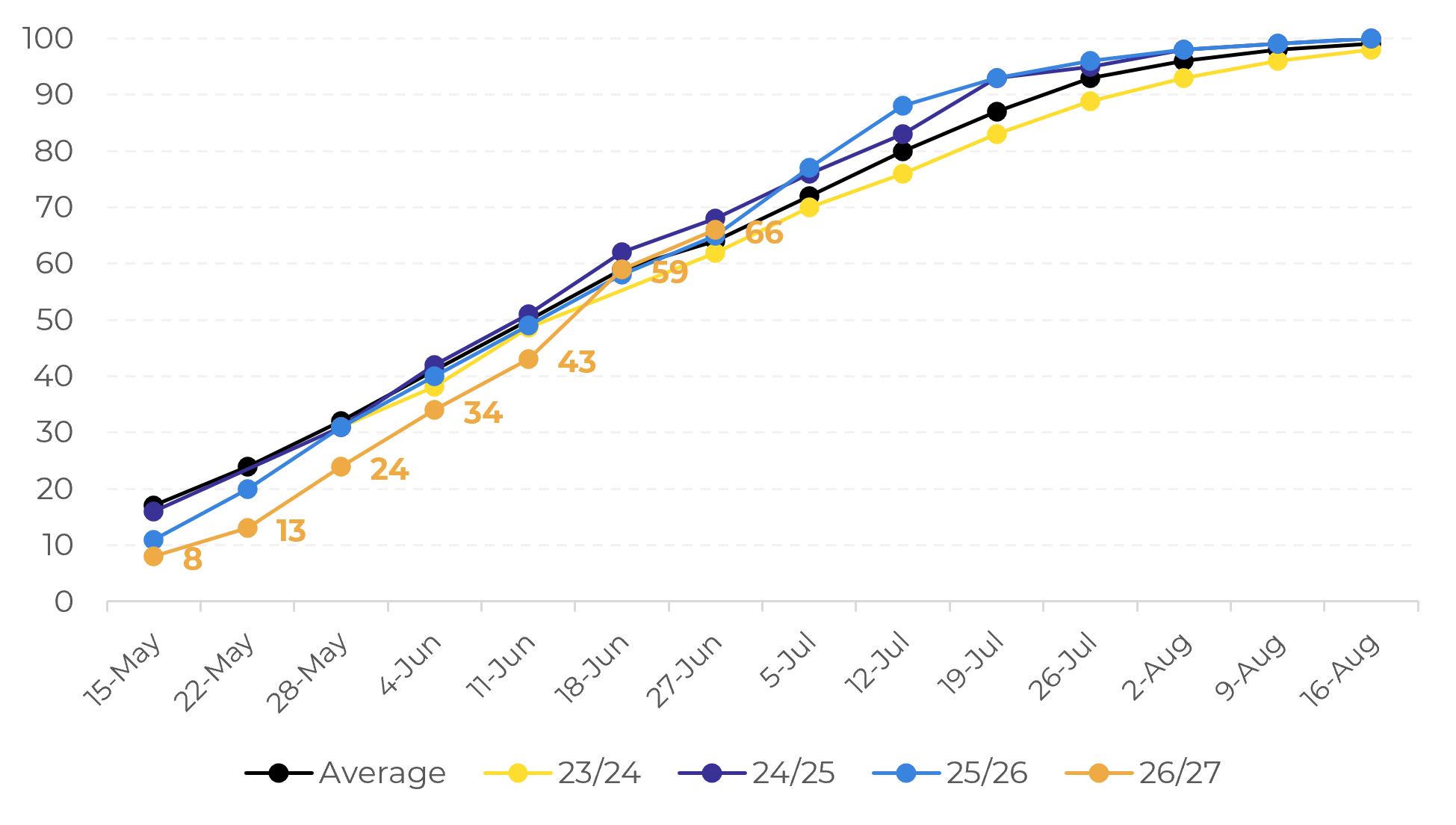
Brazil: Robusta Harvest Pace (%)
Source: Safras & Mercado
Growing concerns over delays in Brazilian coffee reaching the market, along with the lower-than-expected availability of higher-quality beans in the near term, have supported prices both locally and internationally.
These short-term concerns are also being reflected in the spreads structure, which has increased significantly in recent days, particularly the September–December Arabica spread. The September–November Robusta spread has also increased slightly but remains below levels seen in past seasons, as the main impacts of El Niño are expected to materialize more in the medium to long term.
CCSR/IRI ENSO Strength Categories (%, June, 2026)
Source: CCSR/IRI
Arabica: September-December Spread (c/lb)
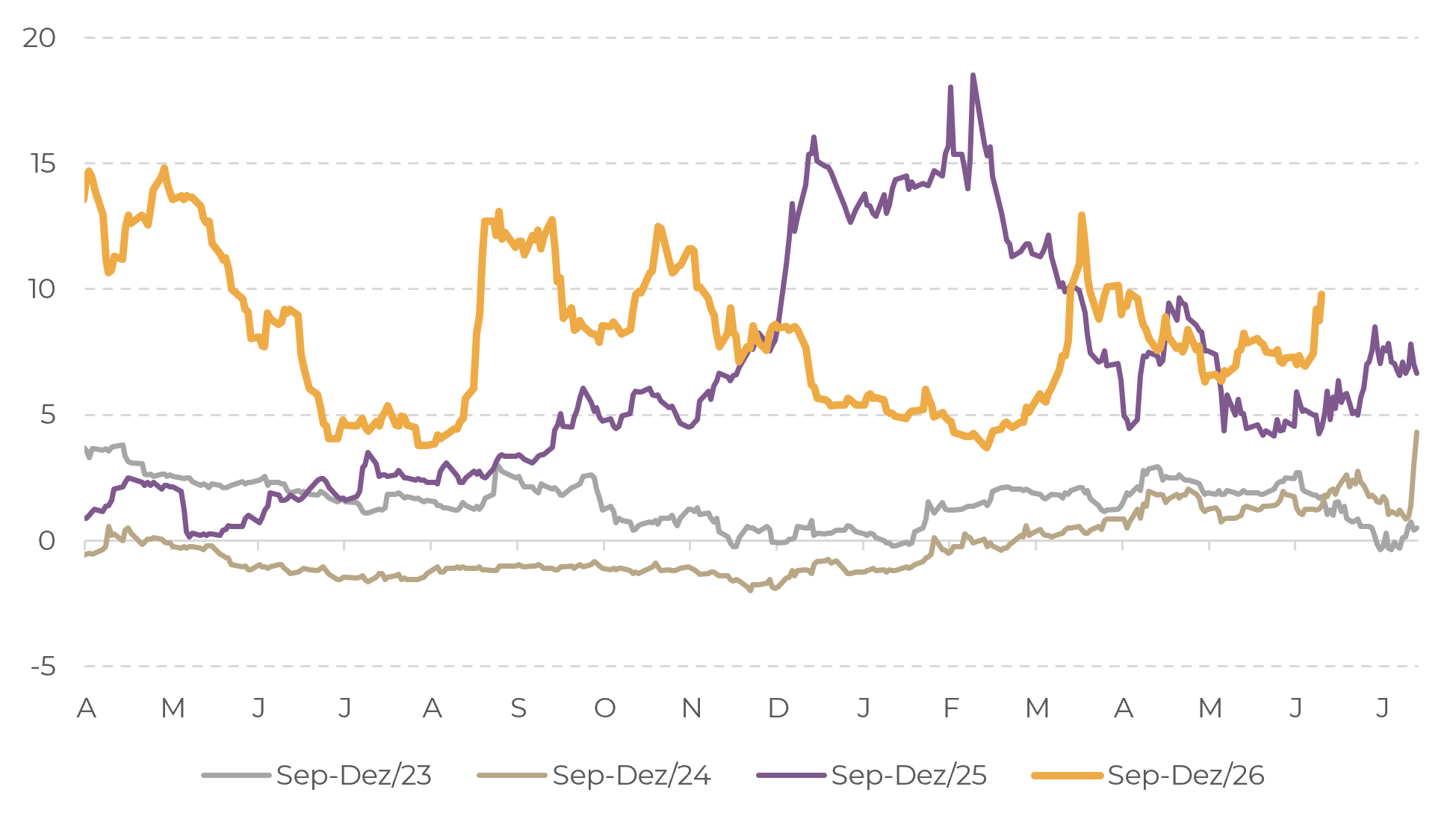
Source: LSEG, Hedgepoint
As the Brazilian harvest approaches its peak - despite delays - the volume of beans affected by rainfall is becoming increasingly significant, with quality concerns coming more clearly into focus. Adverse weather is also slowing the drying process, especially in Arabica regions, impacting beans already on drying patios and, in some cases, causing cherries to fall to the ground, which may reduce cup quality.
This could reduce the overall availability of higher-quality Arabica beans in the 2026/27 season, adding complexity at a time when other Arabica-producing origins are in their offseason. If rainfall persists through the winter and quality is materially affected, it could limit the expected decline in differentials for higher-quality Arabica, despite the bumper crop. For now, Brazilian differentials are declining with the harvest, but less than expected given current concerns (see our report).
On the positive side, a wetter winter can improve soil moisture and support the development of the next crop, although weather conditions in the second half of the year will be crucial for ensuring a strong season.
It is also important to note that these weather challenges are emerging at a time when destination stocks remain low, contributing to market volatility. ICE-certified stocks continue to trend downward, with Arabica inventories at their lowest levels since early 2024 (see report).
In this context, while Brazil’s bumper crop still points to a more bearish medium-term outlook, short-term weather conditions will be critical for Arabica availability and are likely to remain a major driver of market volatility.
Brazil: Cumulative Precipitation in Minas Gerais (mm)
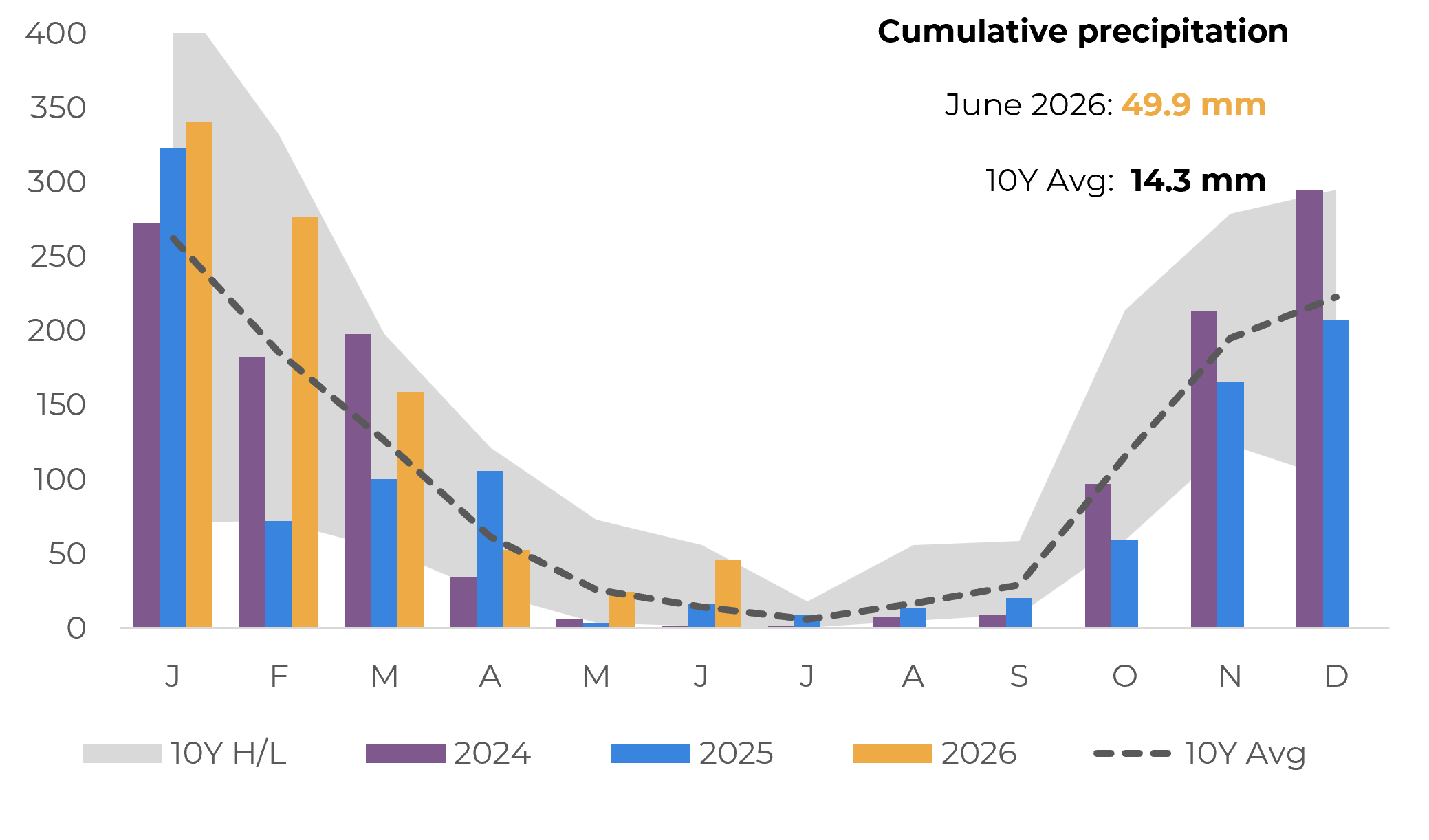
Source: Bloomberg, Hedgepoint
Brazil: Cumulative Precipitation in São Paulo (mm)
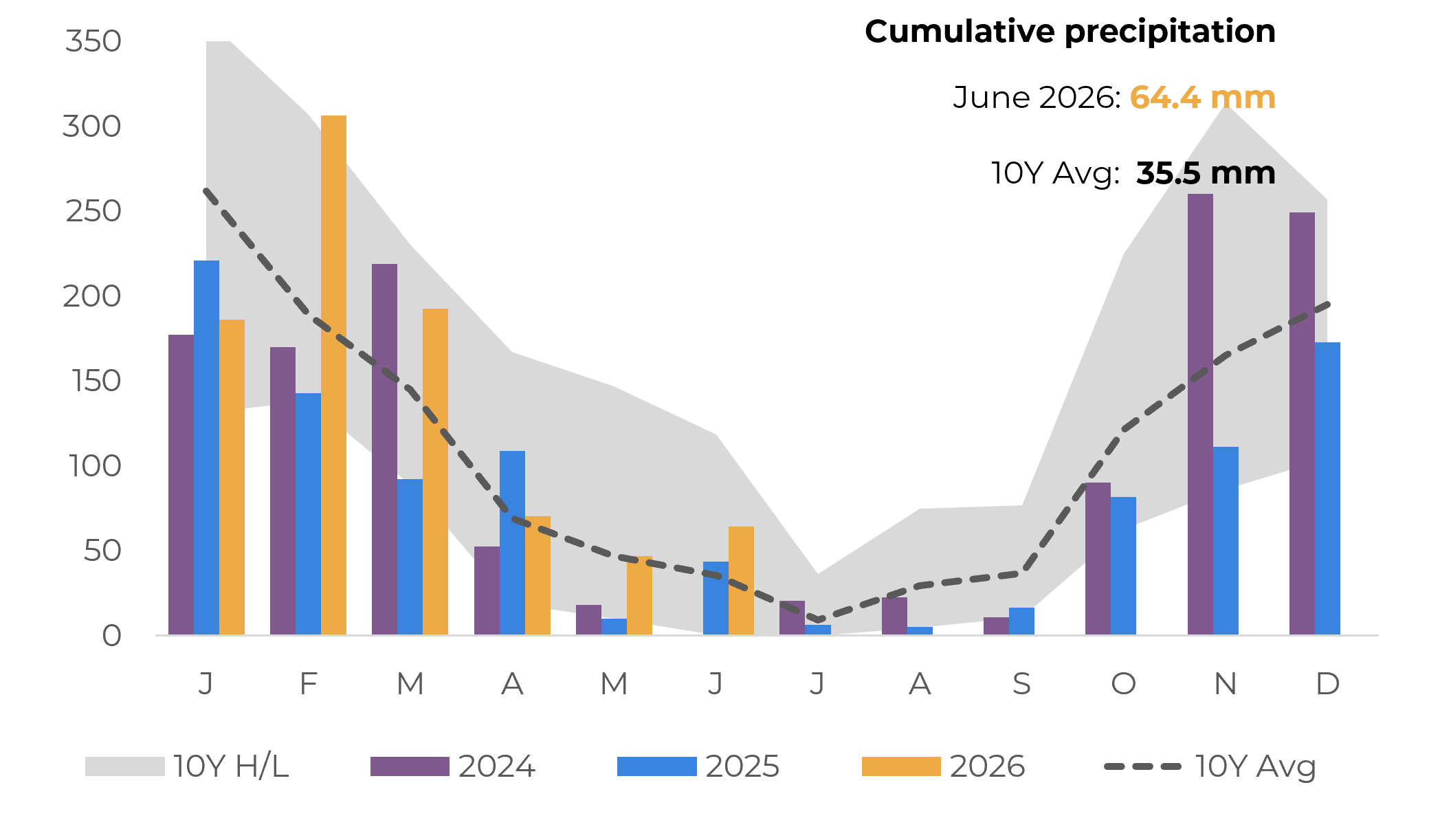
Source: Bloomberg, Hedgepoint
In Summary
Weekly Report — Coffee
laleska.moda@hedgepointglobal.com
thais.italiani@hedgepointglobal.com
Disclaimer
This document has been prepared by Hedgepoint Schweiz AG and its affiliates (“Hedgepoint”) solely for informational and instructional purposes, without intending to create obligations or commitments to third parties. It is not intended to promote or solicit an offer for the sale or purchase of any securities, commodities interests, or investment products. Hedgepoint and its associates expressly disclaim any liability for the use of the information contained herein that directly or indirectly results in any kind of damages. Information is obtained from sources which we believe to be reliable, but we do not warrant or guarantee the timeliness or accuracy of this information. The trading of commodities interests, such as futures, options, and swaps, involves substantial risk of loss and may not be suitable for all investors. You should carefully consider wither such trading is suitable for you in light of your financial condition. Past performance is not necessarily indicative of future results. Customers should rely on their own independent judgment and/or consult advisors before entering into any transactions. Hedgepoint does not provide legal, tax or accounting advice and you are responsible for seeking any such advice separately. Hedgepoint Schweiz AG is organized, incorporated, and existing under the laws of Switzerland, is filiated to ARIF, the Association Romande des Intermédiaires Financiers, which is a FINMA-authorized Self-Regulatory Organization. Hedgepoint Commodities LLC is organized, incorporated, and existing under the laws of the USA, and is authorized and regulated by the Commodity Futures Trading Commission (CFTC) and a member of the National Futures Association (NFA) to act as an Introducing Broker and Commodity Trading Advisor. HedgePoint Global Markets Limited is Regulated by the Dubai Financial Services Authority. The content is directed at Professional Clients and not Retail Clients. Hedgepoint Global Markets PTE. Ltd is organized, incorporated, and existing under the laws of Singapore, exempted from obtaining a financial services license as per the Second Schedule of the Securities and Futures (Licensing and Conduct of Business) Act, by the Monetary Authority of Singapore (MAS). Hedgepoint Global Markets DTVM Ltda. is authorized and regulated in Brazil by the Central Bank of Brazil (BCB) and the Brazilian Securities Commission (CVM). Hedgepoint Serviços Ltda. is organized, incorporated, and existing under the laws of Brazil. Hedgepoint Global Markets S.A. is organized, incorporated, and existing under the laws of Uruguay. In case of questions not resolved by the first instance of customer contact (client.services@Hedgepointglobal.com), please contact internal ombudsman channel (ombudsman@hedgepointglobal.com – global or ouvidoria@hedgepointglobal.com – Brazil only) or call 0800-8788408 (Brazil only). Integrity, ethics, and transparency are values that guide our culture. To further strengthen our practices, Hedgepoint has a whistleblower channel for employees and third-parties by e-mail ethicline@hedgepointglobal.com or forms Ethic Line – Hedgepoint Global Markets. “HedgePoint” and the “HedgePoint” logo are marks for the exclusive use of HedgePoint and/or its affiliates. Use or reproduction is prohibited, unless expressly authorized by HedgePoint. Furthermore, the use of any other marks in this document has been authorized for identification purposes only. It does not, therefore, imply any rights of HedgePoint in these marks or imply endorsement, association or seal by the owners of these marks with HedgePoint or its affiliates.