Live with Experts – Highlights from the Coffee Market
- This analysis summarizes the key topics discussed during our “Live with Experts - Coffee Market”, held on July 23. The full recording is available through the event link.
Macroeconomic Overview
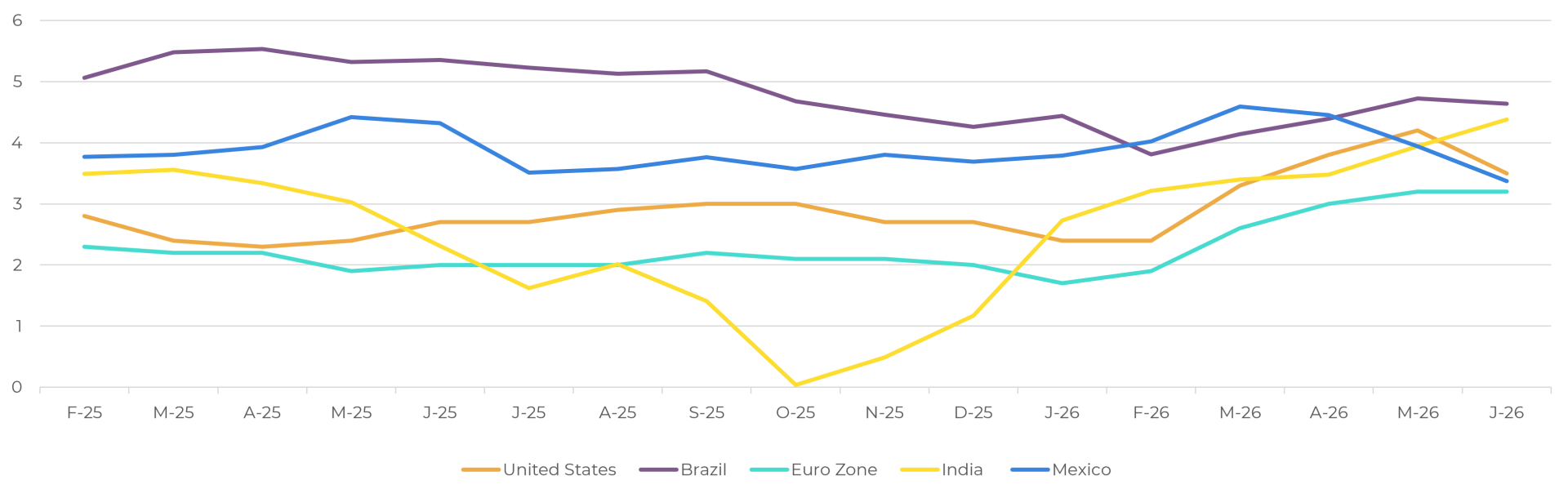
Key Countries CPI (% Y/Y)
Source: LSEG
Prices are likely to continue to be volatile
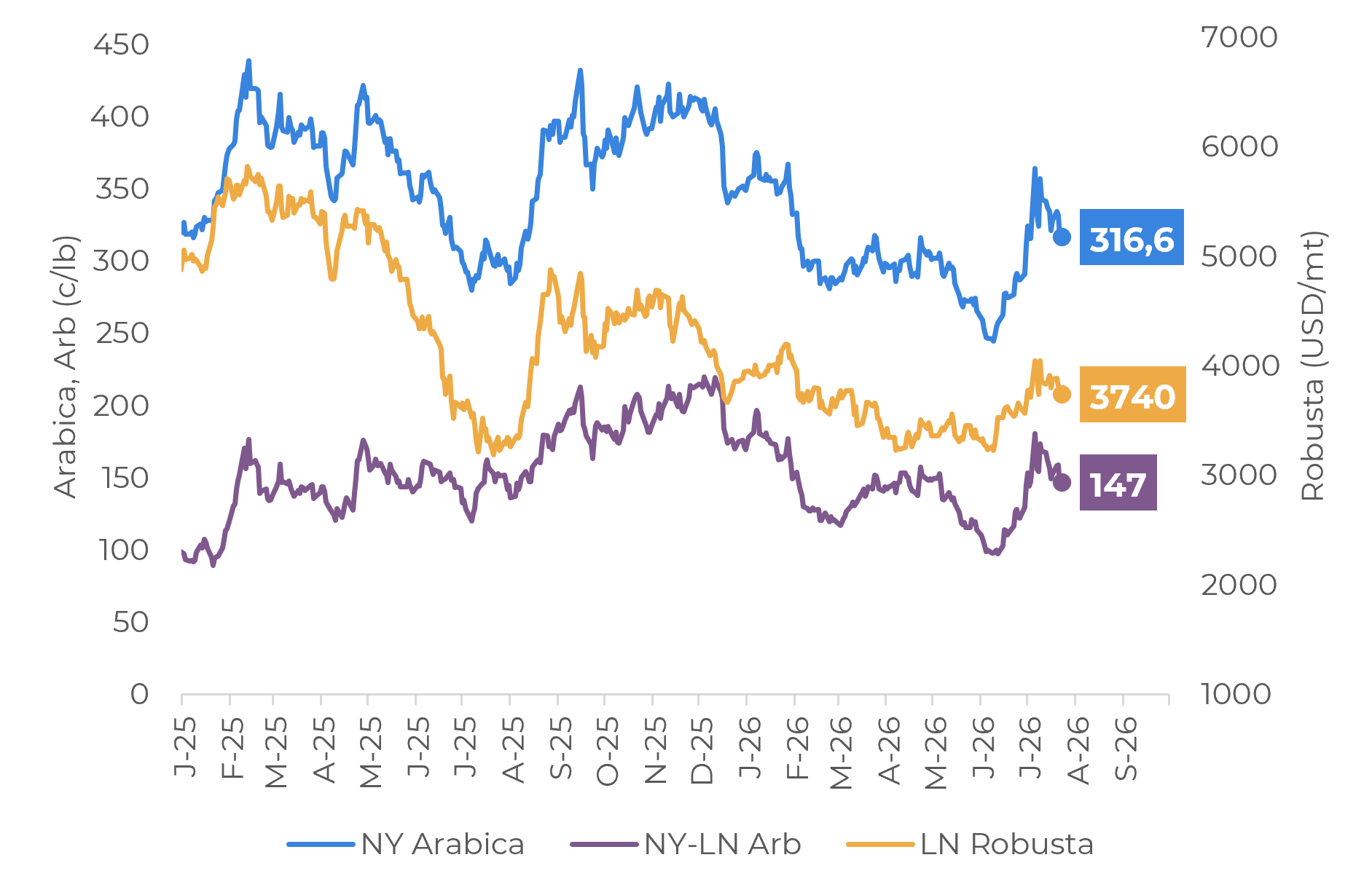
Coffee prices, particularly Arabica, have shown significant volatility in July. While fundamentals have also played a role, macroeconomic factors, technical indicators, and fund positioning were the main drivers, as Arabica futures broke key resistance levels and long-term moving averages. The Arabica-Robusta arbitrage also widened.
At the same time, higher initial margins reduced market liquidity and forced many funds to adjust or close positions, amplifying price movements. Margin calls increased and triggered additional short-covering activity.
Although the market has corrected from recent highs, this does not rule out another period of volatility, especially given the risks associated with El Niño.
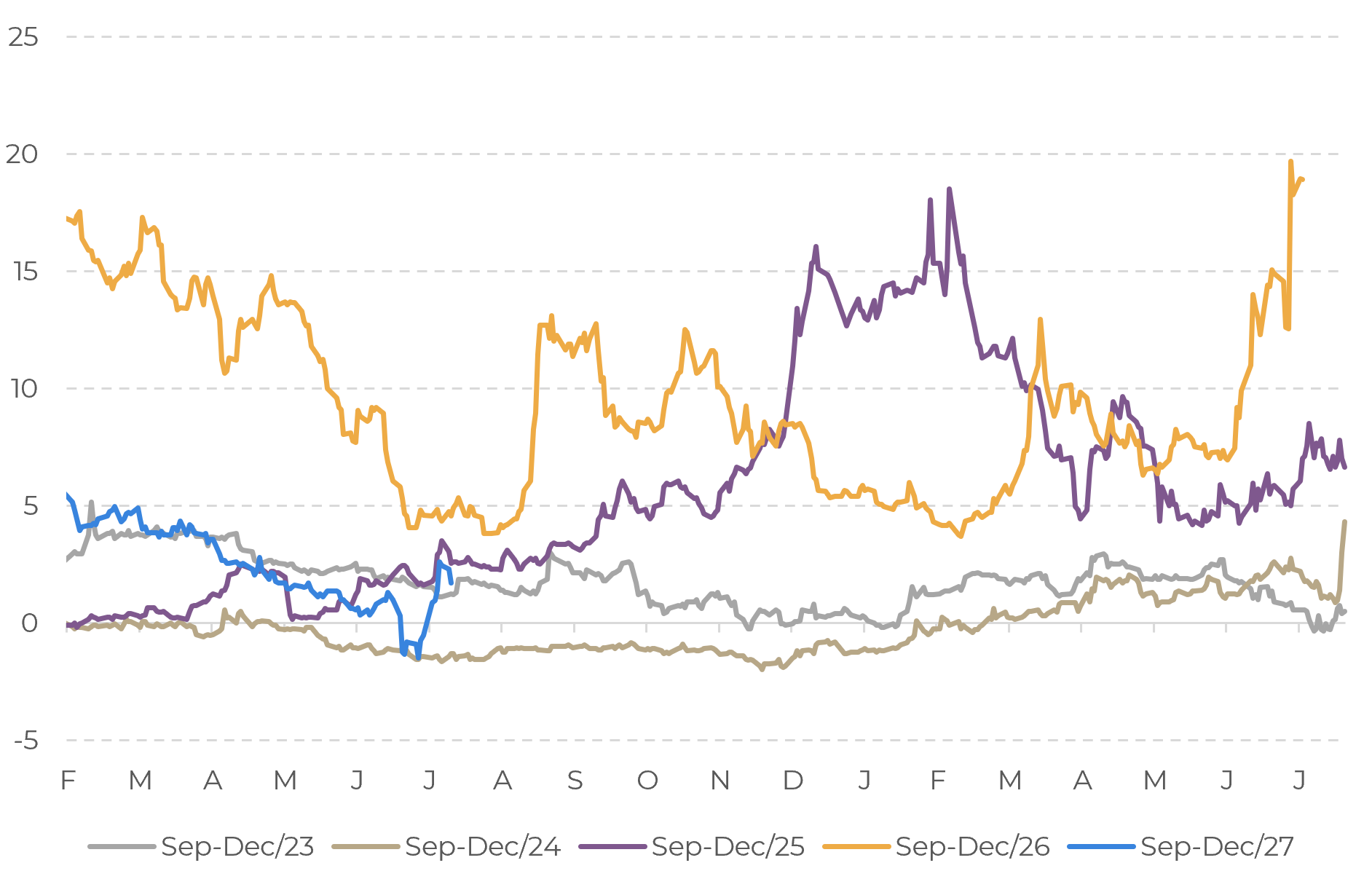
Spreads continue to signal short- and medium-term supply concerns, with the September-December Arabica spread widening significantly during the month. Despite technical influences, underlying fundamentals remain supportive. Delays in the Brazilian harvest, tighter supplies from other origins, the impact of a strong El Niño, and declining ICE-certified stocks are expected to keep nearby spreads elevated.
LN-Robusta (USD/mt), NY-Arabica and arbitrage (c/lb)
Source: LSEG
Arabica: September-December Spread(c/lb)
Source: LSEG
Brazil’s 26/27 harvest was delayed
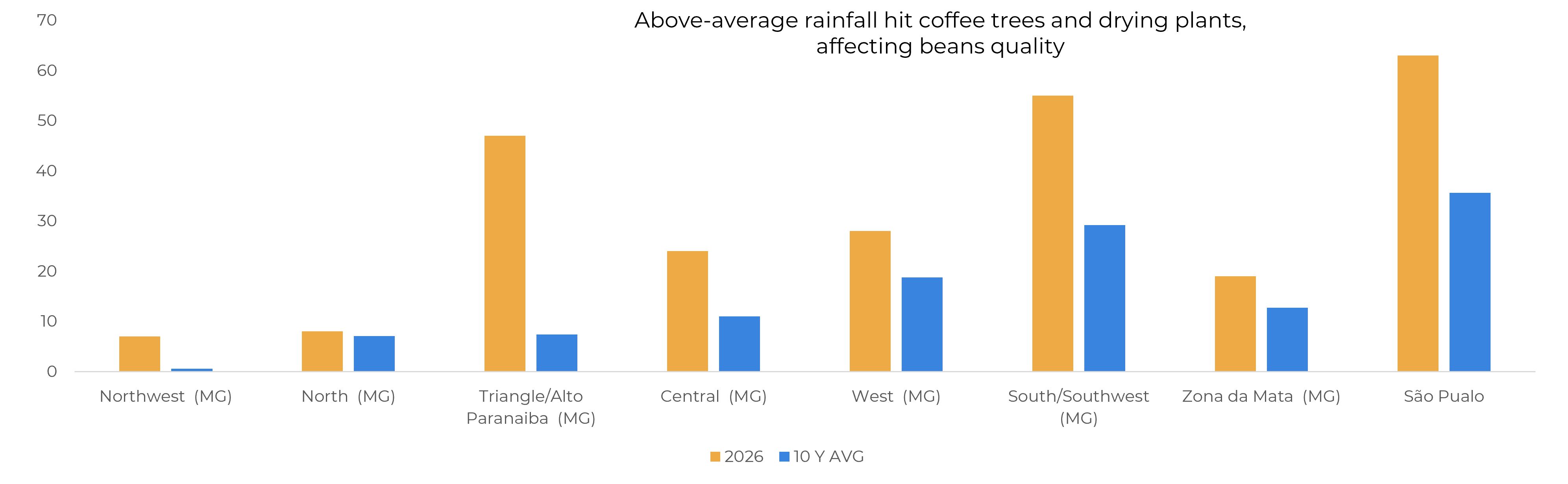
The constant rainfall in June prevented workers from entering the coffee fields, delaying the harvest by many days and also affecting the quality of the beans that had been harvested and were drying during that period. Even after picking up pace in July, the harvest remains below previous years’ levels.
On the other hand, despite the delay in harvesting, the rain did not impact total production, and an exceptional harvest is expected in the country. Other market entities also highlight Brazil’s higher 26/27 crop and how it will lead to a global coffee surplus.
As for the market, while trade was recorded as the harvest progressed and prices rose after the 10th, the pace of sales was slower than in the previous season. This has also been reflected in the country’s coffee exports, with Arabica exports remaining below the average of recent years. Robusta exports, on the other hand, have shown some improvement in recent months, especially due to the more advanced harvest.
In this context, it is also important to note that in mid-July, Brazilian instant coffee was added to the list of exemptions from the new 25% tariff imposed by the U.S. Given that the country is one of Brazil’s largest importers, the measure could boost exports.
Cumulative Precipitation in Brazil Coffee Regions: June (mm)
Source: Somar, Bloomberg.
El Niño poses a risk to other origins
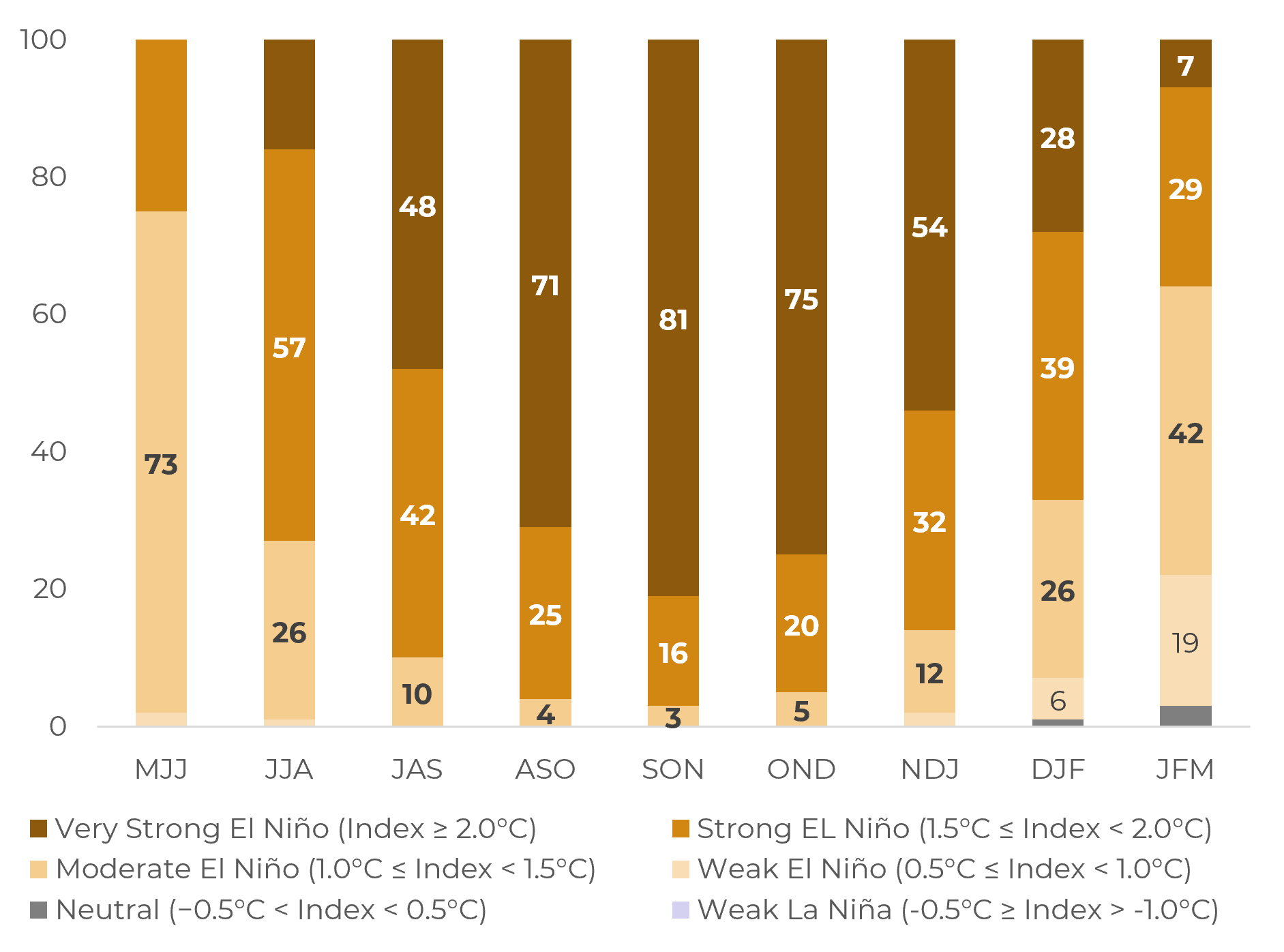
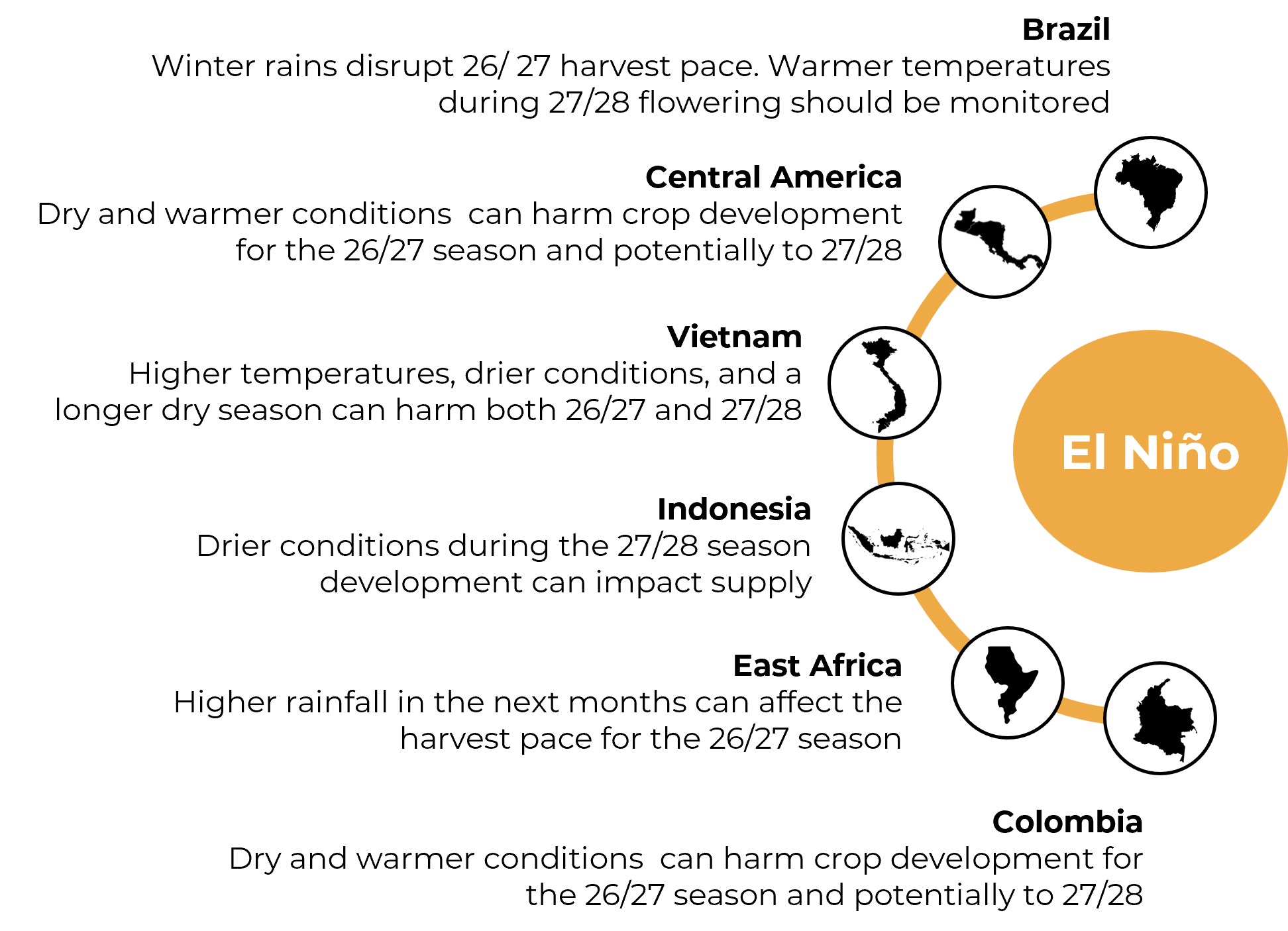
Among the biggest risks for the 26/27 season, the increasing intensity of El Niño could impact the largest coffee producers. There is now a more than 70% probability that the phenomenon will become very strong between August and November 2026. In some producing regions, in fact, weather conditions have already raised concerns about this year’s production.
ENSO Strength Probabilities (%) - Jule 2026
Source: NOAA, Hedgepoint
Possible Impacts of El Niño
Source: Hedgepoint
Global Supply
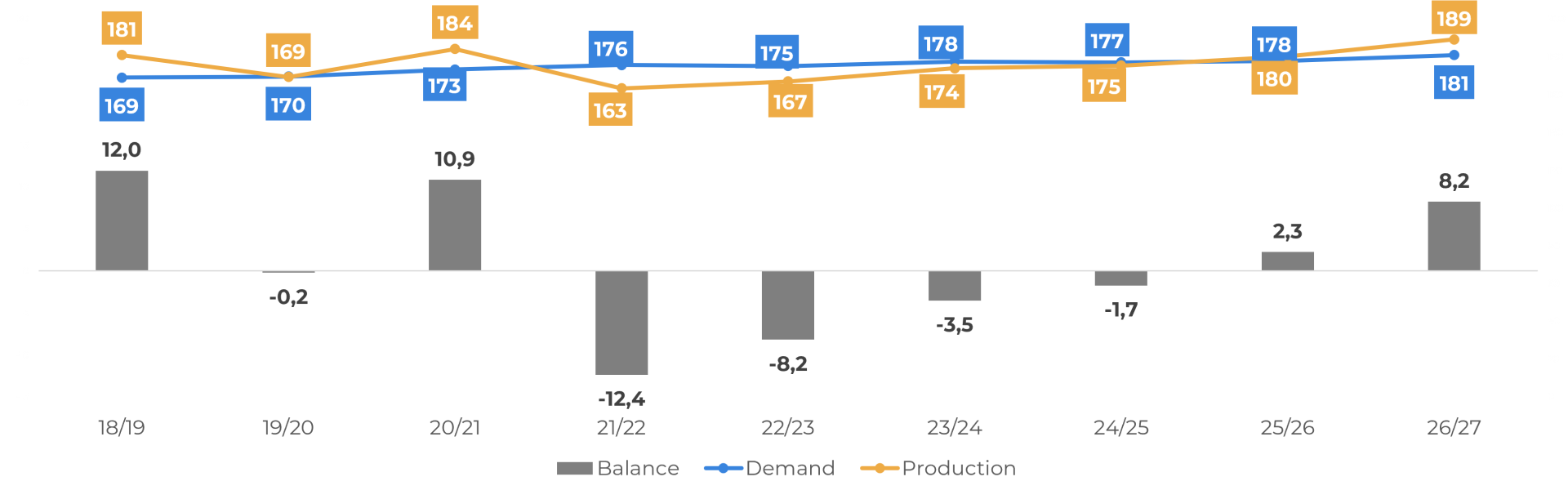
Although Brazil’s record harvest guarantees a surplus this season, an extremely strong El Niño could affect production in other producing regions (currently in the development phase). We have already revised downward our production estimates for some countries based on irregular rainfall patterns. As a result, we have reduced our surplus estimate for 26/27 from 9.9 M scs to 8.2 M scs.
Despite the reduction, the surplus may still allow for a recovery in stocks, although the current market structure, costs, and import trends in destination countries may suggest that producing countries will retain part of their production.
Global Coffee Supply and Demand (M bags)
Source: Hedgepoint
In Summary
Weekly Report — Coffee
laleska.moda@hedgepointglobal.com
luiz.silverio@hedgepointglobal.com
Disclaimer
This document has been prepared by Hedgepoint Schweiz AG and its affiliates (“Hedgepoint”) solely for informational and instructional purposes, without intending to create obligations or commitments to third parties. It is not intended to promote or solicit an offer for the sale or purchase of any securities, commodities interests, or investment products. Hedgepoint and its associates expressly disclaim any liability for the use of the information contained herein that directly or indirectly results in any kind of damages. Information is obtained from sources which we believe to be reliable, but we do not warrant or guarantee the timeliness or accuracy of this information. The trading of commodities interests, such as futures, options, and swaps, involves substantial risk of loss and may not be suitable for all investors. You should carefully consider wither such trading is suitable for you in light of your financial condition. Past performance is not necessarily indicative of future results. Customers should rely on their own independent judgment and/or consult advisors before entering into any transactions. Hedgepoint does not provide legal, tax or accounting advice and you are responsible for seeking any such advice separately. Hedgepoint Schweiz AG is organized, incorporated, and existing under the laws of Switzerland, is filiated to ARIF, the Association Romande des Intermédiaires Financiers, which is a FINMA-authorized Self-Regulatory Organization. Hedgepoint Commodities LLC is organized, incorporated, and existing under the laws of the USA, and is authorized and regulated by the Commodity Futures Trading Commission (CFTC) and a member of the National Futures Association (NFA) to act as an Introducing Broker and Commodity Trading Advisor. HedgePoint Global Markets Limited is Regulated by the Dubai Financial Services Authority. The content is directed at Professional Clients and not Retail Clients. Hedgepoint Global Markets PTE. Ltd is organized, incorporated, and existing under the laws of Singapore, exempted from obtaining a financial services license as per the Second Schedule of the Securities and Futures (Licensing and Conduct of Business) Act, by the Monetary Authority of Singapore (MAS). Hedgepoint Global Markets DTVM Ltda. is authorized and regulated in Brazil by the Central Bank of Brazil (BCB) and the Brazilian Securities Commission (CVM). Hedgepoint Serviços Ltda. is organized, incorporated, and existing under the laws of Brazil. Hedgepoint Global Markets S.A. is organized, incorporated, and existing under the laws of Uruguay. In case of questions not resolved by the first instance of customer contact (client.services@Hedgepointglobal.com), please contact internal ombudsman channel (ombudsman@hedgepointglobal.com – global or ouvidoria@hedgepointglobal.com – Brazil only) or call 0800-8788408 (Brazil only). Integrity, ethics, and transparency are values that guide our culture. To further strengthen our practices, Hedgepoint has a whistleblower channel for employees and third-parties by e-mail ethicline@hedgepointglobal.com or forms Ethic Line – Hedgepoint Global Markets. “HedgePoint” and the “HedgePoint” logo are marks for the exclusive use of HedgePoint and/or its affiliates. Use or reproduction is prohibited, unless expressly authorized by HedgePoint. Furthermore, the use of any other marks in this document has been authorized for identification purposes only. It does not, therefore, imply any rights of HedgePoint in these marks or imply endorsement, association or seal by the owners of these marks with HedgePoint or its affiliates.