
Crop Forecast: Soybean Brazil - Crop 2025/26
Hedgepoint raises Brazilian soybean crop forecast to 179.5 million tons in 2025/26
With positive weather and expansion of area, Brazilian crop is projected at 179.5 million tons
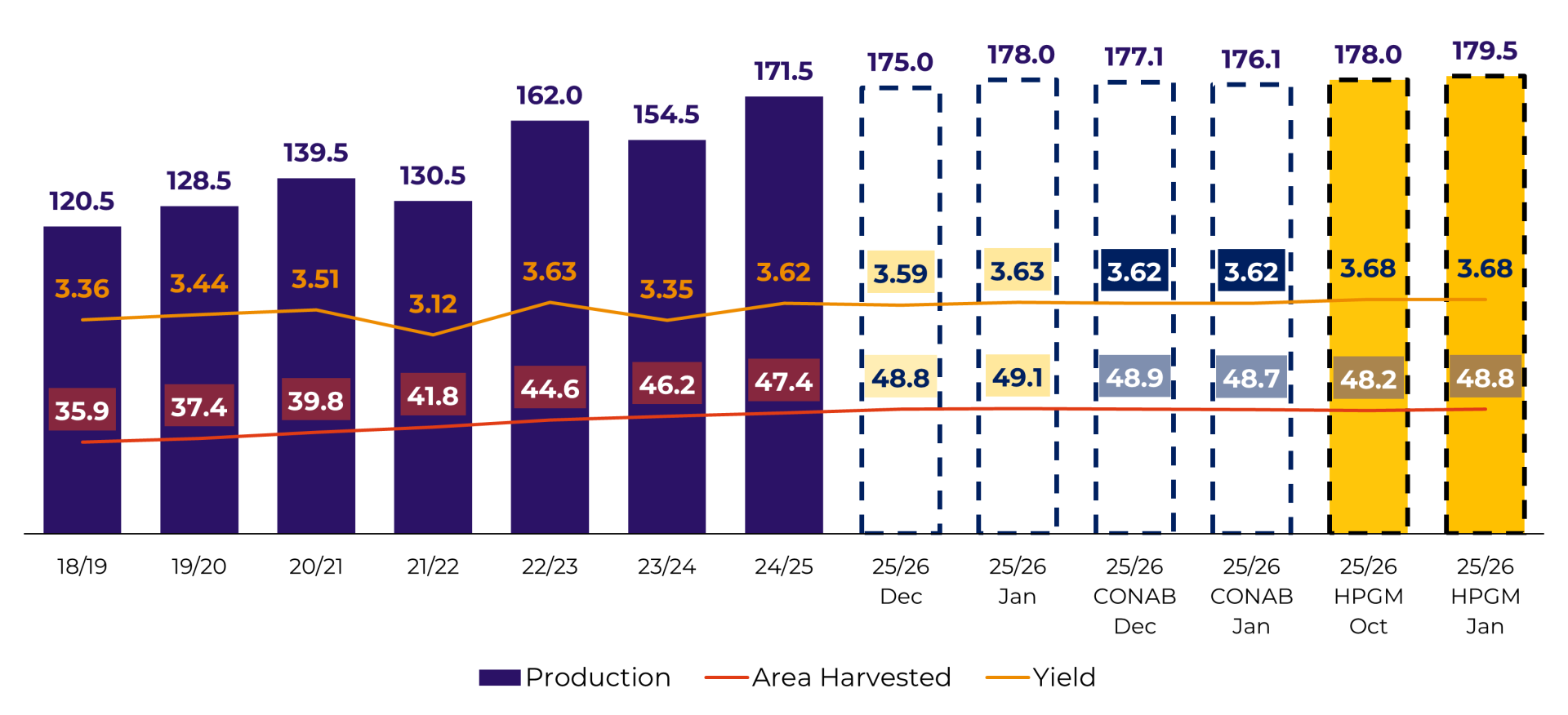
Hedgepoint's new estimate points to Brazilian soybean production of 179.5 million tons in the 2025/26 season, indicating an increase over the previous estimate (178.0 million tons).
The increase in production potential stems from positive adjustments in the areas and average yields expected for some of the country's main producing states. The positive weather, recorded especially throughout December 2025 in most of the main states, created a favorable environment for crop development, supporting the feeling of a crop without significant problems and with great production potential.
Brazil Soybean | Area, Yield and Production (M ha, ton/ha, M ton) | USDA vs. CONAB vs. HPGM
Source: Hedgepoint, USDA, CONAB
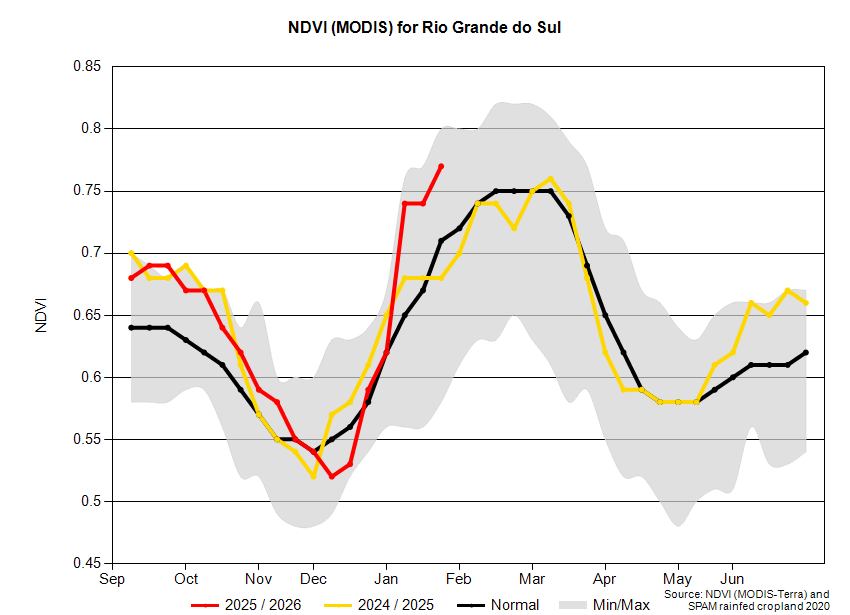
Regarding this, we highlight that current state yield projections take into account, among other factors, the latest USDA data related to the Normalized Difference Vegetation Index (NDVI), which indicates excellent crop development in the country's main producing states so far.
In this sense, the main highlight comes from the state of Rio Grande do Sul, which usually ranks third among the largest soybean producing states in Brazil. After the state experienced weather problems that impacted and reduced its production in the last three seasons, the 2025/26 season has been quite favorable in terms of weather, which should lead to a strong recovery in average yield and state production. Thus, the higher production expected for the state of Rio Grande do Sul is fundamental to the expectation of a new record crop in Brazil.
NDVI | Rio Grande do Sul
Source: USDA
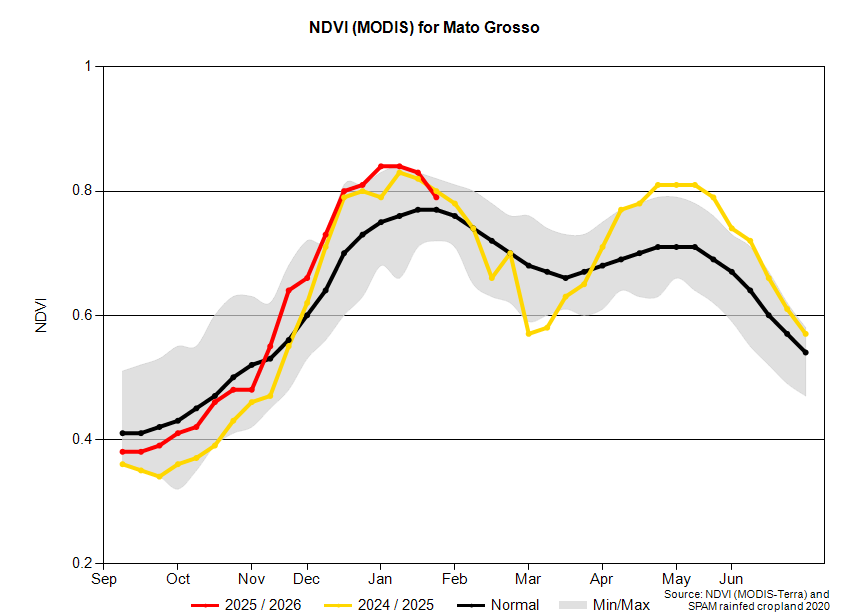
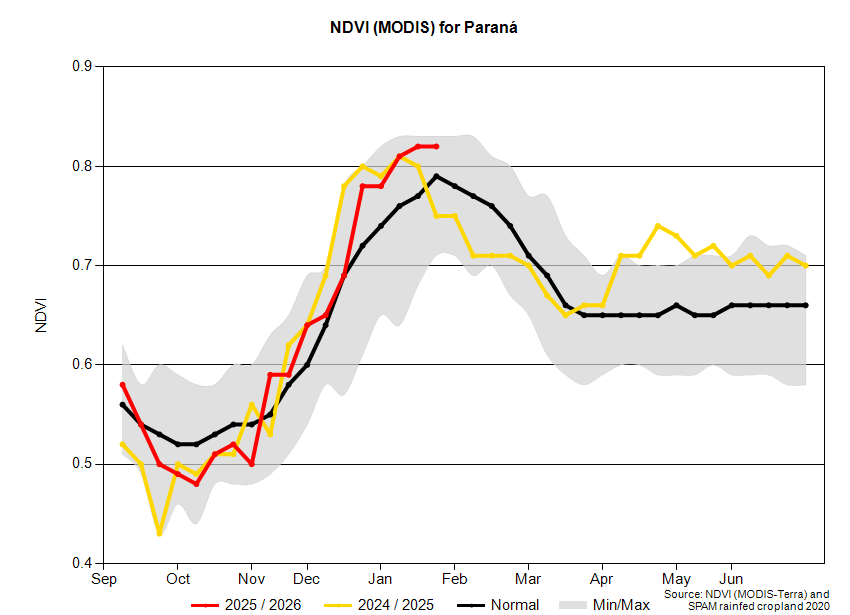
In addition, the two largest soybean producing states in the country, Mato Grosso and Paraná, have also experienced favorable weather and good crop development over the past few months, resulting in high vegetation indexes.
NDVI | Mato Grosso
Source: USDA
NDVI | Paraná
Source: USDA
Other important producing states, such as Goiás, Mato Grosso do Sul, Minas Gerais, and Bahia, also recorded high levels in their vegetation indexes, indicating excellent development and great productive potential in their crops.
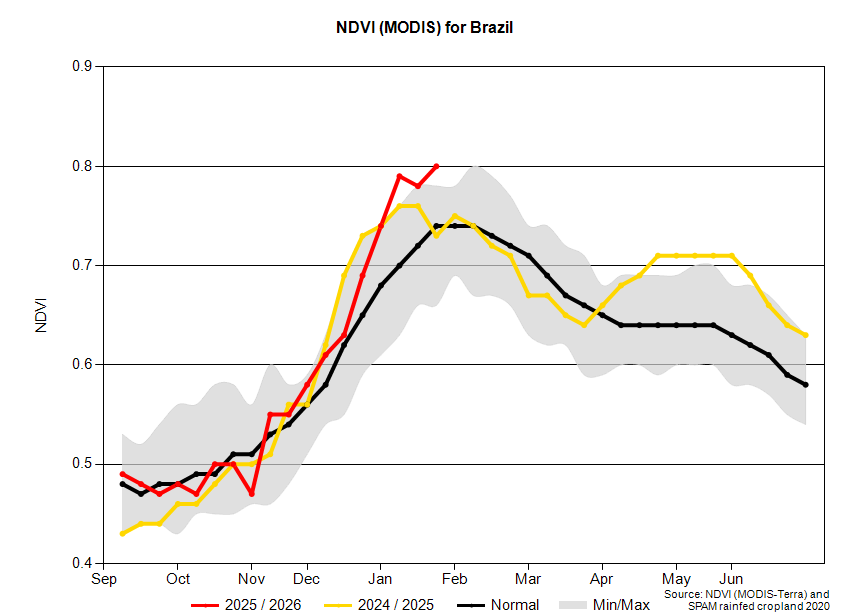
The sum of these positive developments in the country's main producing states results in excellent NDVI levels for Brazil at this time, supporting our feeling of a full crop.
NDVI | Brazil
Source: USDA
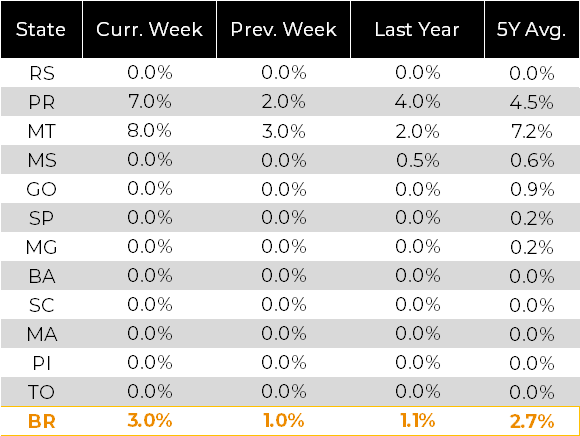
Harvesting of this bumper crop has already begun, with machines advancing in the states of Mato Grosso and Paraná, the first to begin sowing in September 2025.
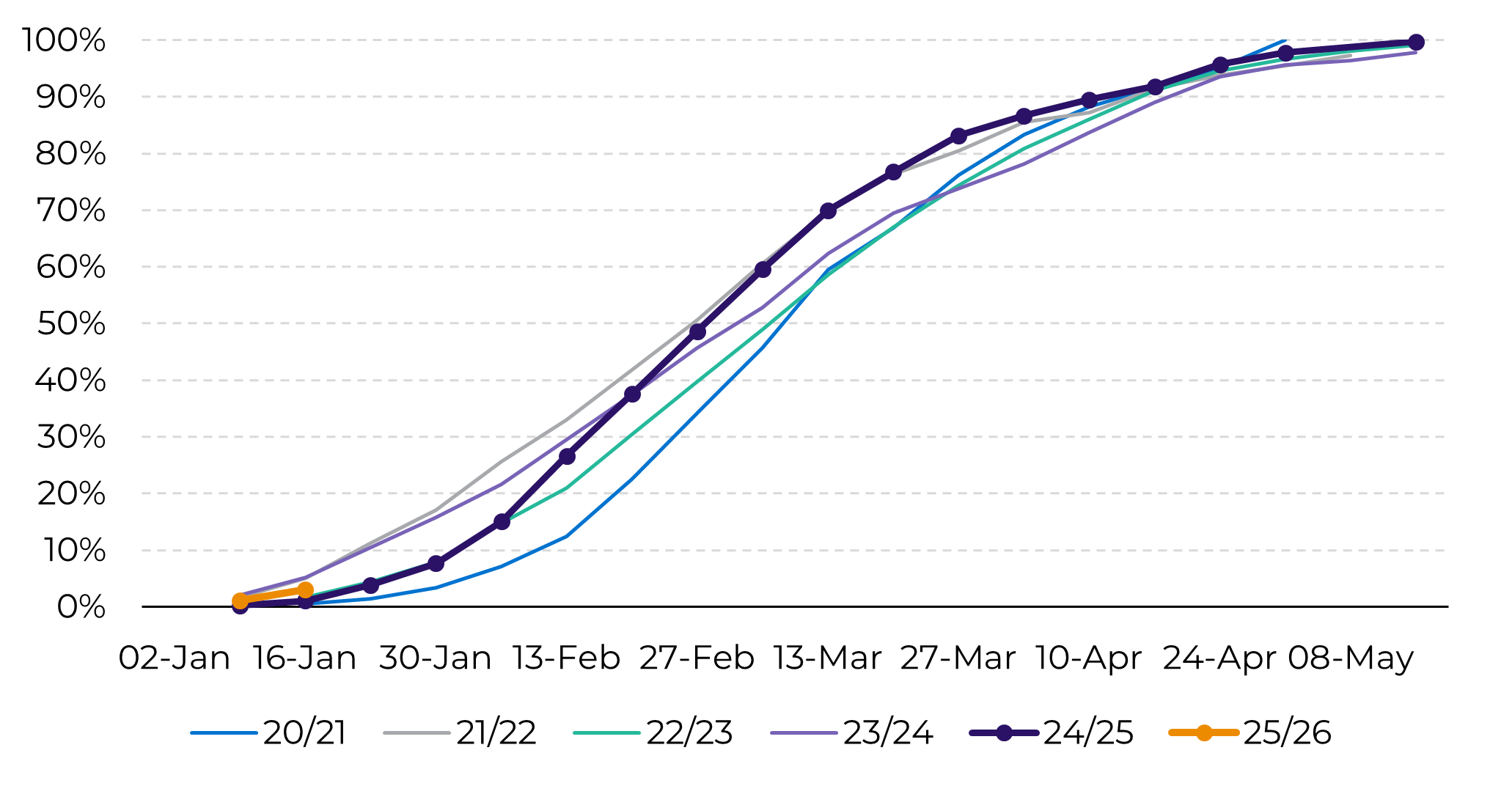
As of January 16, approximately 3% of Brazil's soybean area had been harvested. In the same period last year, the percentage was 1.1%, while the average for the last five crops is 2.7% for the period.
The harvest started at a good pace, but we note that during planting there were delays in work during part of September and October, which may result in a slower pace of harvesting throughout February and/or March. In any case, weather permitting, we believe that possible delays will be isolated factors and will not have a major impact on final yields.
Soybeans | Brazil | Harvest Progress (through January 16)
Source: Safras, Hedgepoint
Soybeans | Brazil | Harvest Progress (through January 16)
Source: Safras, Hedgepoint
The weather will continue to be an important factor in the coming weeks, both for determining state production and for the progress of harvesting. In this regard, we highlight that regular rainfall is still needed in the state of Rio Grande do Sul and in the states of the Northeast and North regions, given that planting is usually later in these areas. On the other hand, drier weather is welcome in the central part of the country, especially during February and March, since most crops will already be ready for harvest and heavy rains can hinder the progress of machinery, also compromising grain quality.
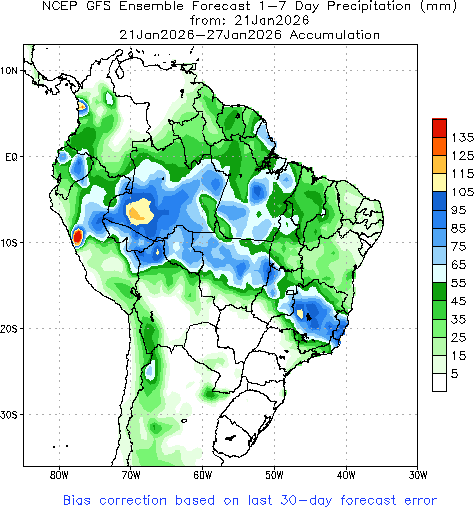
Considering the forecasts for the next two weeks, weather maps point to heavy rainfall over the north-central states of the country between January 20 and 26, which may hinder the progress of machinery in Mato Grosso and the possible start of work in the states of Goiás and Minas Gerais. In the other states of the Midwest and Southeast regions, as well as the South Region, little or no moisture is expected during this period, which should accelerate the progress of work in the state of Paraná.
Brazil | Accumulated Precipitation Forecast | 1 to 7 days (mm)
Source: NOAA
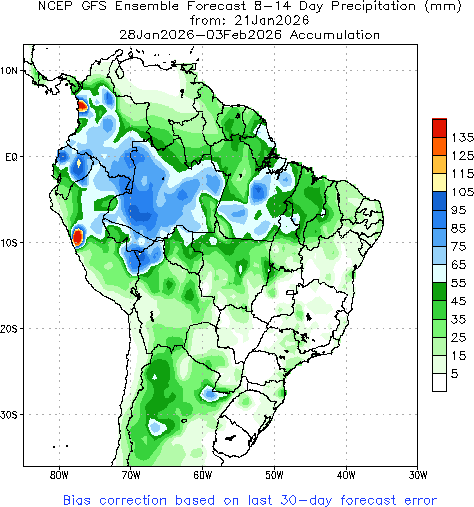
For the period between January 27 and February 2, humidity is expected to be lower in the country's main producing states, which should be favorable for the progress of harvesting work in the central states.
Brazil | Accumulated Precipitation Forecast | 8 to 14 days (mm)
Source: NOAA
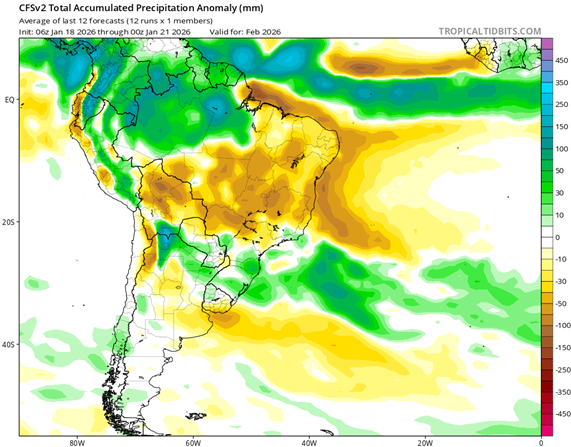
Looking further ahead, forecasts for February point to below-average rainfall in the Southeast, Midwest, and Northeast regions, while the South region is expected to receive above-average rainfall during the period.
For the central states, lower humidity should favor the progress of harvesting, although it may cause some stress for the completion of the development of crops sown later. This possibility deserves attention.
At the same time, the low humidity expected for the Northeast region may cause some concern regarding crop development, as there are still plants in intermediate stages of development due to later planting.
In the South, higher humidity tends to favor crop development in the state of Rio Grande do Sul, consolidating an important recovery regarding the losses recorded in recent crops. This fact deserves to be highlighted, as the recovery of production in Rio Grande do Sul is a fundamental factor for the consolidation of a new record crop at the national level.
Brazil | Forecast of Accumulated Precipitation Anomaly | February (mm)
Source: Tropicaltidbits
In Summary
The new Brazilian soybean crop has the potential to reach a new record crop in the 2025/26 season. Despite delays during planting (still in 2025), the weather has been very favorable for crop development over the last few months, resulting in great production potential in the main producing states. Although average yields in states in the central part of the country may fall slightly short of those recorded in the previous season (which were surprisingly positive), the recovery in production in the state of Rio Grande do Sul should add a significant and fundamental volume to national production this season, boosting production to levels close to 180 million tons.
However, we emphasize that the weather is still an important factor in the coming weeks, not only for the definition of the Rio Grande do Sul crop, but also for the progress of harvesting work throughout Brazil. If current forecasts are confirmed, we do not see major risks in the main producing states, which should guarantee a new record crop in the country.
Market Intelligence - Grains & Oilseeds
Luiz.Roque@hedgepointglobal.com
Revised by Thaís Italiani
Thais.Italiani@hedgepointglobal.com