
Apr 13 / Lívea Coda

Sugar | Crop Update: Brazilian Center-South - 2026 04 10

  Back to main blog page
"Brazil is set for another year of abundant sugarcane supply in the Center-South in 2026/27, reinforcing a structurally surplus amid strong 2025/26 output and partial recovery in Northern Hemisphere producers. While macro and geopolitical factors have driven short-term volatility, fundamentals remain bearish, with ethanol regaining competitiveness as the primary adjustment mechanism through mix reductions and demand stimulation."

More cane ahead, but El Niño still gives the bulls some hope  

  • Brazilian Center-South supply remains strong, with 2025/26 sugar production expected above 40 Mt and 2026/27 cane projected near 635 Mt under normal weather conditions.
  • Global trade flows are oversupplied due to Brazil’s high output and recoveries in India, Thailand, and Mexico, keeping sugar prices structurally bearish.
  • Recent price strength to ~16.1 c/lb faded as geopolitical risk premium eased and the energy complex retreated, underscoring limited macro support.
  • Ethanol has regained parity versus sugar during 2025 last three months, encouraging mix reductions; market equilibrium would require a sugar mix near 44.5%, though physical constraints cap adjustments and maintain it closer to 48%.
  • The effective sugar price floor is estimated around 13.5 c/lb (BRL 2.2/liter ex-mill hydrous), with the strongest upside risks concentrated in 2027 via the possible El Niño–related weather impacts in the Northern Hemisphere 2026/27 crop developments.

Brazil is set to enter another year of abundant sugarcane supply in the Center-South region, supported by favorable weather conditions and positive crop development indicators. When combined with the strong outcome of the 2025/26 season, in which sugar production should exceed 40 million tons, and a partial recovery in Northern Hemisphere producers – particularly India, Thailand, and Mexico – the global sugar market is set for a surplus. As a result, sugar prices remain structurally bearish, with limited upside potential despite occasional support from macroeconomic factors or energy-related volatility. In this report, we aim to discuss our revision to Center-South production estimates and its impacts on the sugar market.

Although raw sugar prices recently reached a five-month high of 16.1 cents per pound, they have since lost momentum as the geopolitical risk premium eased following a temporary ceasefire between the United States and Iran. The energy complex has retreated significantly, declining by more than 15% across its key commodities, which has reduced spillover support to other markets and tempered expectations of a potential cost pass-through from Petrobras, further contributing to the softening sugar prices. It becomes evident that, although relevant, the geopolitical shocks did not affect the sweetener’s fundamentals.

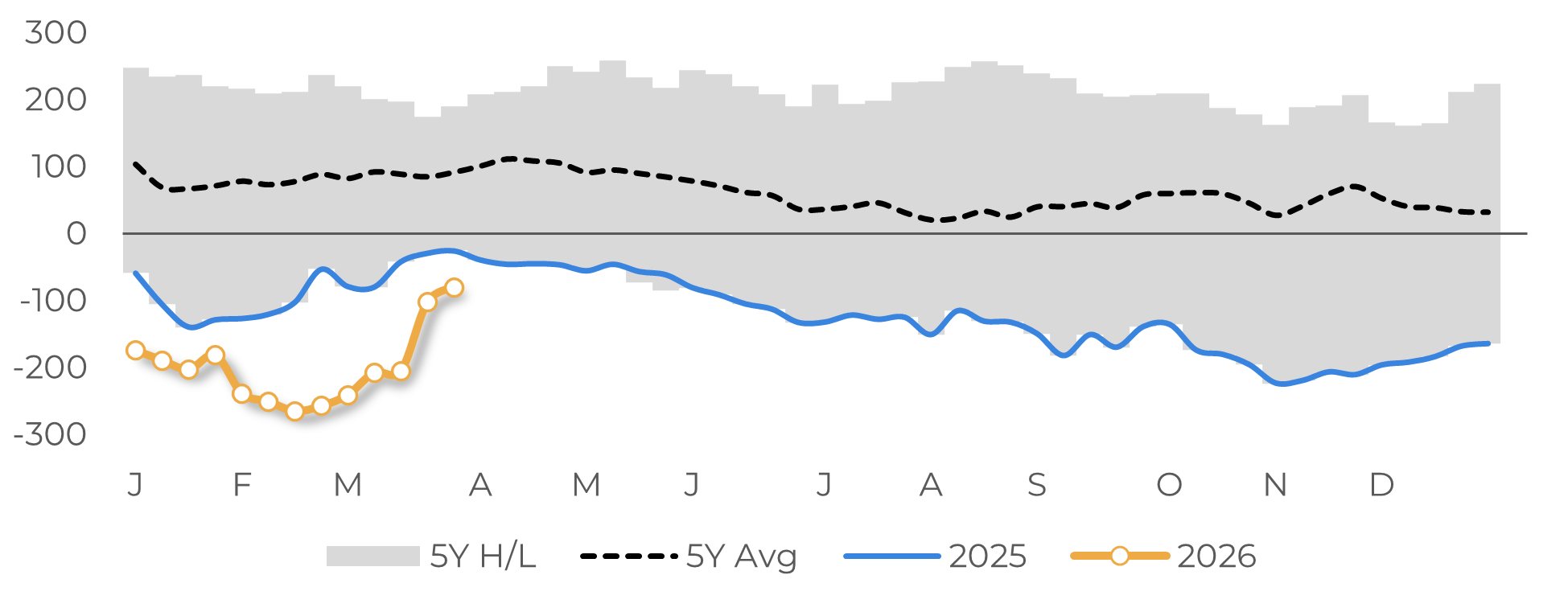
Technical factors played a significant role in the recent price rise, as speculators reduced their short positions, pushing them closer to minimum levels observed in the recent past. However, they have no reason to, in the short term, keep up the buying momentum as market fundamentals remain strictly bearish. Nonetheless, some degree of volatility may still emerge from specs should tensions between the United States and Iran re-escalate.

Figure 1 – Speculative Net Positioning (‘000 lots)
Source: CFTC, Hedgepoint

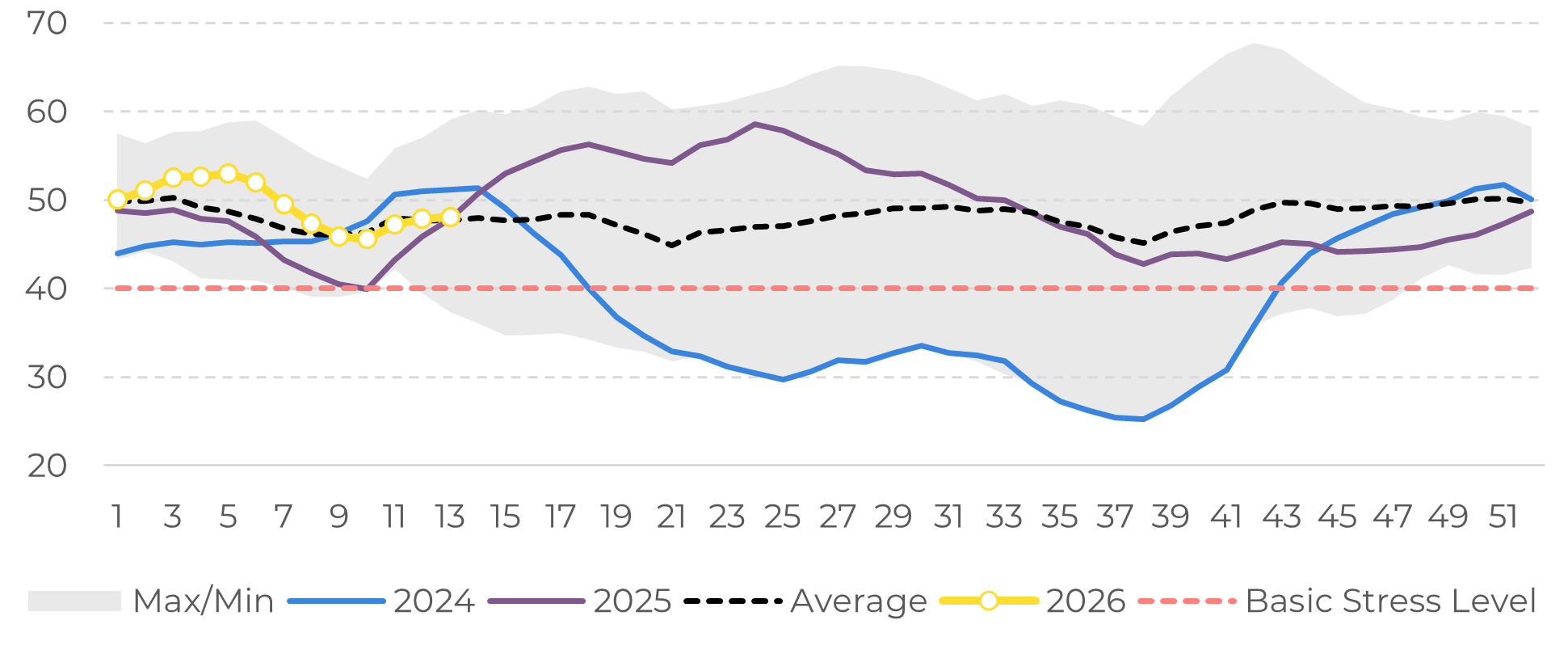
Despite some recovery in Northern Hemisphere production, Brazil - particularly the Center-South region - remains the primary driver of the bearish trend in the sugar market. The 2025/26 season is set to deliver another robust result, with sugarcane crushing exceeding 600 million tons and sugar production surpassing 40 million tons in Center-South, supported by a high sugar mix. Exports may, therefore, exceed 31 million tons, reinforcing Brazil’s role in global supply. Looking ahead to 2026/27, weather conditions have improved, with favorable rainfall recorded between October 2025 and February 2026. These conditions have resulted in a stronger Vegetation Health Index (VHI), which remains close to or above historical averages, allowing for the expectation of a solid yield performance, currently estimated at 78.5 t/ha. As a result, assuming normal weather patterns persist, sugarcane production in the Center-South is projected to reach approximately 635 million tons in the 2026/27 season. Sugar mix remains the hot topic, though. 

Figure 2 – Weekly Vegetation Health Index – Center-South
Source: NOAA

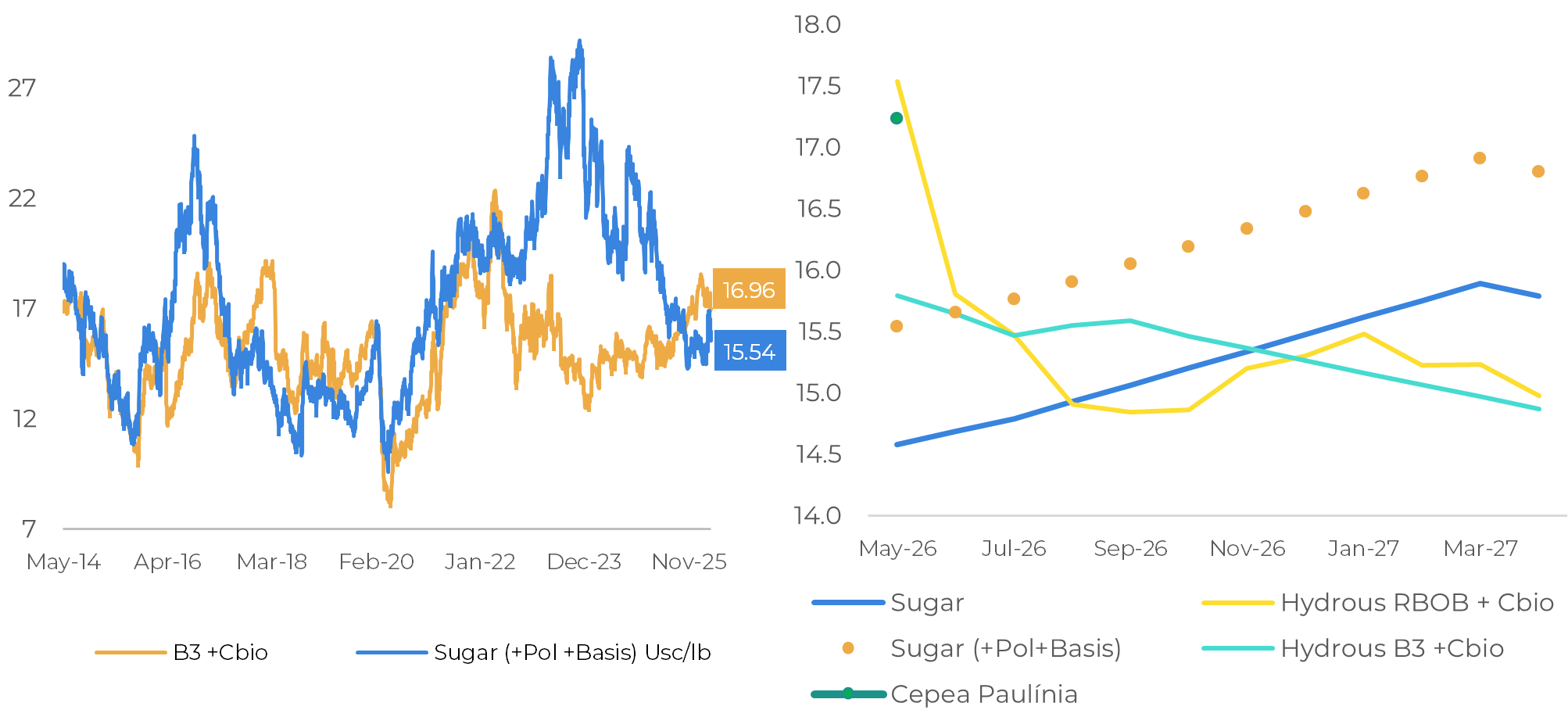
Ethanol has regained competitiveness relative to sugar since the end of 2025 pushed mostly by pressured stocks. This improved parity allows mills to reassess production strategies and reduce sugar output in favor of ethanol in search of better marginal returns. Forward-looking parity analyses suggest that, particularly when CBios are incorporated, hydrous ethanol prices converge toward or even surpass sugar parity over the coming months. This reinforces ethanol as a key adjustment mechanism to help mitigate sugar oversupply, especially if sugar prices remain under pressure.

Figure 4 – Historical sugar and ethanol parity (left) and current future parity (right) 
Source: Bloomberg, Hedgepoint


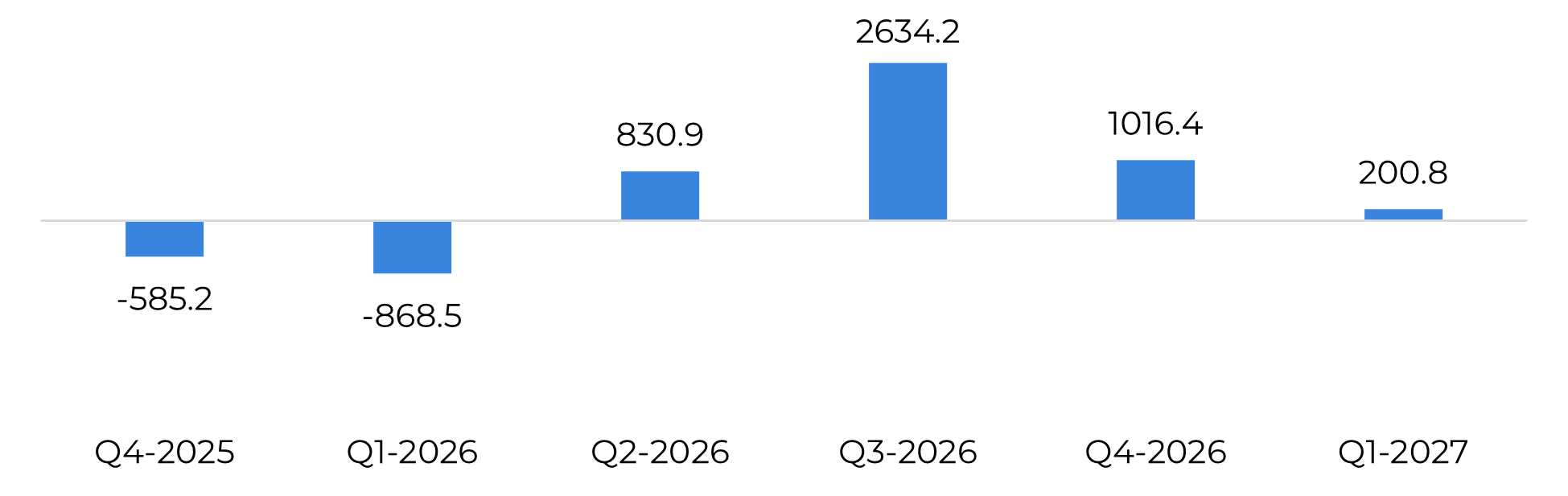
Reducing the sugar mix therefore emerges as the principal lever for market rebalancing. Currently, we estimate that the sugar market is oversupplied by at least 3.2Mt and should remain so as mix adjustments can be capped by physical constraints. This surplus already considers moving from an above 50% sugar mix to 48%. But, as an exercise, what would be the mix that solves the sweeteners supply/demand equation?

As discussed in previous reports, stimulating hydrous ethanol demand remains the most cost effective solution to addressing the excess supply in the sugar market, with prices being the key triggering mechanism. At present, hydrous ethanol offers higher returns than sugar and should therefore be prioritized by mills. As ethanol output increases, most of it should be consumed within the Brazilian domestic market, where hydrous competes directly with gasoline C for consumer demand. Given the relative stability in gasoline prices – reflecting the absence of the former import parity pricing mechanism and Petrobras’s tendency to absorb much of the volatility in international gasoline prices – rising ethanol stocks tend to exert downward pressure on hydrous prices. As prices adjust, hydrous becomes increasingly attractive at the pump.

Over time, this price correction allows hydrous ethanol to gain competitiveness beyond producing states, gradually stimulating demand in other regions before parity with sugar is eventually restored. The sugar mix level that would guarantee an equilibrium in supply and demand would be 44.5%. Based on current estimates, for hydrous ethanol to become sufficiently competitive at the pump outside São Paulo, ex mill prices net of taxes would need to fall to around BRL 2.2 per liter, equivalent to approximately 13.5 cents per pound. This level can therefore be interpreted as an effective price floor for sugar throughout the season.

However, as prices seek the floor, it is important to note that there are physical constraints:

  • Previously sold or contracted sugar volumes should prevent a complete shift of the mix toward ethanol, as many mills are resistant to repositioning themselves.
  • Changes in fuel demand and adjustment mechanism are not immediate and may also limit the decline in the mix.

    Therefore, we remain conservative with a 48% sugar mix for 2026/27, guaranteeing a 40.5 Mt sugar production and another robust contribution to the trade flows – also pushing prices towards the estimated floor. 

Figure 5 – Total sugar trade flows (‘000t tq) – 48% sugar mix generates a 3.2+ surplus
Source: Greenpool, Hedgepoint


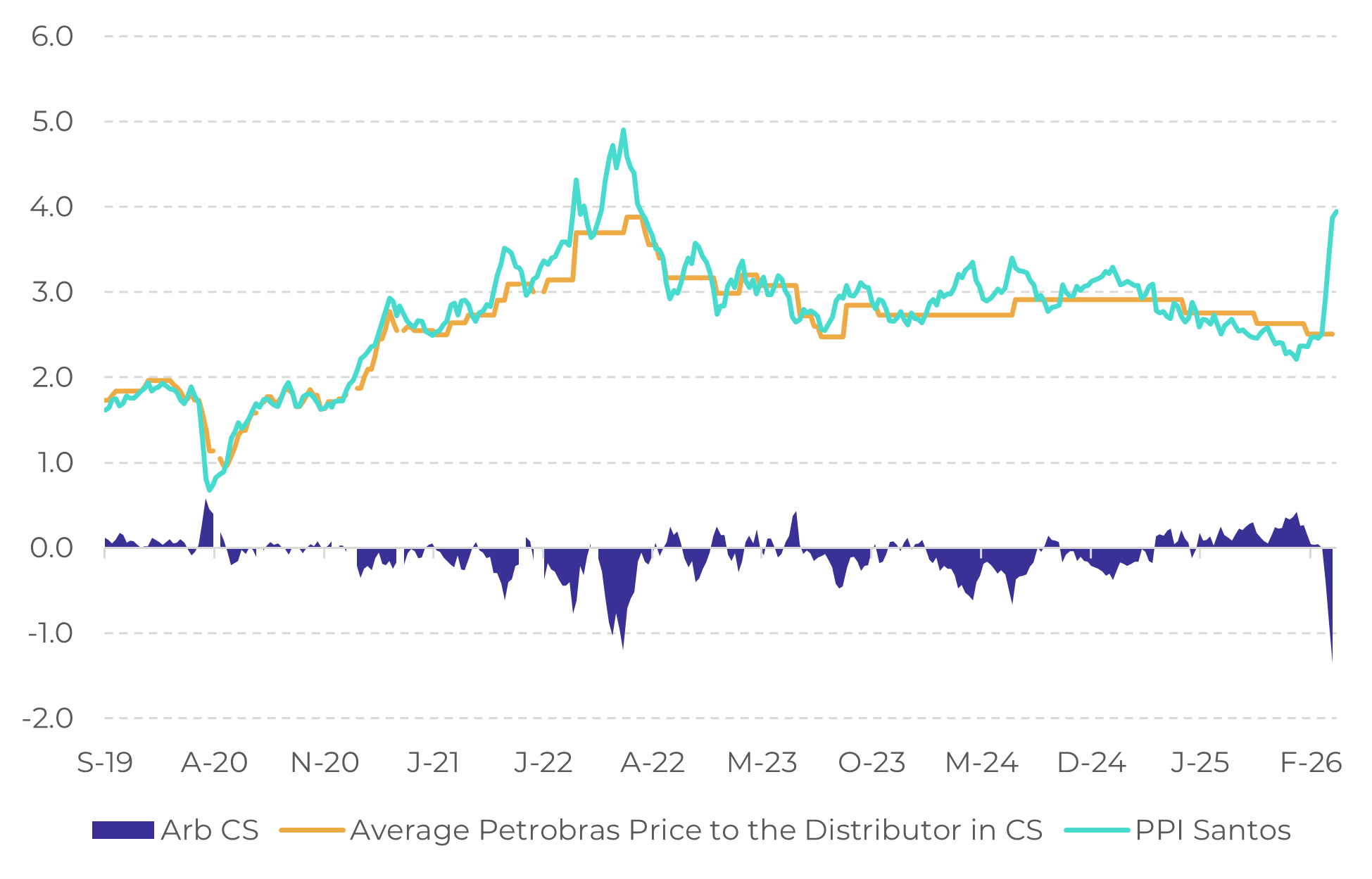
Image 6: Petrobras' average import arbitrage in the Central-South region (BRL/liter)
Source: ANP, Bloomberg, Hedgepoint


For bullish participants, there are some upside risks worth monitoring, although the most relevant one is set to affect the 2027 contracts more. The first, although less likely, involves a renewed escalation of tensions between the United States and Iran that could lead to a pass-through of higher gasoline import costs by Petrobras. Given that Brazil is currently in an election year, we believe to be unlikely that the government would allow a meaningful increase in domestic fuel prices. Should this occur, however, a full pass through of the estimated gasoline import arbitrage of around BRL 1.7 per liter would imply a shift in the estimated price floor from approximately 13.5 cents per pound to around 16.7 cents per pound, a level very close to current hydrous parity based on CEPEA prices. Even so, this scenario would not alter market fundamentals and remains highly dependent on political decisions rather than structural supply-demand dynamics.


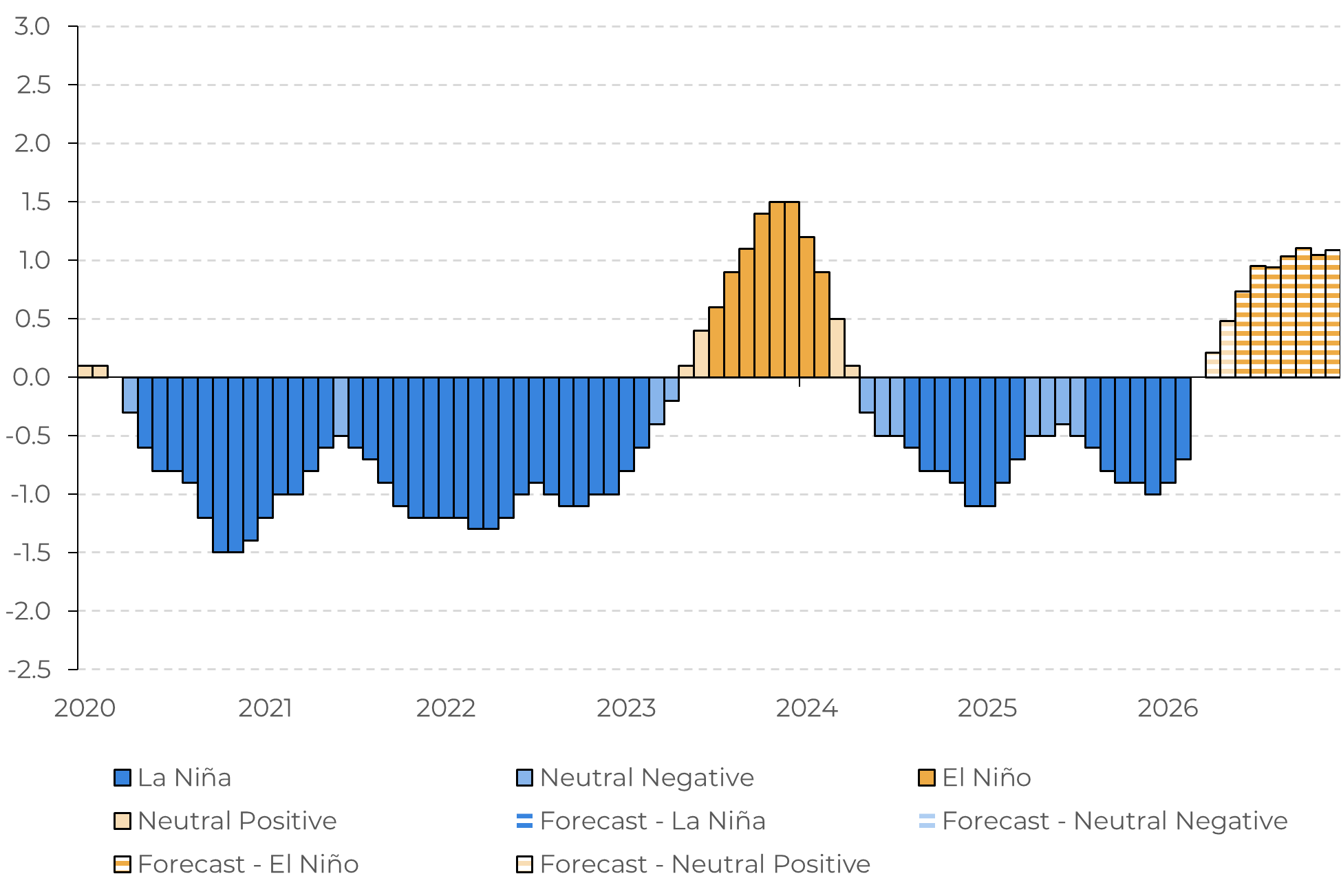
The second potential bullish driver, and more important one, is related to weather. Probabilities and expected intensity of El Niño have already been revised up for the May–June–July period. This increases the likelihood of a wetter winter in Southern Brazil, which could disrupt or slow the pace of the 2026/27 harvest in some states. Nevertheless, the more significant impact of an El Niño event would be felt in the Northern Hemisphere during the 2026/27 crop cycle development. Typically, El Niño conditions are associated with drier and warmer weather across Southeast Asia, southern North America and Central America, posing risks to production in key sugar exporting countries such as India, Thailand, Mexico and Guatemala. Therefore, this scenario could result in reduced sugar availability from the region in the following season and, as a consequence, contribute to firmer prices during 2027.

Image 7: Forecasted Sea Surface Temperature Anomalies (in ºC) in the Nino 3.4 Region
Source: International Research Institute for Climate and Society (IRI)

Crop Update - Sugar 

Written by Lívea Coda
livea.coda@hedgepointglobal.com
Reviewed by Gustavo Costa
gustavo.costa@hedgepointglobal.com
www.hedgepointglobal.com

Disclaimer

This document has been prepared by Hedgepoint Schweiz AG and its affiliates (“Hedgepoint”) solely for informational and instructional purposes, without intending to create obligations or commitments to third parties. It is not intended to promote or solicit an offer for the sale or purchase of any securities, commodities interests, or investment products. Hedgepoint and its associates expressly disclaim any liability for the use of the information contained herein that directly or indirectly results in any kind of damages. Information is obtained from sources which we believe to be reliable, but we do not warrant or guarantee the timeliness or accuracy of this information. The trading of commodities interests, such as futures, options, and swaps, involves substantial risk of loss and may not be suitable for all investors. You should carefully consider wither such trading is suitable for you in light of your financial condition. Past performance is not necessarily indicative of future results. Customers should rely on their own independent judgment and/or consult advisors before entering into any transactions. Hedgepoint does not provide legal, tax or accounting advice and you are responsible for seeking any such advice separately. Hedgepoint Schweiz AG is organized, incorporated, and existing under the laws of Switzerland, is filiated to ARIF, the Association Romande des Intermédiaires Financiers, which is a FINMA-authorized Self-Regulatory Organization. Hedgepoint Commodities LLC is organized, incorporated, and existing under the laws of the USA, and is authorized and regulated by the Commodity Futures Trading Commission (CFTC) and a member of the National Futures Association (NFA) to act as an Introducing Broker and Commodity Trading Advisor. HedgePoint Global Markets Limited is Regulated by the Dubai Financial Services Authority. The content is directed at Professional Clients and not Retail Clients. Hedgepoint Global Markets PTE. Ltd is organized, incorporated, and existing under the laws of Singapore, exempted from obtaining a financial services license as per the Second Schedule of the Securities and Futures (Licensing and Conduct of Business) Act, by the Monetary Authority of Singapore (MAS). Hedgepoint Global Markets DTVM Ltda. is authorized and regulated in Brazil by the Central Bank of Brazil (BCB) and the Brazilian Securities Commission (CVM). Hedgepoint Serviços Ltda. is organized, incorporated, and existing under the laws of Brazil. Hedgepoint Global Markets S.A. is organized, incorporated, and existing under the laws of Uruguay. In case of questions not resolved by the first instance of customer contact (client.services@Hedgepointglobal.com), please contact internal ombudsman channel (ombudsman@hedgepointglobal.com – global or ouvidoria@hedgepointglobal.com – Brazil only) or call 0800-8788408 (Brazil only). Integrity, ethics, and transparency are values that guide our culture. To further strengthen our practices, Hedgepoint has a whistleblower channel for employees and third-parties by e-mail ethicline@hedgepointglobal.com or forms Ethic Line – Hedgepoint Global Markets. “HedgePoint” and the “HedgePoint” logo are marks for the exclusive use of HedgePoint and/or its affiliates. Use or reproduction is prohibited, unless expressly authorized by HedgePoint. Furthermore, the use of any other marks in this document has been authorized for identification purposes only. It does not, therefore, imply any rights of HedgePoint in these marks or imply endorsement, association or seal by the owners of these marks with HedgePoint or its affiliates.

To access this report, you need to be a subscriber.