
2026 Q2 Update and Expectations for Q3
Macroeconomic Outlook
2026 Q3 Expectations: While the ceasefire may ease pressure on oil prices and improve risk appetite, a potential increase in U.S. interest rates typically attracts capital to dollar and puts pressure on emerging market currencies. Markets and central banks should continue to closely monitor inflation trends when shaping future monetary policy decisions.
Bloomberg Commodity Subindexes and DXY (Jan26 = 100)
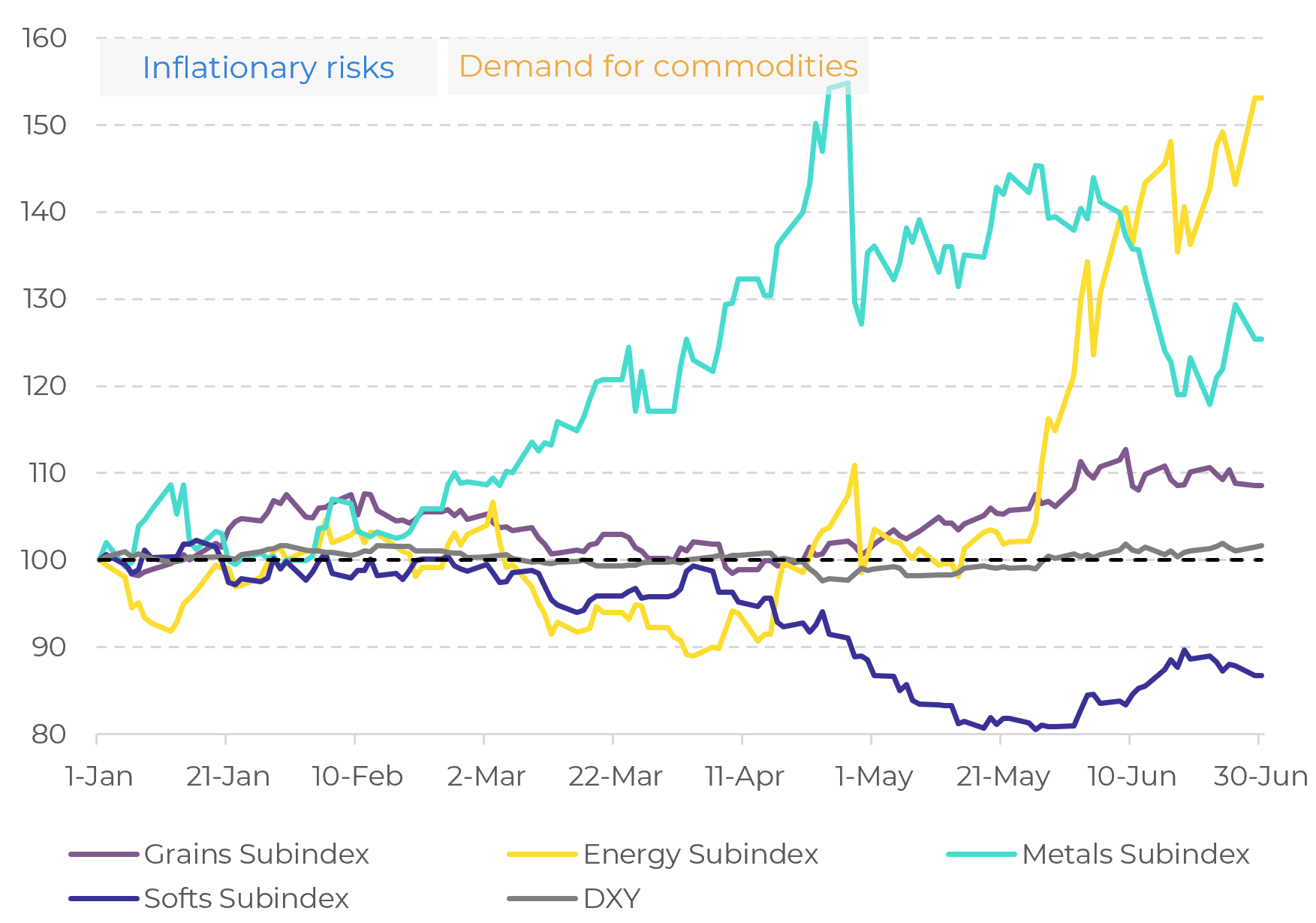
Source: LSEG, Hedgepoint
Macro Key Indicators (Jan 26 = 100)
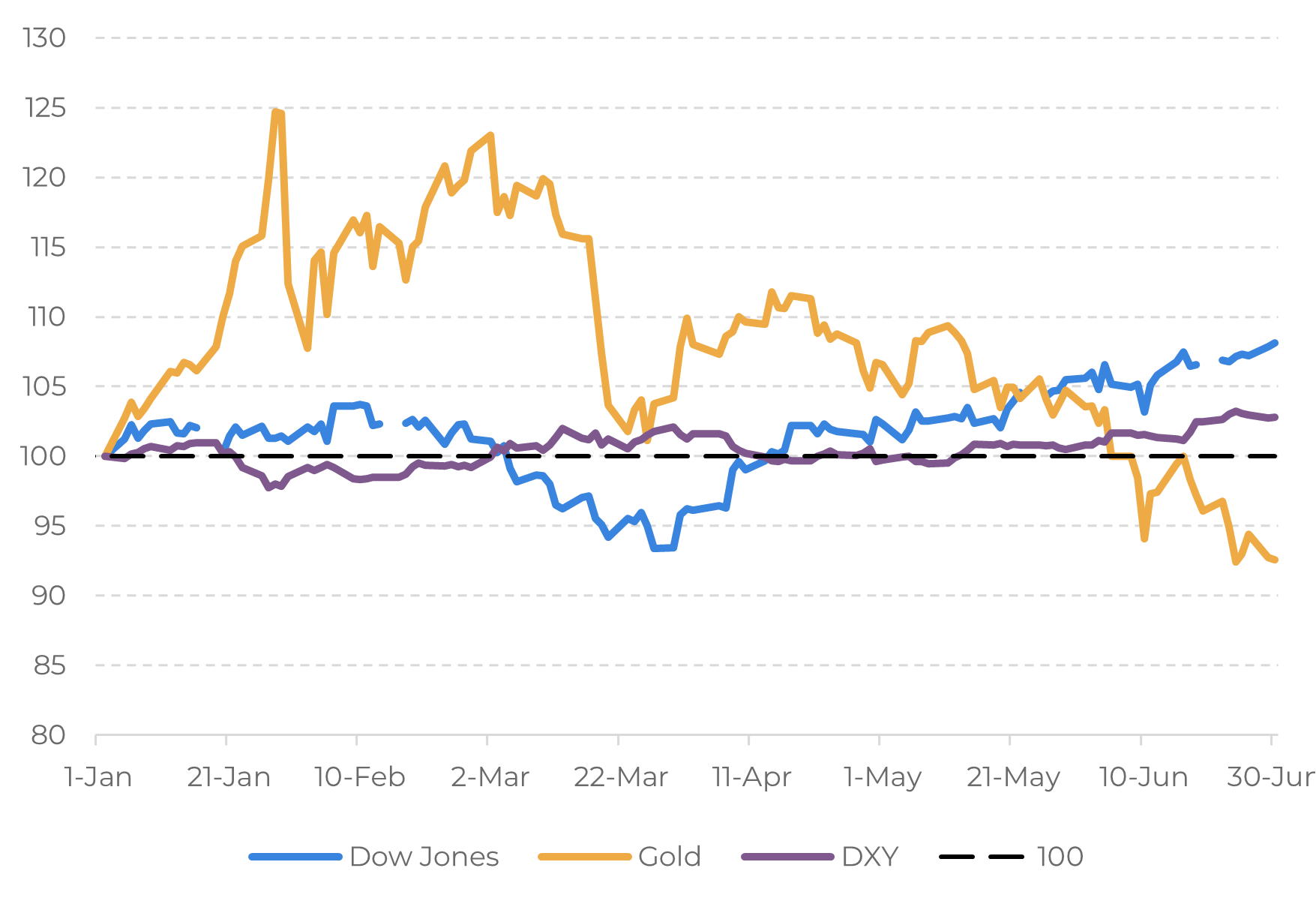
Source: LSEG, Hedgepoint
Softs Commodities Outlook
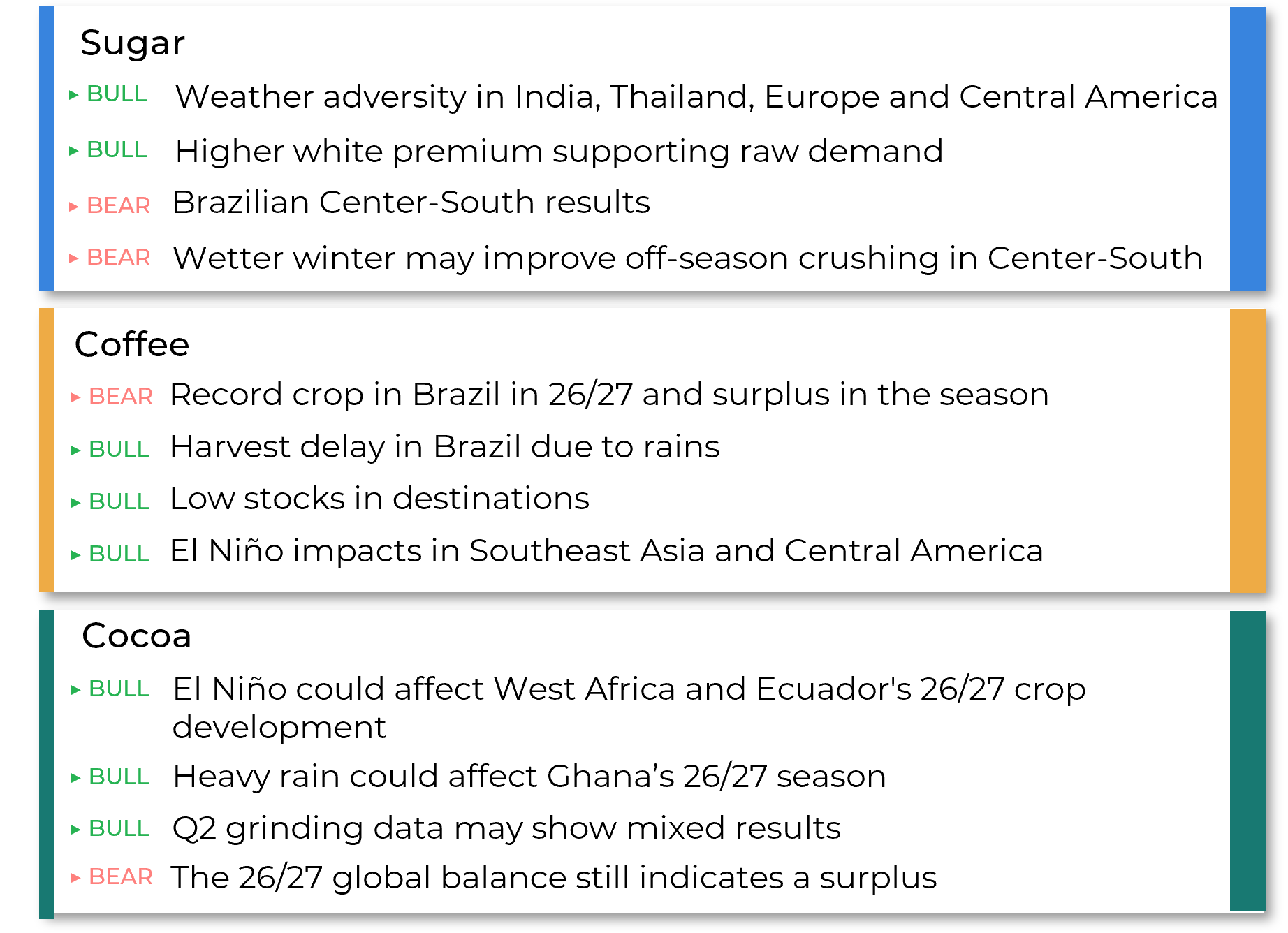
- Sugar: Brazil’s strong 26/27 Center-South season (Apr-Mar) has pushed sugar prices to their lowest levels since 2020. Looking ahead, weather-related risks could tighten supply in the Northern Hemisphere during the 26/27 season (Oct-Sep), providing medium-term support to prices and boosting the white sugar premium.
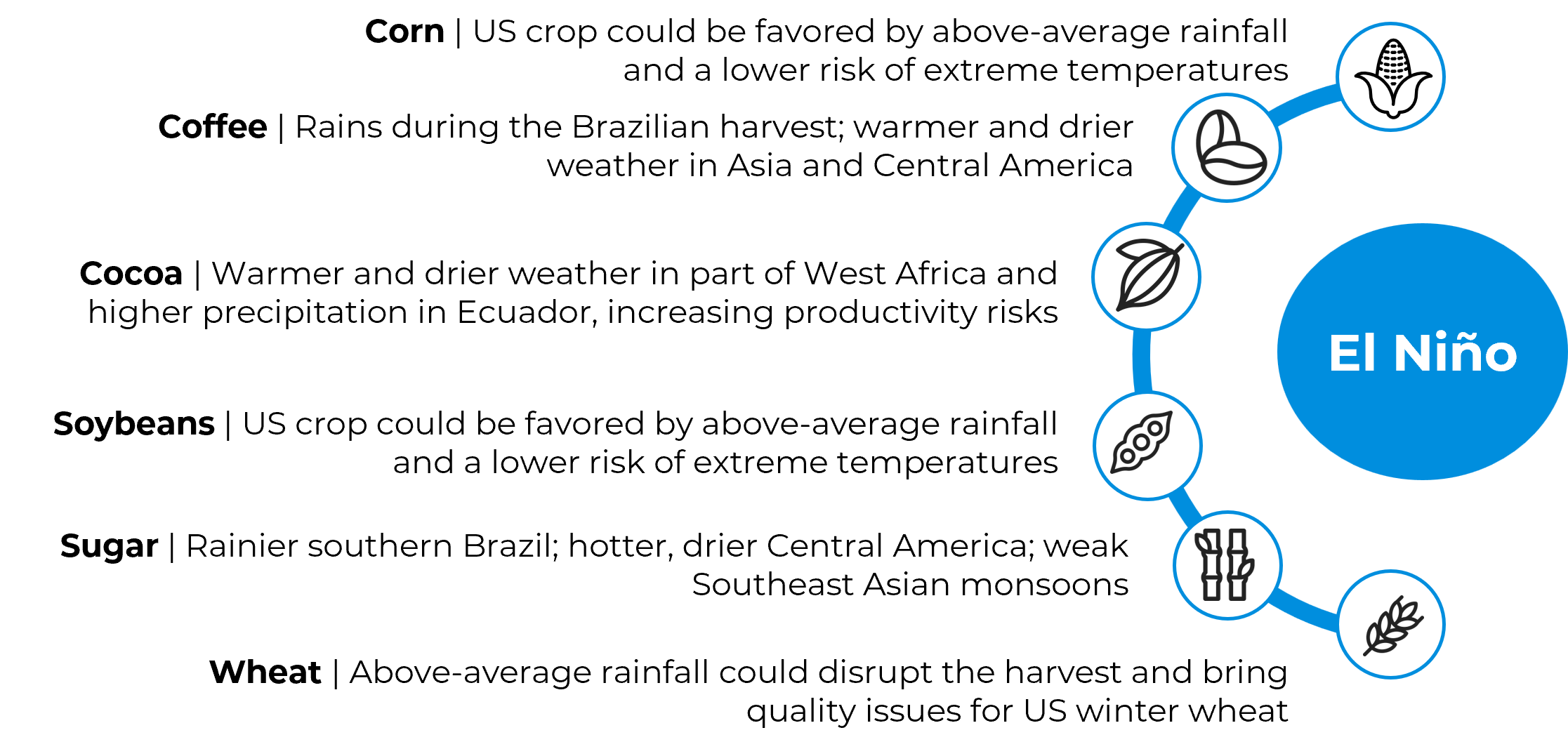
- Coffee: With a record 26/27 coffee crop in Brazil, broader fundamentals are bearish. However, low stocks in destinations, harvest delays in Brazil, and potential El Niño-related disruptions in other origins are providing some support to prices.
- Cocoa: Cocoa prices remained volatile throughout the quarter. Concerns over potential El Niño impacts on both the volume and quality of the upcoming 26/27 crop have supported higher prices. However, improving certified stocks and strong port arrivals in Ivory Coast may limit sustained upward momentum.
Softs Price Index (Jan26 = 100)
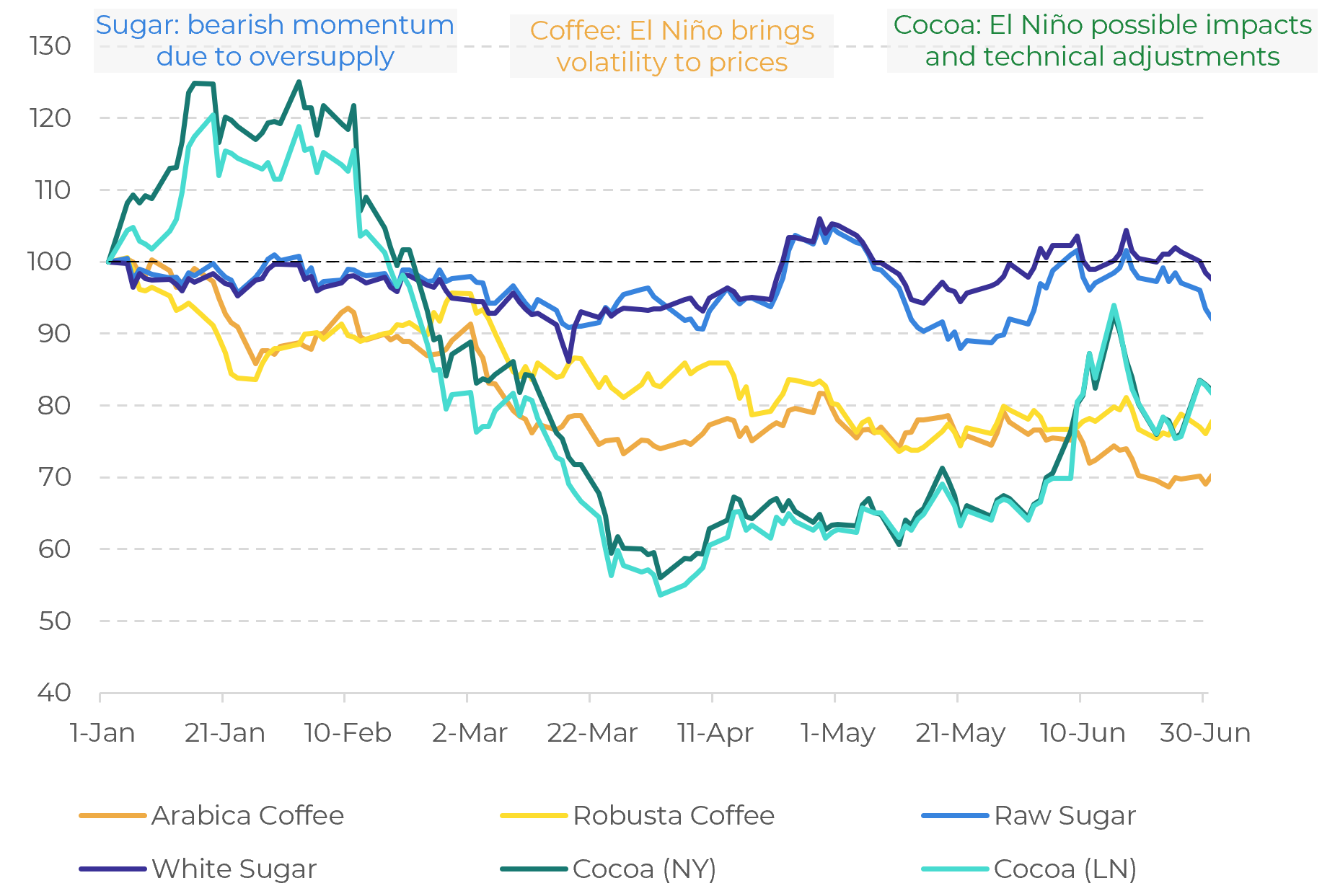
Source: LSEG
Key Factors Going Forward
Grains & Oilseeds Outlook
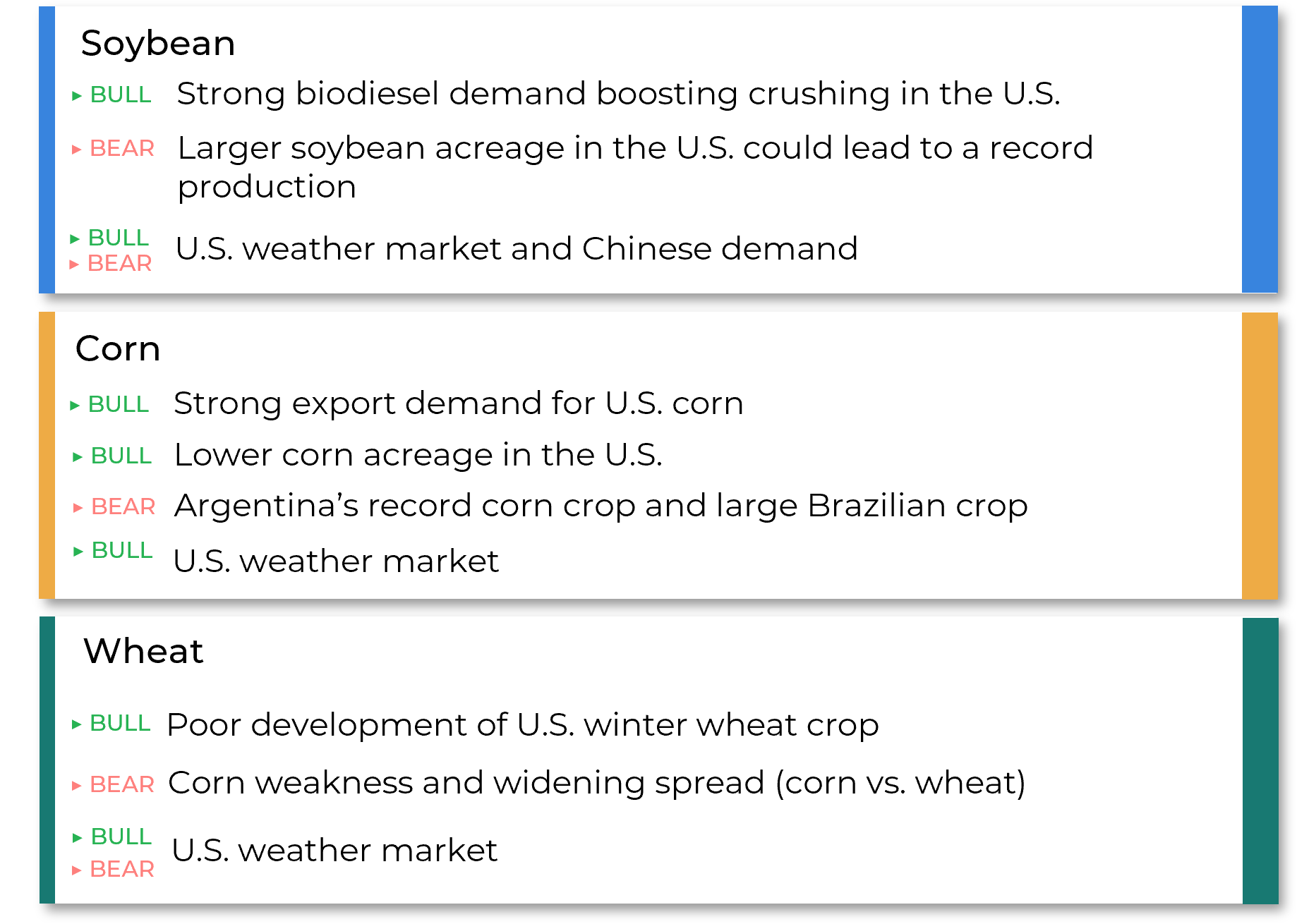
Soybean: Higher biodiesel blending mandates in the U.S. provided fundamental support to prices. In addition, the conflict between the U.S. and Iran kept oil prices elevated, further boosting soybean oil prices.
Corn: Strong demand for U.S. corn remained a supportive factor. However, large crops in South America continued to weigh on the market from the supply side.
Wheat: Poor development of the U.S. winter wheat crop supported prices, which also benefited from expectations of declining global production and lower stocks in the 26/27 season.
Grains Price Index (Jan26 = 100)
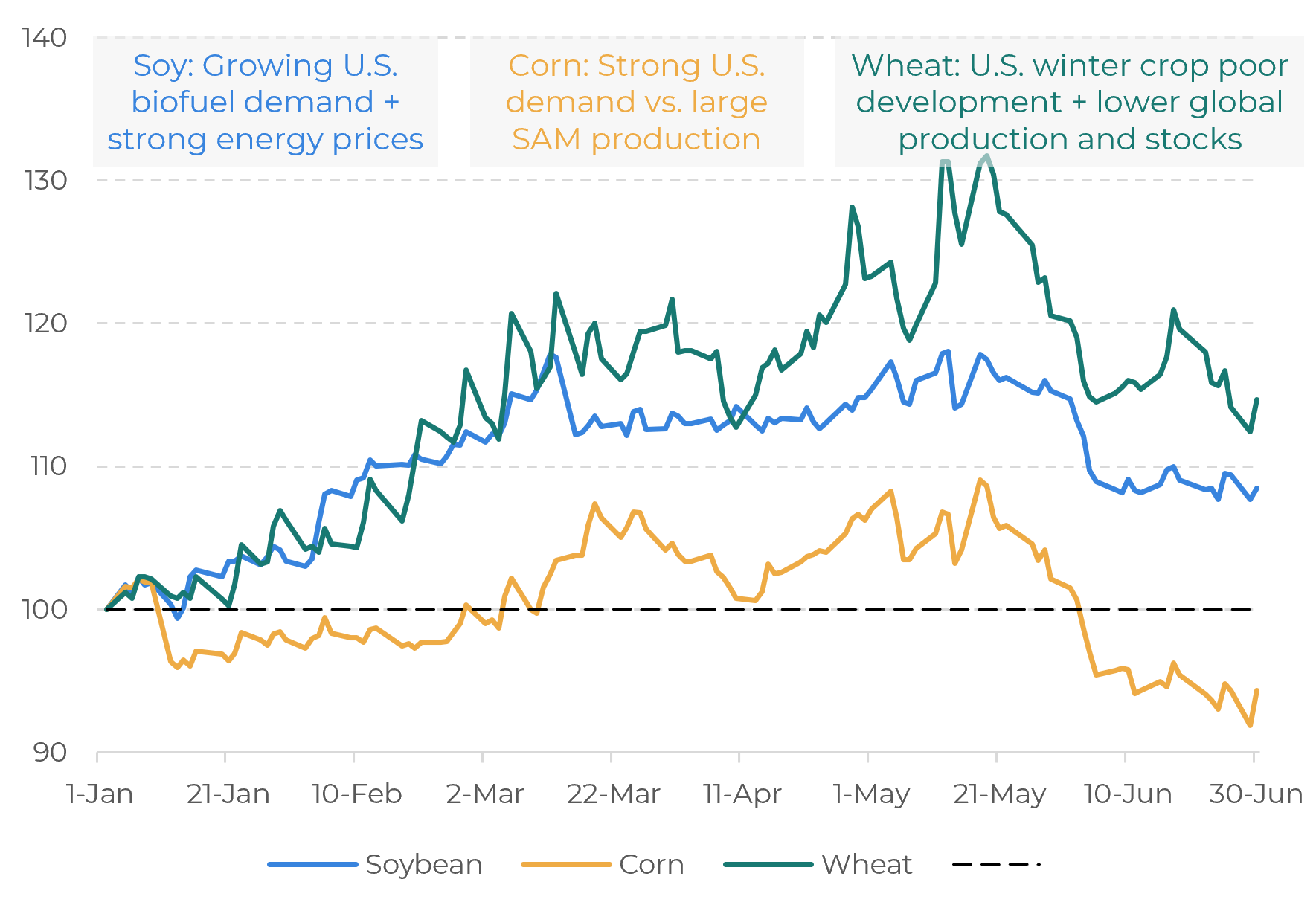
Source: LSEG
Key Factors Going Forward
Energy Outlook
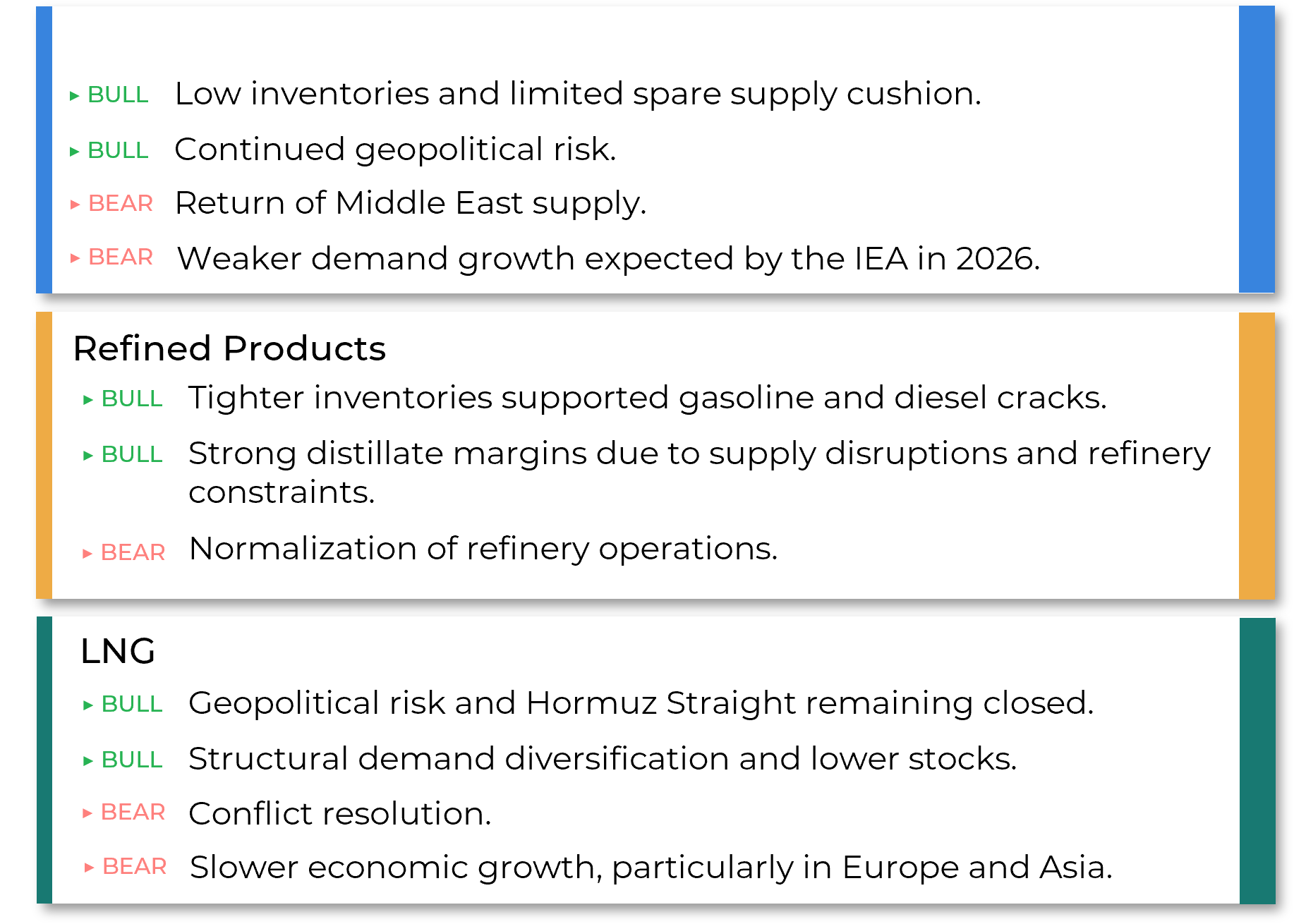
- US-Iran conflict removed significant fuel volumes from the market, triggering price volatility as inventories declined and concerns over freight rates and supply security intensified across crude oil, refined products, and LNG.
- OECD and commercial oil inventories declined sharply during Q2, highlighting reduced buffers against potential future supply shocks.
- Tight product availability and refinery disruptions pushed gasoline and distillate crack spreads to exceptionally strong levels throughout Q2.
Energy Price Index (Jan26 = 100)
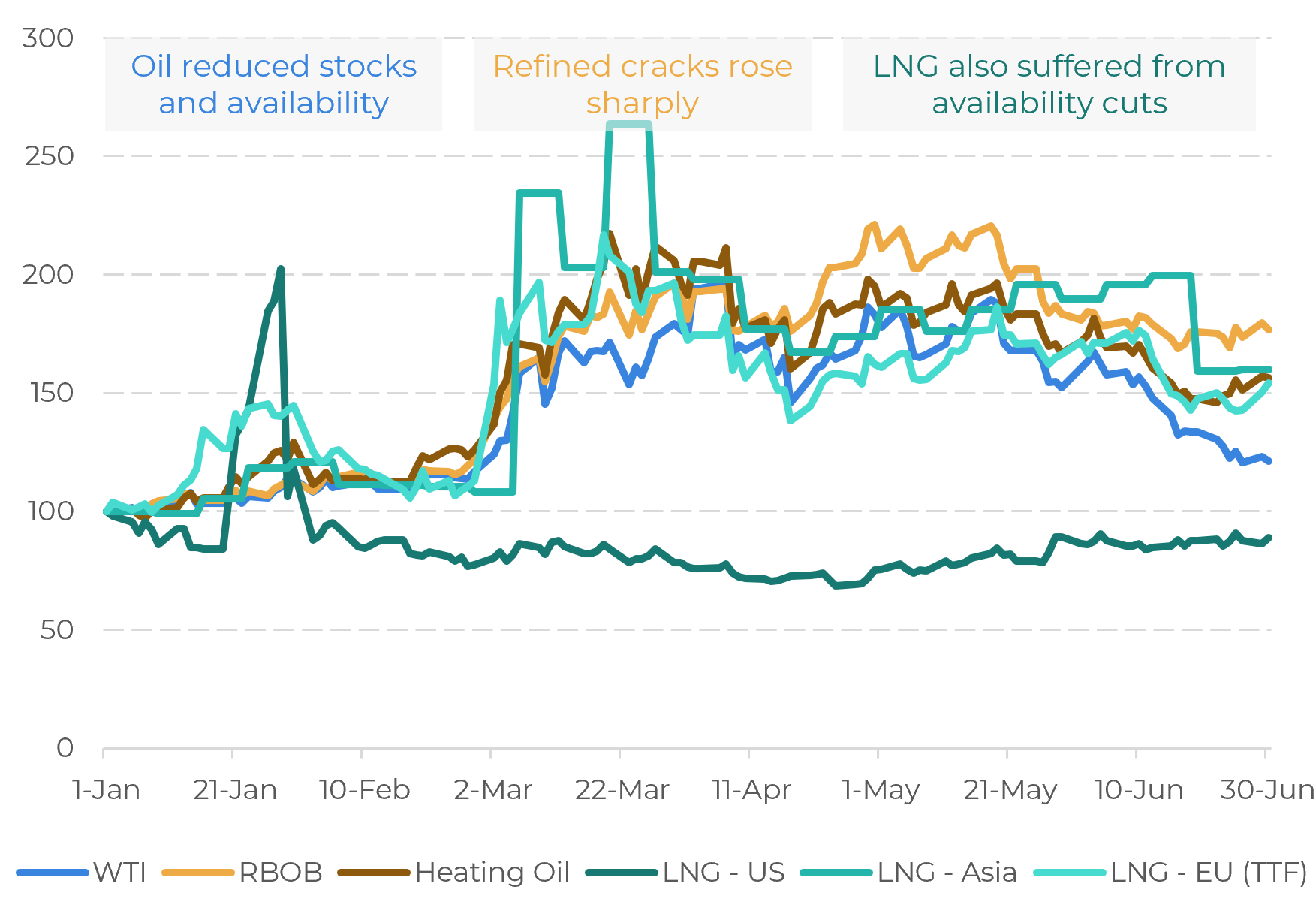
Source: LSEG
Key Factors Going Forward
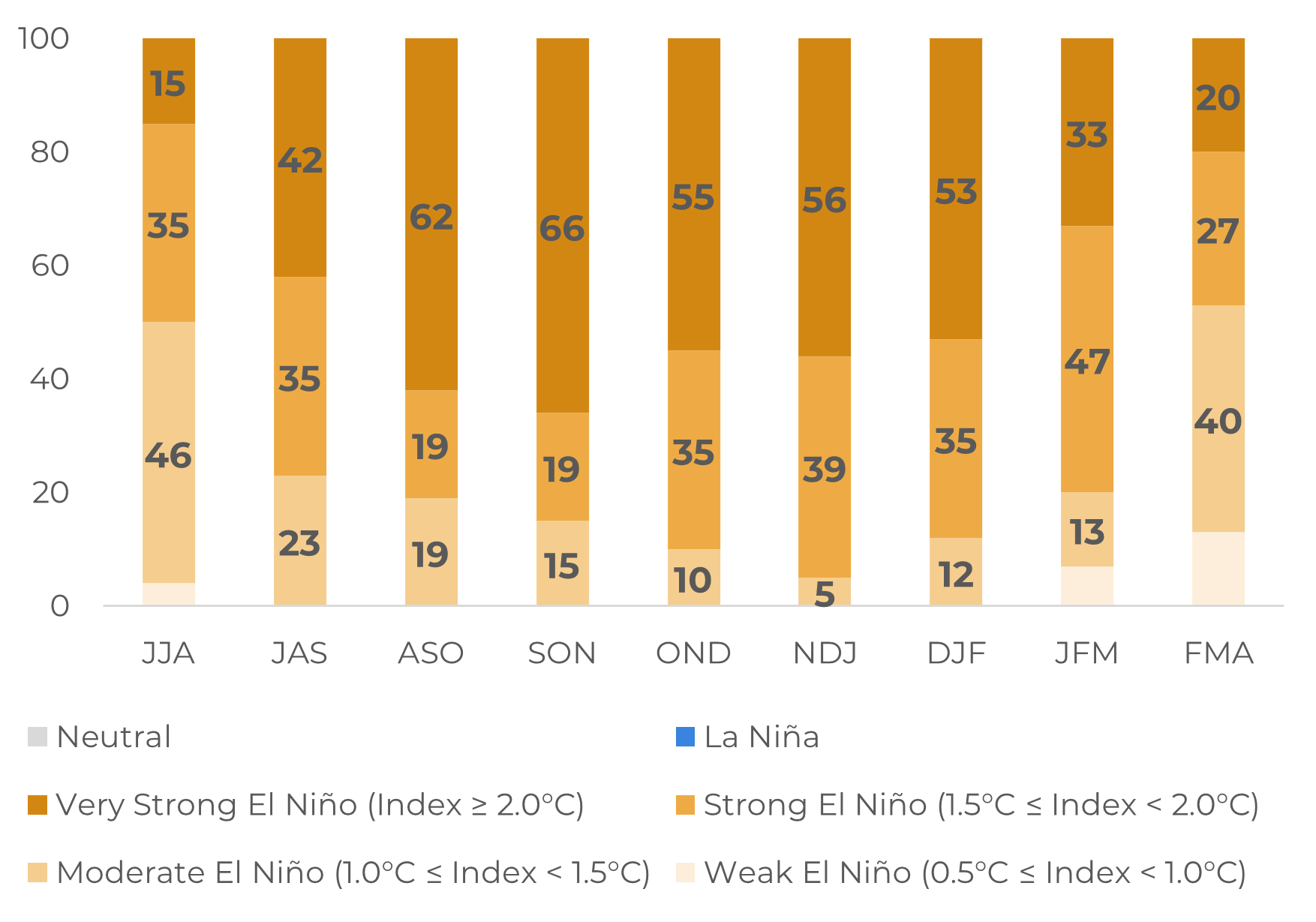
El Niño: a point of concern
NOAA
and IRI models estimates a 97% and 98% probability, respectively, of the
phenomenon occurring between May and July. The likelihood of it persisting
through the second half of 2026 and into early 2027 is virtually certain,
increasing climate-related risks for agricultural commodities.
In addition, the phenomenon is expected to strengthen, with more than 66% probability of reaching very strong intensity between September and November 2026.
CCSR/IRI ENSO Strength Categories (%, June, 2026)
Source: LSEG
El Niño effects in crops
Source: Hedgepoint
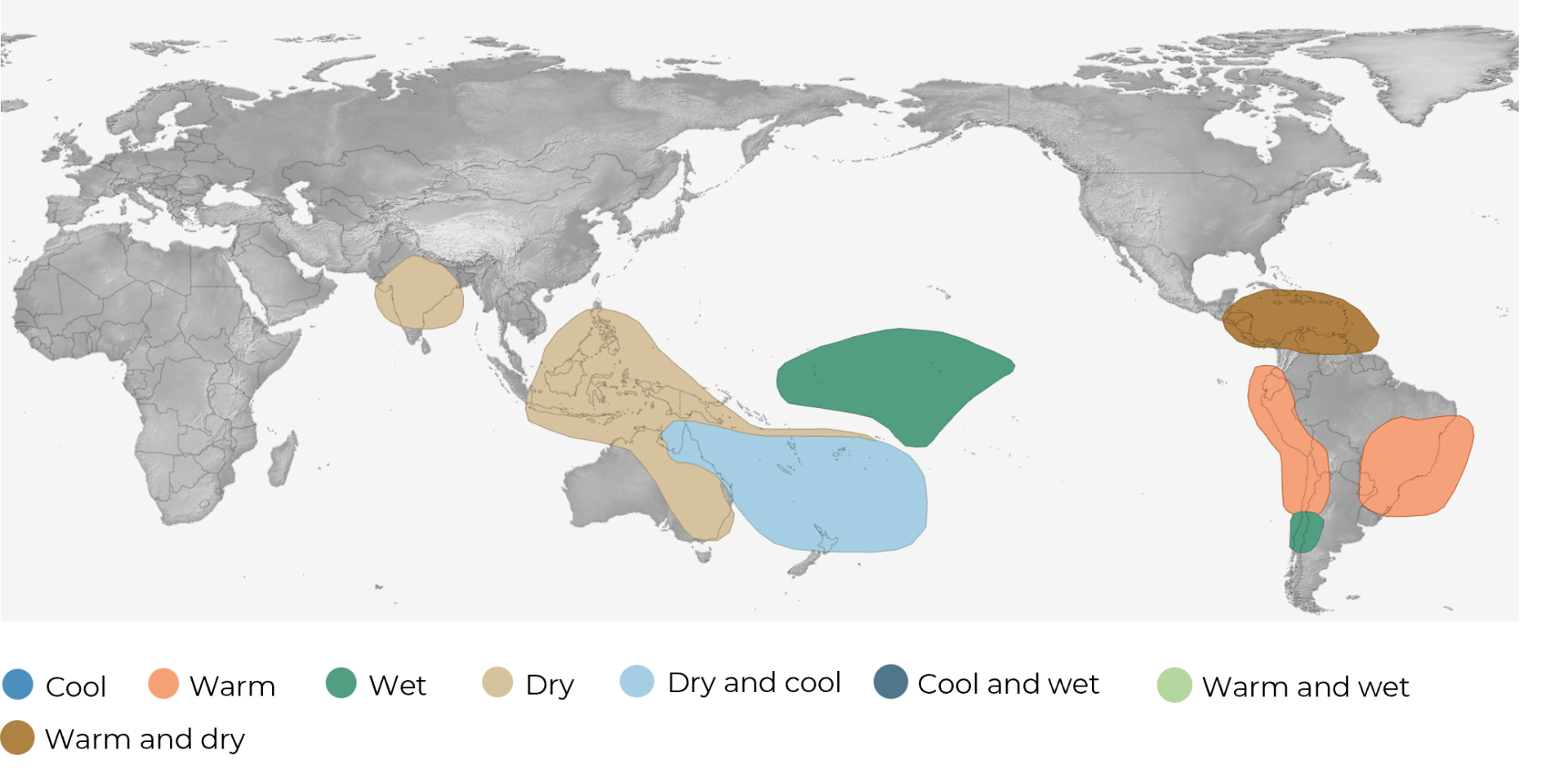
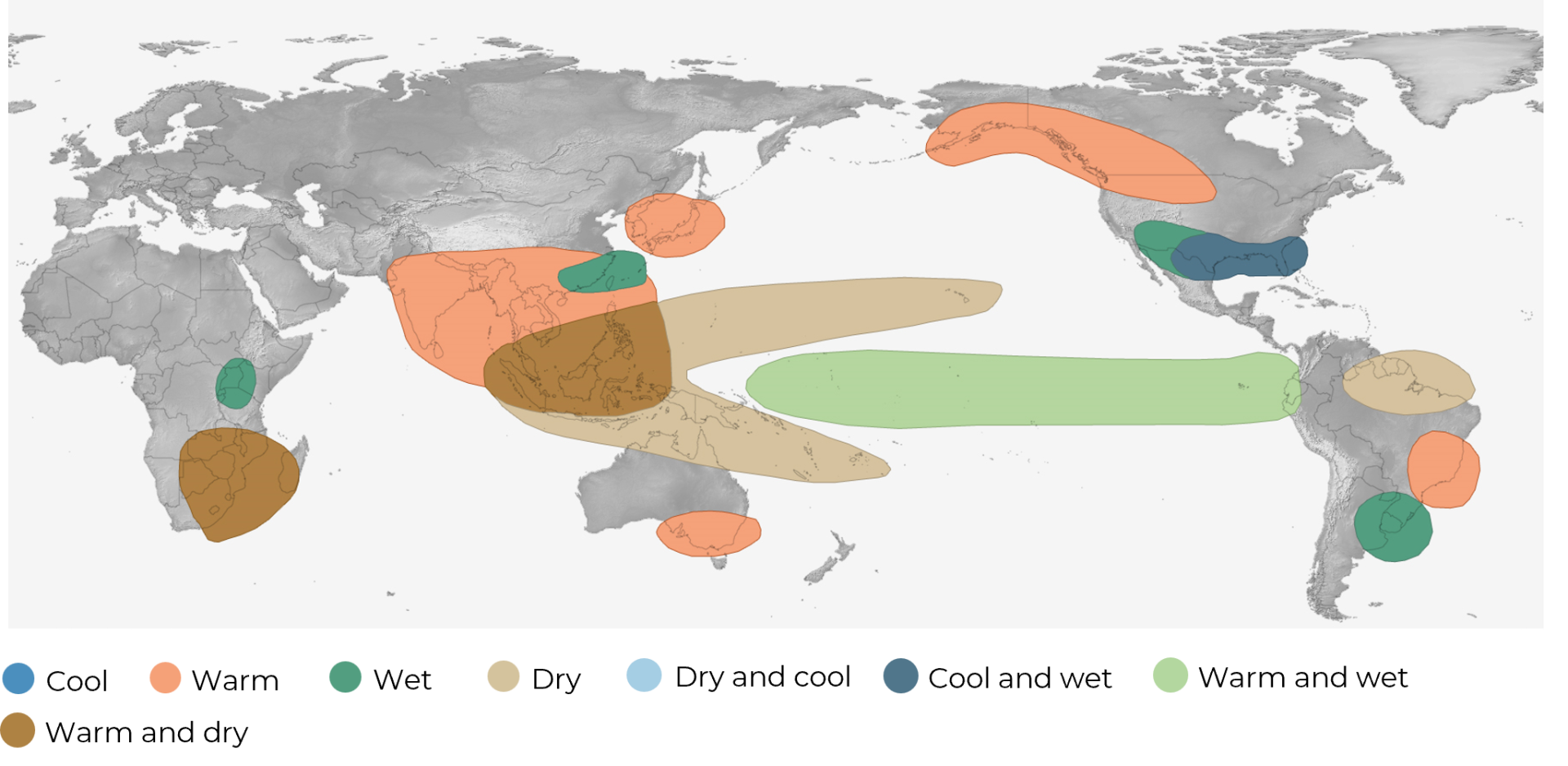
Higher temperatures and uneven rainfall
El Niño could alter monsoon patterns, bringing hotter and drier conditions to Australia, Southeast Asia, and parts of Central America.
Additionally,
it could intensify rainfall in South America and Africa, increasing the risk of
flooding, while also supporting a more active storm track across the southern
United States during the winter.
El Niño: Possible Weather Impacts (June-August)
Source: NOAA
El Niño: Possible Weather Impacts (December-February)
Source: NOAA
Special Report — Multicommodities
livea.coda@hedgepointglobal.com
luiz.roque@hedgepointglobal.com
thais.italiani@hedgepointglobal.com