
2026 Q3 Update and Expectations for Q4
Macroeconomic Outlook
Bloomberg Commodity Subindexes and DXY (Jan26 = 100)
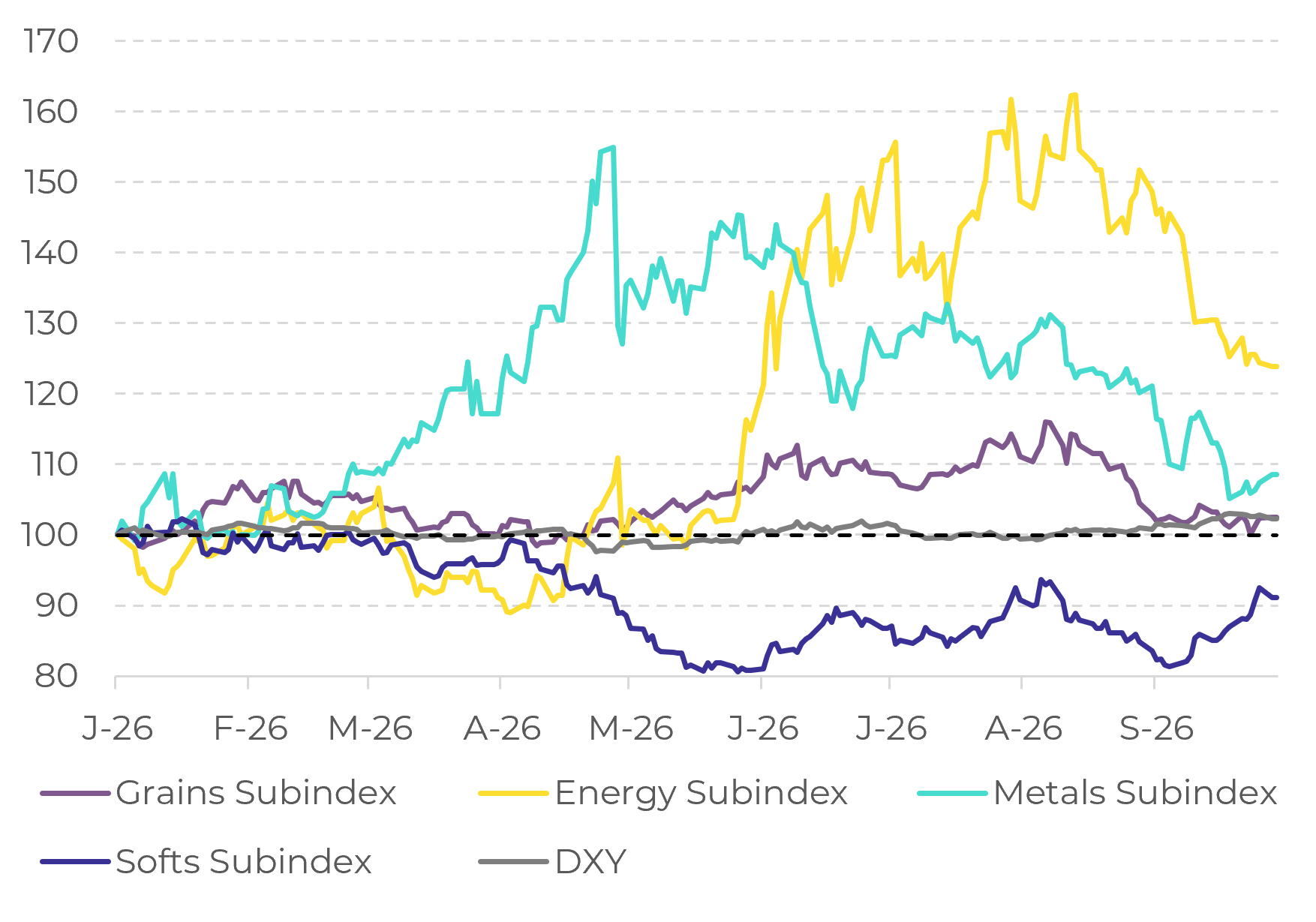
Source: LSEG, Hedgepoint
Macro Key Indicators (Jan26 = 100)
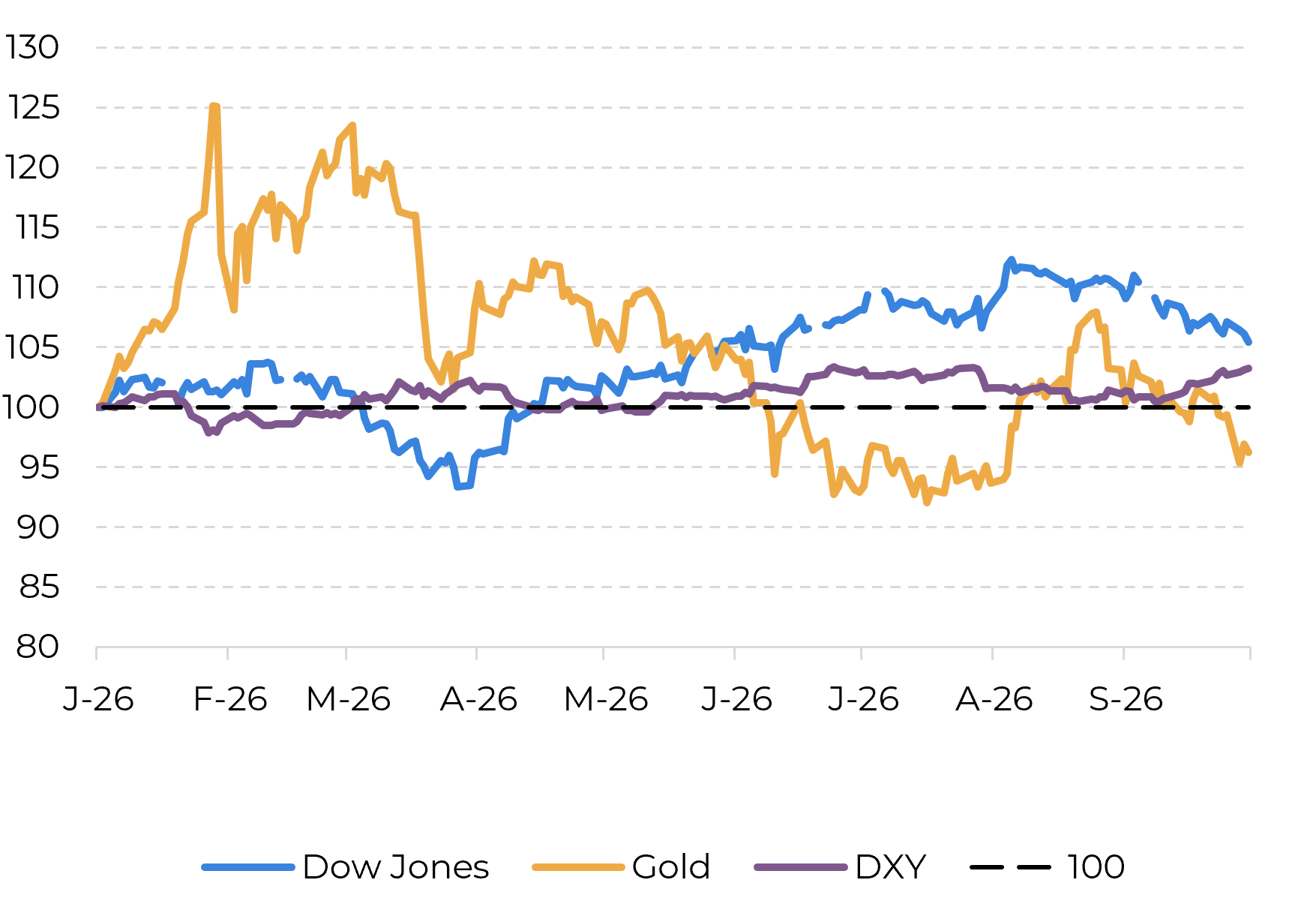
Source: LSEG, Hedgepoint
Softs Commodities Outlook
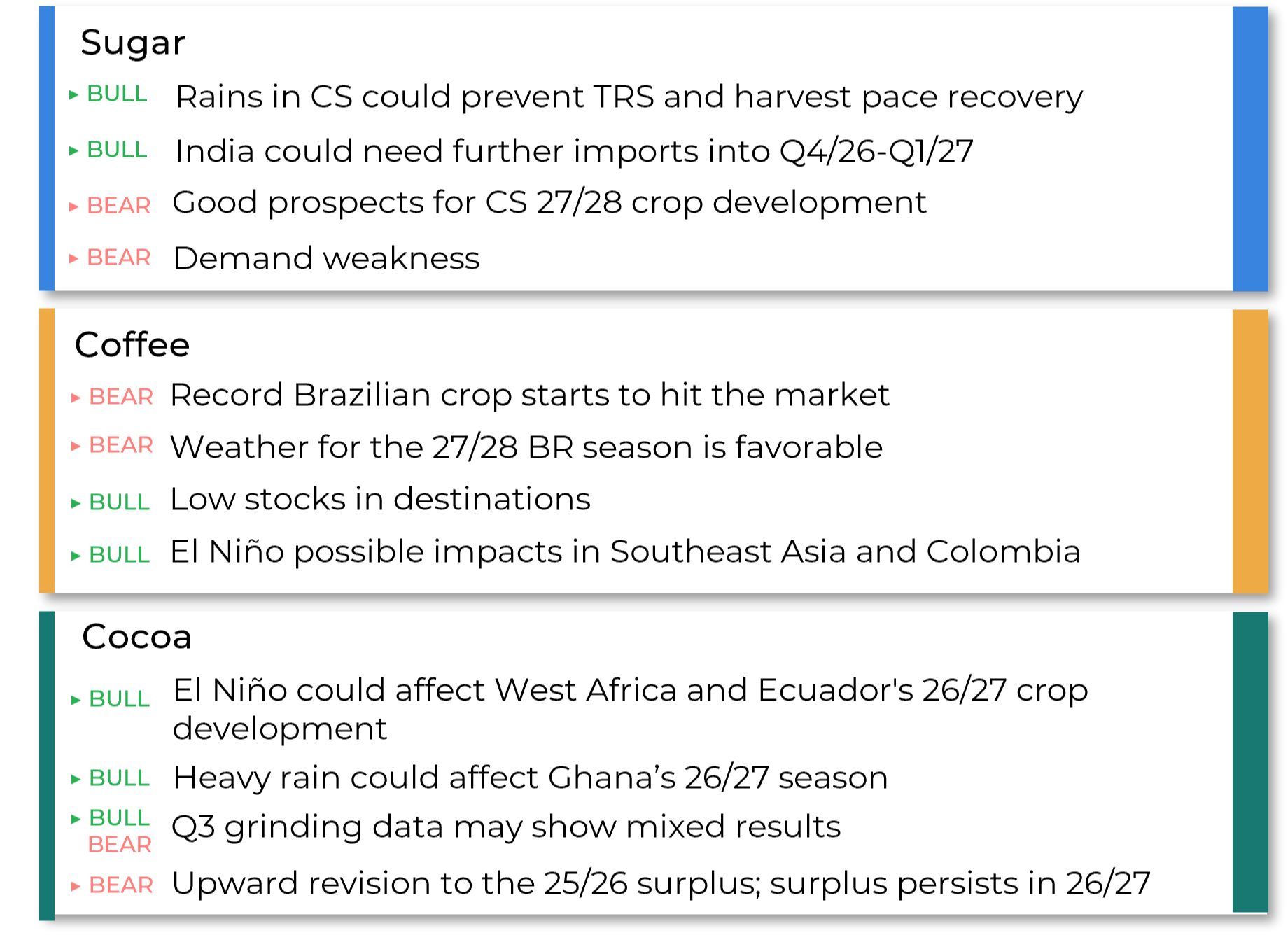
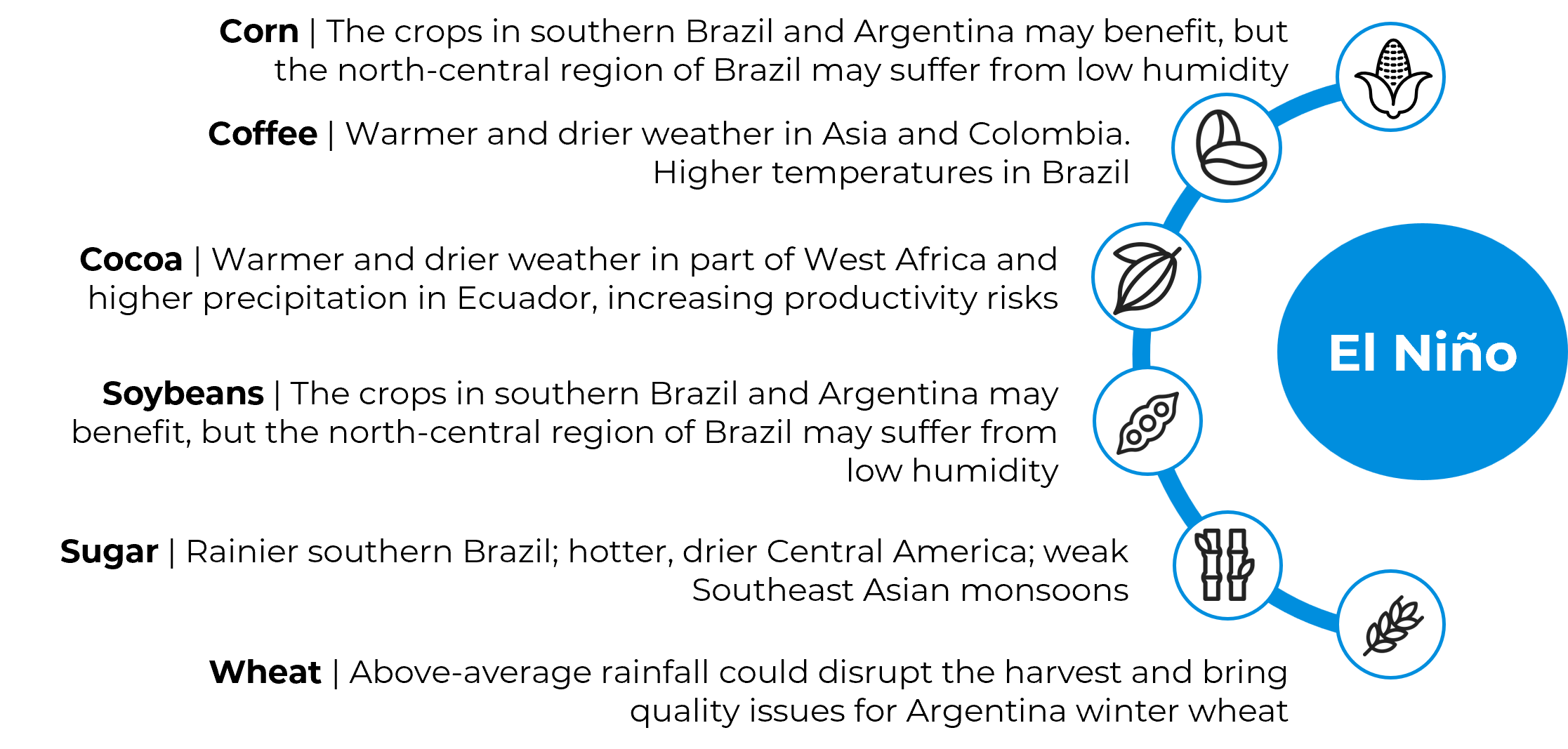
- Sugar: Northern Hemisphere crop losses (EU, Thailand, India) and a wet Brazilian Center-South (CS) due to a strong El-Niño supported prices. However, weak demand continued to limit upside potential.
- Coffee: Tight destination stocks and delays in Brazil’s 26/27 harvest gave support to prices. However, as the crop start to hit the market and the weather for the 27/28 season is favorable, the bearish pressure is increasing.
- Cocoa: Price volatility remained elevated throughout the quarter. Concerns over potential El Niño impacts on both volume and quality of the upcoming 26/27 crop have supported higher prices. However, the increase in certified stocks and the upward revisions to the 25/26 crop surplus may support corrective moves and limit a sustained upward trend.
Softs Price Index (Jan26 = 100)
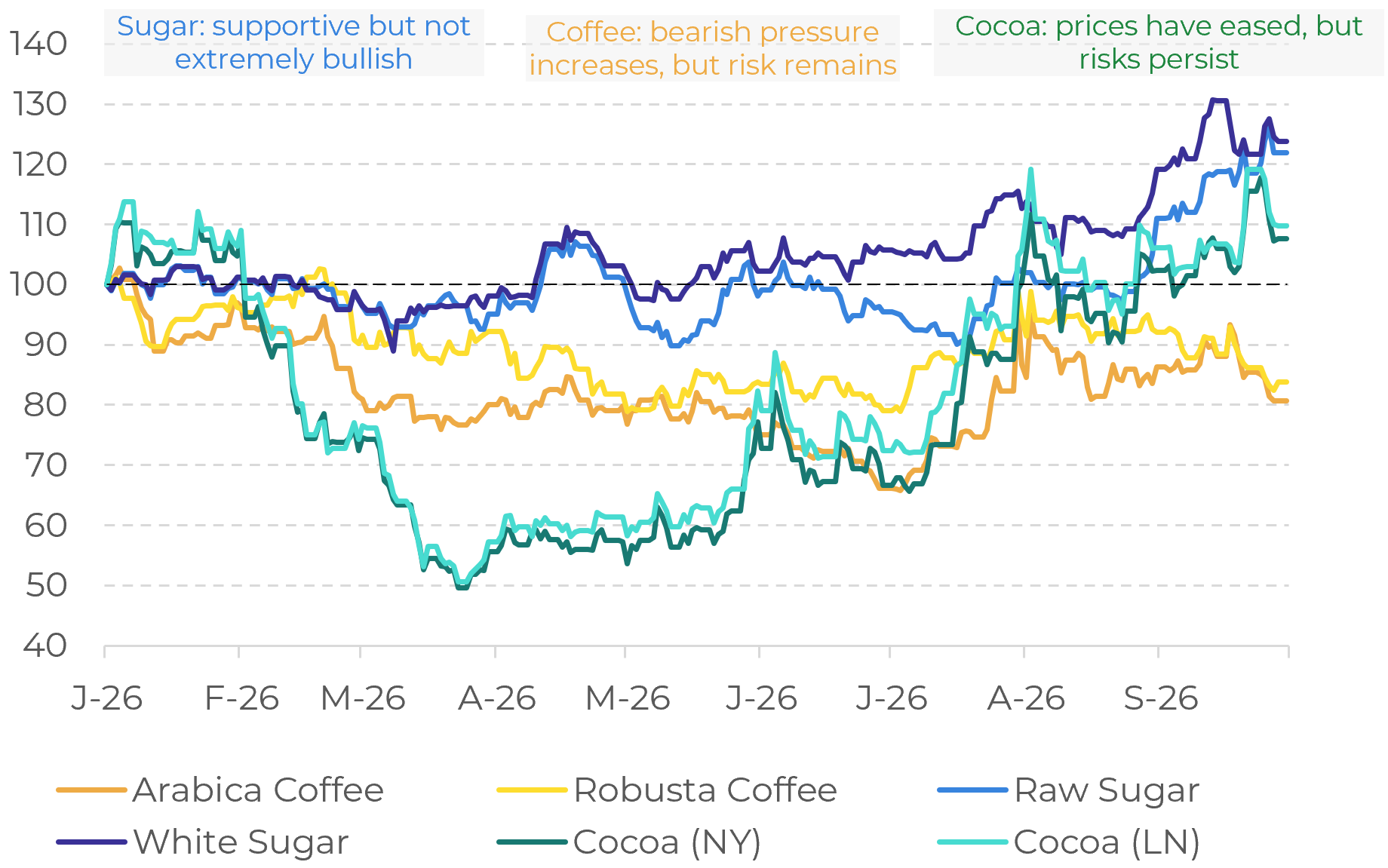
Source: LSEG
Key Factors Going Forward
Grains & Oilseeds Outlook
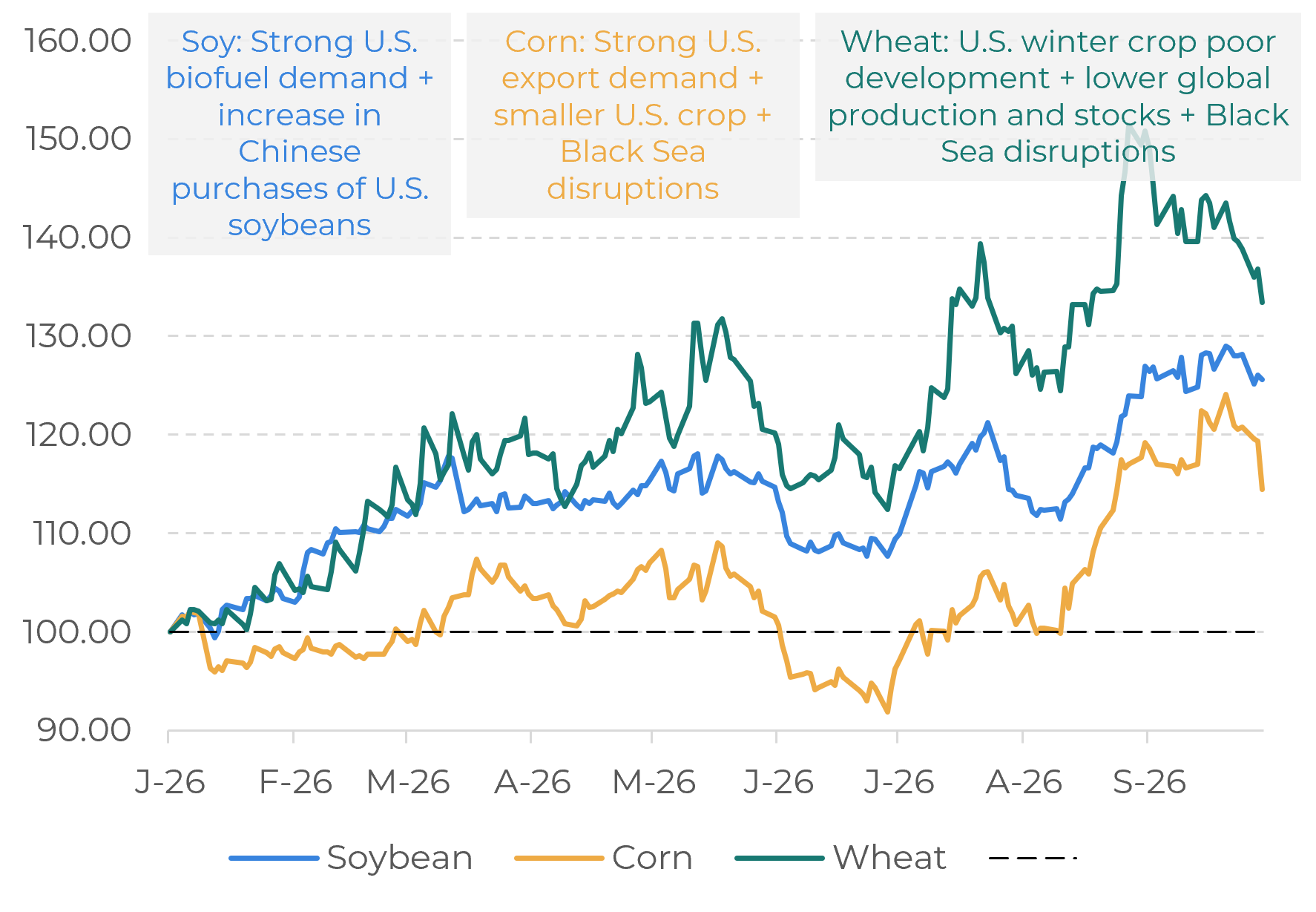
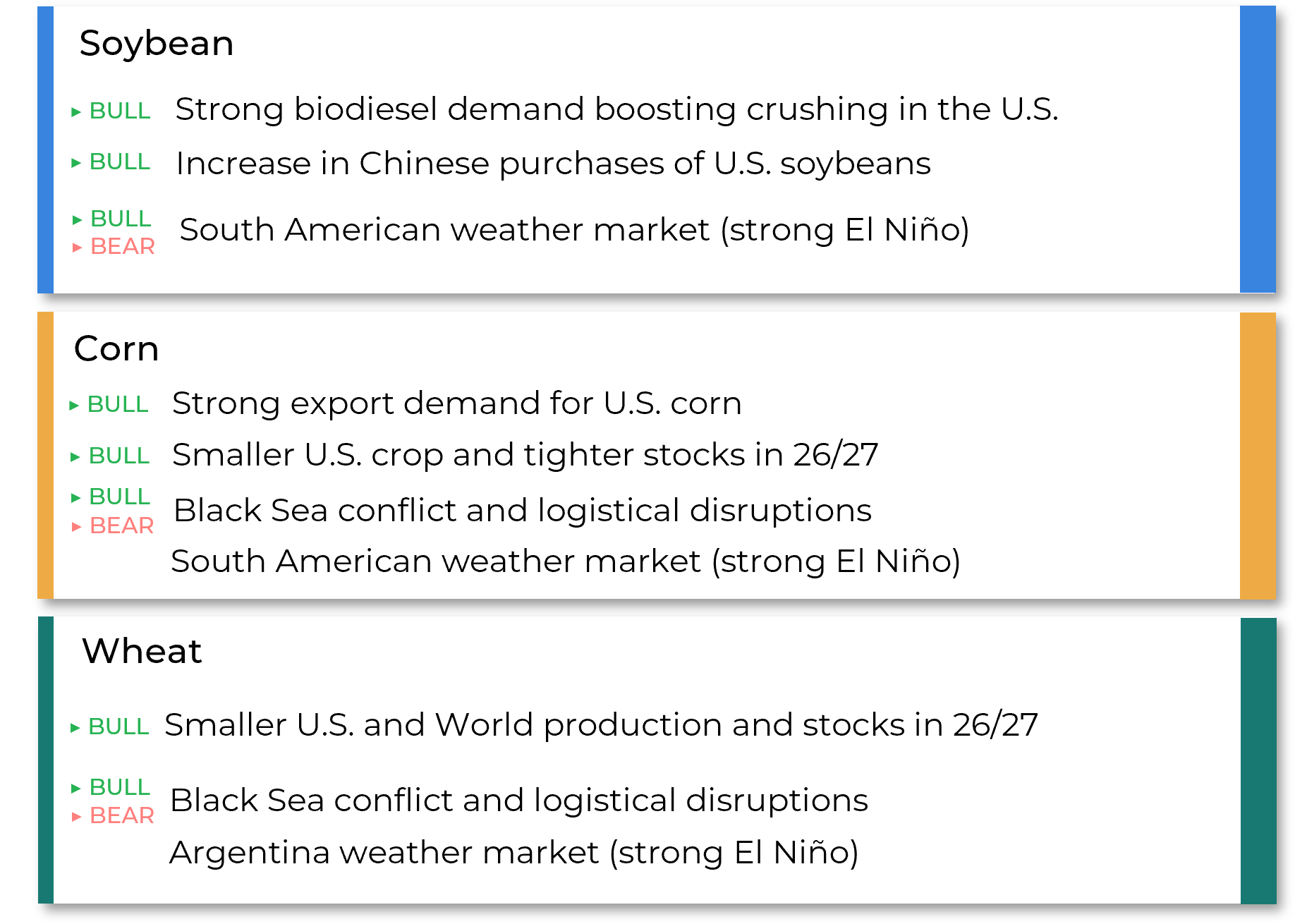
- Soybean: Higher biodiesel blending in the U.S. and the increase in Chinese purchases of U.S. soybeans supported prices. In addition, conflicts involving the U.S. and Iran, as well as Russia and Ukraine, kept oil prices elevated, providing further support to soybean oil prices.
- Corn: Strong demand for U.S. corn, combined with a smaller U.S. crop, has boosted prices. In addition, logistical disruptions in the Black Sea region resulting from the Russia-Ukraine conflict provided further market support.
- Wheat: Poor development of the U.S. winter wheat crop and logistical disruptions in the Black Sea region due to the Russia-Ukraine conflict boosted prices. Expectations of lower global production and tighter stocks in the 26/27 season also contributed to the bullish sentiment.
Grains Price Index (Jan26 = 100)
Source: LSEG
Key Factors Going Forward
Energy Outlook
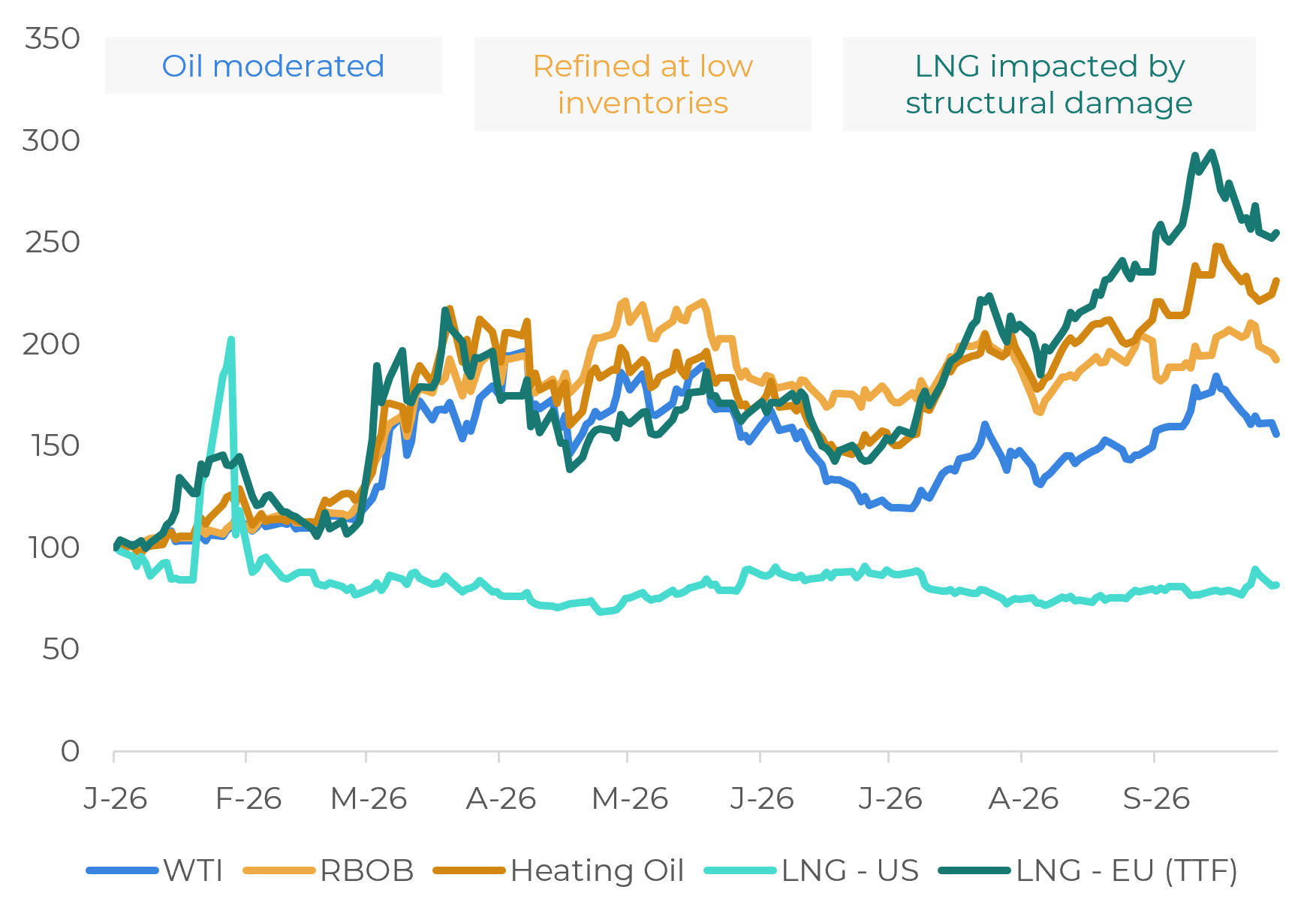
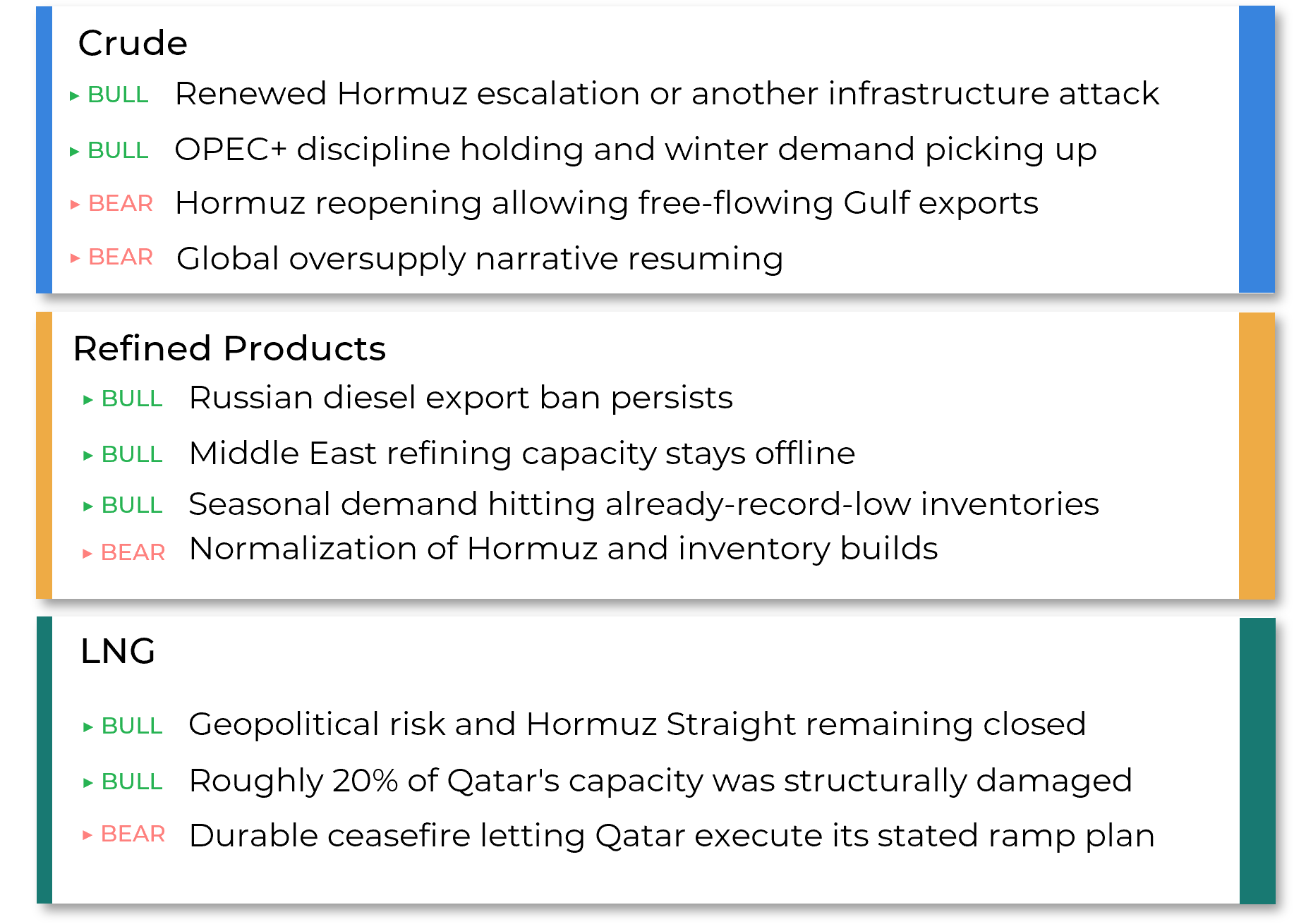
Distillates: The Middle East conflict disrupted the Strait of Hormuz and reduced regional refining capacity, while Russian refinery attacks prompted a diesel export ban. Together, these events tightened global refining and export capacity rather than crude supply. As a result, diesel crack spreads decoupled sharply from crude prices, setting all-time records above $100/bbl. European diesel prices also surged above pre-conflict levels, making refining margins, rather than crude prices, the key story of 2026Q3.
Energy Price Index (Jan26 = 100)
Source: LSEG
Key Factors Going Forward
El Niño: a point of concern
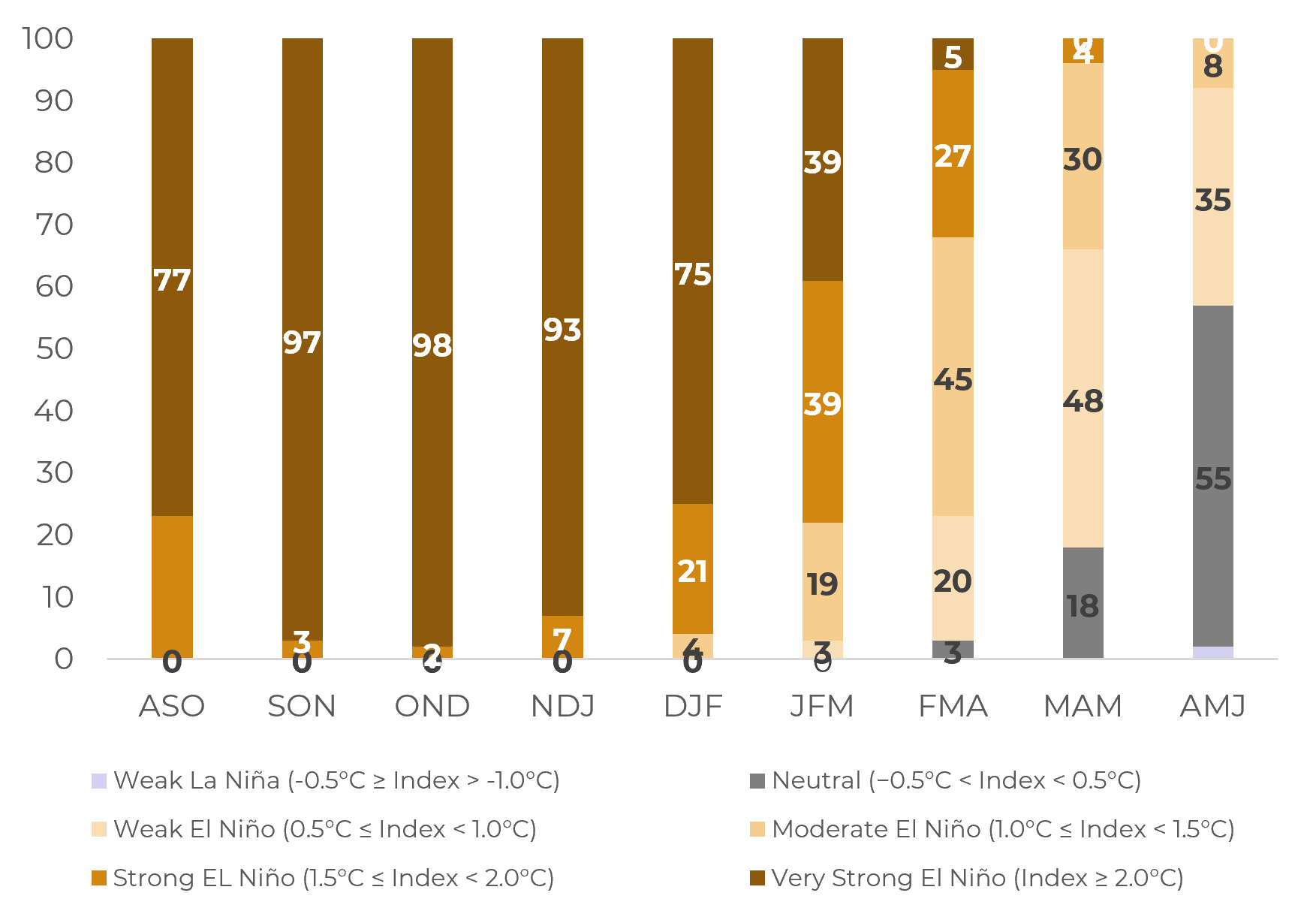
The event is expected to gain force in the next two quarters, having over 77% chance of being very strong between August and October 2026, and over 90% between October and January 2027.
A very strong El Niño increases weather-related risks for agricultural commodities.
CCSR/IRI ENSO Strength Categories (%, Sep, 2026)
Source: CCSR/IRI
El Niño effects in crops
Source: Hedgepoint
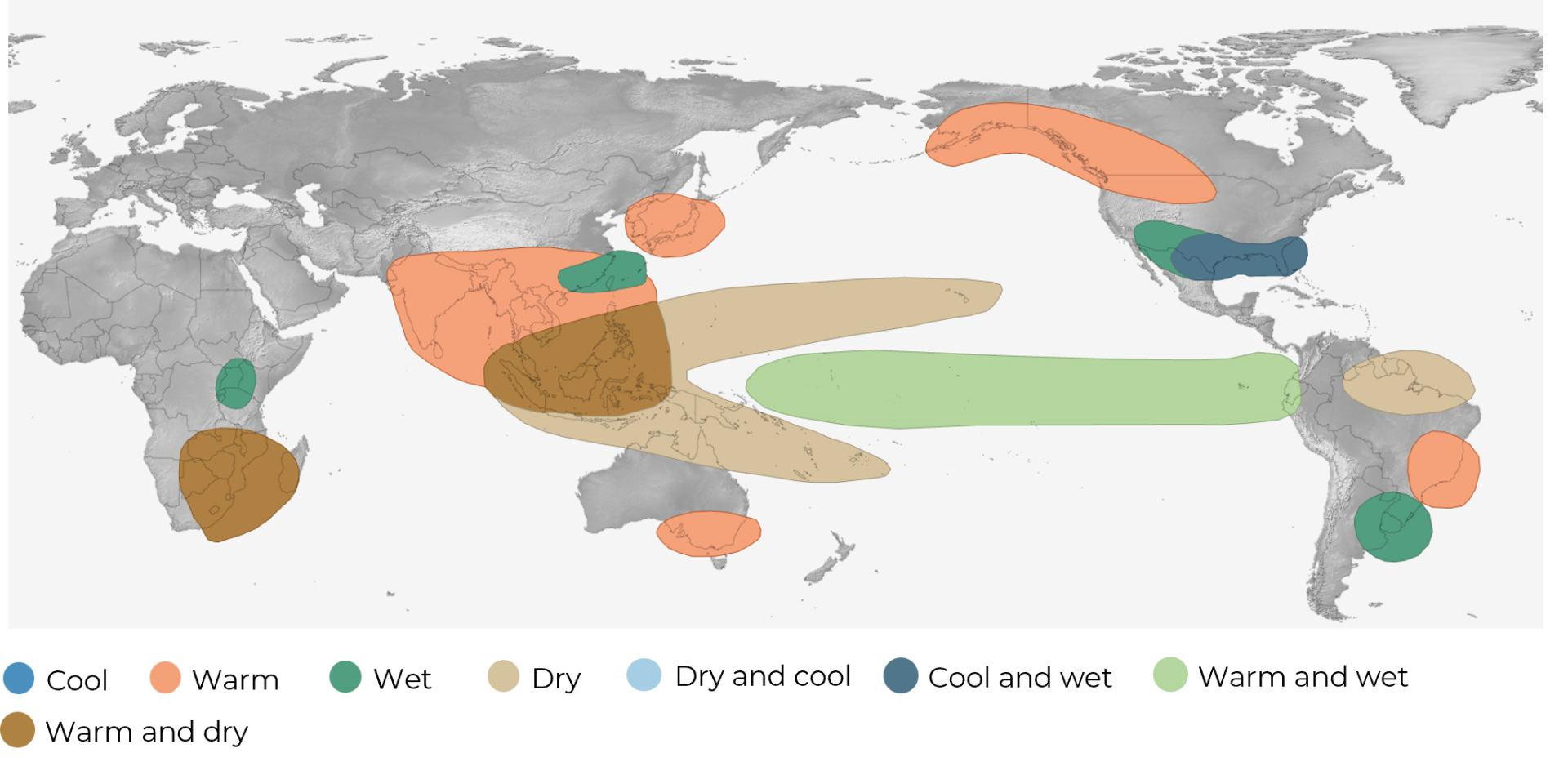
Higher temperatures and uneven rainfall
El Niño could alter monsoon patterns, bringing hotter and drier conditions to Australia, Southeast Asia, northern South America and parts of Central America.
Additionally, it could intensify rainfall in southern South America and Africa, increasing the risk of flooding, while also supporting a more active storm track across the southern United States during the winter.
El Niño: Possible Weather Impacts (December-February)
Source: NOAA
Special Report — Multicommodities
livea.coda@hedgepointglobal.com
luiz.roque@hedgepointglobal.com
thais.italiani@hedgepointglobal.com