The soybean and corn markets are entering a particularly important transition phase. Attention is beginning to shift from the outcome of the U.S. crops and the start of the harvest in the United States to the beginning of planting for the new South American crop. This transition is taking place in an environment where demand continues to provide significant support, while important uncertainties remain regarding the actual size of supply, particularly in the United States and South America.
At the same time, price formation is being influenced by factors that go beyond traditional agricultural fundamentals. Tensions between the United States and Iran, the intensification of the conflict between Russia and Ukraine, the resumption of Chinese purchases of U.S. soybeans, the growth of the U.S. crushing sector, and the expansion of corn-based ethanol in Brazil add new layers of complexity to the market. The result is an environment in which fundamentals, geopolitics, energy, exchange rates, and financial flows now interact simultaneously, increasing the importance of risk management and component-based marketing.
The macro environment is dominated by three major themes: U.S.-China relations, geopolitical conflicts, and energy/exchange rates.
The trade relationship regarding the United States and China is back in the spotlight with the meeting scheduled for September 24 in Washington — the first since Donald Trump’s visit to Beijing in May 2026. Expectations surrounding the meeting are high because China has resumed purchasing U.S. soybeans in significant volumes after a period of very limited purchases. Under recent agreements, there is a target of approximately 25 million metric tons of U.S. soybeans annually — a volume lower than the record of about 36 million metric tons, but still quite significant for the U.S. balance sheet.
A key distinction is between purchases by state-owned enterprises and those by private Chinese crushers. State-owned enterprises may purchase U.S. soybeans for strategic and geopolitical reasons, regardless of the crushing margin. Private companies, on the other hand, tend to buy from the most competitive source. Therefore, consistent confirmation of private Chinese purchases would be a much more significant signal for the market, as it would indicate the effective competitiveness of U.S. soybeans and could put pressure on Brazilian premiums.
The meeting will also take place close to the U.S. midterm elections in November, which adds a political dimension. At the same time, there is a risk of deteriorating relations between Washington and Beijing if U.S. retaliatory policies against Iran affect third countries that maintain trade relations with Tehran — a particularly sensitive issue because China has significant trade ties with Iran.
Geopolitics and the Black Sea
The escalation of attacks between Russia and Ukraine has become particularly significant for grain markets. The attacks have struck port facilities in both countries, compromising export logistics capacity. Ukraine is facing its lowest grain export volumes since the war began in 2022, while Russia has its lowest wheat export potential since 2011.
The impact is not limited to the physical reduction in supply. There is also a reliability premium associated with the origin. As buyers begin to question the ability to fulfill shipments from the Black Sea, origins considered more reliable — such as Brazil, Argentina, and the United States — may command higher premiums.
Exchange Rates and Energy
The conflict has heightened global risk aversion and strengthened the dollar, while the real has remained relatively strong, influenced in part by the interest rate differential and carry trade. The approaching Brazilian elections add another source of exchange rate volatility for the coming months.
Oil and diesel prices have also rebounded as conflicts have escalated. Rising energy costs are benefiting the biofuels market, particularly soybean oil used in biodiesel production. In fact, soybean oil has been showing a strong performance compared to palm oil and has become an increasingly important component in determining the crushing margin in the United States.
Fertilizers
The rise in fertilizer prices is another significant factor. Prices rose significantly after the conflicts began, retreated somewhat, and then gained momentum again as the Russia-Ukraine war intensified. Since the price spike coincided precisely with the Brazilian pre-planting period, the high costs are likely to primarily affect decisions regarding planted area and investment for the 2026/27 crop year.
The market is entering a critical transition period between crops. In the U.S., soybeans and corn are nearing harvest; in Brazil, planning for the 2026/27 crop season is beginning.
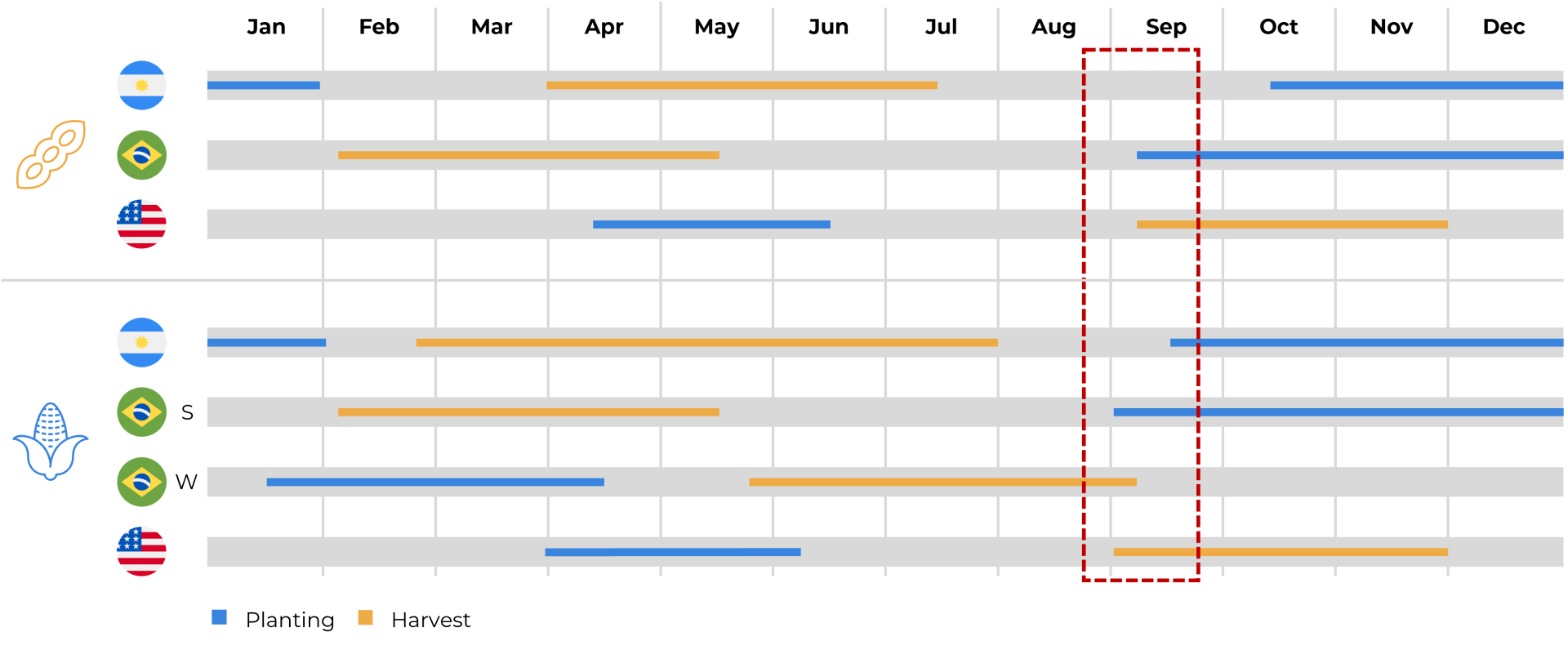
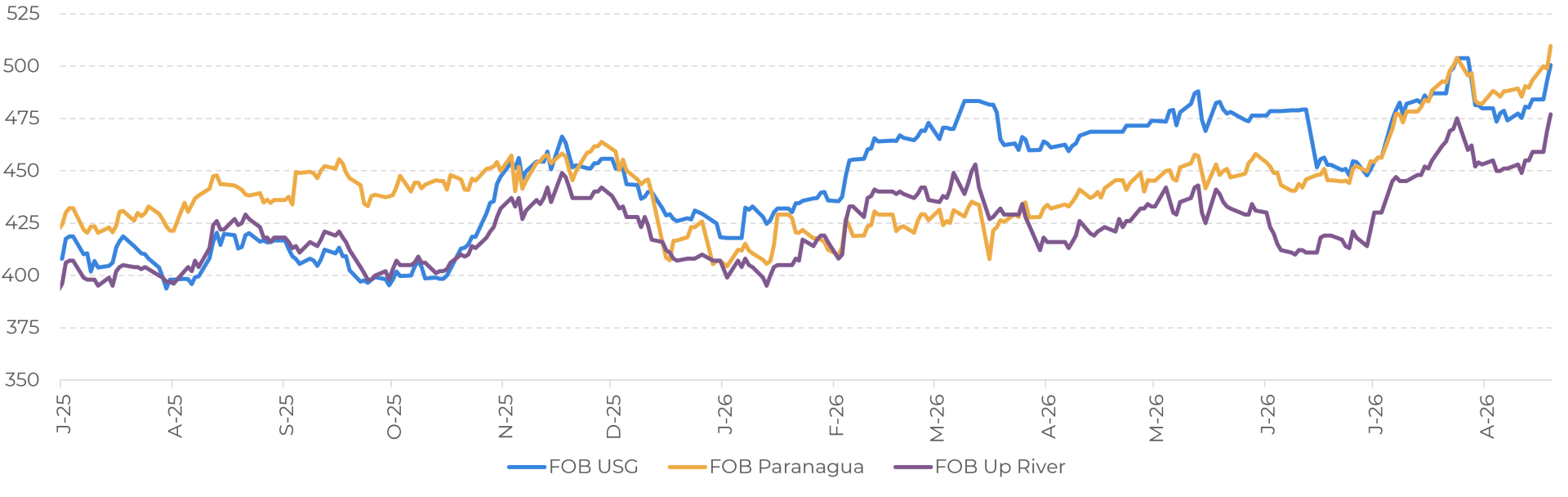
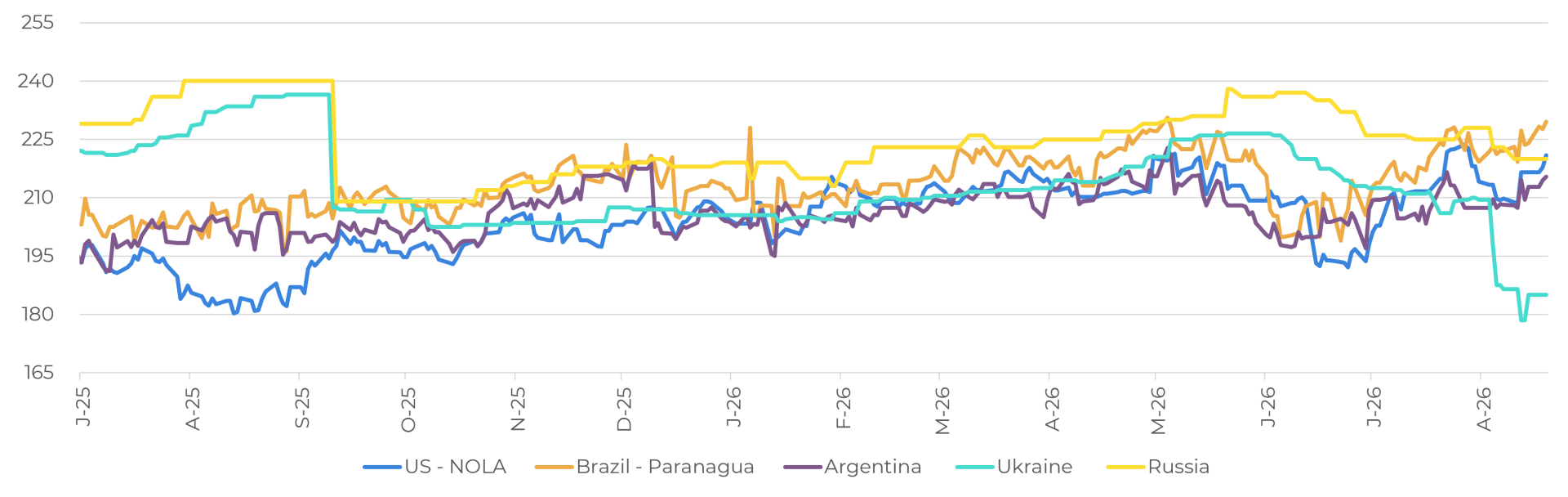
In the soybean market, Brazil and the United States are competing for market share based on price and freight differentials, while also keeping an eye on the seasonal timing of the new U.S. crop’s arrival. In the corn market, Argentina emerges as a highly competitive supplier, while Brazil faces greater international competition and challenges with its main buyer (Iran).
However, Brazilian corn has a unique characteristic: its lower international competitiveness is partially offset by growing domestic demand for ethanol, which intensifies competition for available corn.
Summary
The market is entering a transition period in which the focus is gradually shifting from the U.S. crop alone to a combination of the U.S. crop, South American planting, and South American weather conditions. Historically, this transition increases volatility, especially between October and the end of the year. The direction of prices will depend on confirmation of the U.S. crops and, subsequently, on planting conditions and crop development in Brazil and Argentina.
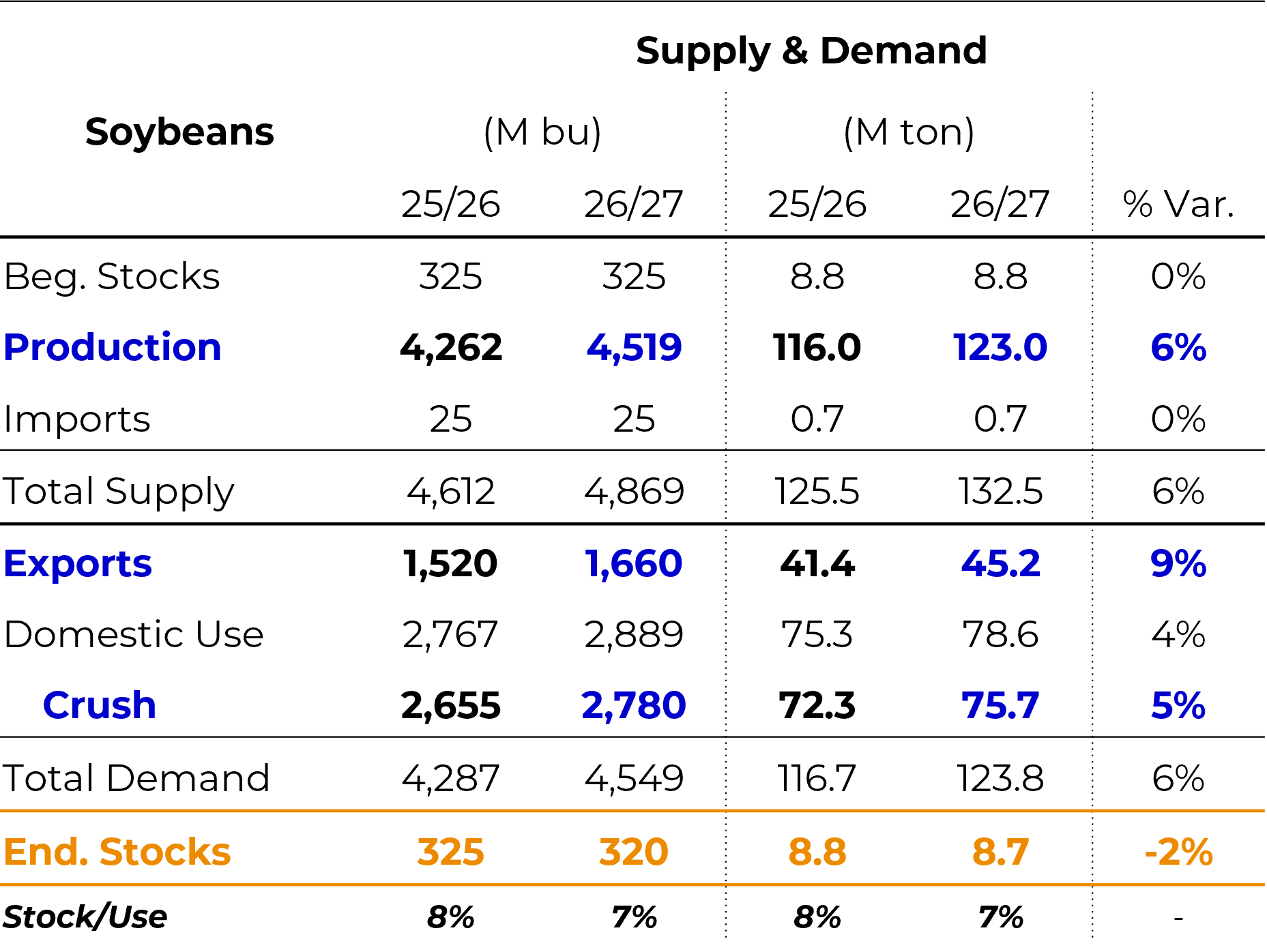
U.S. production is one of the main sources of uncertainty in the current market.
The USDA raised its production estimate to approximately 123 million metric tons, while Pro Farmer projected 124.4 M metric tons. The difference seems small, but the basis for the estimates is important: the USDA assumes lower yields than the previous year, while Pro Farmer assumes higher yields.
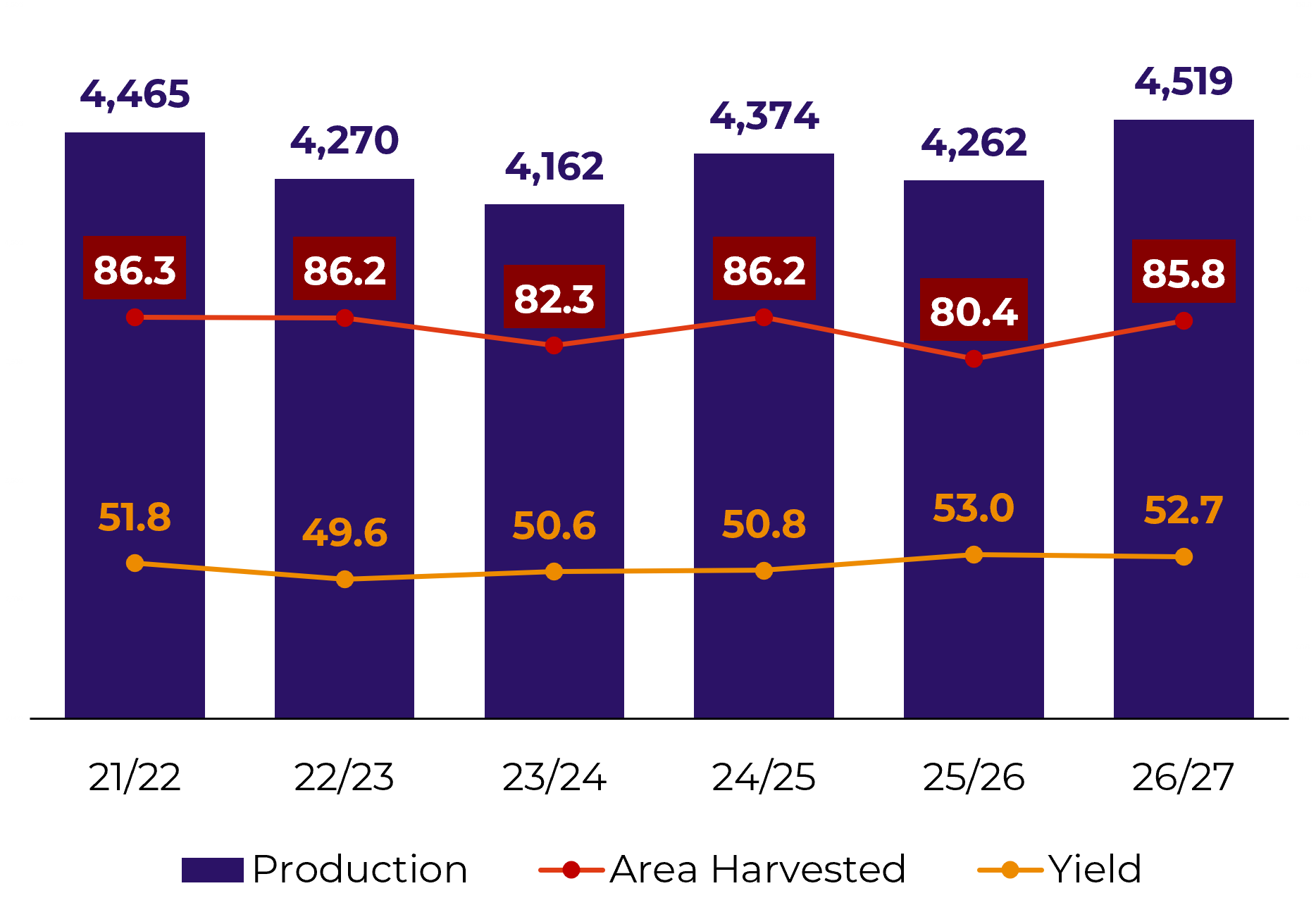
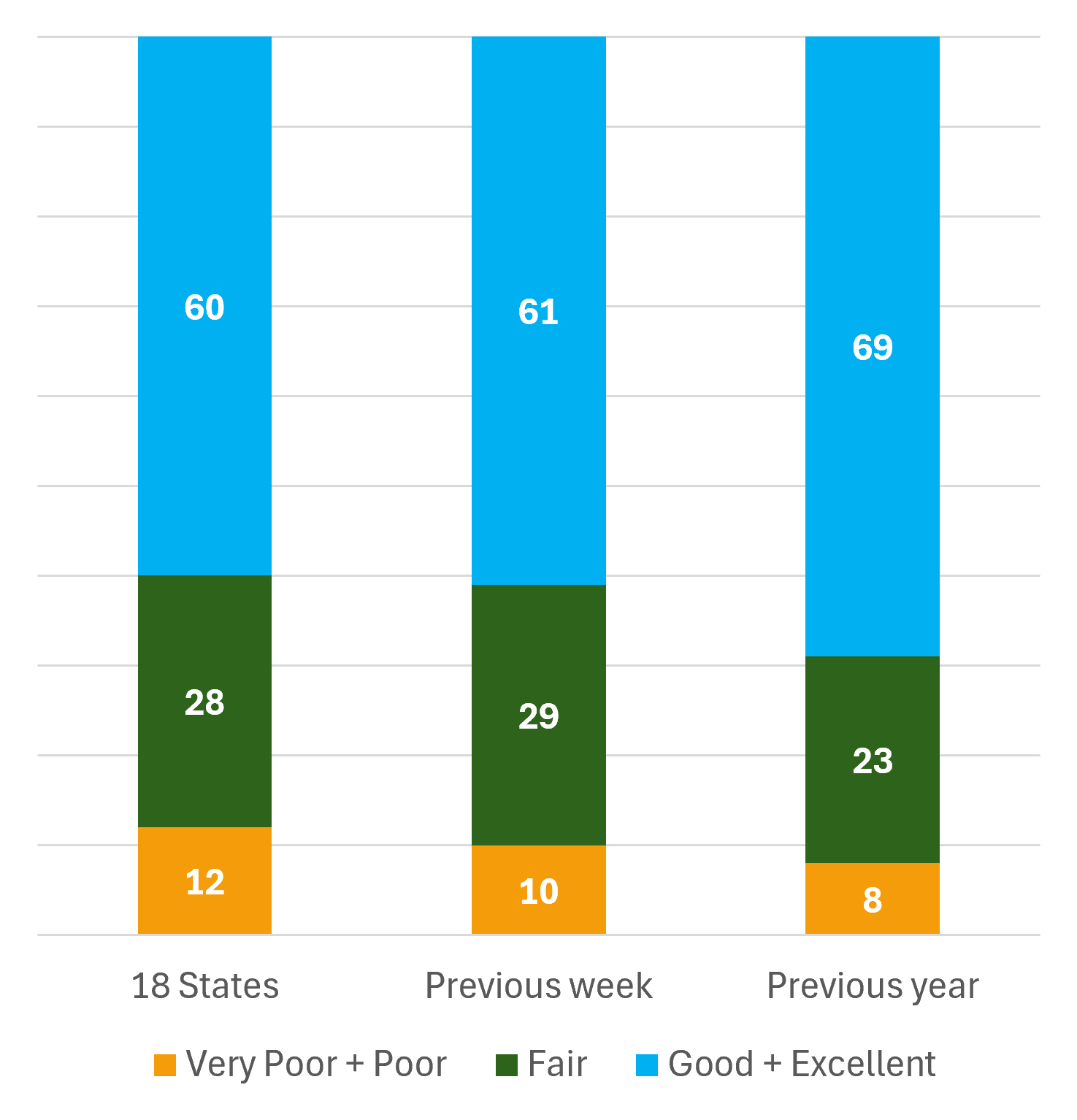
The problem is that crop conditions do not seem to justify such high yields. Only 60% of soybean crops were in good or excellent condition in the penultimate week of August, compared to 69% during the same period last year, which ended with record yields. This increases the likelihood that actual yields will fall short of even the most optimistic projections. Confirmation will depend on the harvest and upcoming USDA reports.
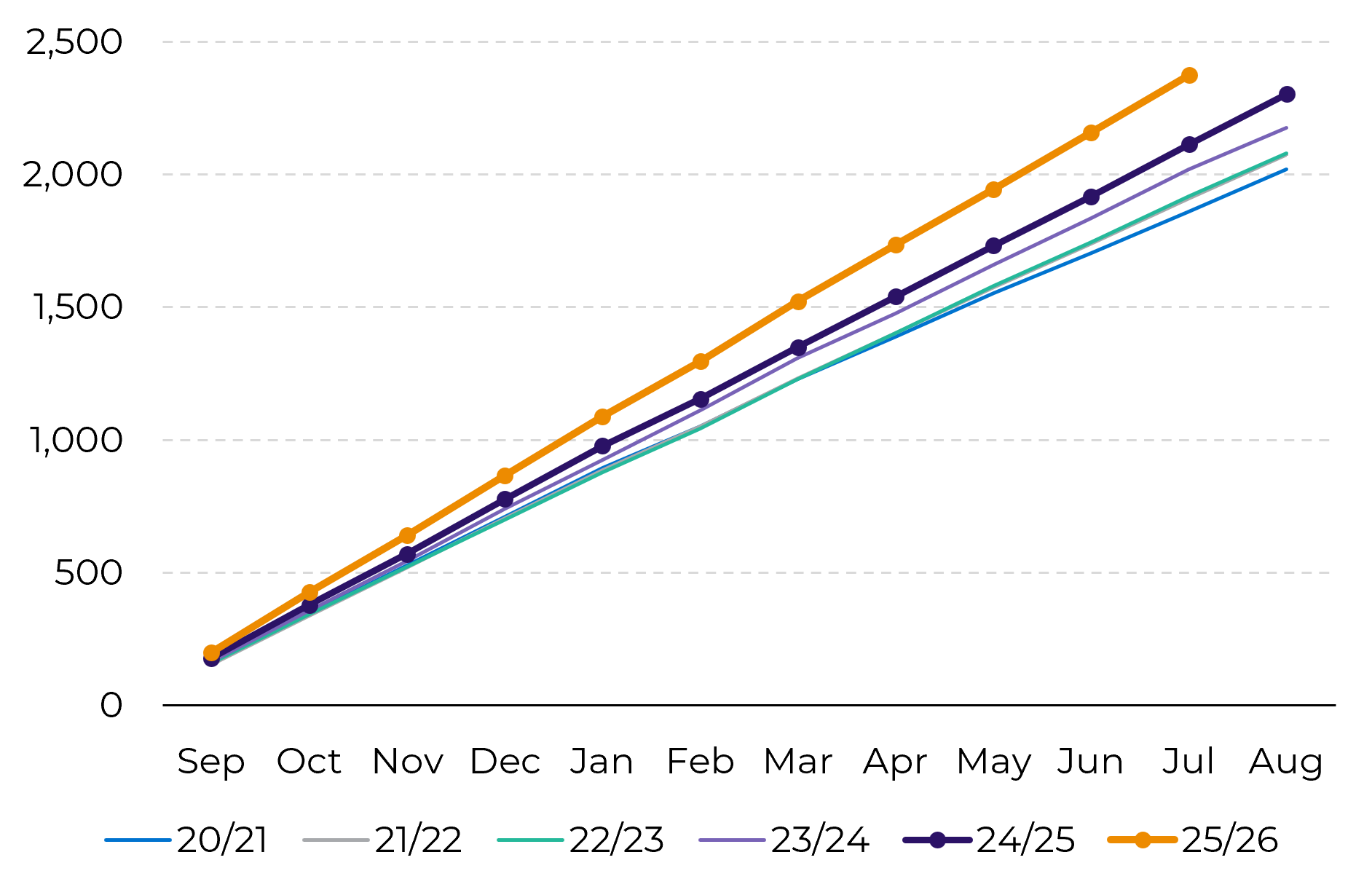
The main supportive factor lies not only in production but also in the strong growth in crushing. The expansion of biodiesel and renewable diesel has boosted the price of soybean oil and significantly improved crushers’ margins.
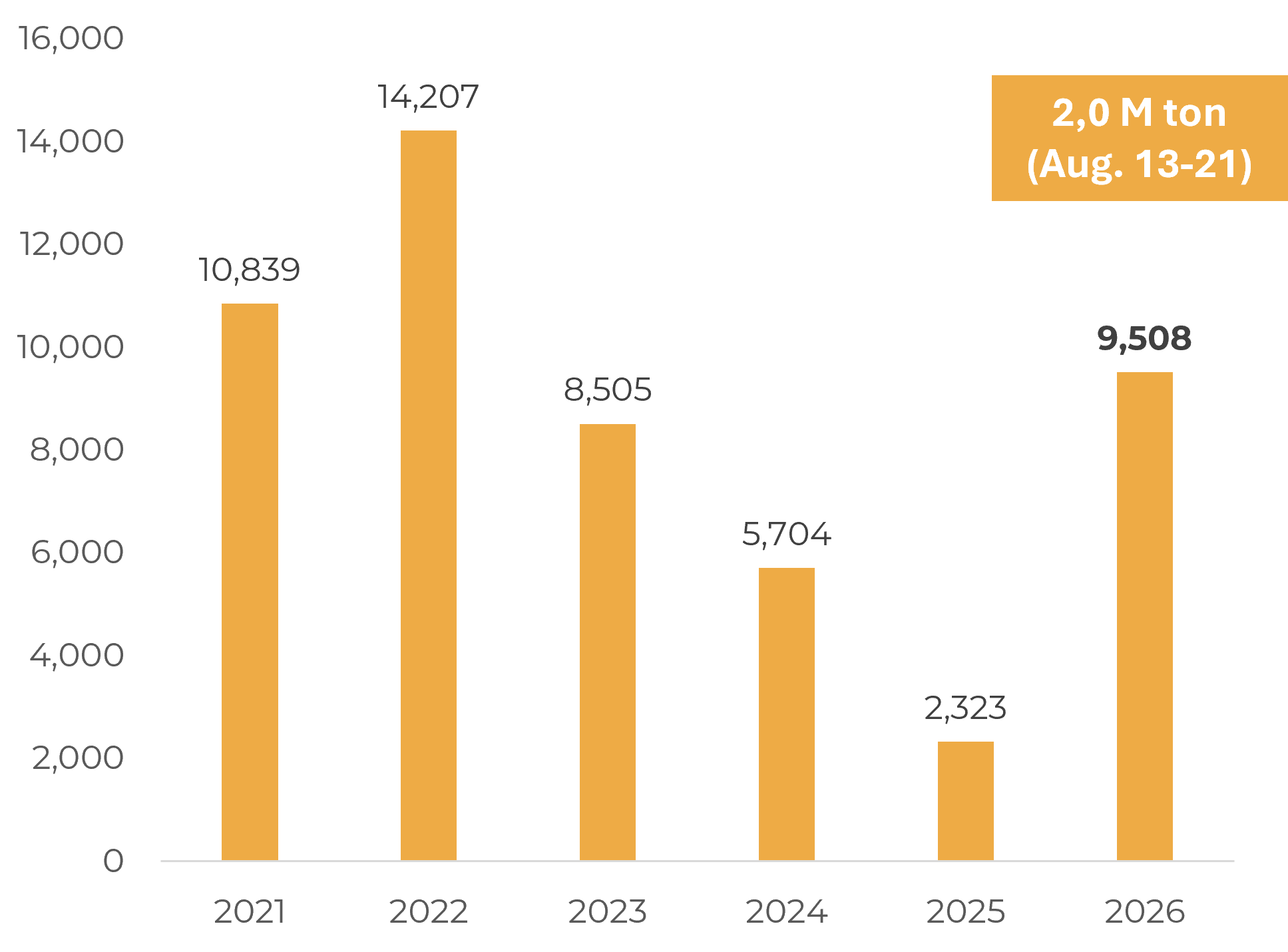
Advance sales also accelerated following the resumption of Chinese purchases, reaching approximately 11.5 M ton for delivery starting in September. The U.S. stock-to-use ratio remains near 7%, limiting the potential for inventory buildup.
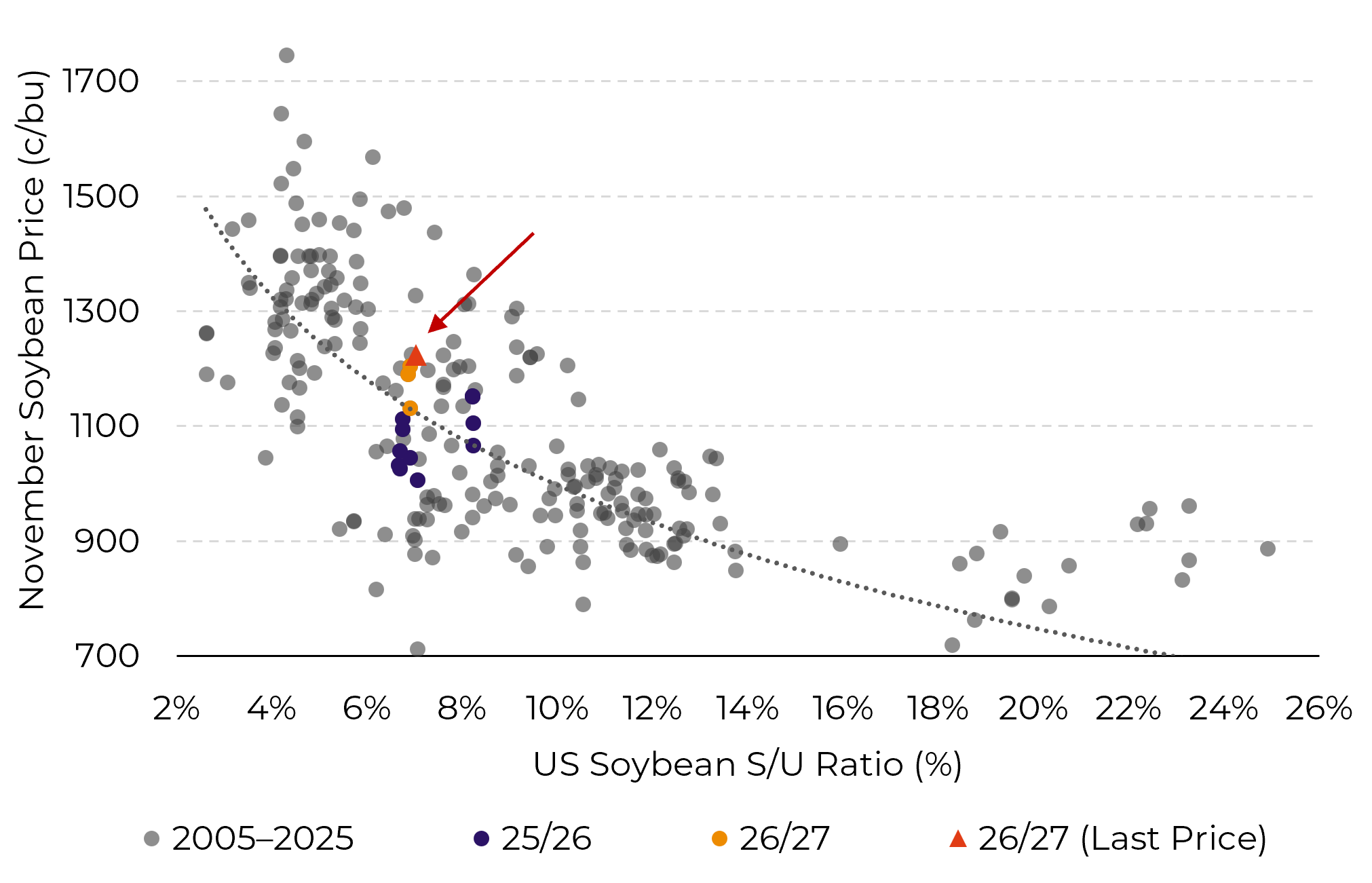
Chicago prices rose from approximately $10/bushel in September 2025 to about $12–12.20/bushel, reflecting primarily improved demand.
With the stock-to-use ratio near 7%, the regression model points to a fair price of around US$ 12/bushel. If U.S. production falls and the stock-to-use ratio approaches 6%, there is room for higher prices. If production grows without a corresponding increase in demand, the market may once again put downward pressure on prices.
Source: CME, USDA, Hedgepoint
Summary
U.S. soybeans present one of the most interesting market dynamics today. Production may set a record, but the combination of record crushing, demand for soybean oil, and a resumption of Chinese purchases prevents the additional supply from automatically translating into high stocks. The big question mark is actual yield. If the crop disappoints, the stock-to-use ratio could tighten further, opening the door for Chicago prices to rise above current levels.
The outlook for U.S. corn shows a similar dynamic, but with a greater likelihood of reduced corn production.
The USDA projects approximately 407 M ton, while Pro Farmer estimates around 390 M ton. The difference is significant and leaves room for future revisions by the USDA.
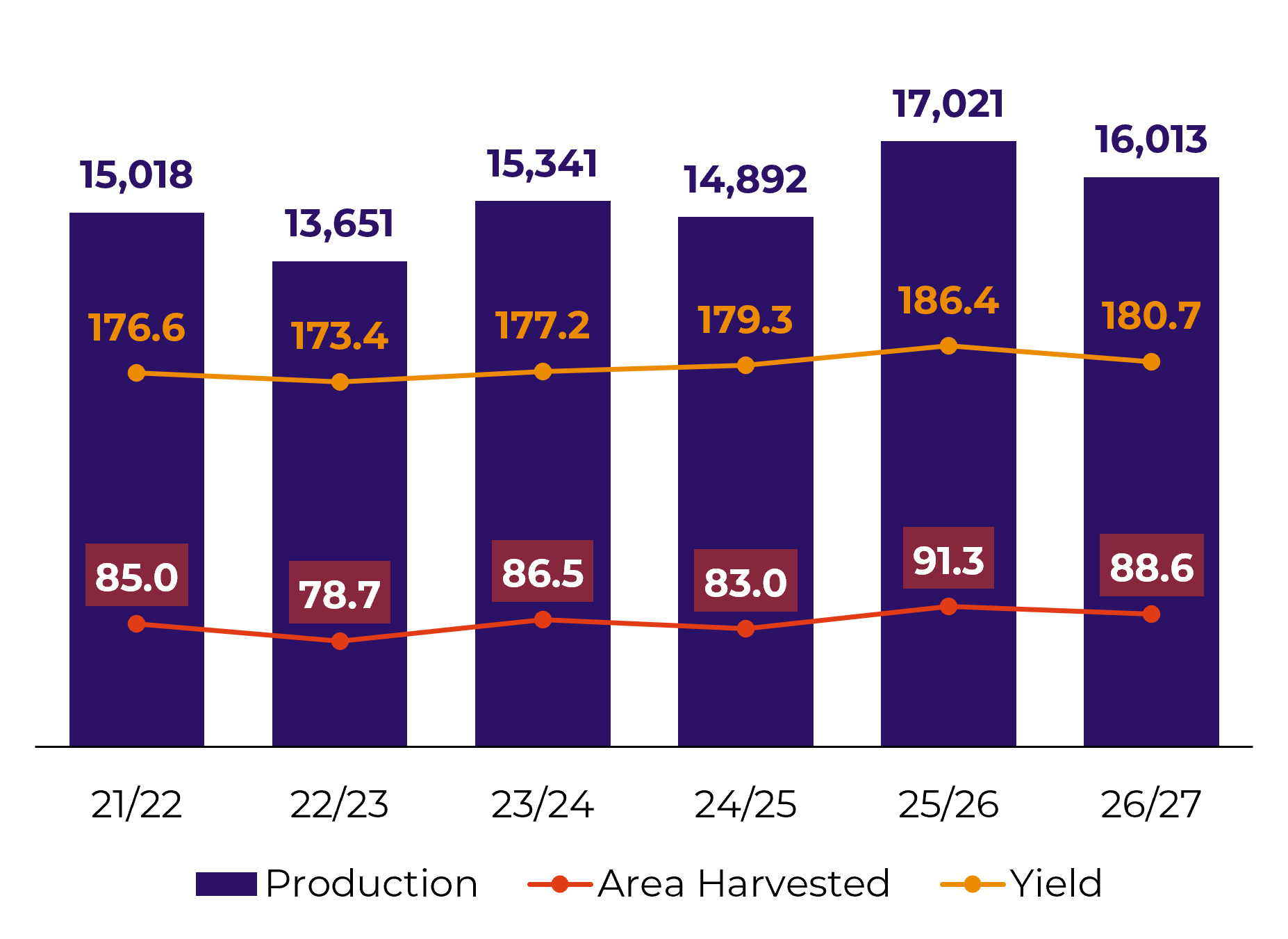
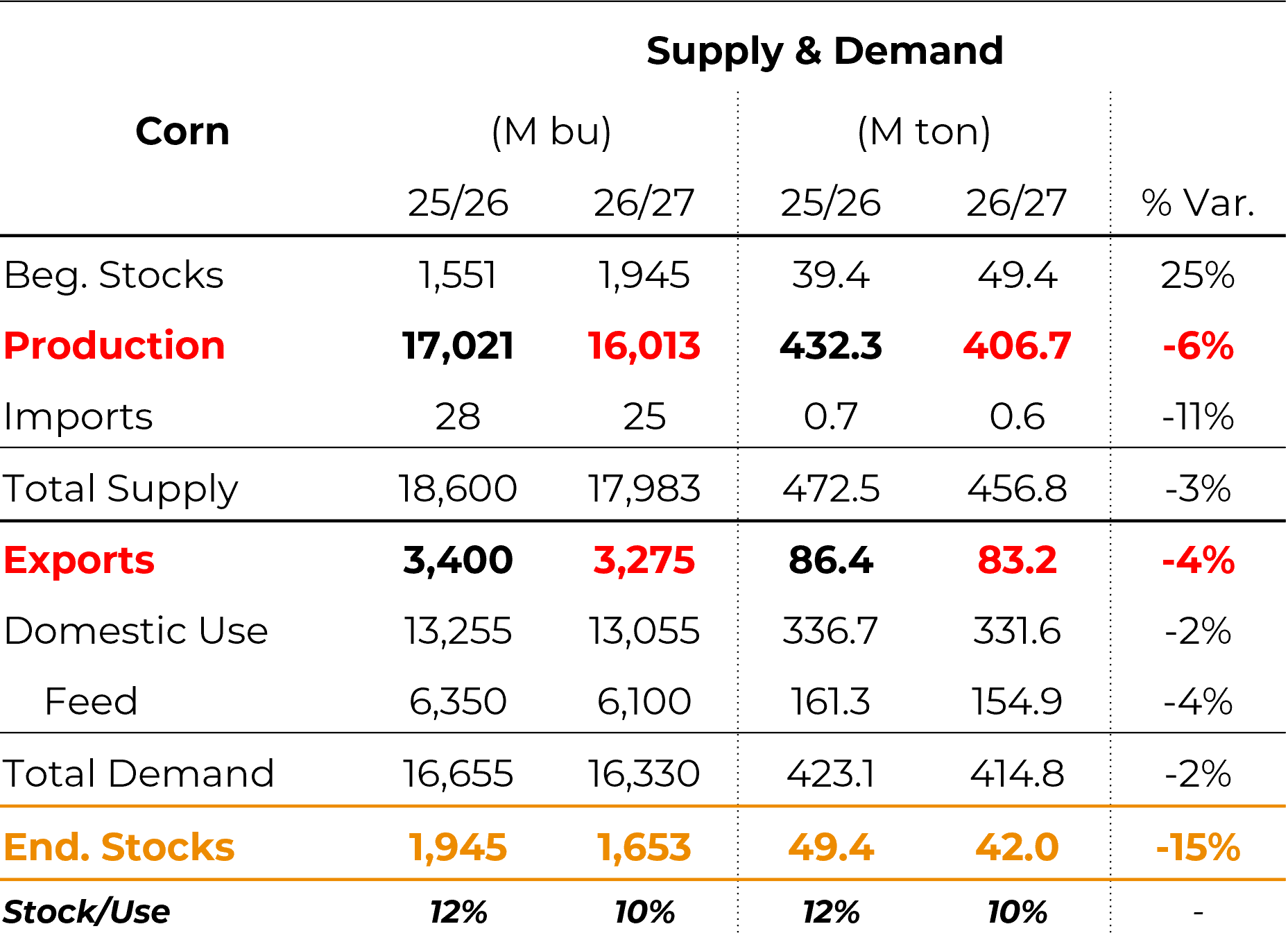
Crop conditions reinforce this possibility: only 57% of the corn was in good or excellent condition, compared to 71% the previous year. Thus, there is justification for a yield lower than that currently used by the USDA.
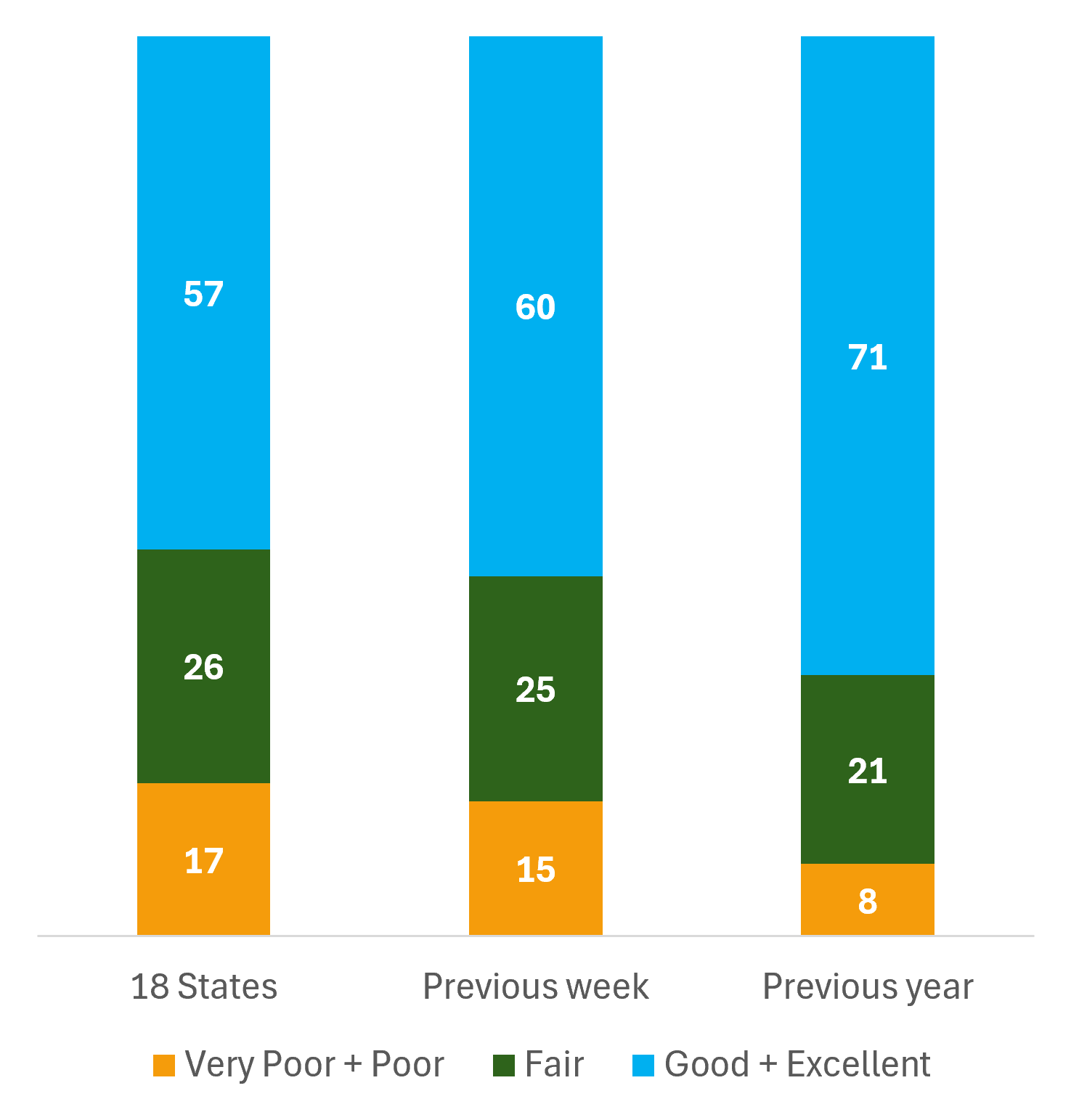
Exports, on the other hand, remain very strong and could reach approximately 83 M ton, the second-highest level in U.S. history. As a result, the stock-to-use ratio could fall from approximately 12% to 10%.
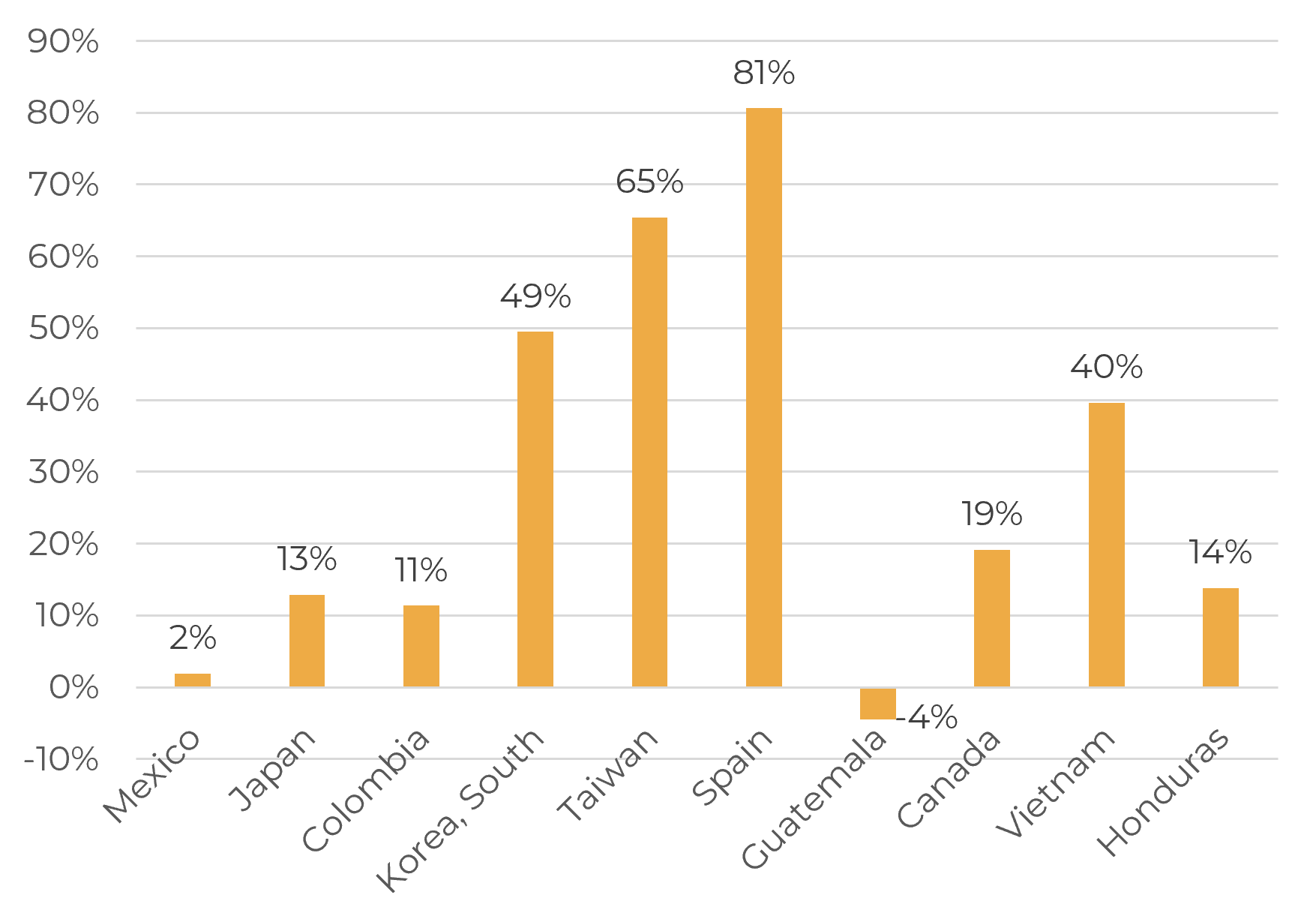
Corn prices have risen from about $3.80/bushel in September 2025 to approximately $4.80–4.90/bushel currently, supported by foreign demand and supply issues in the Black Sea region.
Summary
U.S. corn has more bullish fundamentals than it initially appears. Production may be lower than estimated by the USDA, while exports remain exceptionally strong. If the USDA revises yield estimates downward during the harvest, the stock-to-use ratio could fall even further and provide additional support for Chicago.
European crop conditions deteriorated significantly due to heat waves in June and July. In France, only 29% of crops were in good or excellent condition, while 43% were in poor or very poor condition as of the penultimate week of August.
As a result, the USDA reduced its European production forecast from approximately 57 M ton to 50 M ton, with the possibility of further cuts.
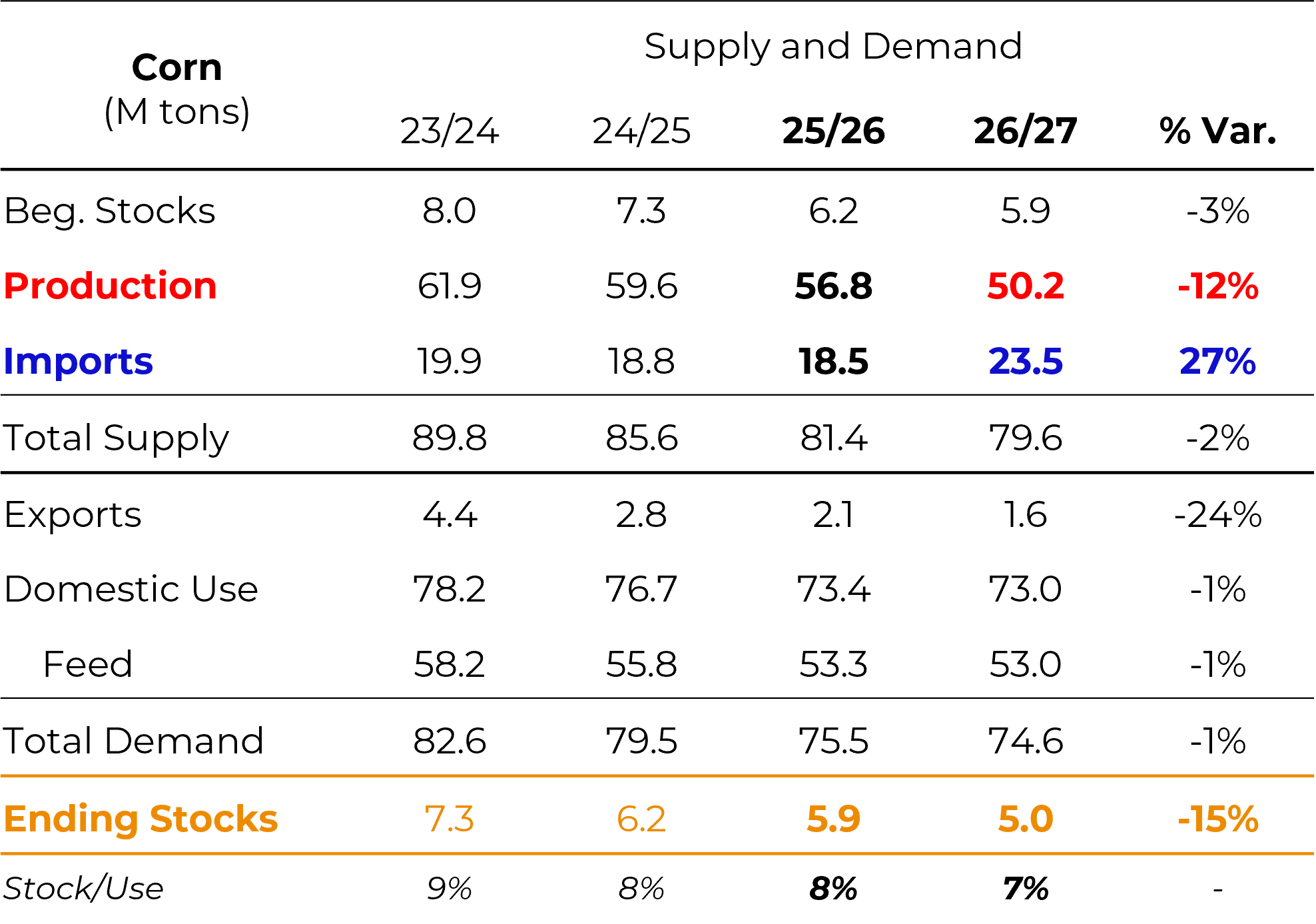
The drop in production is expected to increase import needs at precisely a time when Ukraine — historically one of the EU’s main sources — is facing logistical and export capacity issues. This creates potential for increased European purchases from the U.S., Brazil, and Argentina.
Summary
The decline in European production represents an opportunity for exporters, particularly Brazil and Argentina, but Argentina’s strong competitiveness limits Brazil’s potential gains.
Hedgepoint’s first estimate for the 2026/27 Brazilian crop points to production of 181.7 M ton, virtually in line with the estimated production for 2025/26.
Regarding more optimistic projections, the difference lies mainly in the planted area. The expectation is for an increase of just 0.9%, while the USDA projects growth of 3%. This represents a significant slowdown compared to recent years.
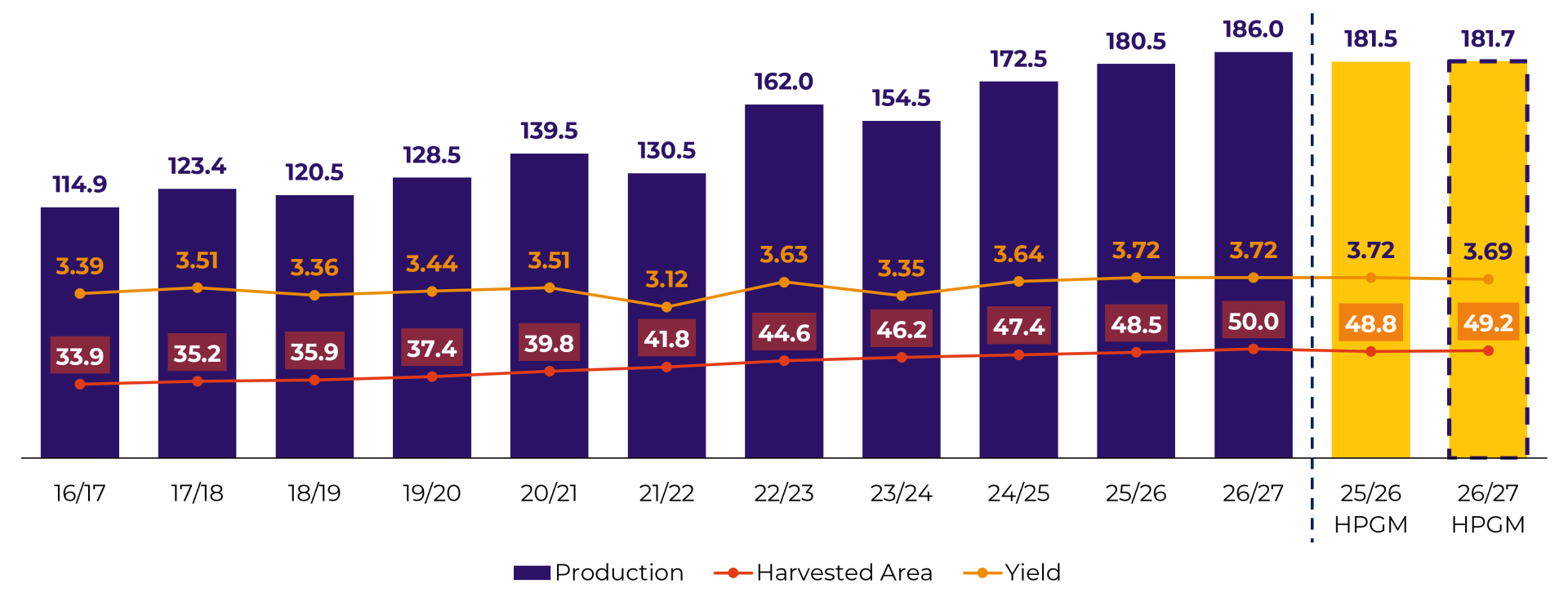
The main issue is margins. Lower prices, high costs, and more expensive fertilizers have significantly reduced producers’ profitability. This environment reduces the incentive for more aggressive expansion of planted area and is also likely to limit investments in technology and inputs.
The projection of 181.7 M ton does not yet factor in any potential negative impact from El Niño. The phenomenon follows a historically recognized pattern in Brazil:
• higher humidity in the South;
• less precipitation in the Central-North.
This pattern is particularly relevant because Mato Grosso, Goiás, Bahia, and other areas of the Central-North have already suffered significant losses during previous El Niño episodes.
For September and October, forecasts remain favorable for Brazilian planting, with normal or above-average rainfall in the Central-North. Concerns grow starting in November, when projections begin to show a pattern more typical of El Niño, with reduced rainfall in the Central-North and increased rainfall in the South.
This creates a significant risk: the crop may start with good planting conditions but later face development problems.
Regarding demand for the current season, Brazilian soybean exports for 2025/26 are expected to reach approximately 114 M ton, about 6 M ton above the previous record of 108 M ton. The pace of shipments remains strong, supported by high international demand for Brazilian soybeans.
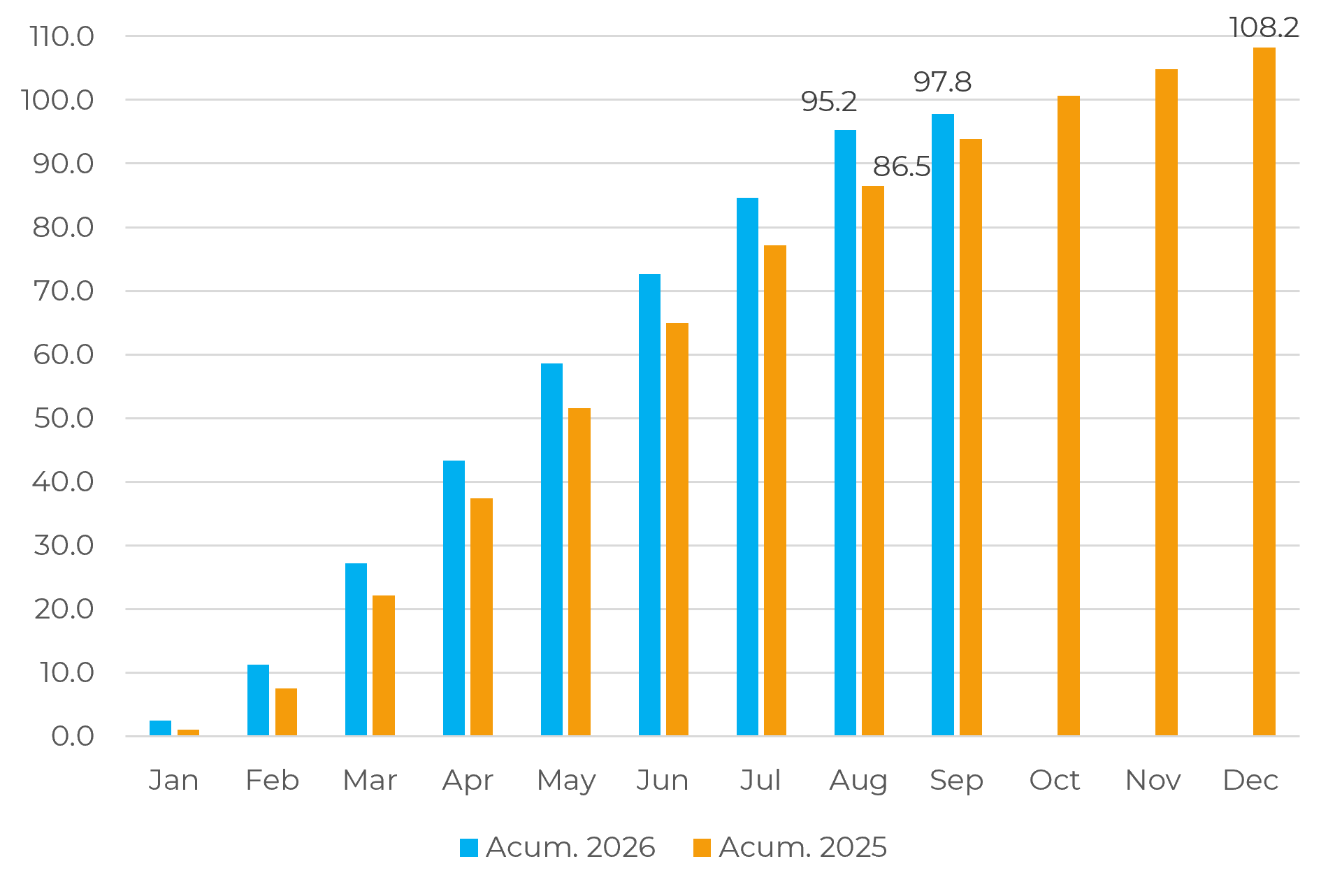
Source: MDIC, Maritime Agencies, Hedgepoint
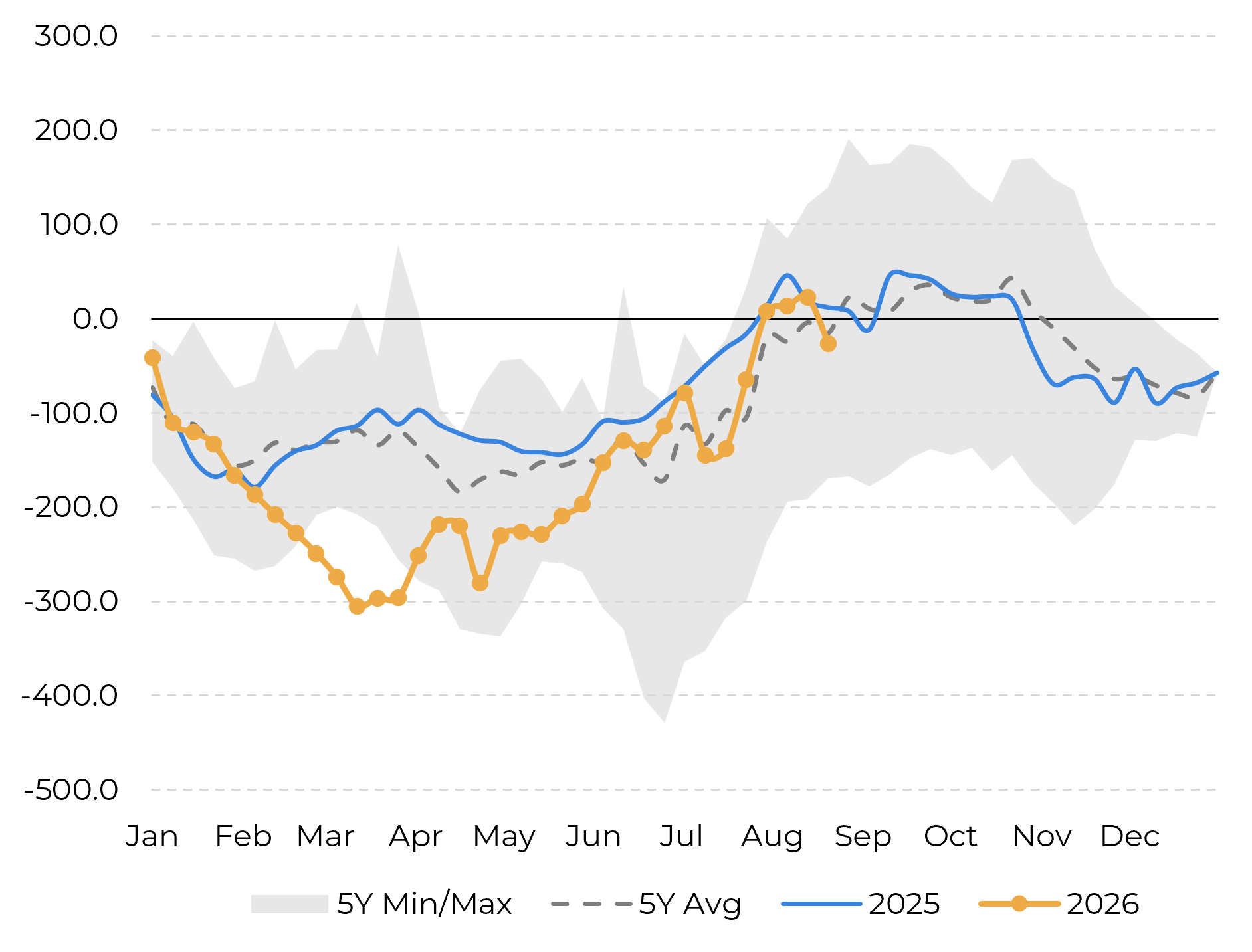
Premiums have also gained momentum, driven by favorable seasonal conditions in the second half of the year and a combination of:
• strong foreign demand;
• strong domestic demand;
• lower supply ahead of the next crop.
Source: CME, ESALQ, Hedgepoint
Summary
Brazilian soybeans are entering the new cycle with prospects for much more moderate supply growth. The main point of concern is not just the planted area, but the combination of compressed margins and climate risk associated with El Niño. If weather conditions remain merely normal, production should be close to 181–182 M ton; if there are problems in the Central-North region, there is potential for a significantly smaller crop and, consequently, for a strong reaction in prices and premiums.
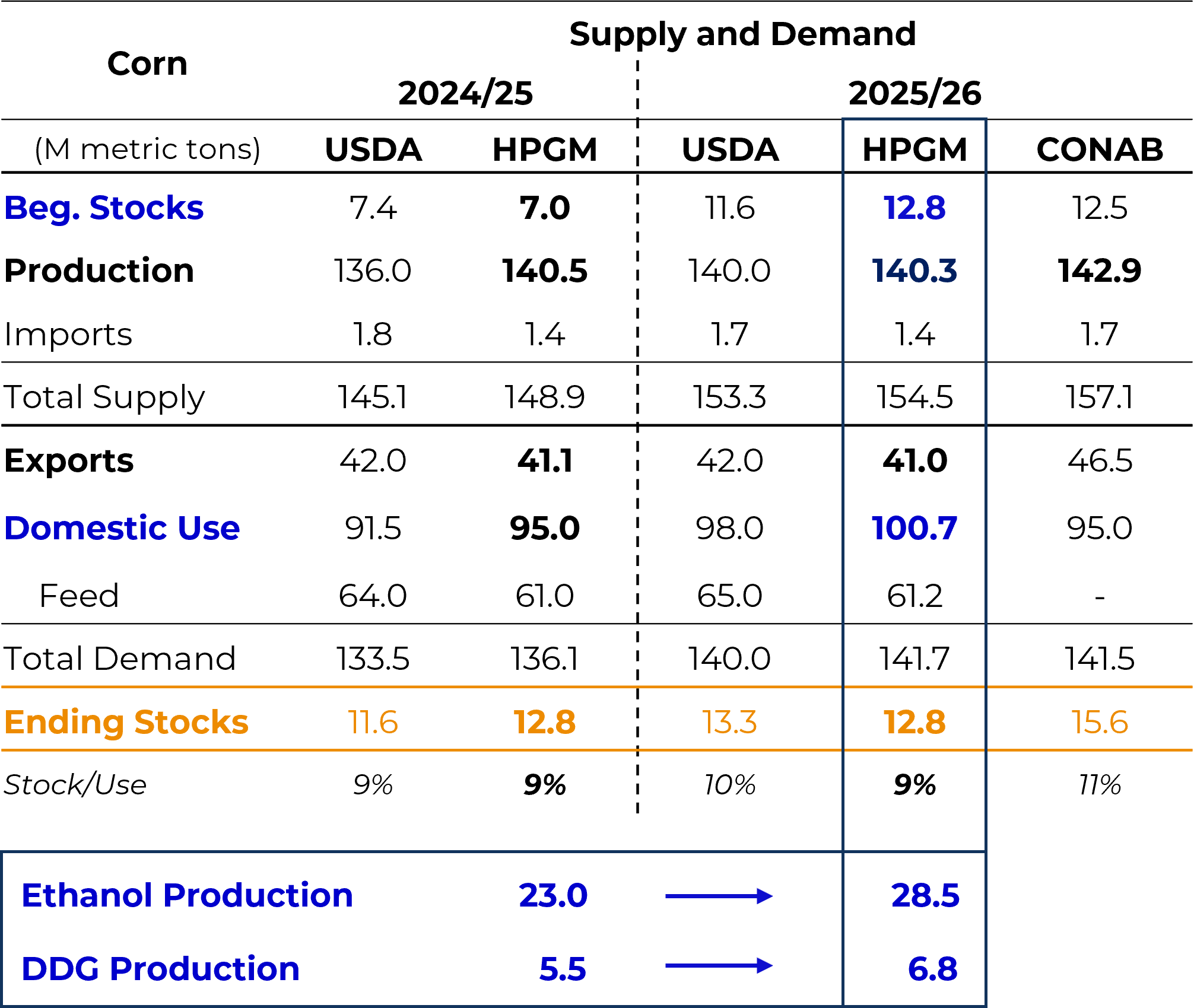
Brazil’s 2025/26 corn production is estimated at approximately 140.3 M ton. The main highlight, however, is the growth in domestic demand.
Corn consumption for ethanol is expected to grow by about 5.5 M ton, potentially reaching close to 29 M ton with E32. There are currently 29 corn-based ethanol plants in operation and another 27 projects under development.
Source: USDA, CONAB, Hedgepoint
This growth explains why Brazilian corn may be less competitive for export without necessarily representing a negative factor for producers. The domestic market is willing to pay for corn, especially in regions near ethanol plants.
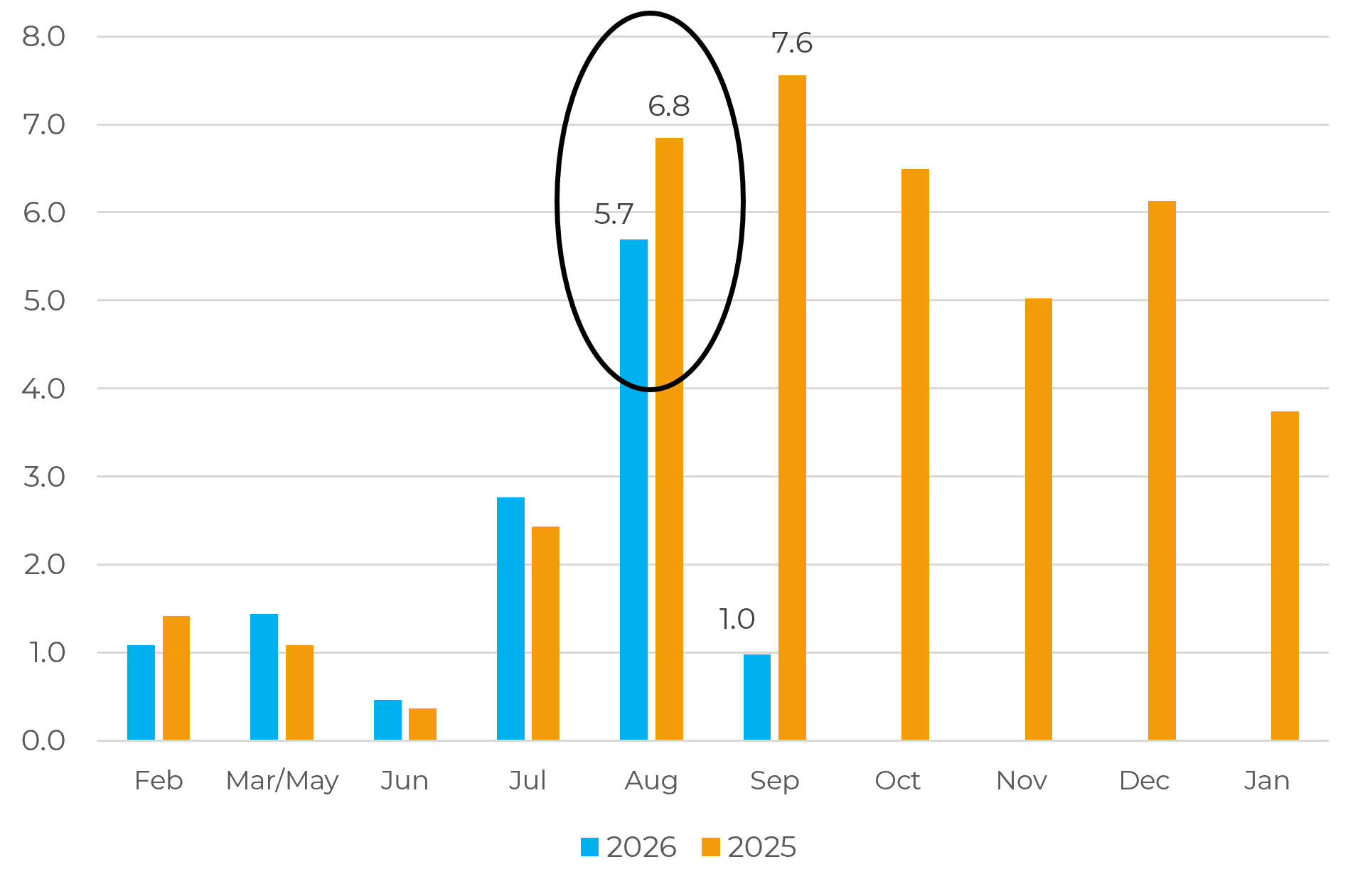
Exports, on the other hand, may face difficulties. Brazilian exports are now estimated at 41 M ton, virtually unchanged from the previous year. Two factors are limiting export potential:
1. increased competition from Argentina;
2. a possible reduction in Iranian purchases.
Iran, the largest buyer of Brazilian corn in 2025, purchased about 9 M ton last year, but was approximately 1 M ton below the previous pace in the year-to-date period analyzed for 2026 (January through July), due to logistical difficulties caused by the conflict.
Source: MDIC, Maritime Agencies, Hedgepoint
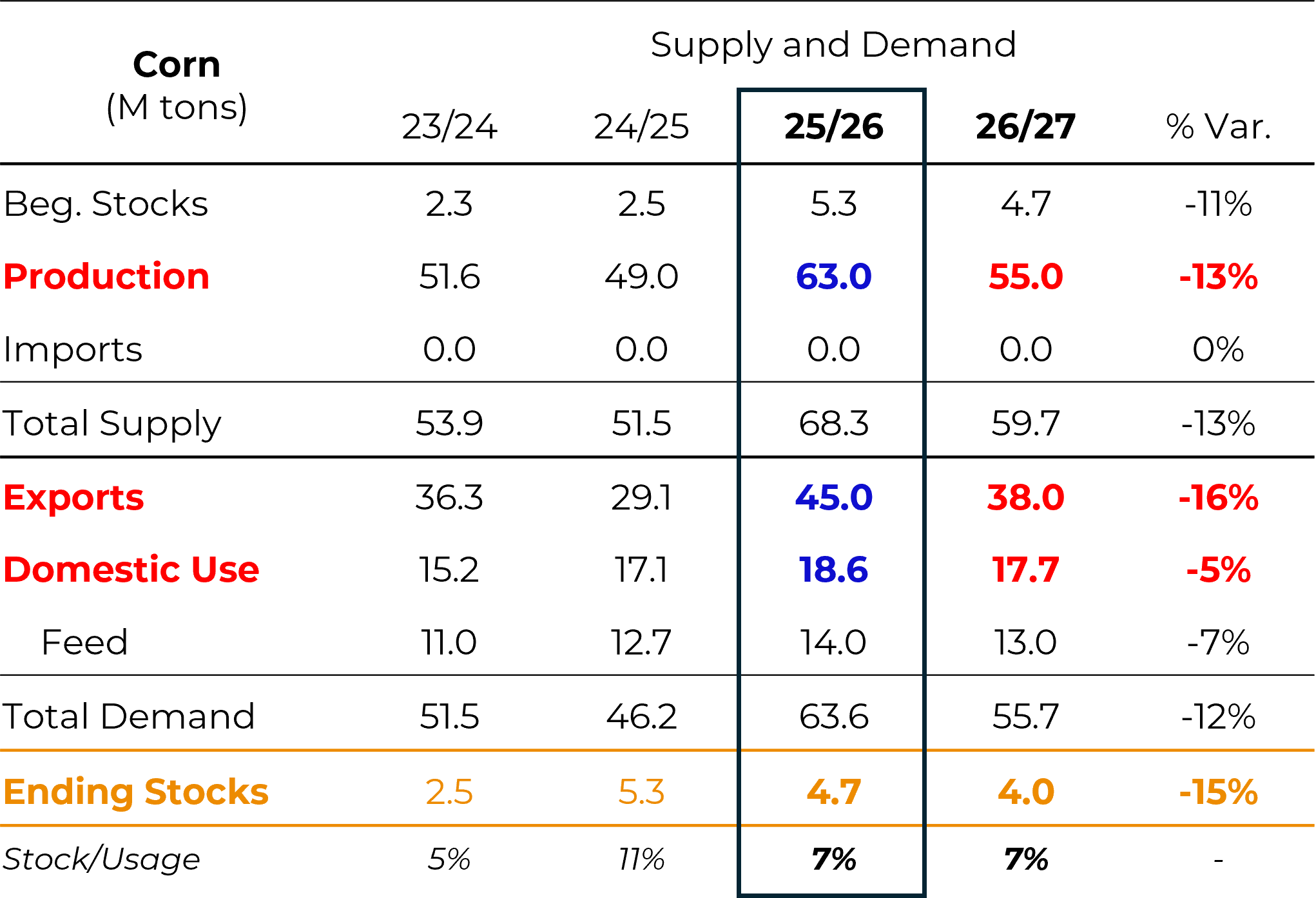
At the same time, Argentina is experiencing an exceptional crop, estimated at 63 M ton by the USDA, though local estimates are closer to 70 M ton. Argentine exports could jump from 29 M ton to approximately 45 M ton, surpassing Brazil.
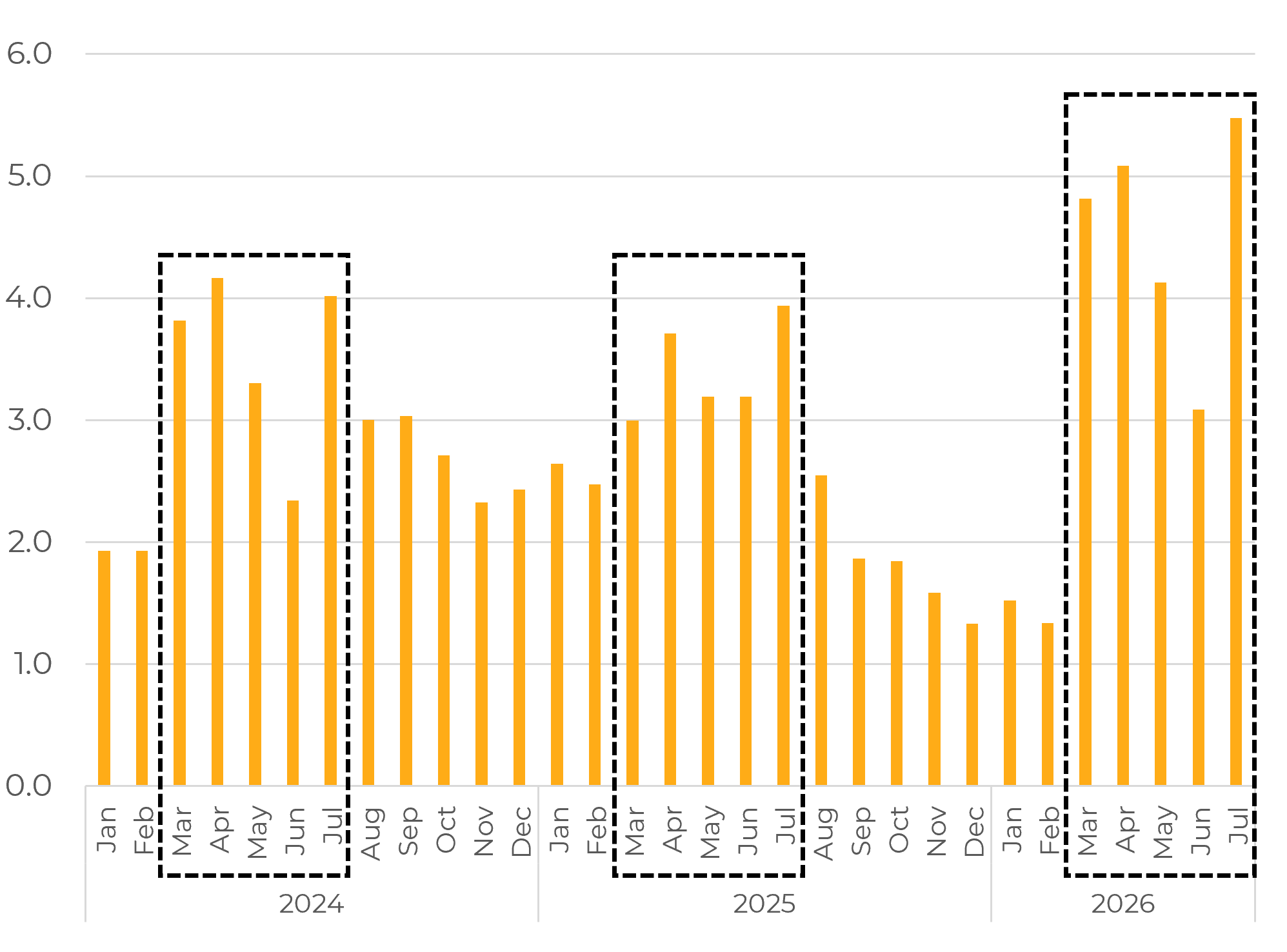
Source: Argus, Hedgepoint
Summary
Brazilian corn presents a clear dichotomy: more challenging exports, but structurally strong domestic demand. Growth in ethanol production reduces dependence on foreign markets and can absorb a significant portion of the surplus. However, the combination of highly competitive Argentine corn and lower Iranian demand may prevent exports from growing.
One of the most important points is the realization that fundamentals, while essential, are not sufficient to anticipate all relevant market movements.
Over the past 25–26 years, there have been at least 14–15 major events capable of completely altering the market landscape: the 2008 financial crisis, the COVID-19 pandemic, wars, and geopolitical events, among others. The next major shock will likely be something the market is not yet discussing today.
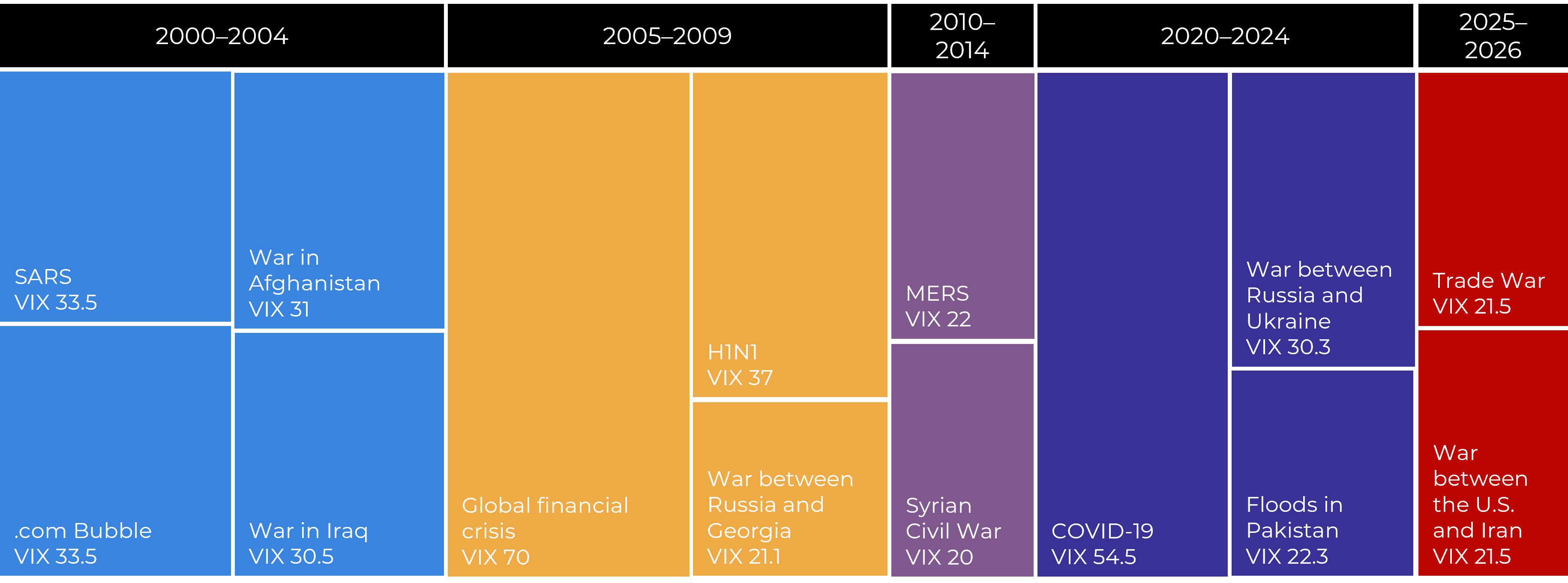
This observation underscores the importance of risk management. Price formation has become more complex, and no strategy can completely eliminate uncertainty. The goal is now to structure trading in such a way that an unexpected event does not compromise the producer’s or company’s margin.
Marketing Strategies
There are four basic approaches:
1. Do nothing
This allows the producer to fully capture any price increase but leaves them completely exposed to a price drop.
2. Fix the spot price
This guarantees a known margin and eliminates uncertainty, but it also eliminates the producer’s share of any subsequent price appreciation.
3. Use futures
This provides protection in liquid, standardized markets, such as Chicago or B3. The downside is that the price is more rigidly locked in, and there may be margin costs and discrepancies between the contract and the physical exposure.
4. Using options and OTC structures
Allows for greater customization of:
• maturity;
• volume;
• upside or downside exposure;
• and separate definition of price components.
This latter approach allows you to work with the Chicago rate, exchange rate, and premium independently, rather than necessarily setting all components simultaneously.
Summary
In a market subject to unexpected shocks, risk management becomes just as important as price forecasting. The most efficient strategy is to address the components of price formation individually and avoid relying on a single directional bet.
• U.S. Crushing: Strong Growth Driven by Biodiesel.
• Resumption of Chinese purchases: agreement calls for 25 M ton of U.S. soybeans per year.
• Risk of smaller crops in the U.S.: soybean and corn crop conditions below last year’s levels.
• U.S. corn: exports near 83 M ton and stock-to-use ratio potentially at 10%.
• Problems in the EU: increased need for corn imports.
• El Niño: risk to Brazilian soybean production.
• Corn ethanol in Brazil: structural growth in domestic demand.
• Problems in the Black Sea region: increased strategic importance of alternative sources.
• Potential for large U.S. crops: if current yields hold.
• Chinese purchases still below historical potential.
• Large Argentine corn crop: increased international competition, particularly with Brazil.
• Risk of a decline in Iranian purchases of Brazilian corn.
• A stronger real: reduces the competitiveness of exports.
• Possible profit-taking by funds: if fundamentals change.
The corn and soybean complex market is entering one of the most important periods of the year with a scenario that, at first glance, appears balanced but actually presents significant asymmetry in risks. On the one hand, U.S. supply may still be ample, and Argentina is reporting an exceptional corn crop; on the other hand, U.S. yields may disappoint, demand for soybean crushing is extremely strong, and Europe may need to increase its corn imports. In Brazil, the growth of corn-based ethanol creates a new structural driver of demand, while El Niño introduces a potentially significant risk for the upcoming soybean crop.
The main takeaway is that demand currently provides more consistent support for prices than supply exerts downward pressure. For soybeans, U.S. crushing, soybean oil, and the resumption of Chinese purchases are keeping Chicago prices near $12 per bushel; for corn, strong U.S. exports, issues in the Black Sea region, and a possible reduction in U.S. production are helping to keep prices firm. In South America, however, the situation is more complex: Brazil may have larger crops but with tighter margins, while Argentina may assume a growing share of corn exports.
In this environment, the greatest risk is attempting to predict a single direction for prices in advance. The transition from the U.S. harvest to the South American planting season, the meeting between Trump and Xi in September, the conflict in the Middle East, the situation in the Black Sea, and the evolution of El Niño could trigger rapid and nonlinear price movements. Therefore, the most appropriate strategy is to treat Chicago futures, exchange rates, and premiums as independent components, taking advantage of the windows of opportunity presented by each and using hedging structures that allow participation in favorable movements without leaving the margin fully exposed to a potential market shock.
In summary, the market enters the second half of the year with fundamentals strong enough to support prices, but also with enough risks to preclude an overly optimistic outlook. The combination of structural demand, weather, and geopolitics is likely to keep volatility high — and, precisely for this reason, make active trade management just as important as price forecasting itself.
To watch the full Outlook H2 2026 on the Corn and Soybean Complex markets,
click on this link.