Mar 3 / Lívea Coda

S&D and Trade Flow Update - 2026 03 03

  Back to main blog page

"Sugar prices remain under pressure as global fundamentals continue to point to an increase in availability. Expectations of Brazilian sugar production above 40 Mt for a third consecutive year, combined with recovering Northern Hemisphere supply, outweigh modest demand growth. While macro volatility, political decisions and weather risks may introduce price swings, the underlying balance remains bearish for the 2025/26 (Oct-Sep) season."

S&D and Trade Flow

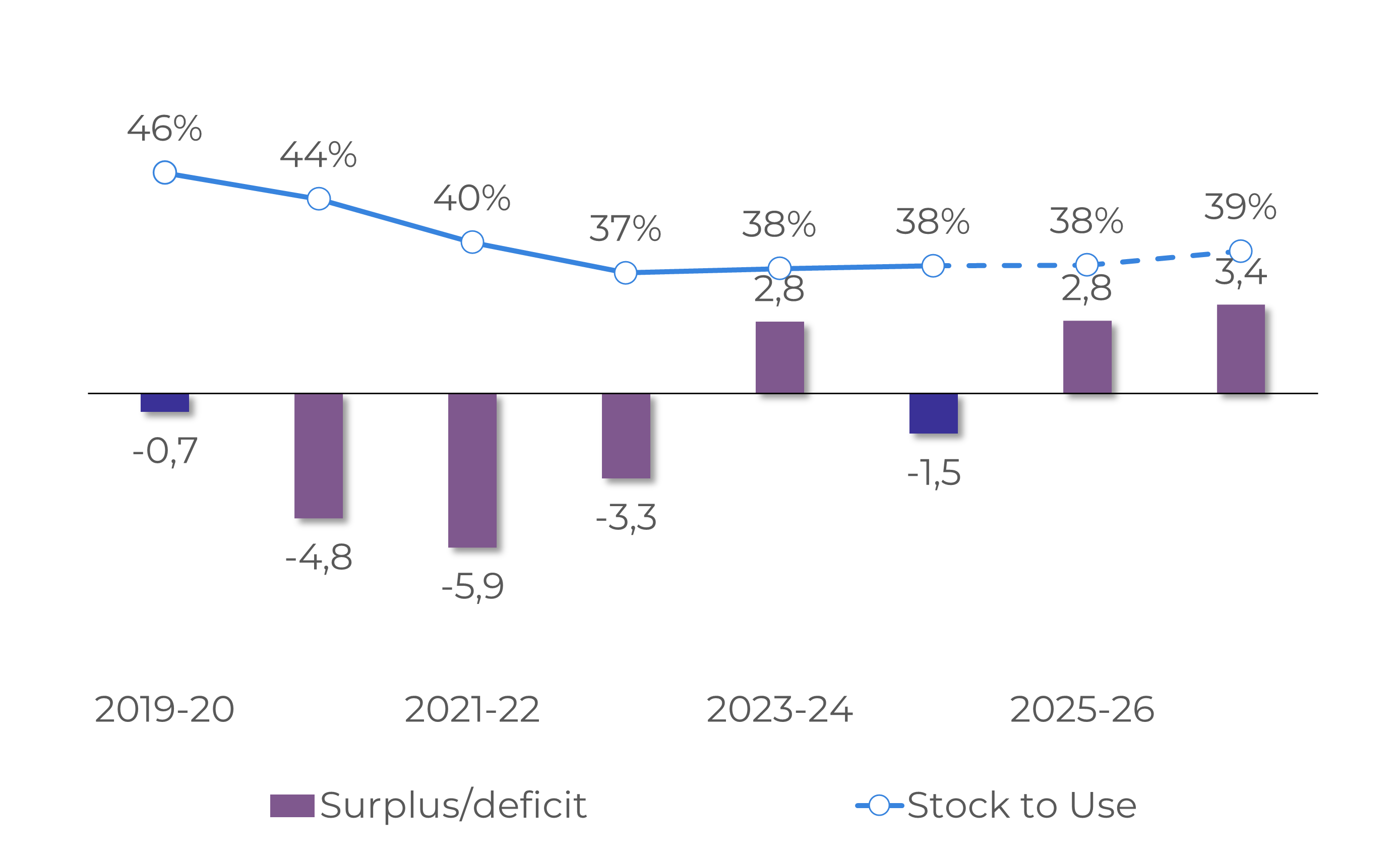
The global October–September 2025/26 balance is expected to remain in surplus. Brazil continues to anchor global availability, while recoveries in India, Thailand, and Mexico add incremental supply. Demand growth remains insufficient to absorb these volumes, particularly in the context of economic uncertainty across key consuming regions. As a result, trade flows following the Brazilian intercrop continue to signal oversupply.

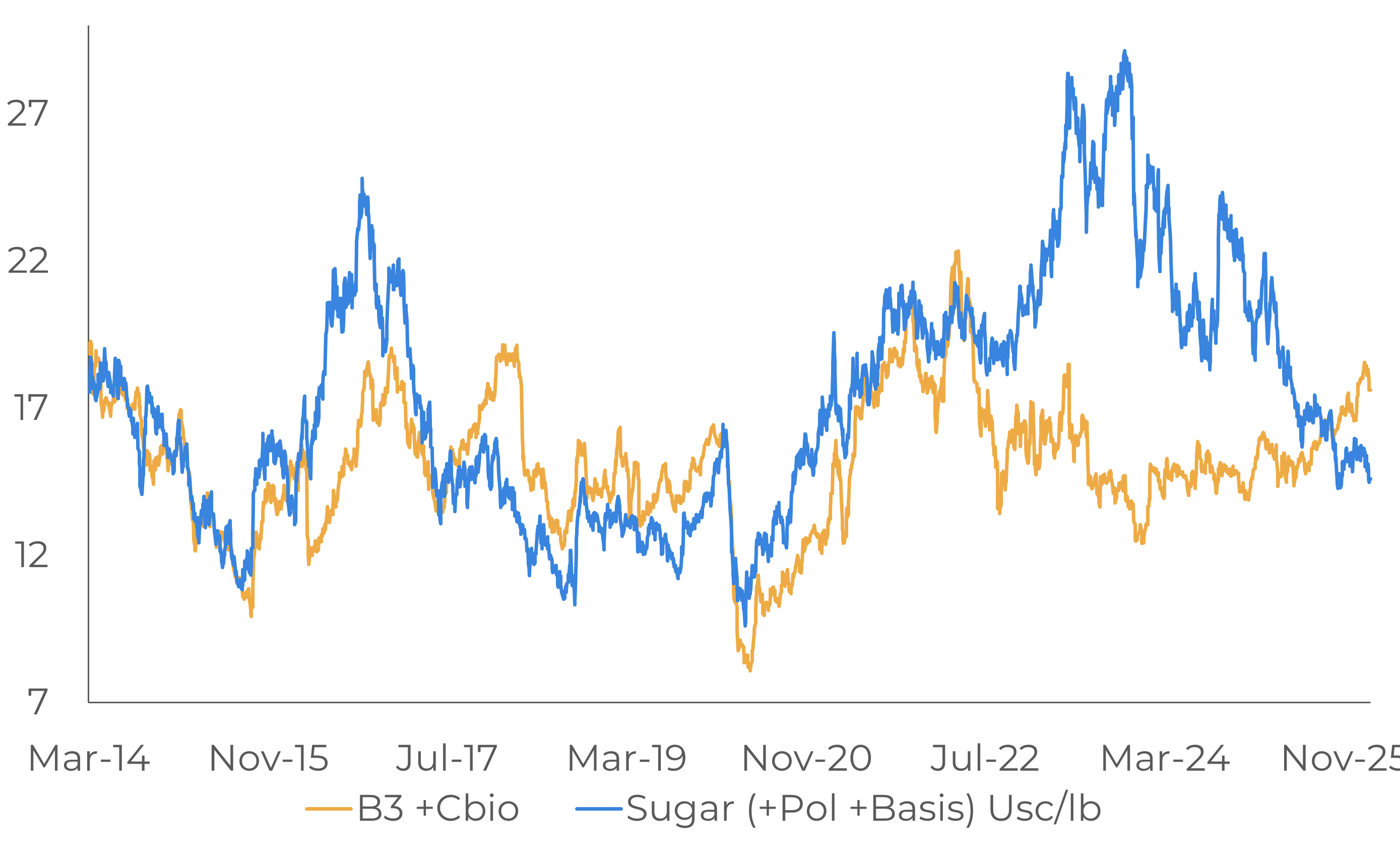
The most cost-efficient mechanism to absorb the expected surplus would be through an expansion of ethanol demand in the Brazilian domestic market. Note that it does not mean a change to our expected Otto Cycle growth (2.5% in CS) but an alteration in the fuel demand share. To restore hydrous ethanol competitiveness at the pump in most states, we estimate that ex-mill prices would need to fall from the current ~BRL 3.0/liter to approximately BRL 2.3/liter (ex tax). Under this scenario, the implied price floor for sugar would be near 13.5 c/lb. In a surplus year, prices should gravitate toward this level as the market attempts to rebalance excess sugar availability via ethanol consumption. However, physical market constraints may block an equilibrium mix, keeping some oversupply and the bearish trend throughout the season.

Image 1: Total Trade Flow ('000t)

Source: GreenPool, Hedgepoint

Image 2: Global Supply and Demand (Mt rv | Oct-Sep)

Source: GreenPool, Hedgepoint

Brazil CS

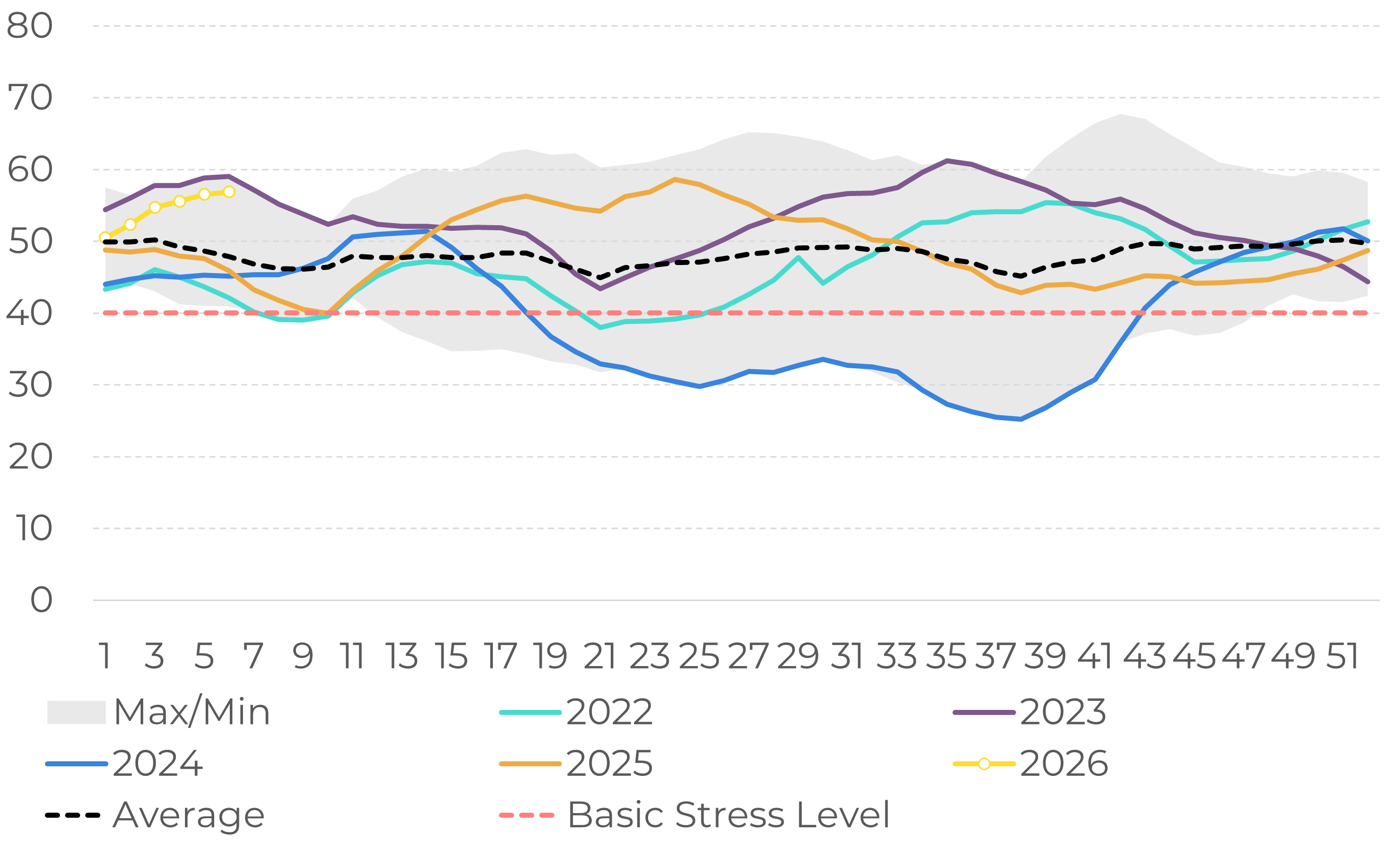
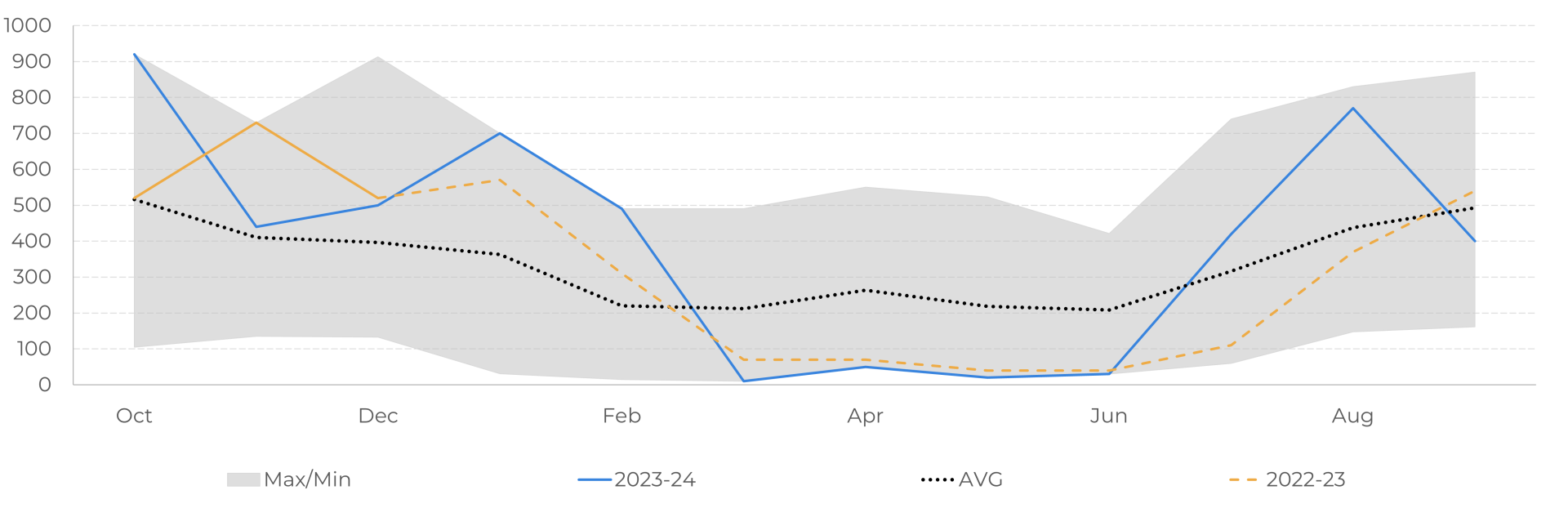
Image3: Weighted average VHI for the CS region

Source: NOAA

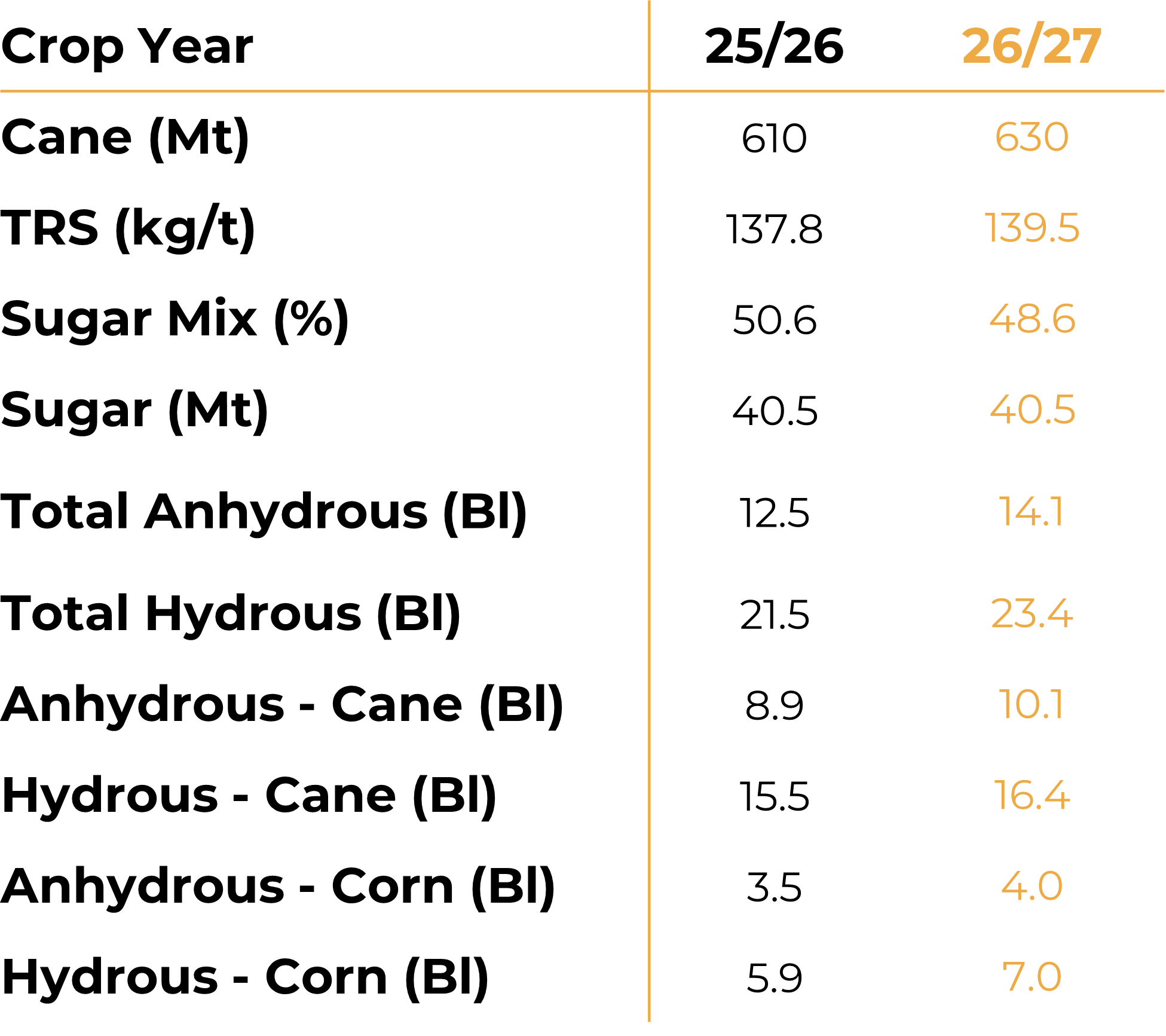
Center-South bearish fundamentals have strengthened further. Improved Vegetation Health Index readings and realized crushing data prompted an upward revision in cane availability to about 610 Mt for 2025/26, from 605 Mt previously. Despite a lower sugar mix, now estimated at 50.6%, and a TRS of 137.8 kg/t, sugar production is expected to reach 40.5 Mt, keeping exports elevated at approximately 31.65 Mt.

Market focus is increasingly shifting toward the 2026/27 crop. Preliminary models, based on realized figures through November, suggest cane crushing could approach 630 Mt, largely supported by a rebound in TCH following improved rainfall. Sugar mix remains the key uncertainty. At this stage, we estimate a mix around 48.6%, implying sugar production close to 40.5 Mt, with revisions likely as data from the October–February development window becomes available. Note that this mix will not fully solve the global surplus. Physical and commercial constraints — notably presold and hedged sugar volumes and the nonlinear adjustment of fuel demand — cap downside flexibility in the mix, preventing a move toward ~46.2%, the estimated equilibrium level.

Image 4: Historical Parity (c/lb)

Source: Bloomberg, Hedgepoint

Image 5: Crop estimate 48.6% (need to generate hydrous consumption)

Source: UNICA, Hedgepoint

Brazil CS Ethanol

Ethanol has regained competitiveness against sugar, currently offering the highest payback for raw material allocation, including in São Paulo. Nevertheless, futures curves point to an uncertain price outlook through the season. With Otto-cycle demand projected to grow 2.5% and corn ethanol production expected near 11 B liters, hydrous and anhydrous stocks are likely to be rebuilt if the sugar mix stabilizes around 48.6%.
Under this scenario, sustaining a prolonged ethanol premium appears challenging, particularly in an election year when gasoline price adjustments remain a risk. This reinforces a broadly bearish outlook for both ethanol and sugar in the absence of material supply or demand shocks.

Brazil NNE

Image 6: Sugar Balance - Brazil NNE (Apr-Mar Mt)

Source: MAPA, SECEX, Hedgepoint

Conab’s third estimate led to a downward revision in North-Northeast output for 2025/26. Sugar production is now projected at 3.6 Mt from 59.1 Mt of cane, with exports revised lower accordingly. For 2026/27, rainfall has been adequate so far, and we maintain a moderately optimistic outlook of 61 Mt of cane and 3.8 Mt of sugar.

A key structural trend in the region is the rapid expansion of corn ethanol. Output is expected to rise sharply in 2026/27, reaching between 1.5 and 1.7 B liters, supporting the region’s capacity to sustain higher sugar mixes despite price volatility.

India

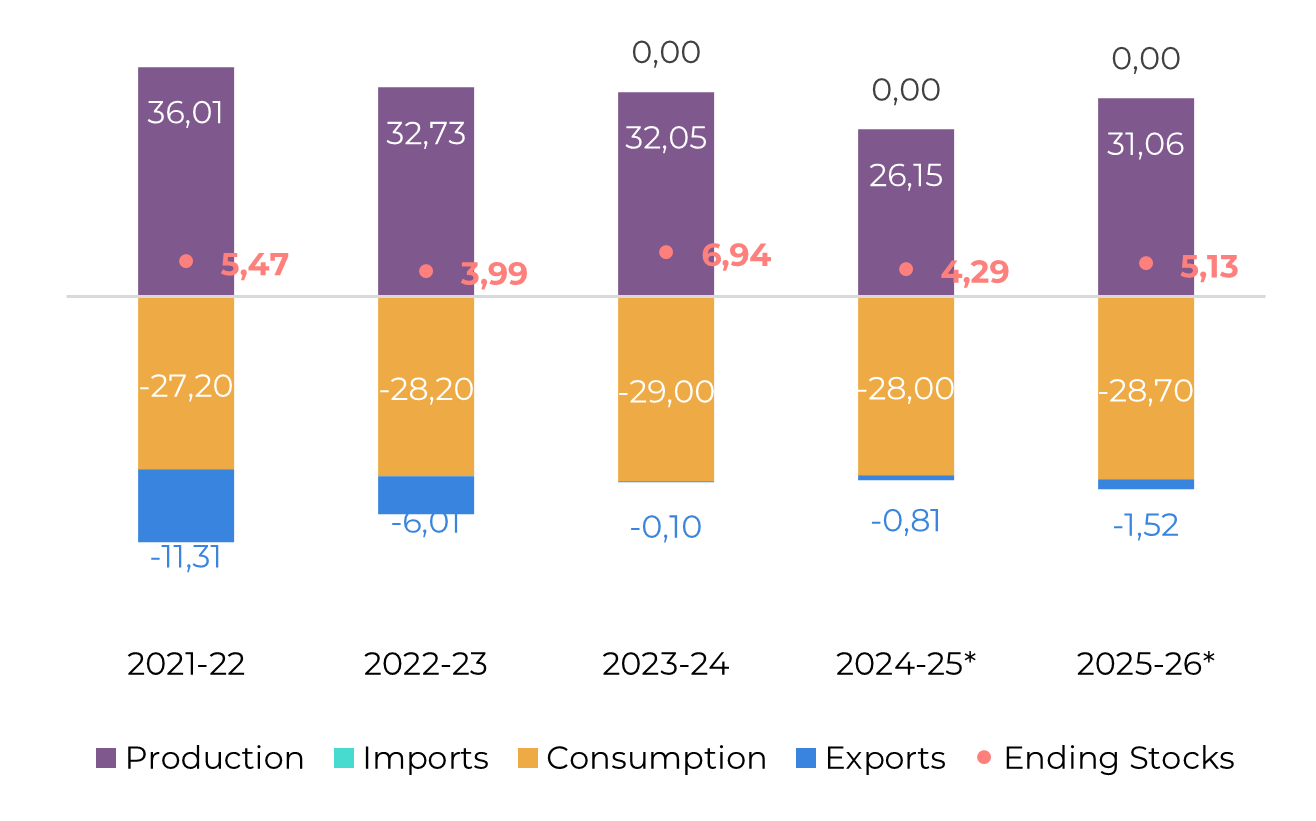
Image 7: Sugar Balance - India (Oct-Sep Mt)

Source: ISMA,AISTA, Hedgepoint

India’s 2024/25 season closed with gross sugar production near 30 Mt and net output of 26.1 Mt after ethanol diversion. For 2025/26, early-season results confirm a strong recovery: sugar production between October and January was up 17% year-on-year, supported by higher crushing volumes and improved yields rates. Net production is now estimated at 31.1 Mt, with ethanol diversion projected at 3.7 Mt. The recent reduction in the sweetener’s output was due to heavy rains and early flowering possibly inducing lower yields.

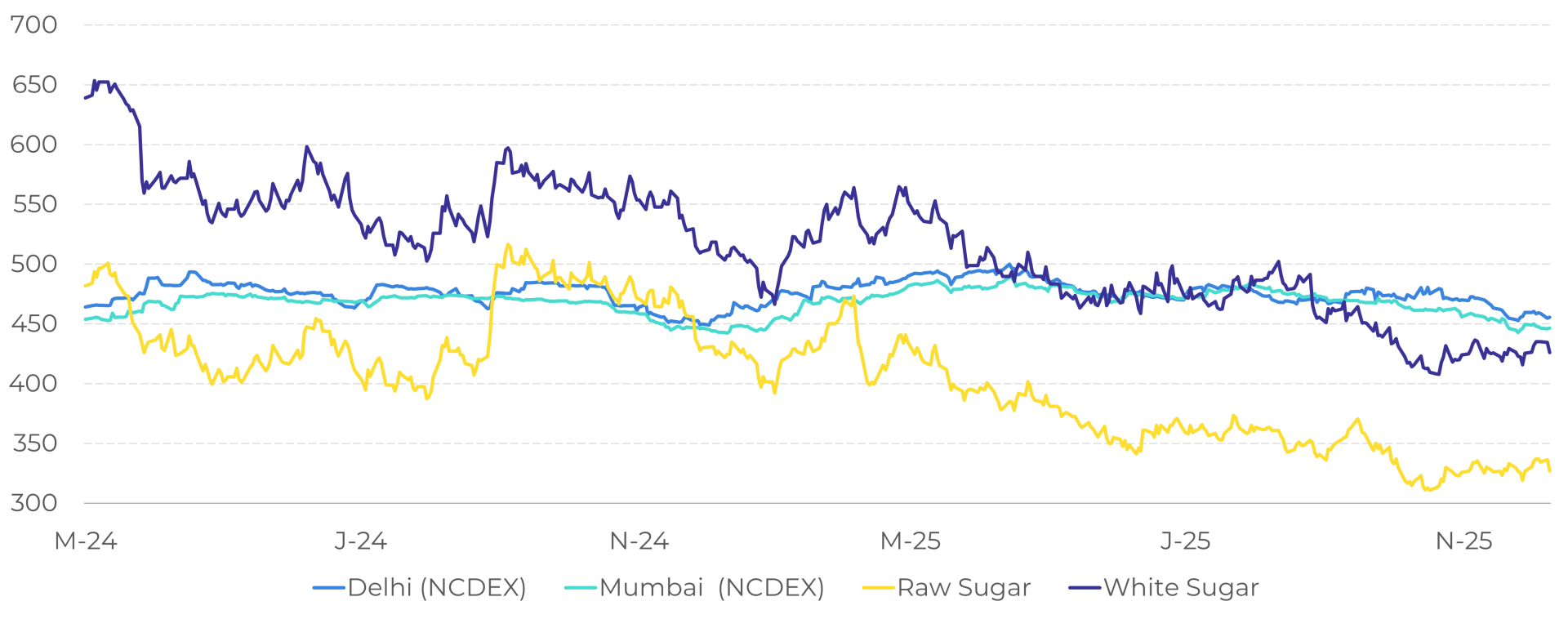
On exports, the government has authorized 1.5 Mt. However, current international prices remain unattractive, with export parity near 18.5 c/lb for raws and around USD 450/t for whites. As a result, new export deals are likely to be delayed. Any increase in the Minimum Selling Price would further strengthen domestic prices and restrict export flows under current global conditions.

Image 8: India’s domestic prices vs international (USD/t)

Source: Bloomberg, Hedgepoint

Thailand

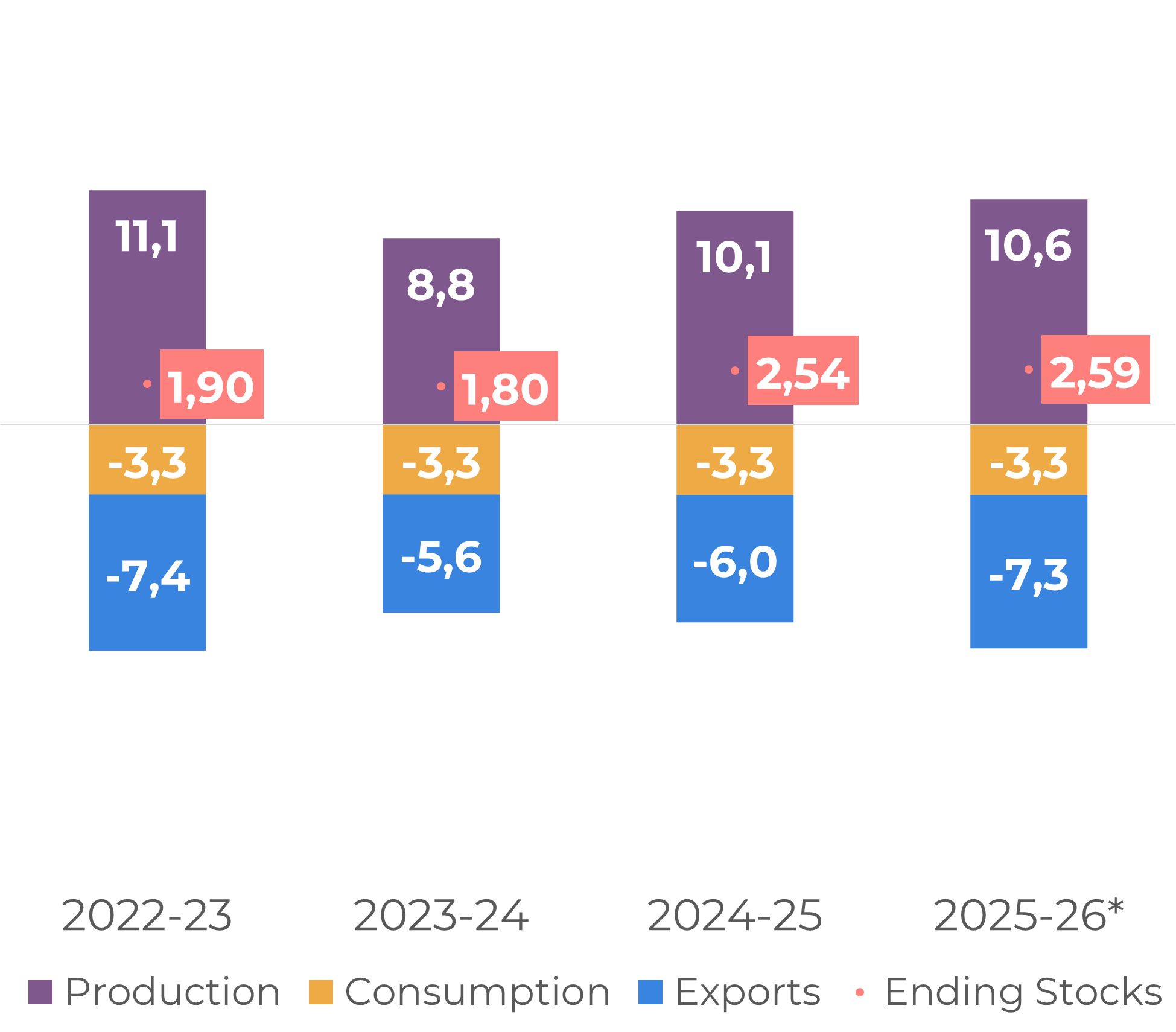
Image 9: Sugar Balance - Thailand (Dec-Nov Mt)

Source: Thai Sgar Millers, Sugarzone, Hedgepoint

Thailand’s recovery remains uneven. While rainfall during key development stages initially supported expectations of a stronger rebound, disease pressure — particularly white leaf, linked to restrictions on cane burning — led to a downward revision in cane output to 97 Mt. Sugar production for 2025/26 is now estimated at 10.6 Mt, representing an improvement year-on-year but still well below historical capacity.


Image 10: Thailand main cane-producing provinces precipitation weighted average

Source: GADAS, Hedgepoint

EU 27+UK

Image 11: Sugar Balance - EU 27+UK (Oct-Sep Mt)

Source: EC, Greenpool, Hedgepoint

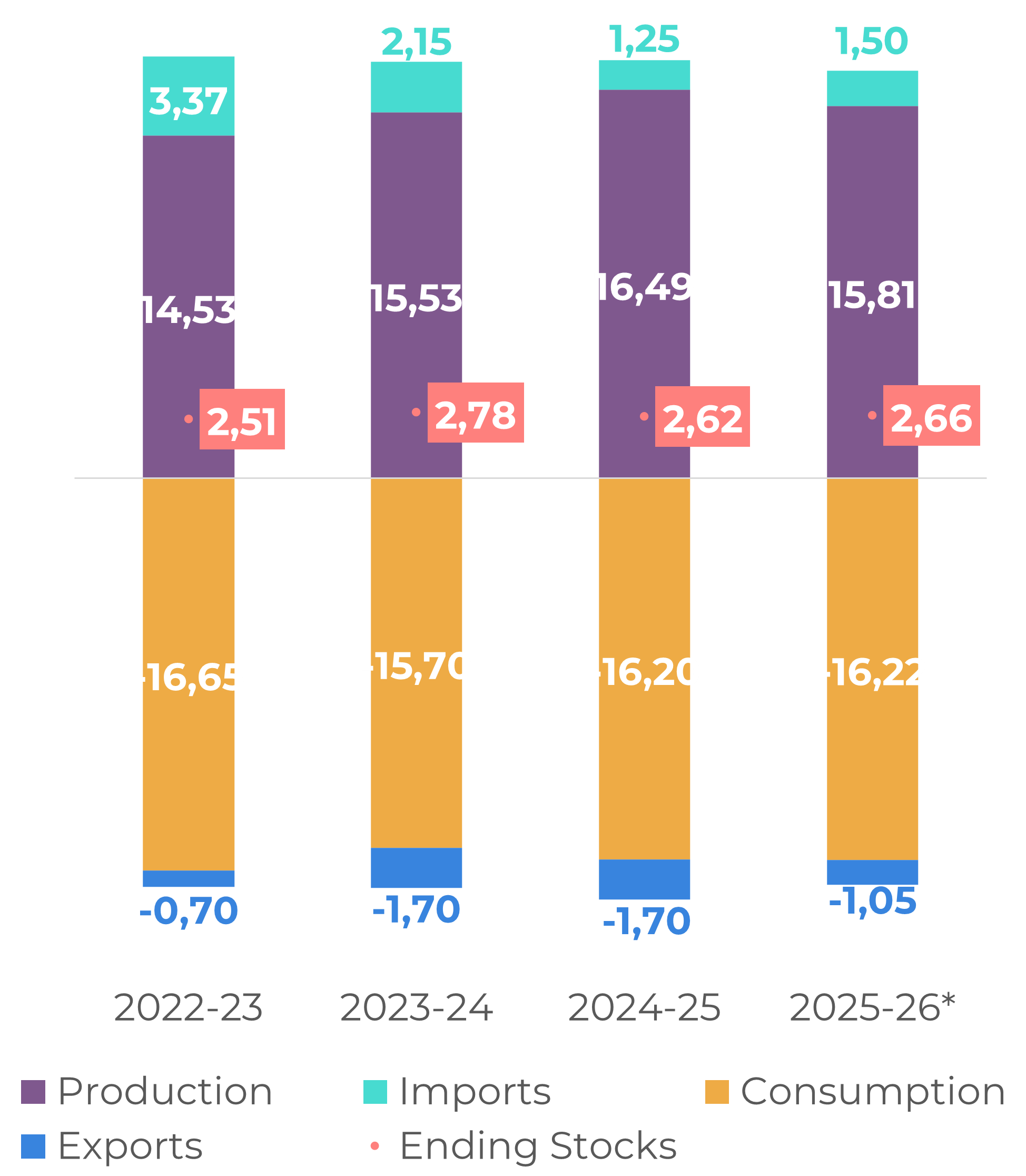
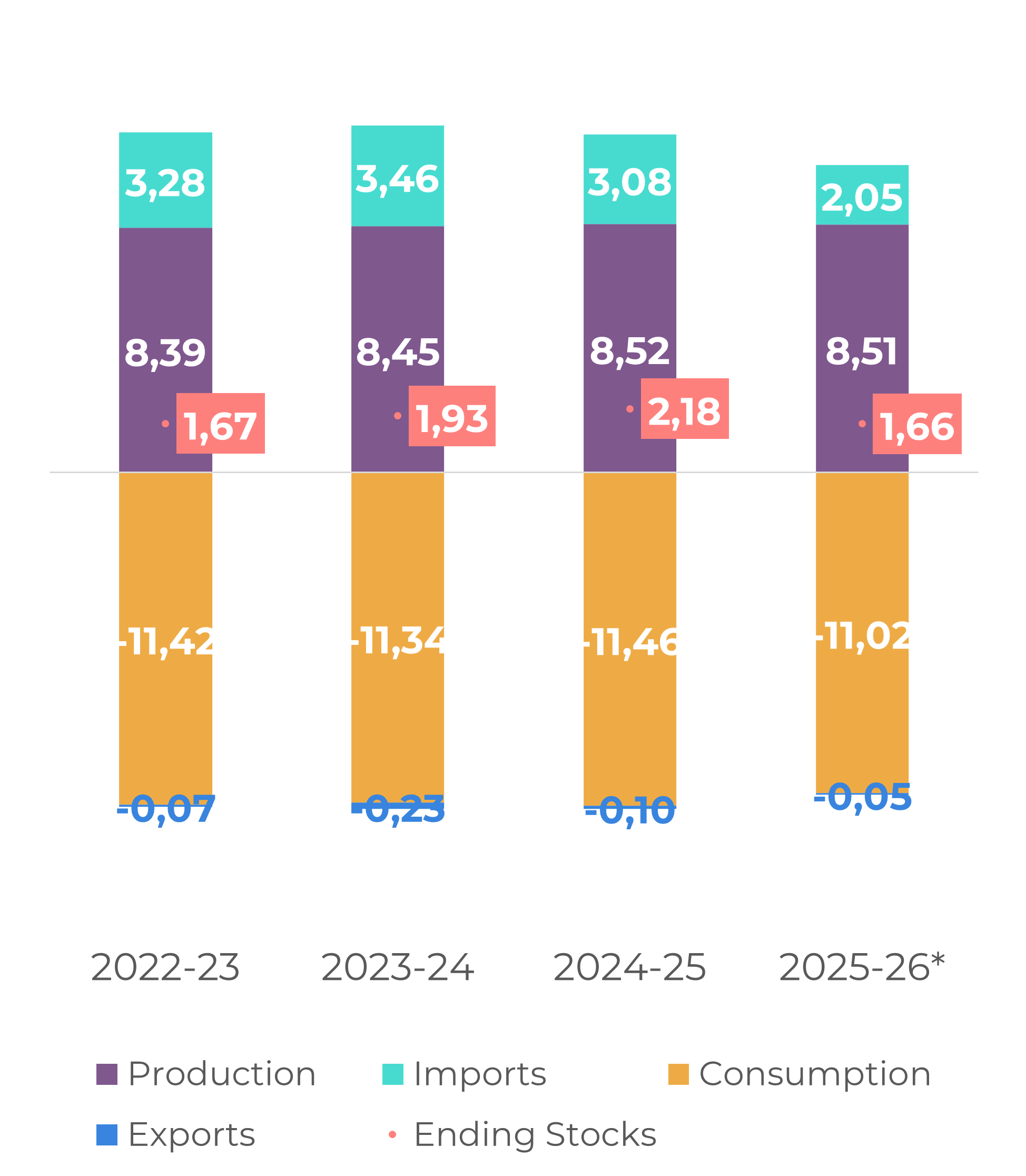
EU+UK sugar production for 2025/26 is projected at 15.8 Mt after accounting for reduced harvested area and ethanol diversion, down from 16.5 Mt in 2024/25. Trade flows are expected to invert with imports rising to around 1.5 Mt and exports falling to approximately 1.0 Mt.

The EU–Mercosur agreement introduces limited duty-free access, including a 180 kt zero-tariff quota for Brazil and 10 kt for Paraguay. While modest in volume, these measures may intensify competitive pressure on the EU sugar sector and exacerbate existing structural vulnerabilities.

Mexico

Image 12: Sugar Balance - Mexico (Oct-Sep Mt)

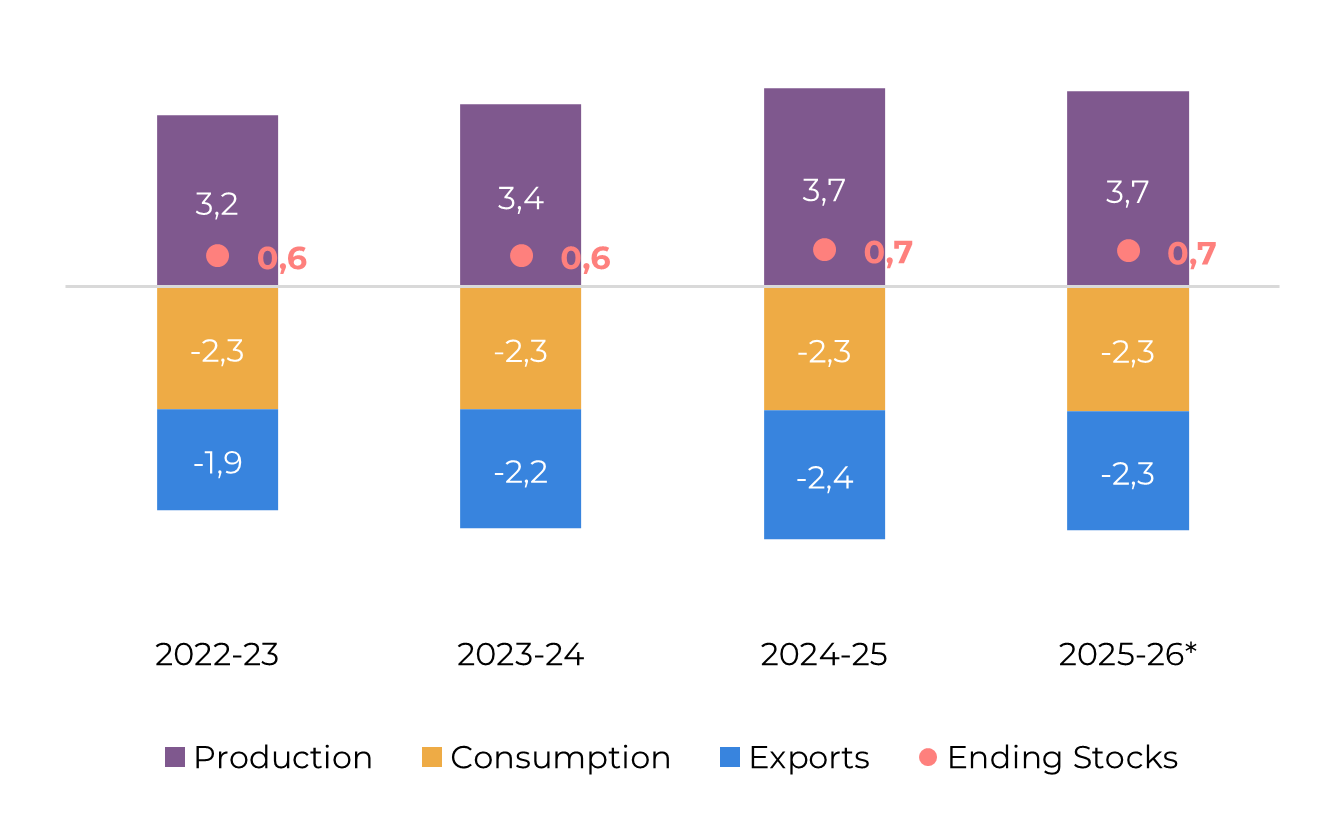
Source: Conadesuca, Greenpool, Hedgepoint

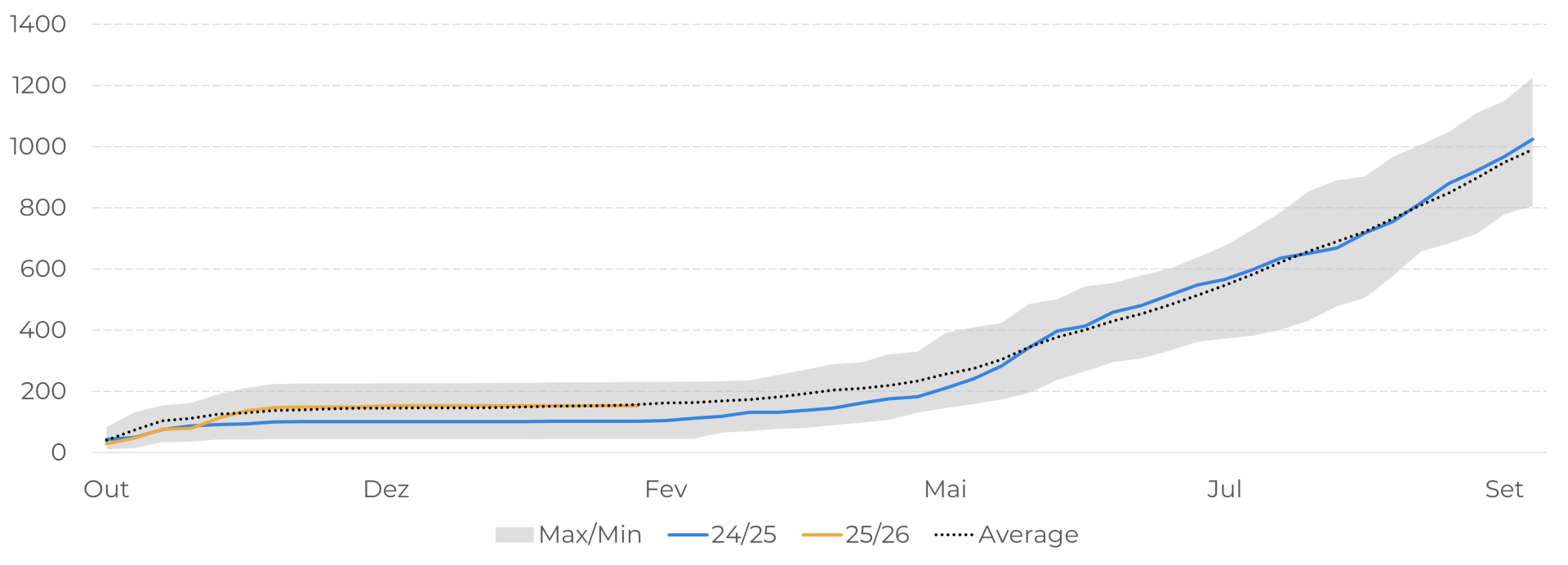
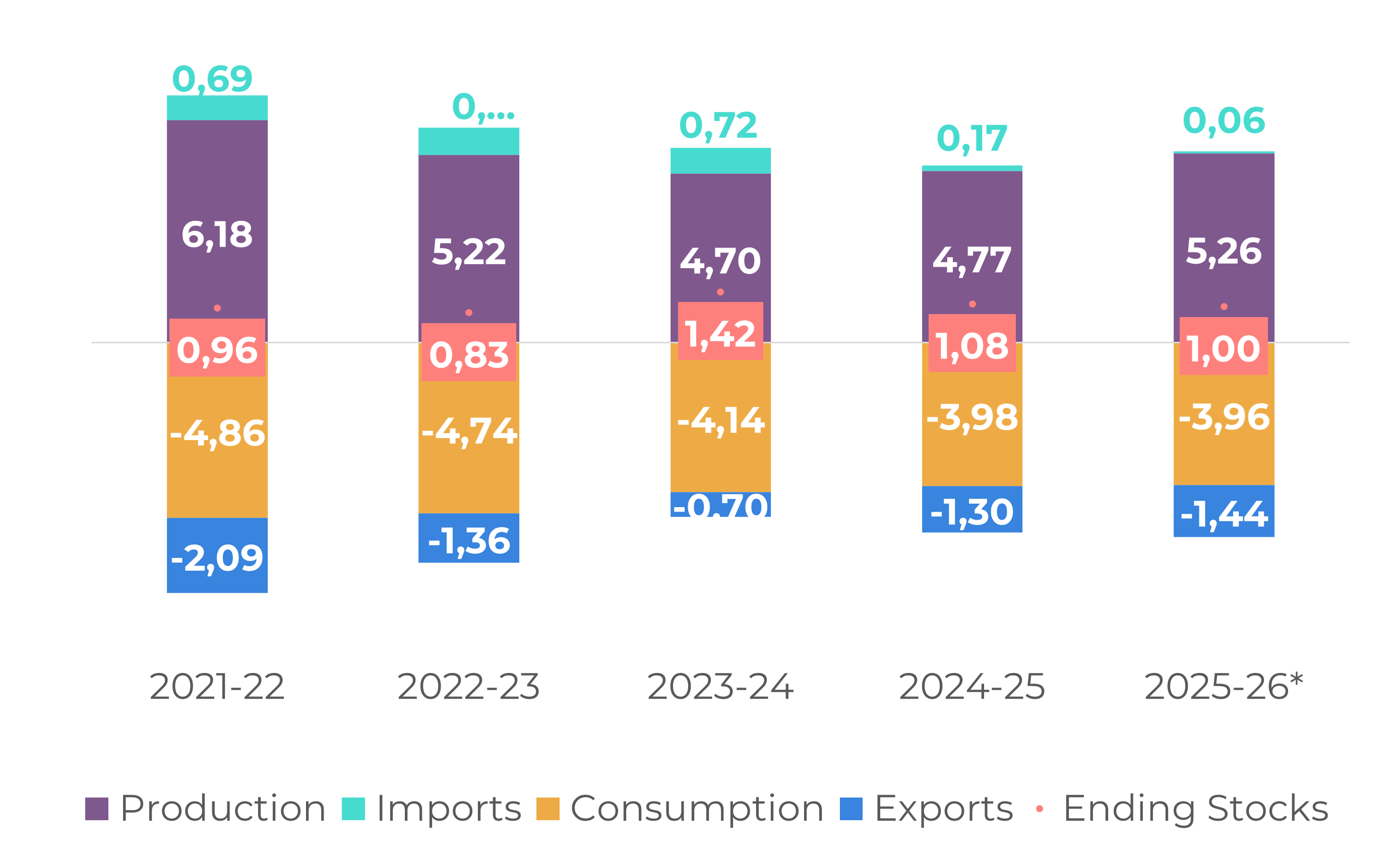
Mexico’s 2024/25 sugar production exceeded 4.7 Mt, supported by significant stock carryover that enabled exports above 1 Mt. For 2025/26, CONADESUCA expects production to rise by 10%, with yields recovering despite a slow start to the crushing season. Supply should reach 5.3Mt, while imports are expected to reduce and exports to increase, allowing stocks to stay close to average.  

Image 13: Crop Prrogress

Source: Conadesuca, Greenpool, Hedgepoint

USA

Image 14: Sugar Balance - US (Oct-Sep Mt)

Source: USDA, Hedgepoint

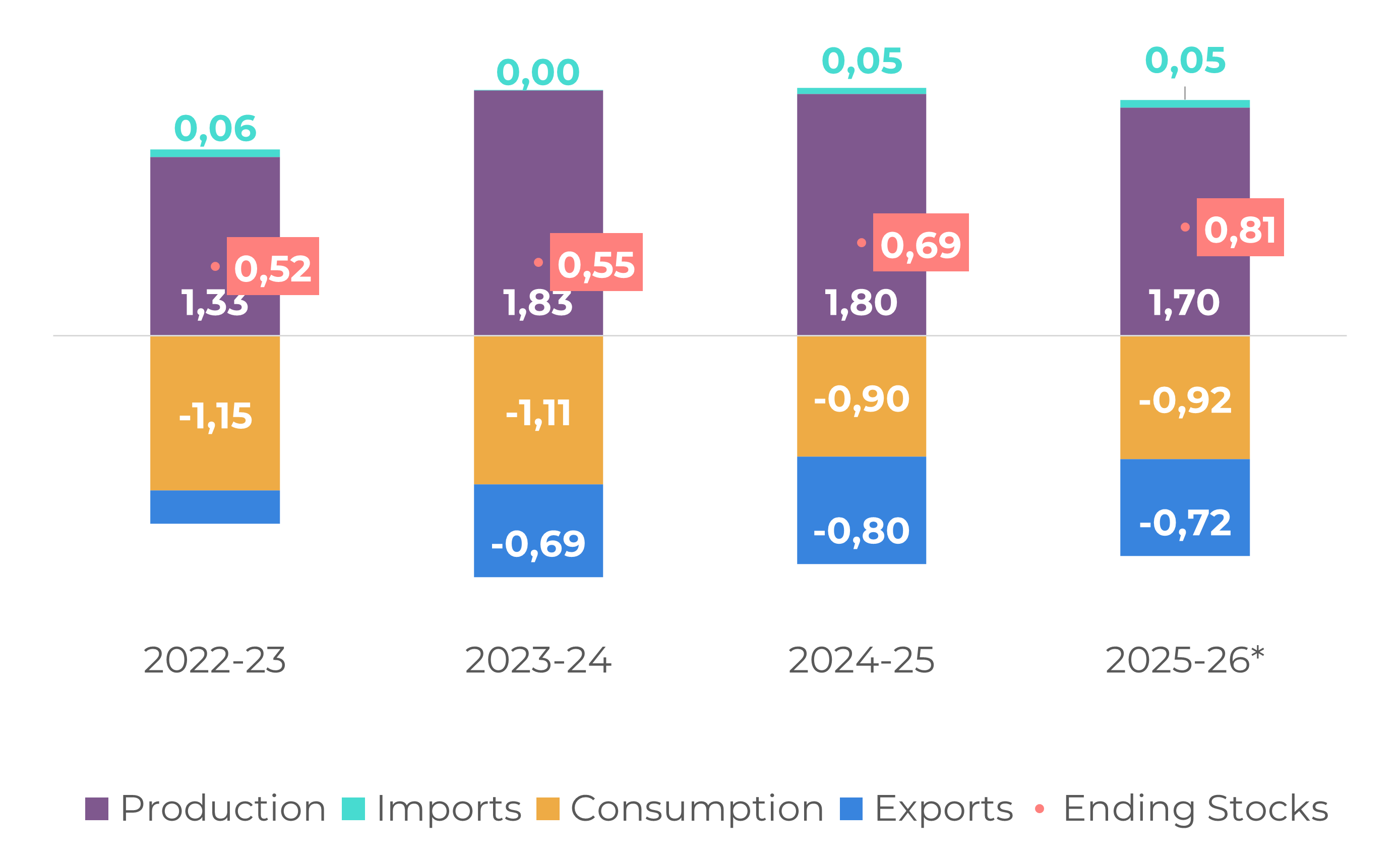
US beet sugar production for 2025/26 is estimated at 4.63 Mt, the lowest level since 2020/21, reflecting acreage declines despite record yields. Cane sugar output was revised higher to 3.88 Mt, driven by strong results in Louisiana and Florida.

Even with these revisions, total US sugar production remains marginally below last season. Elevated carry-in stocks allow imports to fall sharply to around 2 Mt, reducing the stock-to-use ratio to approximately 14.5%.

Ukraine

Image 15: Sugar Balance - Ukraine (Mt Sep-Aug)

Source: Ukrsugar, Sugar.ru, Greenpool, hEDGEpoint

Ukraine’s 2025/26 sugar production is expected to surpass 1.7 Mt, generating an exportable surplus of at least 700 kt. While EU restrictions remain a constraint, exports to global markets continue, and discussions aimed at increasing future EU quotas are ongoing.


Russia

Image 16: Sugar Balance - Russia (Mt Sep-Aug)

Source: Ikar, Sugar.ru, Greenpool, Hedgepoint

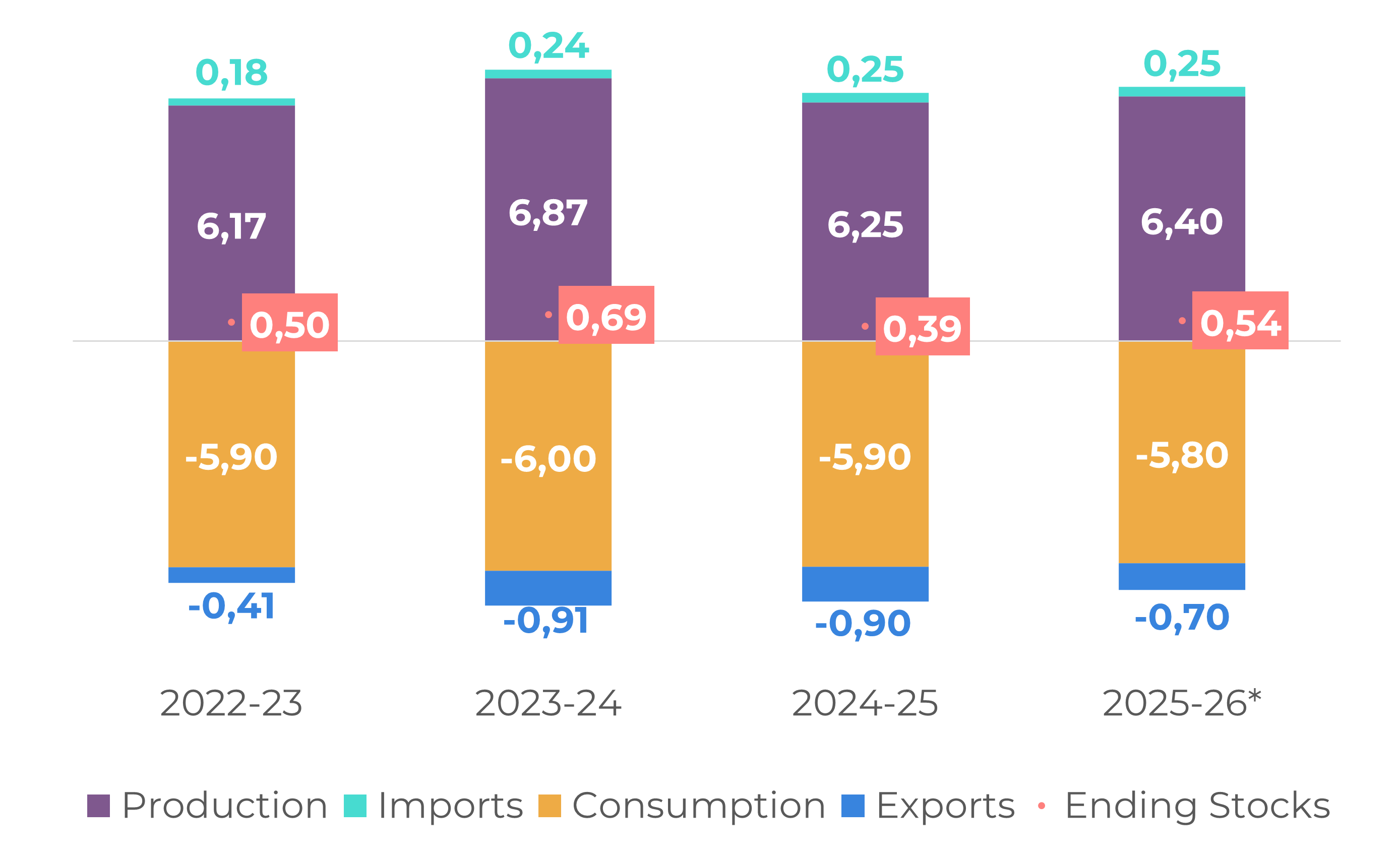
Russia’s sugar beet harvest has been completed, with total sugar production for 2025/26 estimated at 6.4 Mt after accounting for processing losses. Despite drought in the South, higher yields in Central regions compensated losses, guaranteeing about 40,5–41,0 t/ha beet yields which is an improvement compared to the past year.

For 2026/27, beet area is currently estimated at 1.1–1.2 million hectares, similar to the previous year, which combined to yield recovery, if drought risk in the South normalizes, production could reach up to 6.7Mt.

China

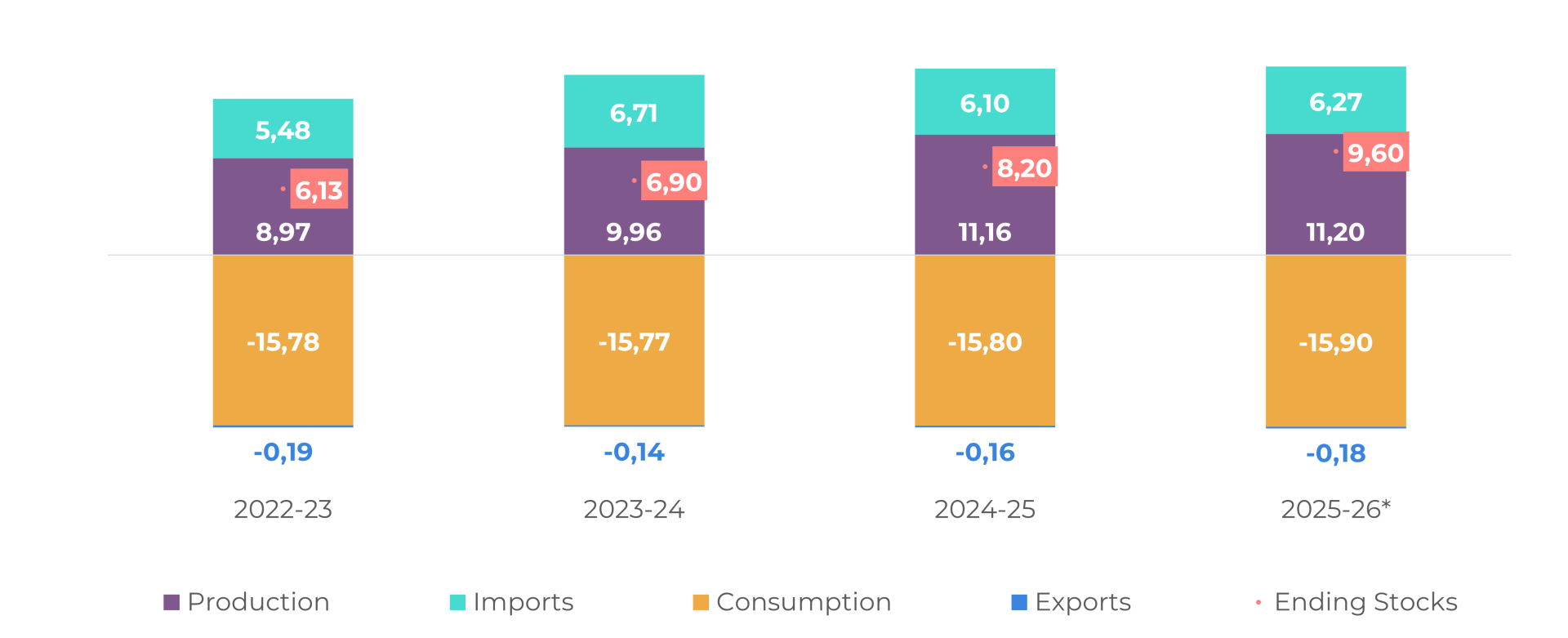
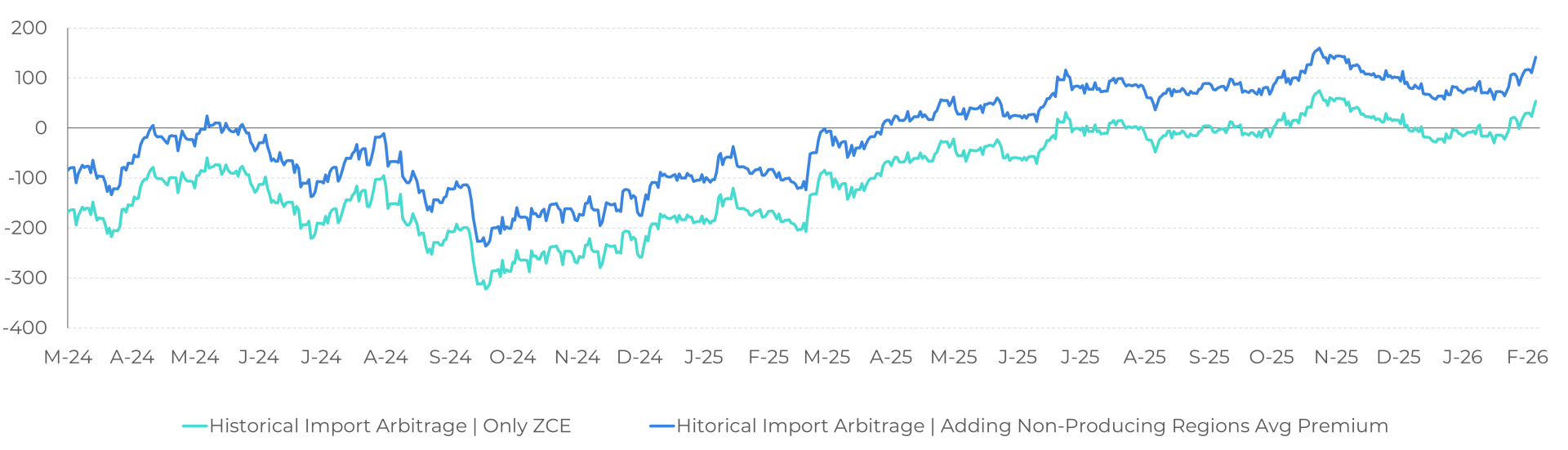
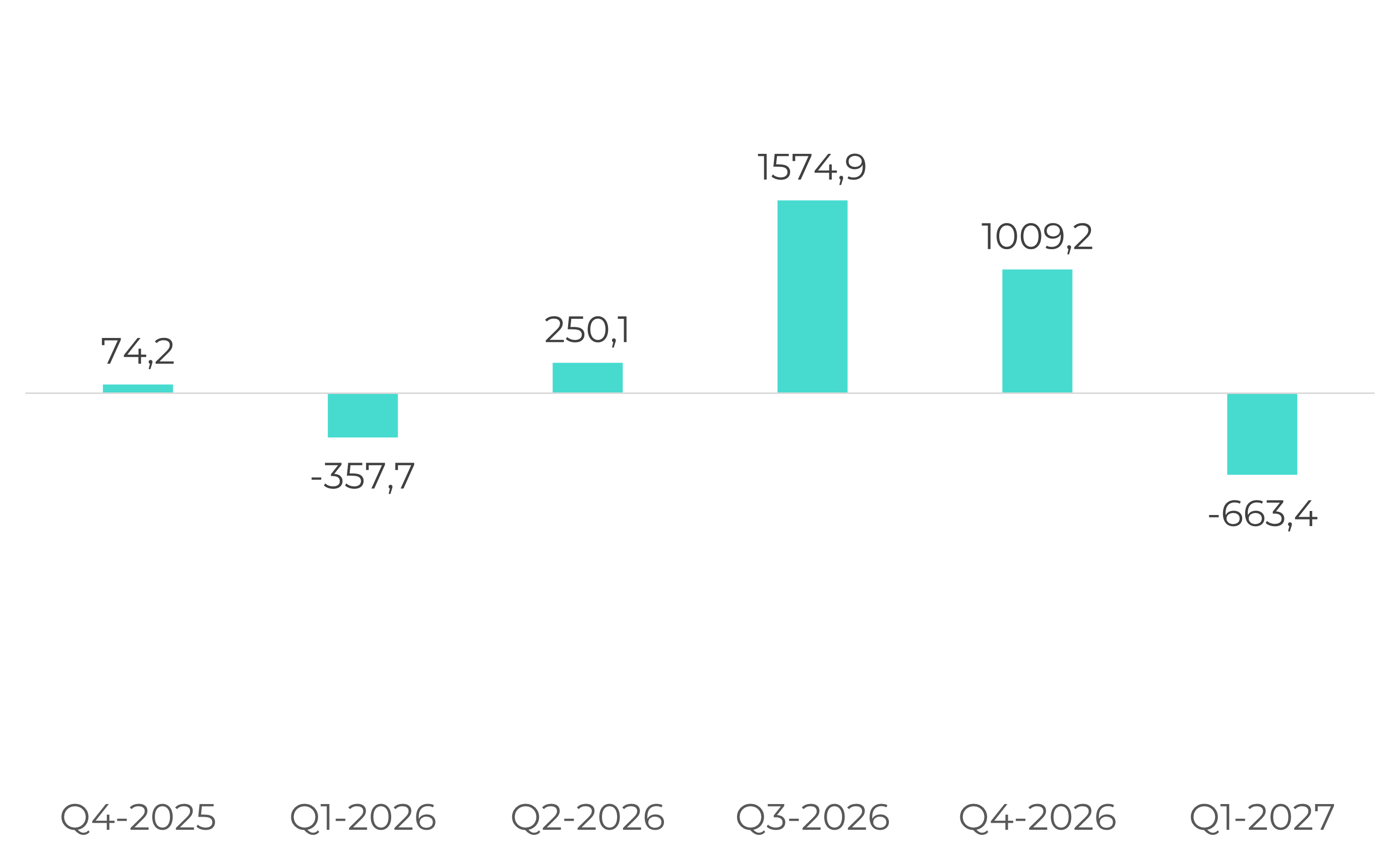
China’s 2025/26 sugar production outlook remains steady at 11.17 Mt. Imports rose 21% year-on-year amid favorable prices and a sharp decline in syrup imports following regulatory changes. As domestic crushing accelerates, import momentum is expected to ease, however, the bearish outlook might induce higher end-of-season results. 

Image 17: Sugar Balance - China (Oct-Sep Mt)

Source: GSMN, CSA, Refinitiv, Greenpool, Hedgepoint

Obs: stocks also account for bonded warehouses volume and imports include syrup and smuggling estimates

Image 18: Total Imports - China ('000t - exc. syrup and smuggling)

Source: GSMM, Hedgepoint

Image 19: Estimated Hisorical Chinese Import Arbitrage (USD/t)

Source: Bloomberg, LSEG, Msweet, YNTW, Hedgepoint

Weekly Report — Sugar and Ethanol

Written by Lívea Coda
livea.coda@hedgepointglobal.com
Reviewed by Laleska Moda
laleska.moda@hedgepointglobal.com

Sugar and Ethanol Desk

Murilo Mello
murilo.mello@hedgepointglobal.com
Vipul Bhandari
vipul.bhandari@hedgepointglobal.com
Gabriel Oliveira
gabriel.oliveira@hedgepointglobal.com
Etori Veronezi
etori.veronezi@hedgepointglobal.com
José Torreão
jose.torreao@hedgepointglobal.com
www.hedgepointglobal.com

Disclaimer

This document has been prepared by Hedgepoint Schweiz AG and its affiliates (“Hedgepoint”) solely for informational and instructional purposes, without intending to create obligations or commitments to third parties. It is not intended to promote or solicit an offer for the sale or purchase of any securities, commodities interests, or investment products.

Hedgepoint and its associates expressly disclaim any liability for the use of the information contained herein that directly or indirectly results in any kind of damages. Information is obtained from sources which we believe to be reliable, but we do not warrant or guarantee the timeliness or accuracy of this information.
The trading of commodities interests, such as futures, options, and swaps, involves substantial risk of loss and may not be suitable for all investors. You should carefully consider wither such trading is suitable for you in light of your financial condition. Past performance is not necessarily indicative of future results. Customers should rely on their own independent judgment and/or consult advisors before entering into any transactions.
Hedgepoint does not provide legal, tax or accounting advice and you are responsible for seeking any such advice separately.
Hedgepoint Schweiz AG is organized, incorporated, and existing under the laws of Switzerland, is filiated to ARIF, the Association Romande des Intermédiaires Financiers, which is a FINMA-authorized Self-Regulatory Organization. Hedgepoint Commodities LLC is organized, incorporated, and existing under the laws of the USA, and is authorized and regulated by the Commodity Futures Trading Commission (CFTC) and a member of the National Futures Association (NFA) to act as an Introducing Broker and Commodity Trading Advisor. HedgePoint Global Markets Limited is Regulated by the Dubai Financial Services Authority. The content is directed at Professional Clients and not Retail Clients. Hedgepoint Global Markets PTE. Ltd is organized, incorporated, and existing under the laws of Singapore, exempted from obtaining a financial services license as per the Second Schedule of the Securities and Futures (Licensing and Conduct of Business) Act, by the Monetary Authority of Singapore (MAS). Hedgepoint Global Markets DTVM Ltda. is authorized and regulated in Brazil by the Central Bank of Brazil (BCB) and the Brazilian Securities Commission (CVM). Hedgepoint Serviços Ltda. is organized, incorporated, and existing under the laws of Brazil. Hedgepoint Global Markets S.A. is organized, incorporated, and existing under the laws of Uruguay. In case of questions not resolved by the first instance of customer contact (client.services@Hedgepointglobal.com), please contact internal ombudsman channel (ombudsman@hedgepointglobal.com – global or ouvidoria@hedgepointglobal.com – Brazil only) or call 0800-8788408 (Brazil only).
Integrity, ethics, and transparency are values that guide our culture. To further strengthen our practices, Hedgepoint has a whistleblower channel for employees and third-parties by e-mail ethicline@hedgepointglobal.com or forms Ethic Line – Hedgepoint Global Markets.
“HedgePoint” and the “HedgePoint” logo are marks for the exclusive use of HedgePoint and/or its affiliates. Use or reproduction is prohibited, unless expressly authorized by HedgePoint.
Furthermore, the use of any other marks in this document has been authorized for identification purposes only. It does not, therefore, imply any rights of HedgePoint in these marks or imply endorsement, association or seal by the owners of these marks with HedgePoint or its affiliates.

To access this report, you need to be a subscriber.