
Bearish now, hope in the clouds
- Short-term outlook remains bearish, with low volatility and limited reaction to external factors (e.g., energy markets).
- Market focus has shifted to weather risks, with El Niño driving bullish expectations.
- India’s delayed monsoon and export restrictions support a slightly bullish sentiment, with possible import needs ahead.
- Thailand and parts of Mexico face dryness risks, threatening 2026/27 output and export availability.
- Brazil's Center-South remains stable, reinforcing its capacity to supply the world amid other countries' crop failures.
Bearish now, hope in the clouds
The sugar market feels notably quiet at the moment, with very little news to drive prices. Limited volatility and clearly bearish short-term fundamentals have kept it somewhat insulated from external moves, even the recent strength in the energy complex linked to US–Iran tensions has had little impact.
As a result, the focus has naturally shifted away from the short term and toward medium- and long-term risks. Unless we see a major escalation in geopolitics, the weather remains the key variable to watch.
In particular, the increasing talk around an earlier and stronger El Niño has been the main source of attention, giving some support to bullish positioning. This is especially reflected in the March 2027 contract, which has been more sensitive to these forward-looking risks. The strengthening of the V/H spread suggests the market is starting to price in tighter Northern Hemisphere availability, a clear shift from the relatively comfortable supply backdrop seen in the current 2025/26 season.
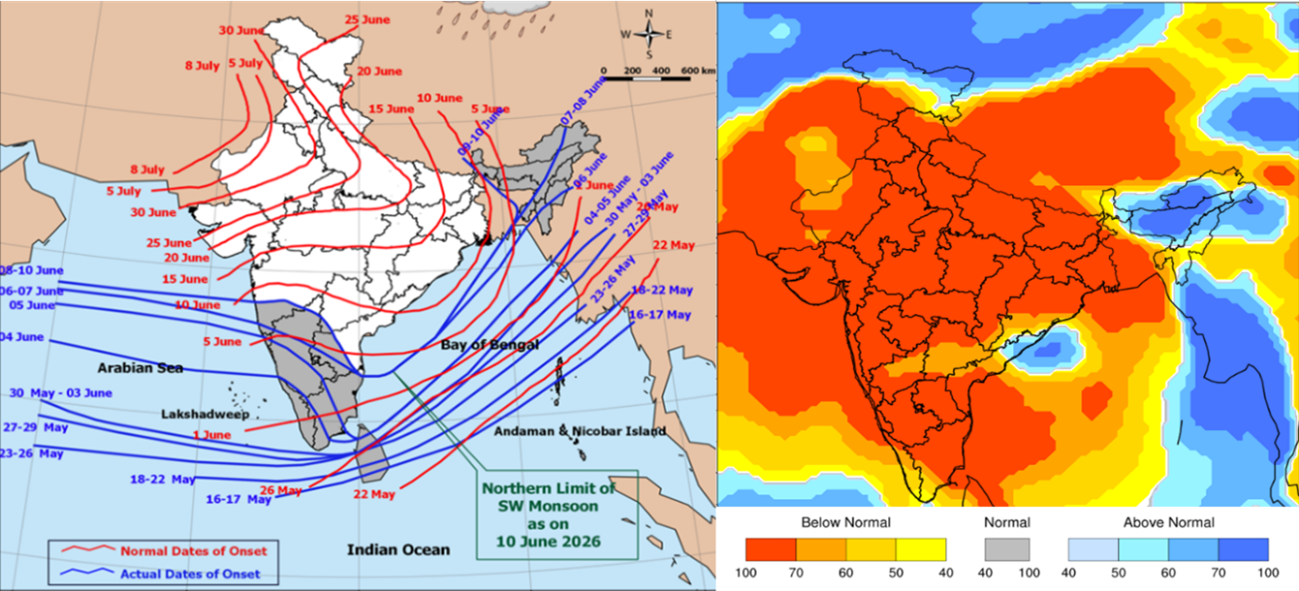
One of the key variables currently under close watch is the progress of India’s Southwest Monsoon. Rainfall has been delayed relative to its usual pattern, and the Indian Meteorological Department has slightly revised its forecast downward, from 92% to 90% of the long-term average. According to weather officials, part of this delay is linked to Western Disturbances originating in the Mediterranean, rather than being directly attributed to El Niño at this stage. The Western Disturbances system, which typically brings rain and snowfall to northern India, can disrupt the monsoon’s advance, as observed this year
This shift introduces greater uncertainty for the development of the 2026/27 sugarcane crop and, consequently, for production prospects. Beyond sugar, these weather dynamics also pose risks to key summer crops such as rice, soybeans, and cotton, particularly in central India. In turn, this may contribute to upside risks for food inflation, adding further pressure on the Indian rupee.
Additionally, reservoir levels are below last year’s, but still above the 10 year average, remaining consistent with typical pre monsoon depletion patterns. In the event of a below-average monsoon, replenishment could prove challenging, potentially further penalizing the development of the 2026/27 season. That said, there is clear regional divergence: while the South appears most vulnerable, the Northwest remains comparatively more comfortable.
As a result, India remains an important bullish pillar for the global market. The country has had limited participation in trade flows in recent periods and is widely expected to maintain export restrictions into the next season, potentially even turning to imports if domestic balances tighten further.
Advance of the Southwest Monsoon (left) and Rainfall Probability (%) in June, July and August for India (right) - June 2026
Source: Indian Meteorological Department
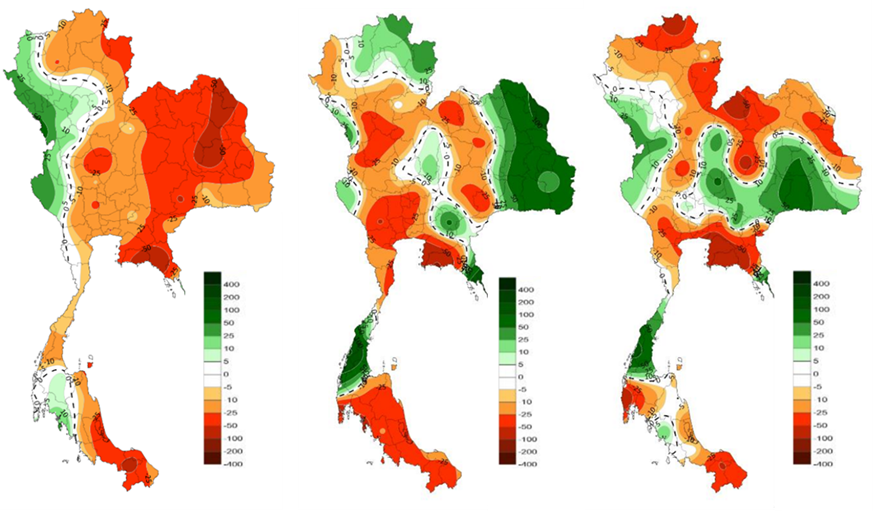
Thailand, meanwhile, is another origin that tends to be negatively affected during El Niño years. Current forecasts point to below-average rainfall across key cane-growing regions, raising concerns for 2026/27 yields and potentially reducing its ability to export.
More specifically, Nakhon Ratchasima is expected to experience a dry spell through June and July, with a possible improvement only in August, when rainfall could turn above average. Further into the Northeast, however, conditions appear more challenging. Khon Kaen and Udon Thani are projected to face persistently dry weather throughout the entire period, intensifying downside risks to production.
Precipitation Anomaly Forecast in Thailand for June (left), July (center) and August (right)
Source: Thai Meteorological Department
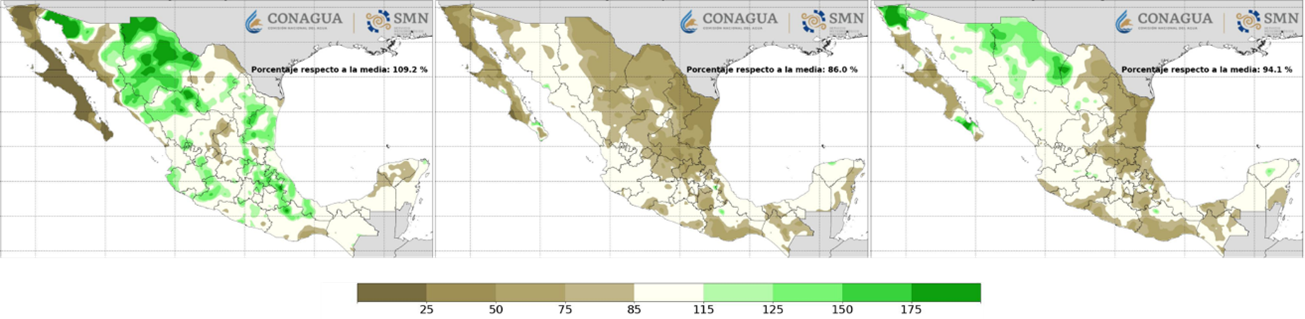
In Mexico, the impact of El Niño remains less defined, though current forecasts point to drier conditions across central regions. So far, San Luis Potosí appears to be the most exposed, accounting for roughly 7% of total cane output. In contrast, the outlook is comparatively more favorable in key producing states such as Veracruz (38%) and Jalisco (7.2%), where weather conditions are expected to be more supportive.
Cumulative precipitation Anomaly (% | June (left), July (center) and August (right))
Source: Conagua
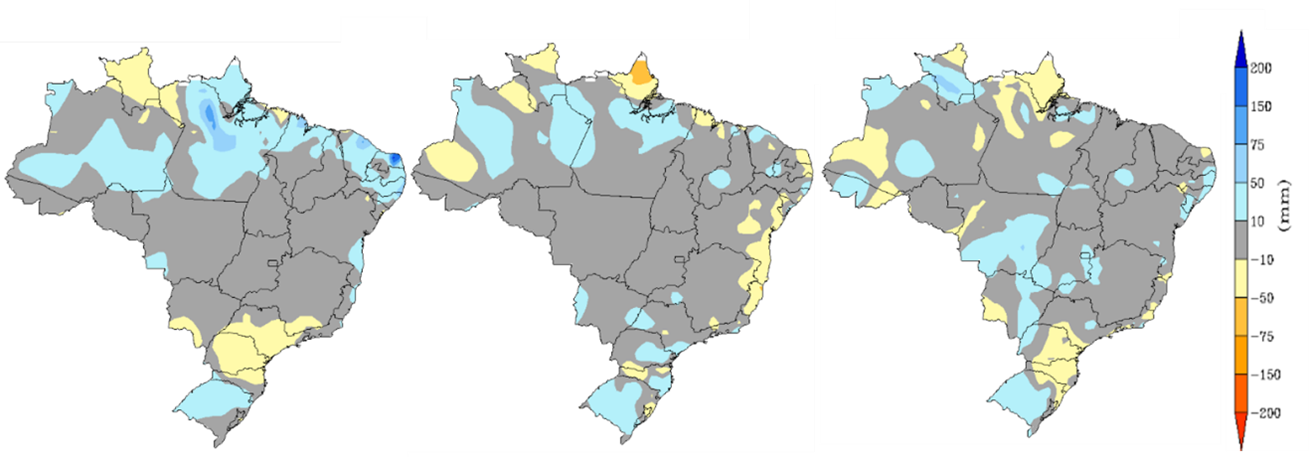
Precipitation Anomaly in Brazil (mm | June (left), July (center) and August (right))
Source: Inmet
In the end, while weather-related disruptions may weigh on Northern Hemisphere production, as highlighted in our previous report, there is still no indication of risk to Brazil’s Center-South output, neither for 2026/27 nor, at this stage, for 2027/28. This reinforces Brazil’s role as the key global supplier and further highlights the market’s growing reliance on the region.
However, it remains essential to keep a close eye on weather developments globally, as this continues to be the main source of support for bullish sentiment. Any meaningful shifts could influence the current forward curve and further reinforce the V/H spread.
Summary
The sugar market remains quiet, with bearish short-term fundamentals limiting price moves and shielding it from external drivers. As a result, attention has shifted to medium- and long-term risks, with weather, particularly El Niño, emerging as the key source of bullish potential. While risks are building in the Northern Hemisphere (India, Thailand, parts of Mexico, for instance), Brazil’s Center-South continues to show a stable outlook, reinforcing its central role in global supply and shaping the forward curve into carry.
Weekly Report — Sugar
Reviewed by Thaís Italiani
thais.italiani@hedgepointglobal.com
Disclaimer
This document has been prepared by Hedgepoint Schweiz AG and its affiliates (“Hedgepoint”) solely for informational and instructional purposes, without intending to create obligations or commitments to third parties. It is not intended to promote or solicit an offer for the sale or purchase of any securities, commodities interests, or investment products.