Apr 8 / Luiz Fernando G. Roque

Fundamentals back in focus: U.S. Prospective Plantings point to new soybean and corn acreage

Fundamentals back in focus: U.S. Prospective Plantings point to new soybean and corn acreage


The important and highly anticipated U.S. “Prospective Plantings” report, released on March 31 by the U.S. Department of Agriculture (USDA), once again drew the market’s attention to fundamentals, providing the first official figures regarding the areas to be planted in the new 2026/27 U.S. crop year.

Although the report confirmed market sentiment indicating an increase in the area to be planted with soybeans and a reduction in the area to be planted with corn in the new season, the figures differed slightly from expectations.

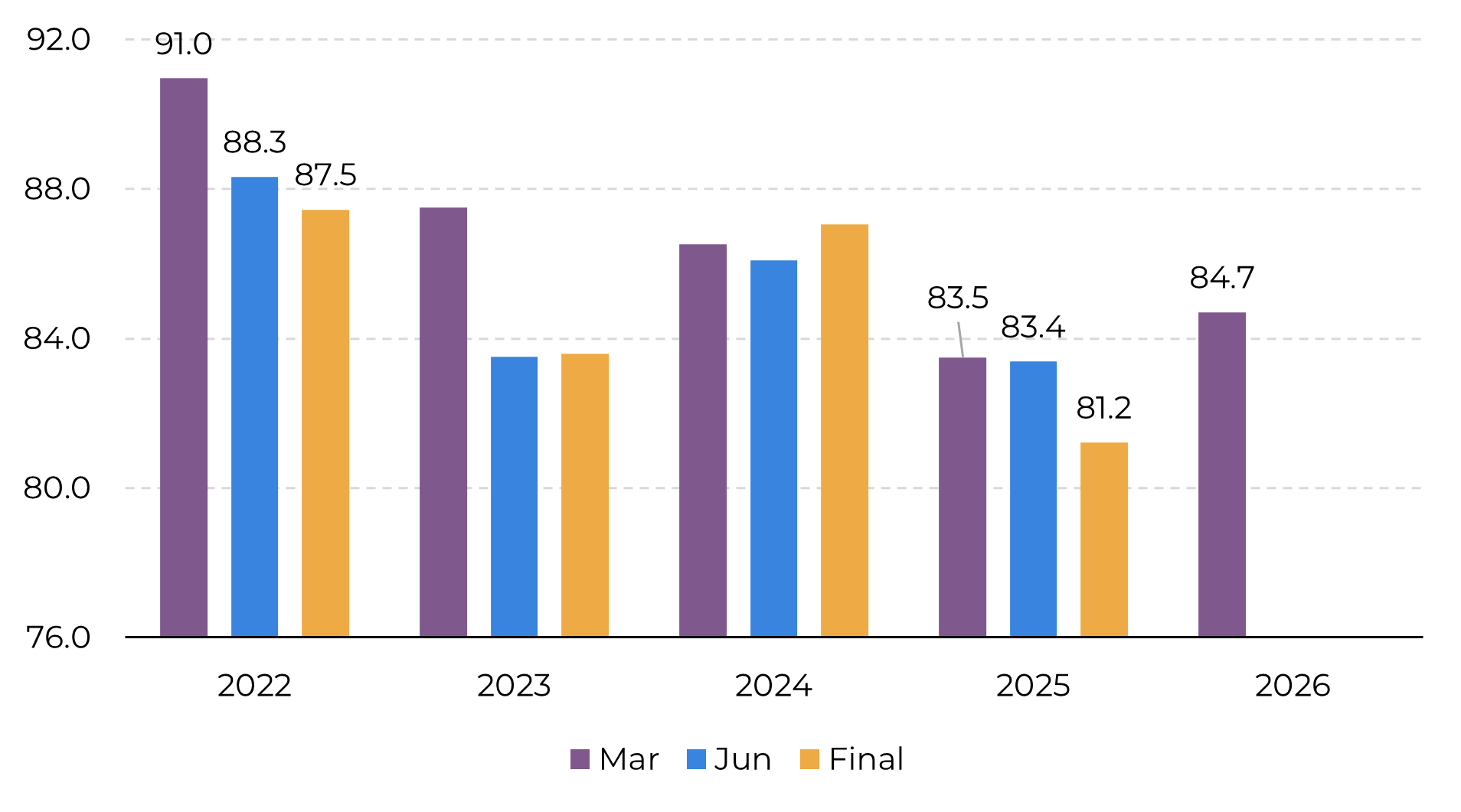
According to the USDA, the area to be planted with soybeans in 2026/27 is estimated at 84.7 million acres, an increase of 3.5 million acres compared to the previous season (81.2 million acres), or +4.3%. The figure was 1.0% below the market estimate (or 0.8 million acres), which had anticipated a soybean area of 85.5 million acres.

Soybeans | U.S. Planted Area (in millions of acres)
                                                                                                                                                                                        Source: USDA, Hedgepoint


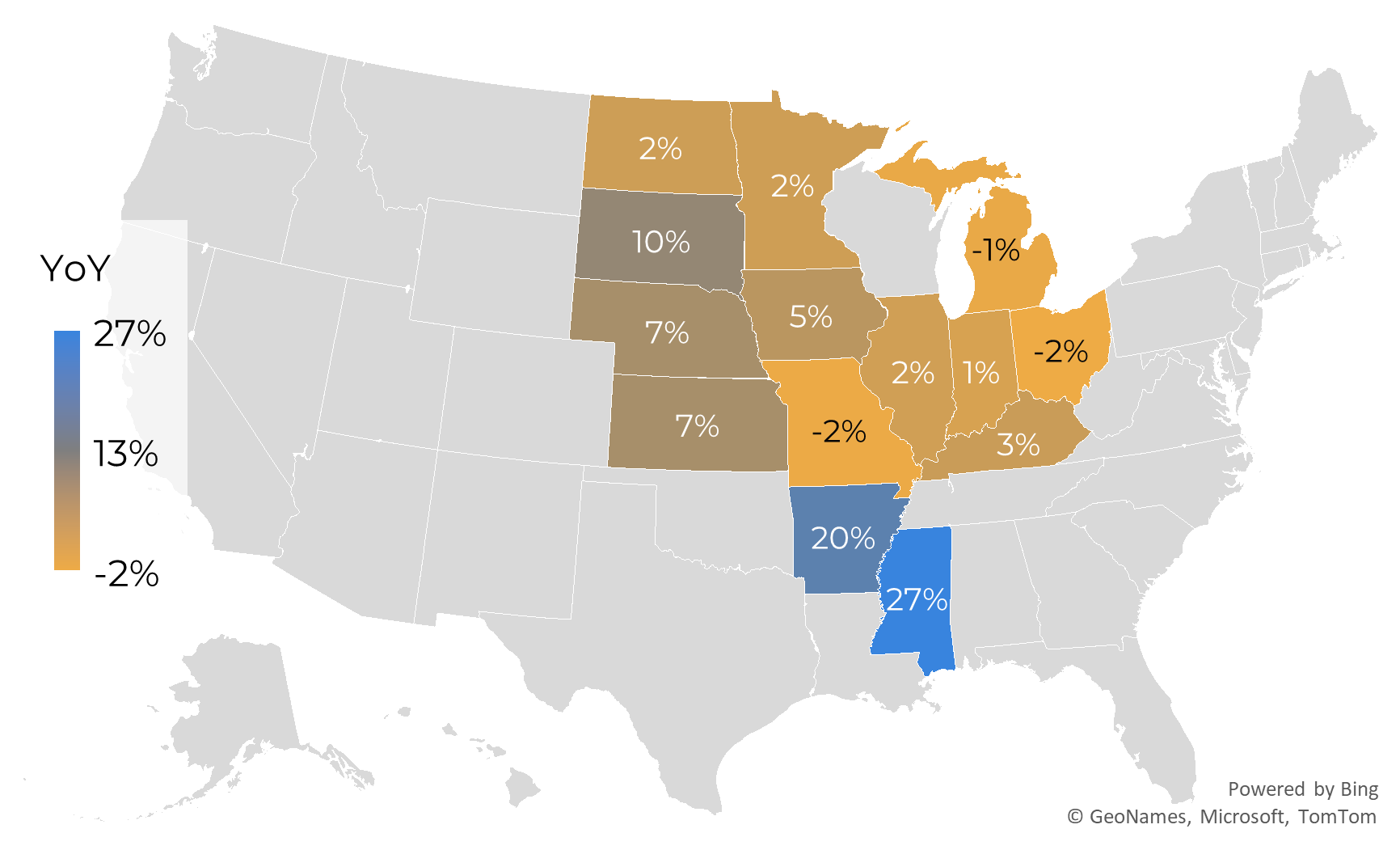
Soybeans | U.S. Planted Area | States | 2026/27 vs. 2025/26 (% change)
                                                                                                                                                                                             Source: USDA, Hedgepoint


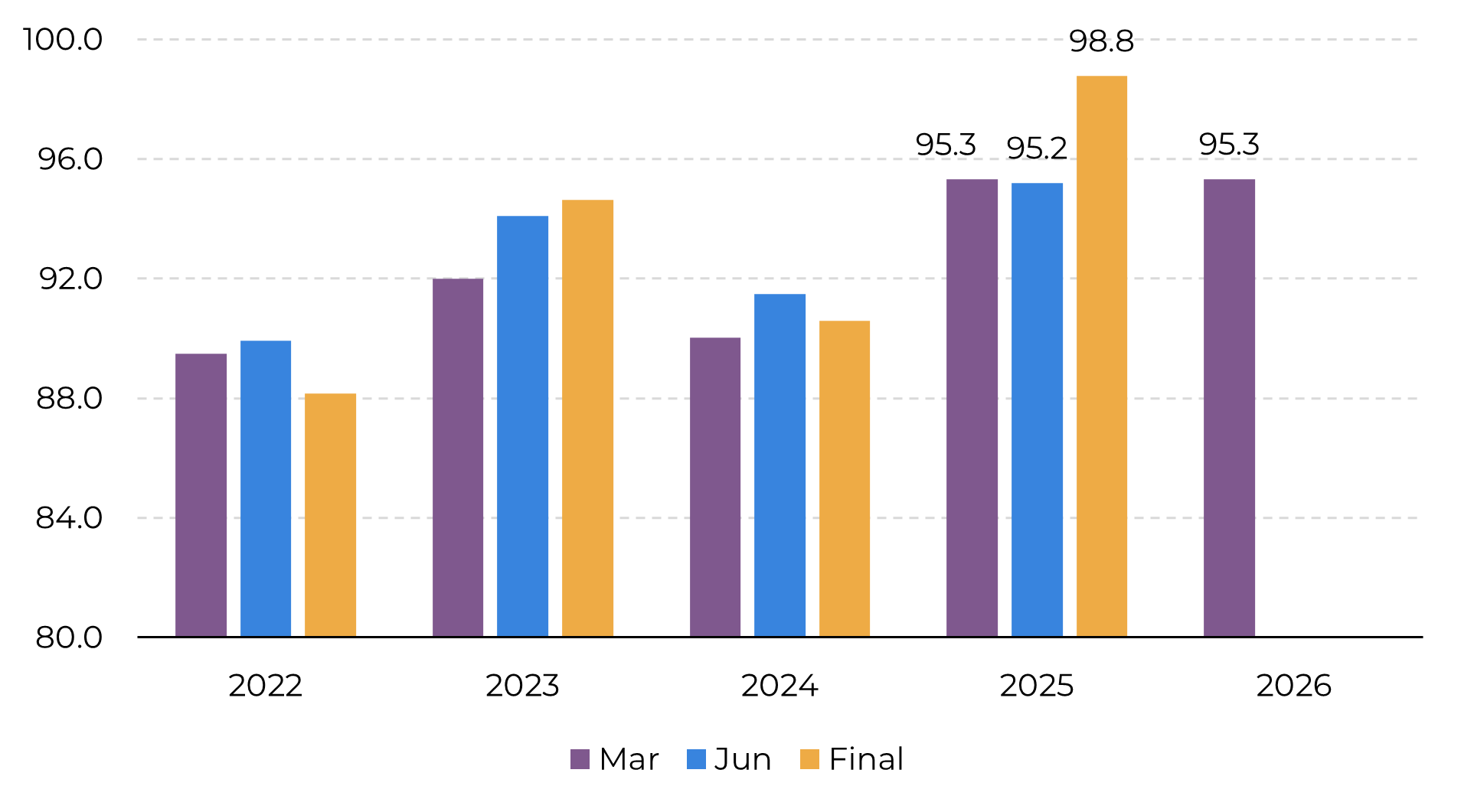
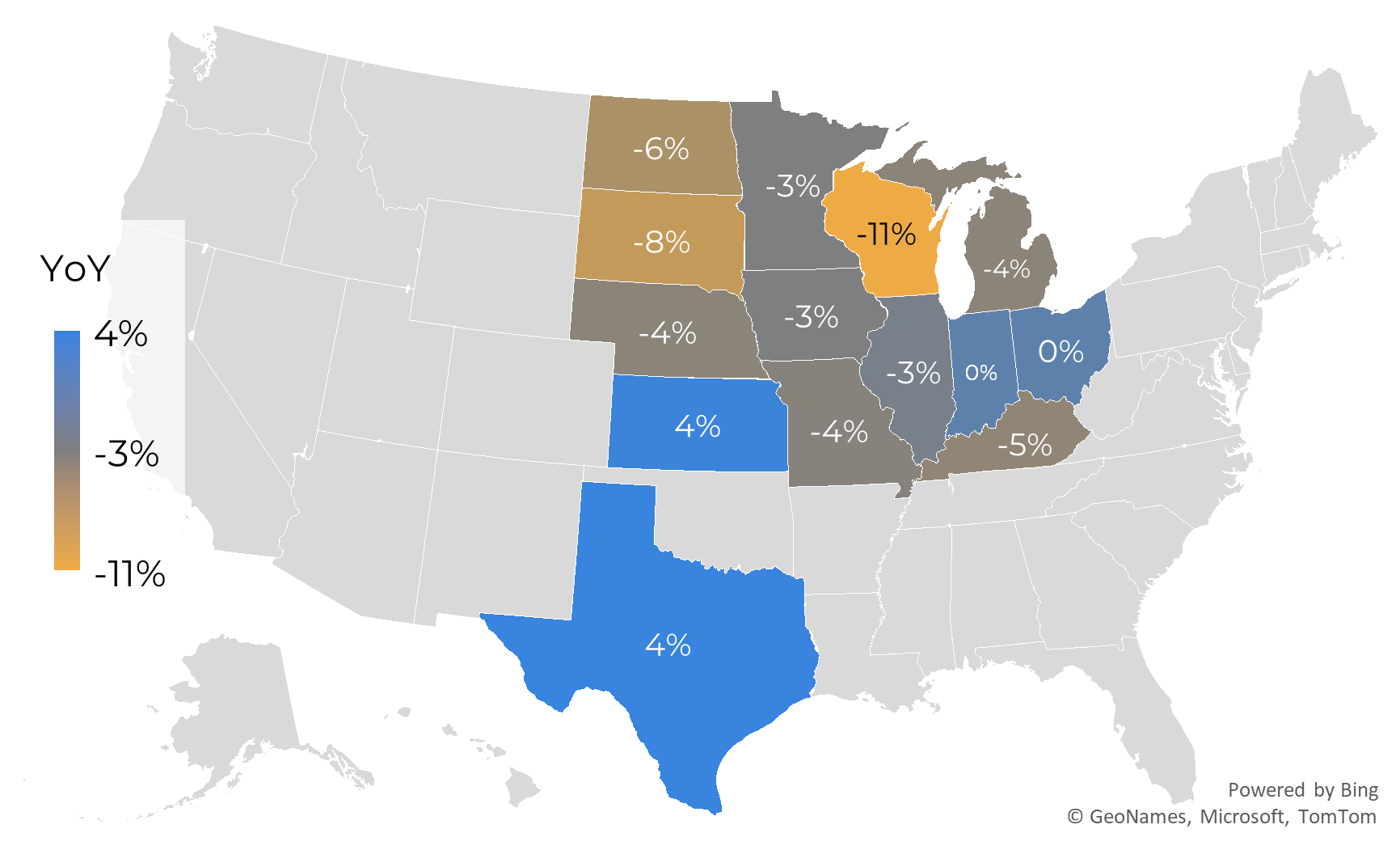
As for corn, the USDA estimates that U.S. producers will plant 95.3 million acres in 2026/27, a decrease of 3.5 million acres from last season (98.8 million acres), or -3.5%. Unlike soybeans, the figure was 1.0% above market expectations (or 0.9 million acres), which had projected a corn area of 94.4 million acres.

Corn | U.S. Planted Area (in millions of acres)
                                                                                                                                                                                             Source: USDA, Hedgepoint

Corn | U.S. Planted Area | States | 2026/27 vs. 2025/26 (% change)
                                                                                                                                                                                             Source: USDA, Hedgepoint


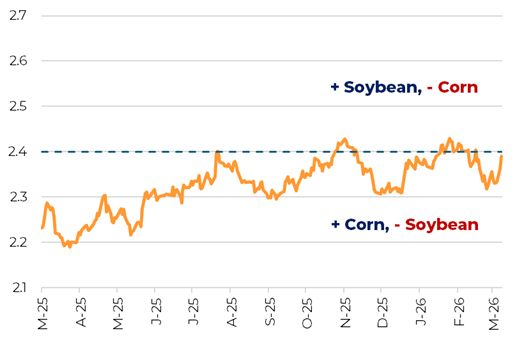
Market expectations of an increase in soybean acreage and a reduction in corn acreage are supported by an improvement in the soybean-to-corn price ratio in favor of soybeans, a trend that has emerged in recent months. However, the high volatility triggered by the conflict between the U.S. and Iran since late February has brought significant uncertainty regarding production costs and prices for both commodities, impacting their price ratio. At this time, the soybean-to-corn ratio has once again become more favorable to corn, although the rise in international fertilizer prices brings new uncertainties, given the greater need for nitrogen fertilizers in corn cultivation.

Soybeans vs. Corn | CBOT Futures Ratio
                                                                                                                                                               Source: LSEG, Hedgepoint


Given these factors, we highlight that there is a high probability of significant differences between the areas estimated in the “Planting Intentions” report (March 31) and the areas that will be reported in the “Planted Area” report, to be released on June 30.

In any case, based on the data currently available, we have been able to develop new supply-and-demand projections for the upcoming U.S. crop year, with the aim of anticipating the first official estimates to be released in the USDA’s May Supply and Demand Report (on May 12). To do so, we used the provisional figures indicated in the USDA Outlook Forum, now projecting yields based on the areas estimated in the “Crop Intentions” report. In this calculation, we also used factors related to the differences between planted and harvested areas, as well as average yields, also indicated by the USDA in the Outlook Forum.

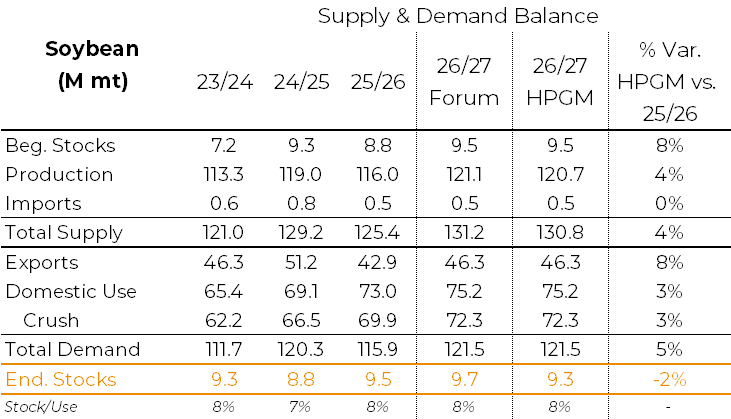
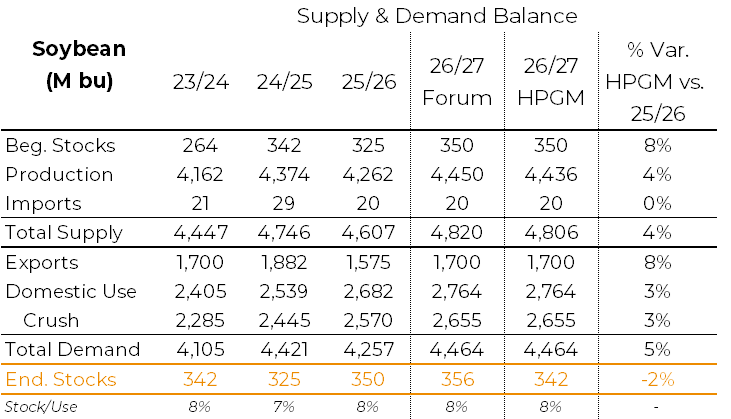
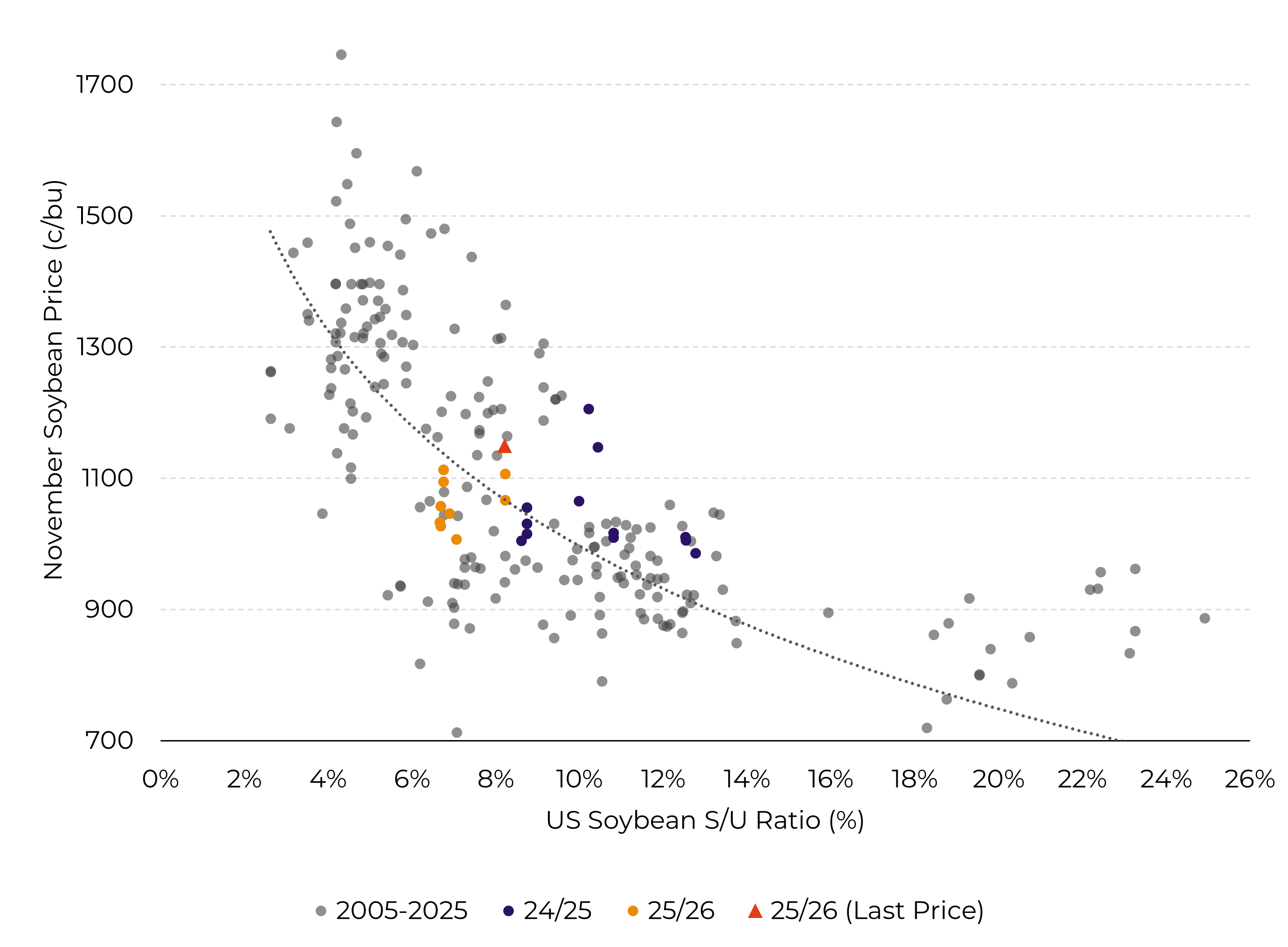
For soybeans, potential production is estimated at 120.7 million tons, a 4% increase compared to the 2025/26 season. If confirmed, this production would be the second-highest in U.S. history.

Keeping the other supply and demand figures unchanged from the Outlook Forum estimates, lower production should lead to lower ending stocks as well, estimated at 9.3 million tons, a 2% decline from the previous season. Even so, the stock-to-use ratio is expected to remain around 8%.

This 8% soybean stock-to-use ratio, according to our historical correlation analysis, would indicate equilibrium prices in Chicago around 10.80–11.00 USD/bu.

Soybeans | U.S. | Supply and Demand (in M tons)
                                                                                                                                                                 Source: USDA, Hedgepoint

Soybeans | U.S. | Supply and Demand (in M bushels)
                                                                                                                                                                 Source: USDA, Hedgepoint

Soybeans | U.S. | Stock/Use vs. Price
                                                                                                                                                                 Source: USDA, Hedgepoint


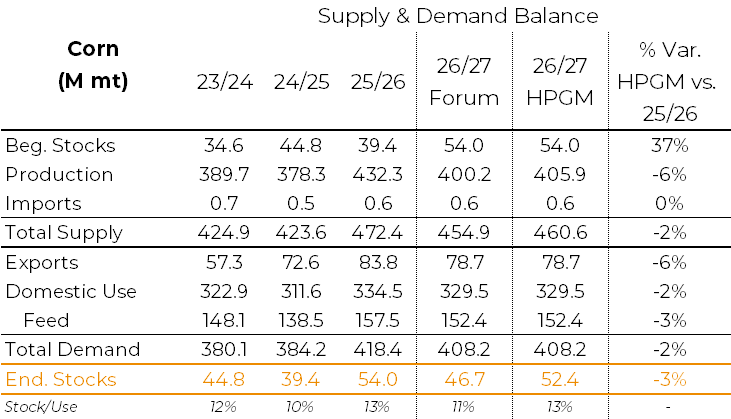
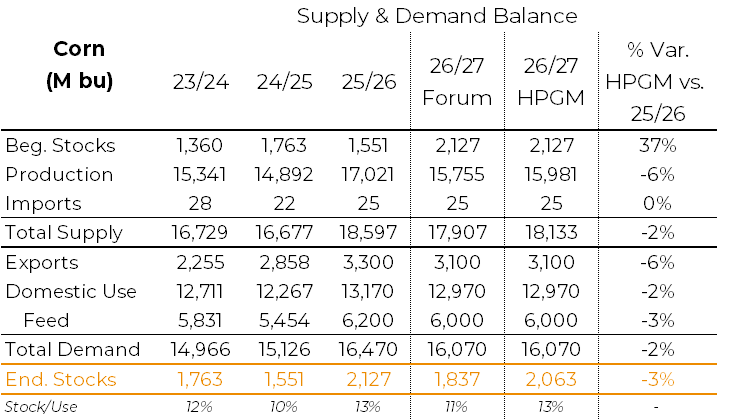
As for corn, potential production is estimated at 405.9 million tons, a 6% decline from the previous season. If confirmed, this production would also be the second-highest in U.S. history, trailing only the 2025/26 production.

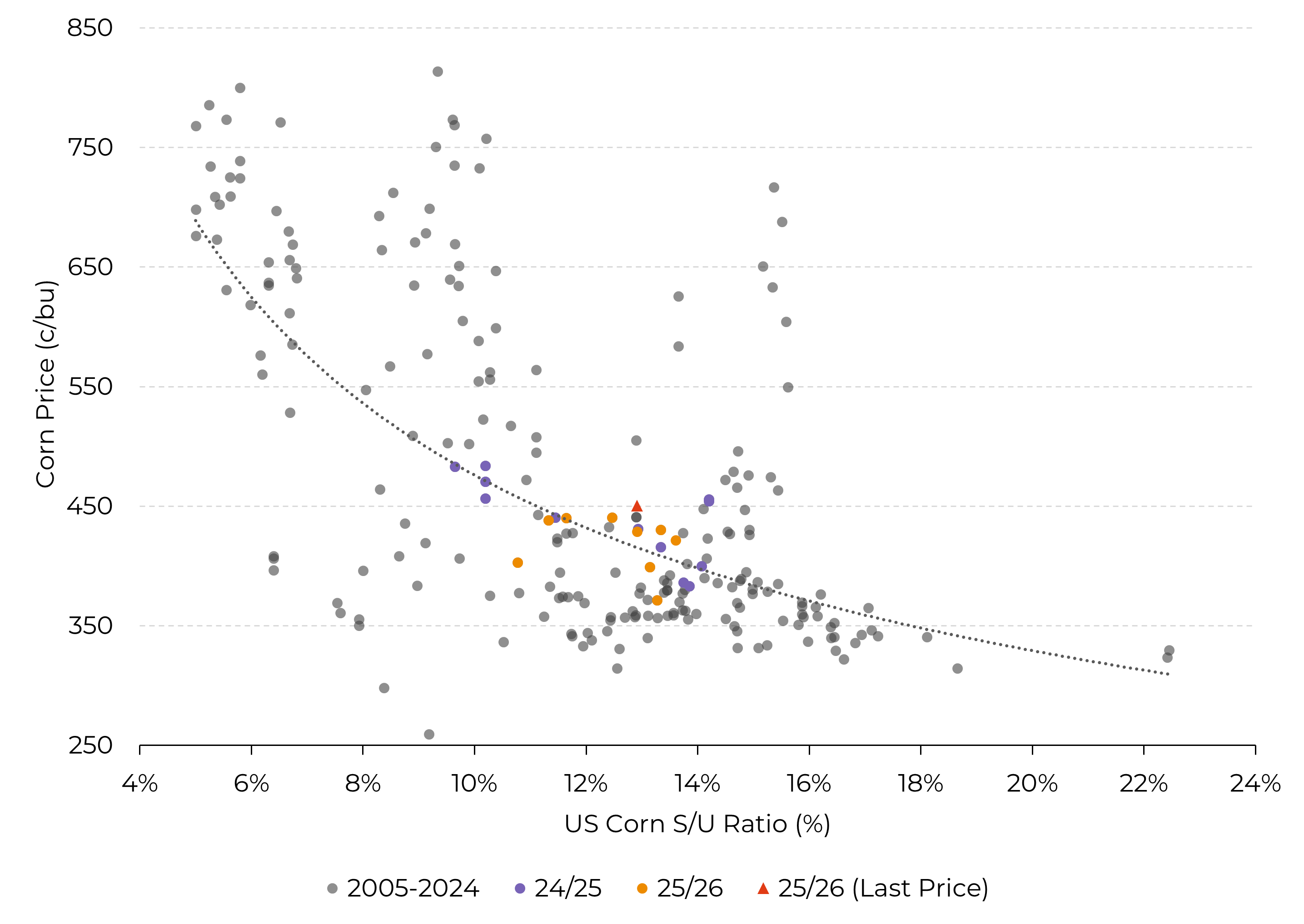
With other supply and demand figures remaining unchanged (Forum), the result is expected to lead to ending stocks of 52.4 million tons, a 3% decline compared to the 2025/26 season. Even with a likely decline driven mainly by lower production, stocks are expected to remain at very high levels (stock-to-use ratio of 13%).

In our historical correlation analysis, this corn stock-to-use ratio of 13% would suggest equilibrium prices in Chicago of around 4.00–4.10 USD/bu.

Corn | US | Supply and Demand (in M tons)
                                                                                                                                                                 Source: USDA, Hedgepoint

Corn | US | Supply and Demand (in M bushels)
                                                                                                                                                                 Source: USDA, Hedgepoint

Corn | U.S. | Stock/Use vs. Price
                                                                                                                                                                 Source: USDA, Hedgepoint


With planting for this new U.S. crop season just beginning, attention now turns to weather conditions for the progress of planting and crop development over the next 150 days.

At this time, weather maps indicate normal or above-average rainfall for April across the entire production belt, which should support planting progress and adequate germination of the first crops sown, although potential excess moisture warrants attention.

U.S. Precipitation Anomaly Forecast (%) - April
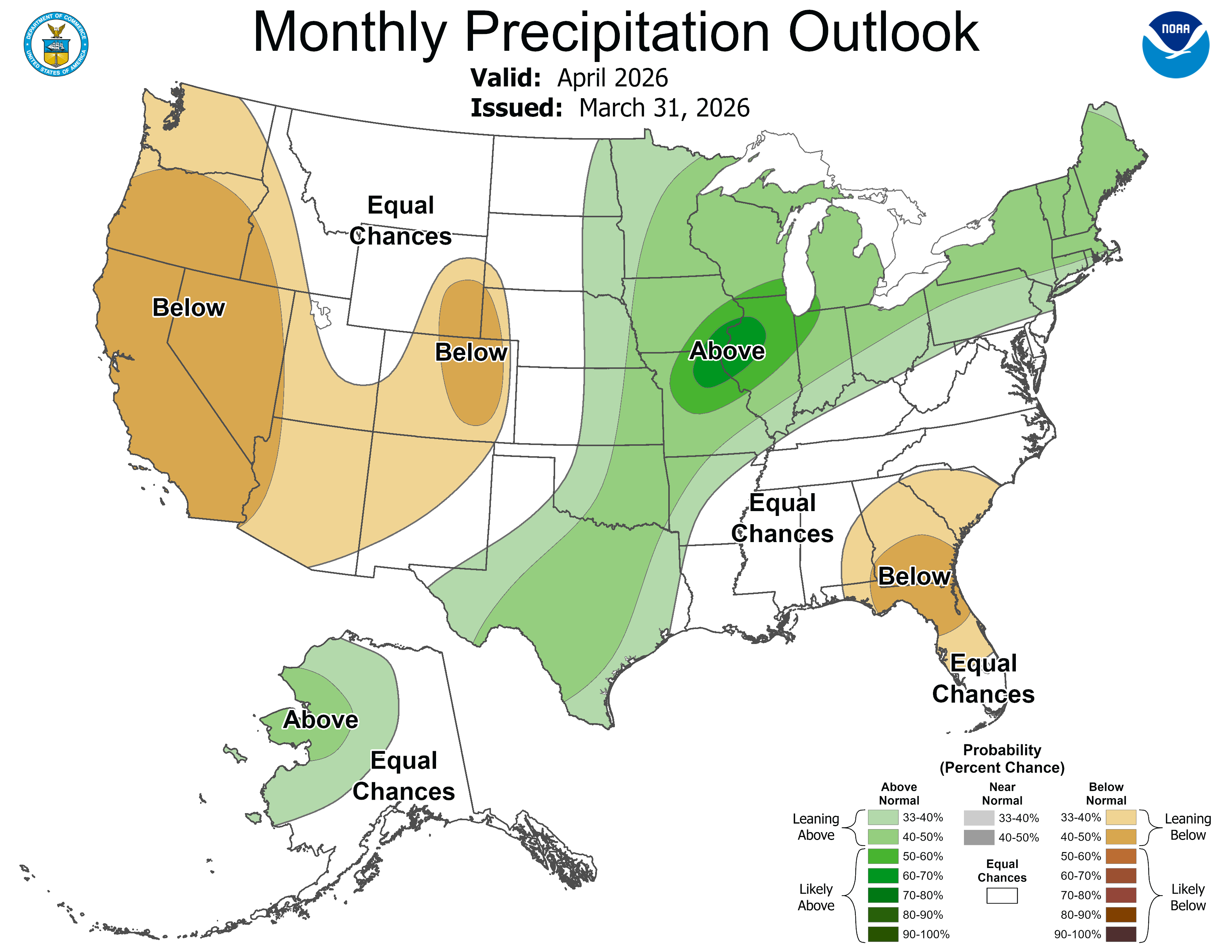
                                                                                                                                                                                     Source: NOAA


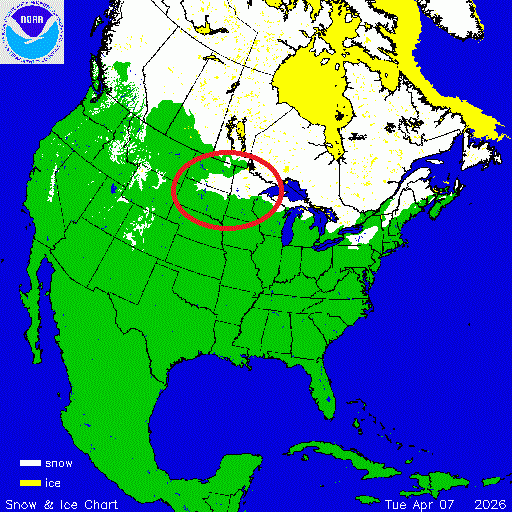
When we look at the snow cover and compare it to the same period last year, we notice that there is more snow in North Dakota and Minnesota, which could hinder the machines’ initial progress. However, we do not see any major potential problems at this time.

U.S. | Snow Cover | April 7, 2025                                                       U.S. | Snow Cover | April 7, 2026
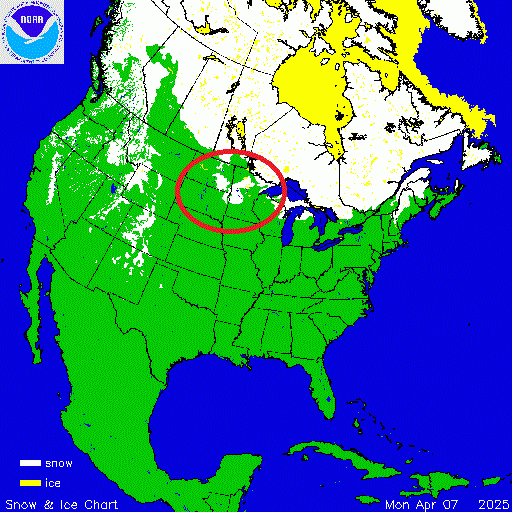
                                                                                                                                         Source: NOAA                                                                                                                                               Source: NOAA


Looking a little further ahead, the precipitation anomaly forecast map points to “normal” rainfall between April and June across most of the U.S. Corn Belt, also indicating favorable conditions for crop development. However, some states in the western half of the Corn Belt may experience below-average rainfall during this period, which warrants attention.

U.S. Precipitation Anomaly Forecast (%) – April, May, and June
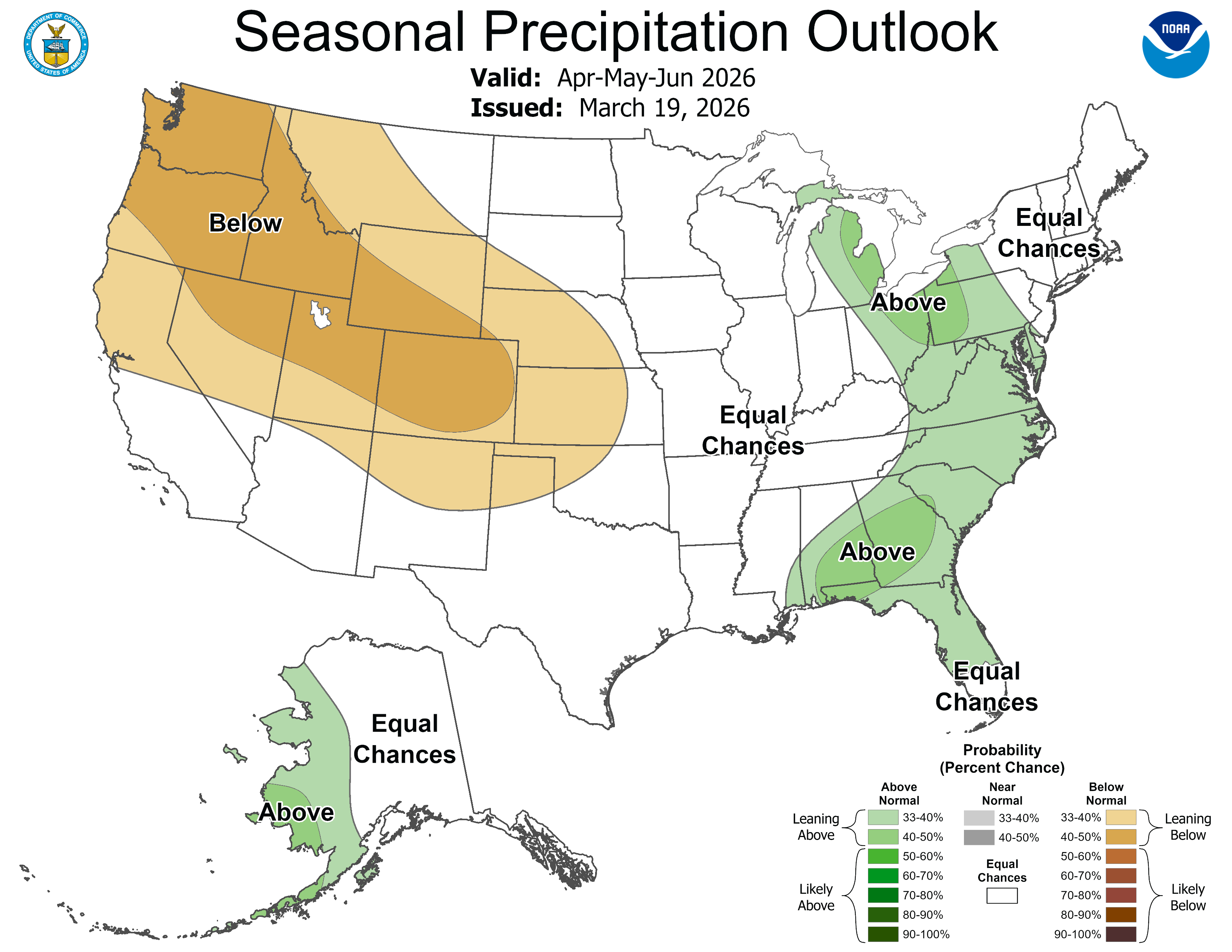
                                                                                                                                                                                     Source: NOAA


When we look at the Drought Monitor, we note that some states in the southern and western parts of the production belt are currently experiencing low soil moisture, which is also a factor that warrants attention. For these states, it is essential that rainfall returns with greater volume and more regularity in the coming weeks so that soil moisture can recover and conditions become more favorable for crop development.

U.S. Drought Monitor | March 31
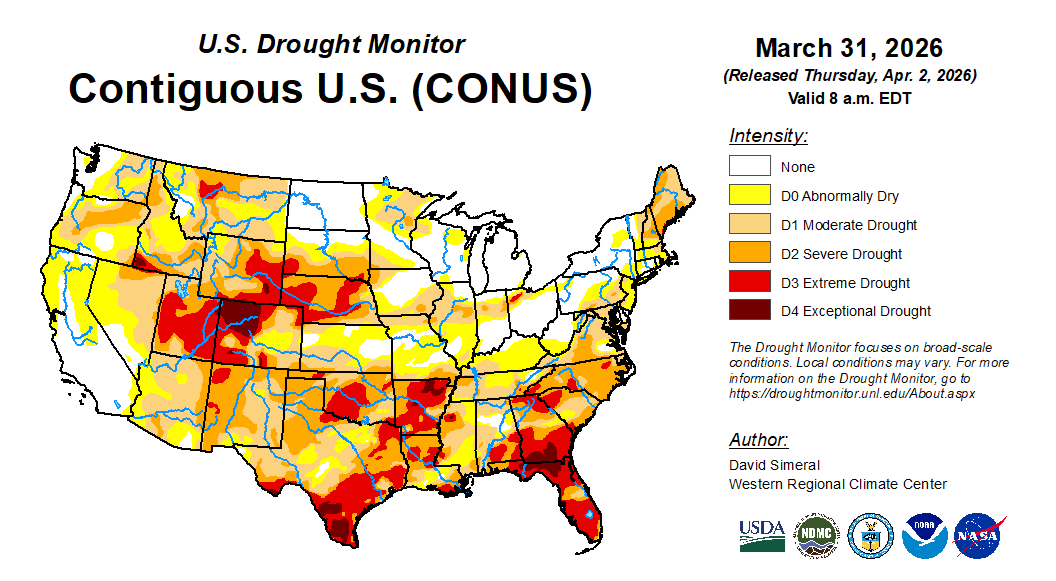
                                                                                                                                                                                                                         Source: USDA, NOAA


The speculative period regarding the U.S. weather market is officially open! Fasten your seatbelts!
Market Intelligence - Grains and Oilseeds


Written by Luiz F. Roque
Luiz.Roque@hedgepointglobal.com

Revised by Thaís Italiani

www.hedgepointglobal.com

Disclaimer

This document has been prepared by Hedgepoint Schweiz AG and its affiliates (“Hedgepoint”) solely for informational and instructional purposes, without intending to create obligations or commitments to third parties. It is not intended to promote or solicit an offer for the sale or purchase of any securities, commodities interests, or investment products.
Hedgepoint and its associates expressly disclaim any liability for the use of the information contained herein that directly or indirectly results in any kind of damages. Information is obtained from sources which we believe to be reliable, but we do not warrant or guarantee the timeliness or accuracy of this information.
The trading of commodities interests, such as futures, options, and swaps, involves substantial risk of loss and may not be suitable for all investors. You should carefully consider wither such trading is suitable for you in light of your financial condition. Past performance is not necessarily indicative of future results. Customers should rely on their own independent judgment and/or consult advisors before entering into any transactions.
Hedgepoint does not provide legal, tax or accounting advice and you are responsible for seeking any such advice separately.
Hedgepoint Schweiz AG is organized, incorporated, and existing under the laws of Switzerland, is filiated to ARIF, the Association Romande des Intermédiaires Financiers, which is a FINMA-authorized Self-Regulatory Organization. Hedgepoint Commodities LLC is organized, incorporated, and existing under the laws of the USA, and is authorized and regulated by the Commodity Futures Trading Commission (CFTC) and a member of the National Futures Association (NFA) to act as an Introducing Broker and Commodity Trading Advisor. HedgePoint Global Markets Limited is Regulated by the Dubai Financial Services Authority. The content is directed at Professional Clients and not Retail Clients. Hedgepoint Global Markets PTE. Ltd is organized, incorporated, and existing under the laws of Singapore, exempted from obtaining a financial services license as per the Second Schedule of the Securities and Futures (Licensing and Conduct of Business) Act, by the Monetary Authority of Singapore (MAS). Hedgepoint Global Markets DTVM Ltda. is authorized and regulated in Brazil by the Central Bank of Brazil (BCB) and the Brazilian Securities Commission (CVM). Hedgepoint Serviços Ltda. is organized, incorporated, and existing under the laws of Brazil. Hedgepoint Global Markets S.A. is organized, incorporated, and existing under the laws of Uruguay. In case of questions not resolved by the first instance of customer contact (client.services@Hedgepointglobal.com), please contact internal ombudsman channel (ombudsman@hedgepointglobal.com – global or ouvidoria@hedgepointglobal.com – Brazil only) or call 0800-8788408 (Brazil only).
Integrity, ethics, and transparency are values that guide our culture. To further strengthen our practices, Hedgepoint has a whistleblower channel for employees and third-parties by e-mail ethicline@hedgepointglobal.com or forms Ethic Line – Hedgepoint Global Markets.
“HedgePoint” and the “HedgePoint” logo are marks for the exclusive use of HedgePoint and/or its affiliates. Use or reproduction is prohibited, unless expressly authorized by HedgePoint.
Furthermore, the use of any other marks in this document has been authorized for identification purposes only. It does not, therefore, imply any rights of HedgePoint in these marks or imply endorsement, association or seal by the owners of these marks with HedgePoint or its affiliates.

To access this report, you need to be a subscriber.