The global corn and soybean complex markets are undergoing a significant transition, marked by the interplay of macroeconomic, geopolitical, energy, and climate factors. Despite the prospect of large crops in some of the world’s leading producing countries, new structural factors supporting prices have emerged, particularly linked to the expansion of biofuels and the resurgence of oil’s influence on agricultural commodities.
At the same time, markets remain highly sensitive to weather conditions. Market focus is gradually shifting from the South American crop to the development of the U.S. crop and, subsequently, to the potential impacts of El Niño on South America during the 2026/27 season.
In this context, corn and soybeans present relatively balanced fundamentals in the short term, but with high potential volatility for the coming months.
The main macroeconomic driver remains the conflict in the Middle East involving Iran and the United States. Even with the ceasefire in place, the market continues to operate under a high level of geopolitical uncertainty, maintaining strong volatility in financial markets and pressure on energy commodities.
Oil has once again taken on direct relevance for agricultural markets. Rising energy prices:
• puts upward pressure on global inflation;
• raises logistics costs;
• increases the competitiveness of biofuels;
• strengthens demand for soybean oil and corn for ethanol.
This trend partially alters the traditional dynamics of the agricultural sector, as a significant portion of the demand for soybeans and corn is becoming increasingly dependent on the energy market.
Several countries have raised or are discussing raising mandatory biodiesel and ethanol mandates, seeking to reduce dependence on fossil fuels and curb inflationary pressures. This creates a structurally positive foundation for:
• soybean crushing;
• demand for soybean oil;
• corn consumption for ethanol.
In the United States, inflation has recently shown signs of accelerating again, mainly due to the weight of energy costs. This led the Federal Reserve to halt its cycle of interest rate cuts, increasing the likelihood that high interest rates will remain in place for longer.
At the same time, the dollar has lost strength globally. The DXY index remains weak, while defensive assets, such as gold, have appreciated significantly due to the global search for safety.
In Brazil, the interest rate differential continues to favor capital inflows into the country. As a result:
• the real has appreciated significantly;
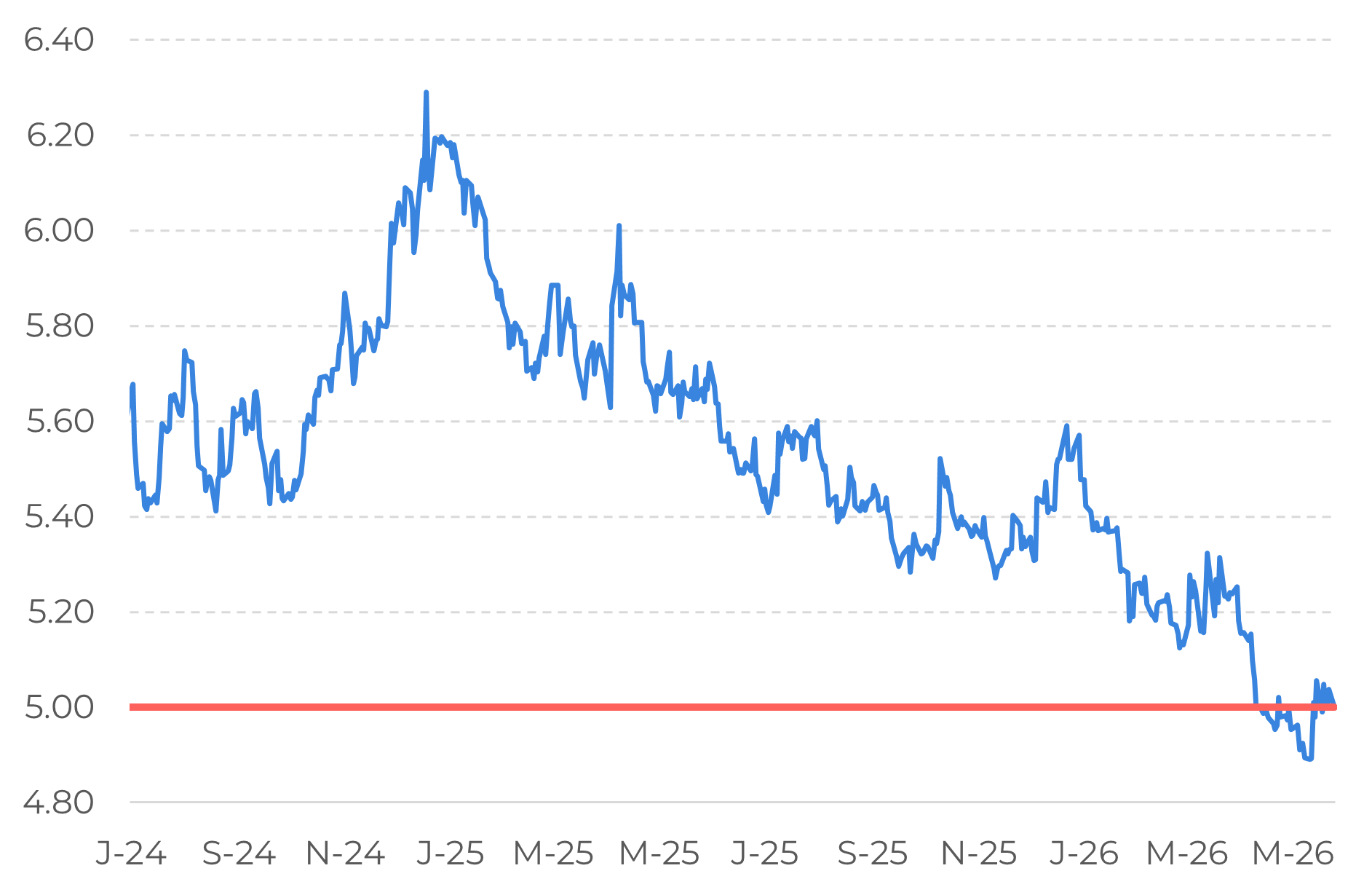
• the exchange rate fell from around R$6.20 to close to R$5.00;
• domestic agricultural prices have been partially pressured by exchange rate movements.
The recent appreciation of the real against the dollar reduces the competitiveness of Brazilian exports and partially limits the pass-through of international price increases to domestic prices. This occurs precisely at a time of intense global competition, especially in corn, with Argentina and the United States offering more competitive sources in the international market.
In addition, the geopolitical environment has gained direct relevance for Brazilian agriculture. The Middle East has established itself as an important destination for Brazilian exports, especially:
• corn;
• chicken meat.
Any deterioration regarding trade or logistics in the region could have significant impacts on export flows, domestic demand, and price formation in Brazil.
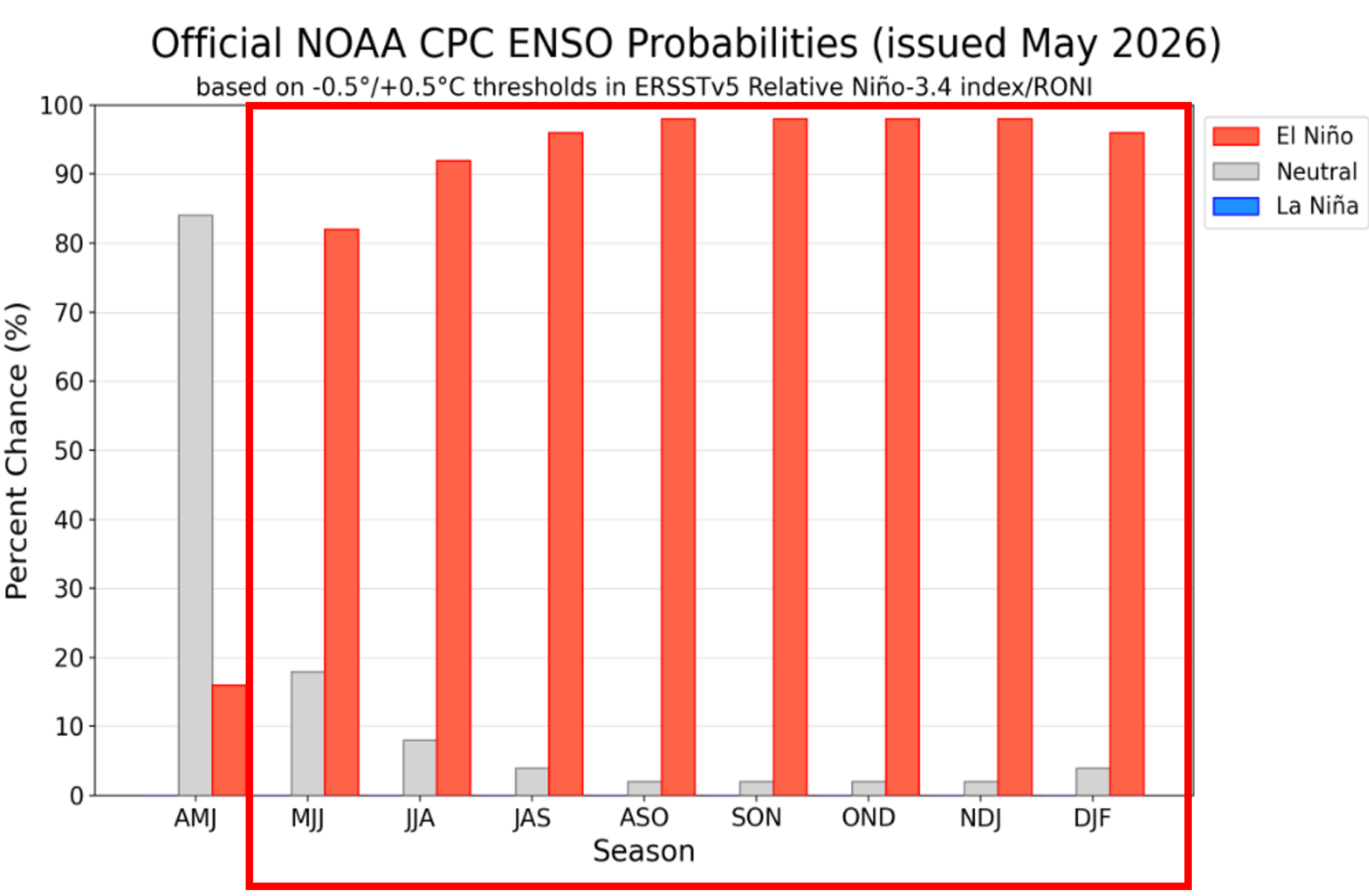
The main weather factor affecting the market today is the transition to El Niño. The probability of the phenomenon occurring is already over 80%–90%, with a growing risk of a strong or very strong event.
Historically, El Niño causes:
• below-average rainfall in north-central Brazil;
• above-average rainfall in southern South America.
This heightens concerns, particularly regarding central-northern Brazil. The market remains highly sensitive following the losses recorded in the 2023/24 Brazilian soybean crop, when drought episodes associated with El Niño significantly impacted yield in that region.
On the other hand, Argentina and southern Brazil may benefit from increased rainfall, creating the possibility of partially offsetting potential losses in north-central Brazil.
Another relevant factor is Southeast Asia. Indonesia and Malaysia, the world’s largest palm oil producers, may face drier periods under the influence of El Niño.
If this occurs:
• palm oil production may decline;
• international vegetable oil prices tend to rise;
• soybean oil gains additional support.
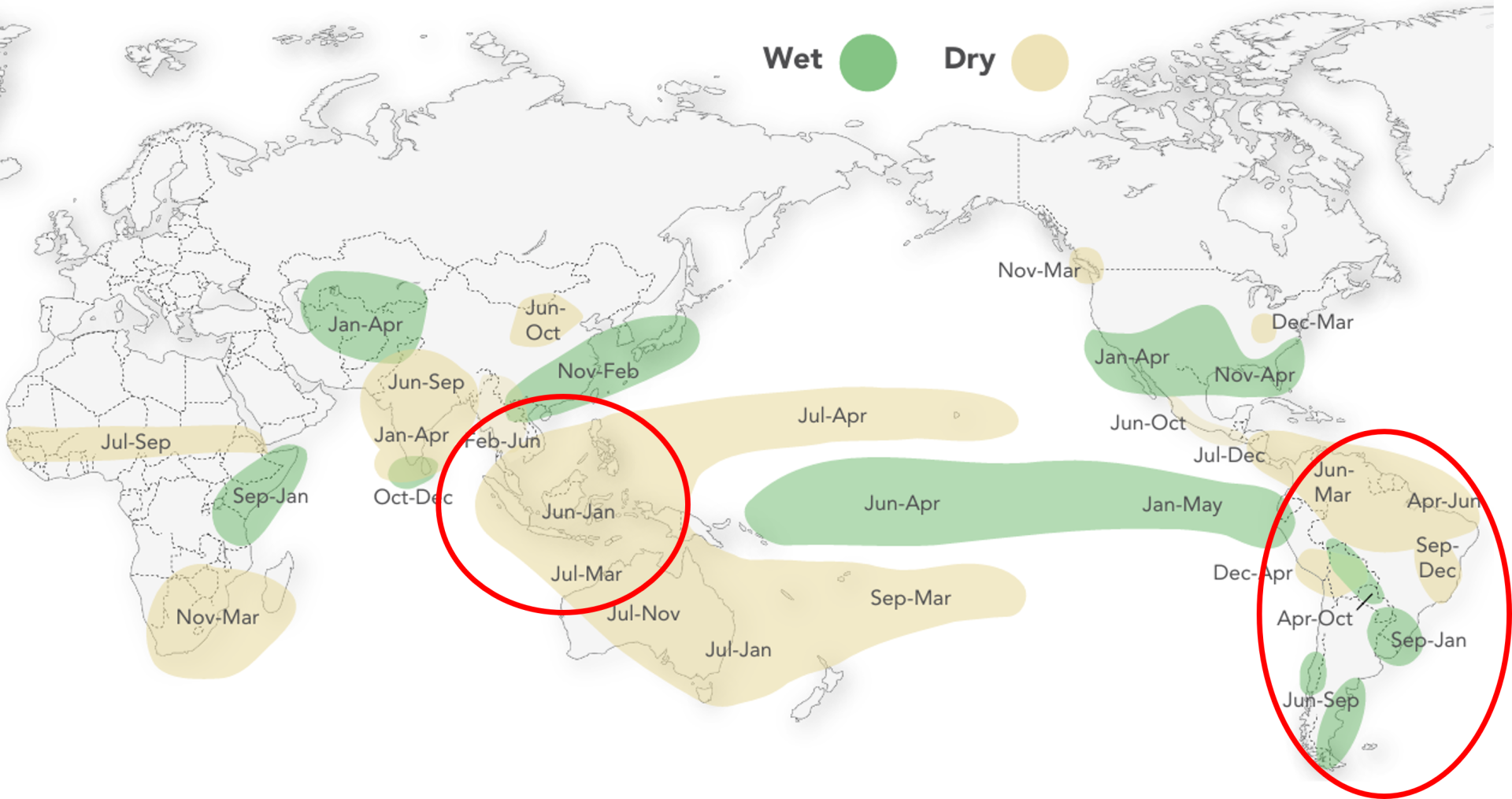
Source: Columbia University
In the United States, the current weather outlook remains quite positive:
• planting is proceeding at a rapid pace;
• good moisture;
• initial crop conditions close to the levels observed in the previous record crop.
Even so, the weather market between June and August remains the key determining factor for corn and soybeans in Chicago in the short term.
At the same time, the market continues to monitor the possible strengthening of El Niño. Although the most significant impacts are expected to occur at the end of the year (the next South American growing season), the mere prospect of a major weather event is already adding a risk premium to the market.
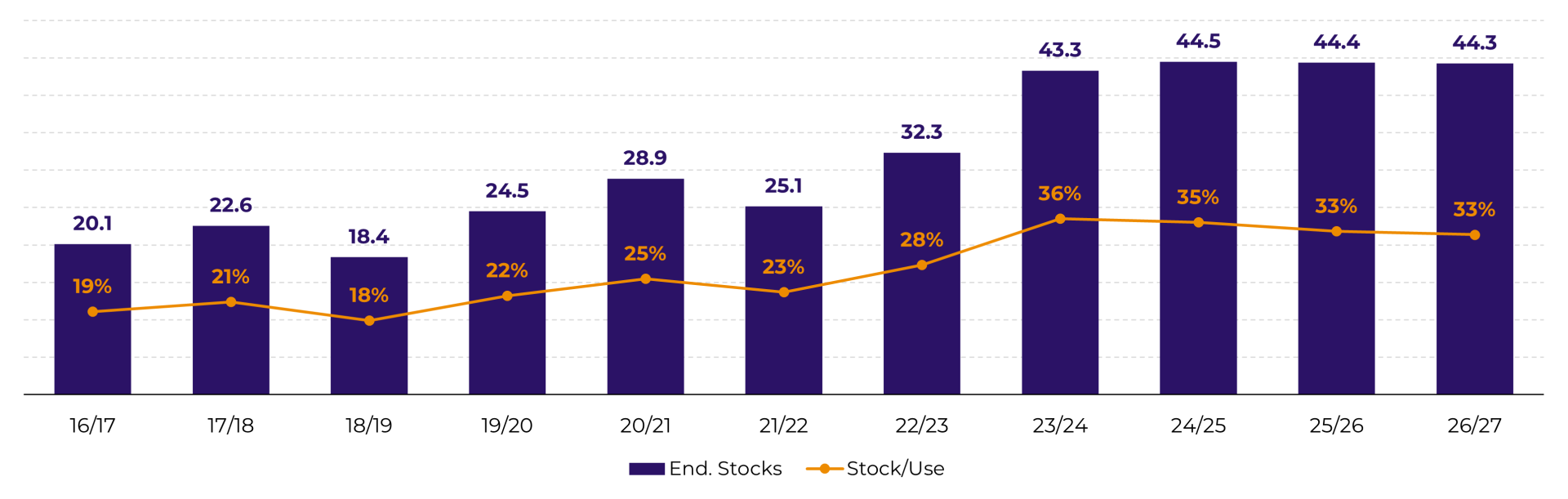
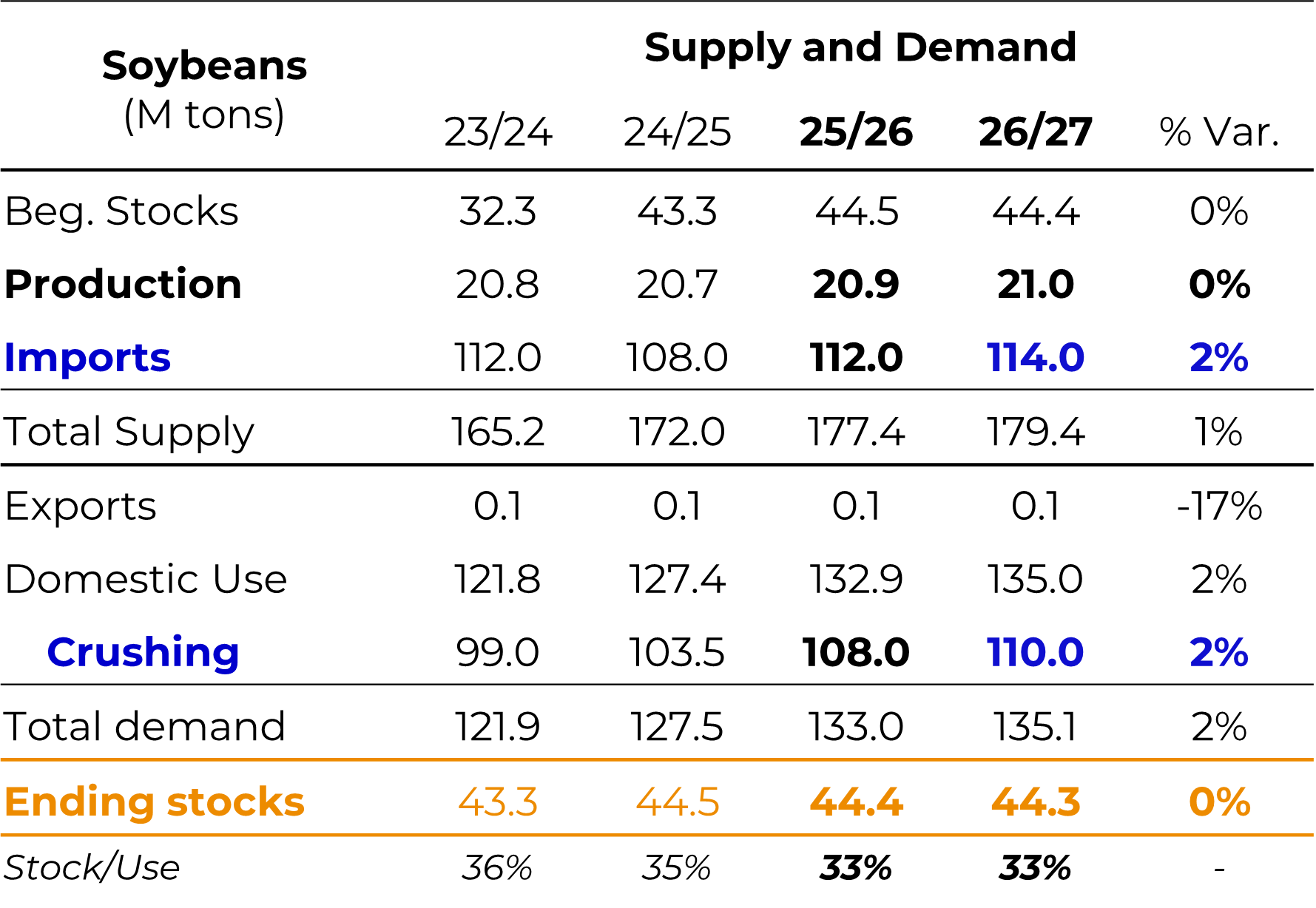
China continues to prioritize food security and maintaining high strategic soybean stocks.
Chinese stocks remain above 44 million tons, equivalent to approximately four months of consumption.
Even with a slowdown in consumption growth:
• imports remain high;
• the main objective remains rebuilding and maintaining stocks.
At the same time, signs of a structural slowdown are emerging:
• tighter margins in swine farming;
• a possible reduction in the breeding herd;
• slower growth in soybean meal consumption.
Chinese demand remains significant, but at a much slower pace than in the past decade.
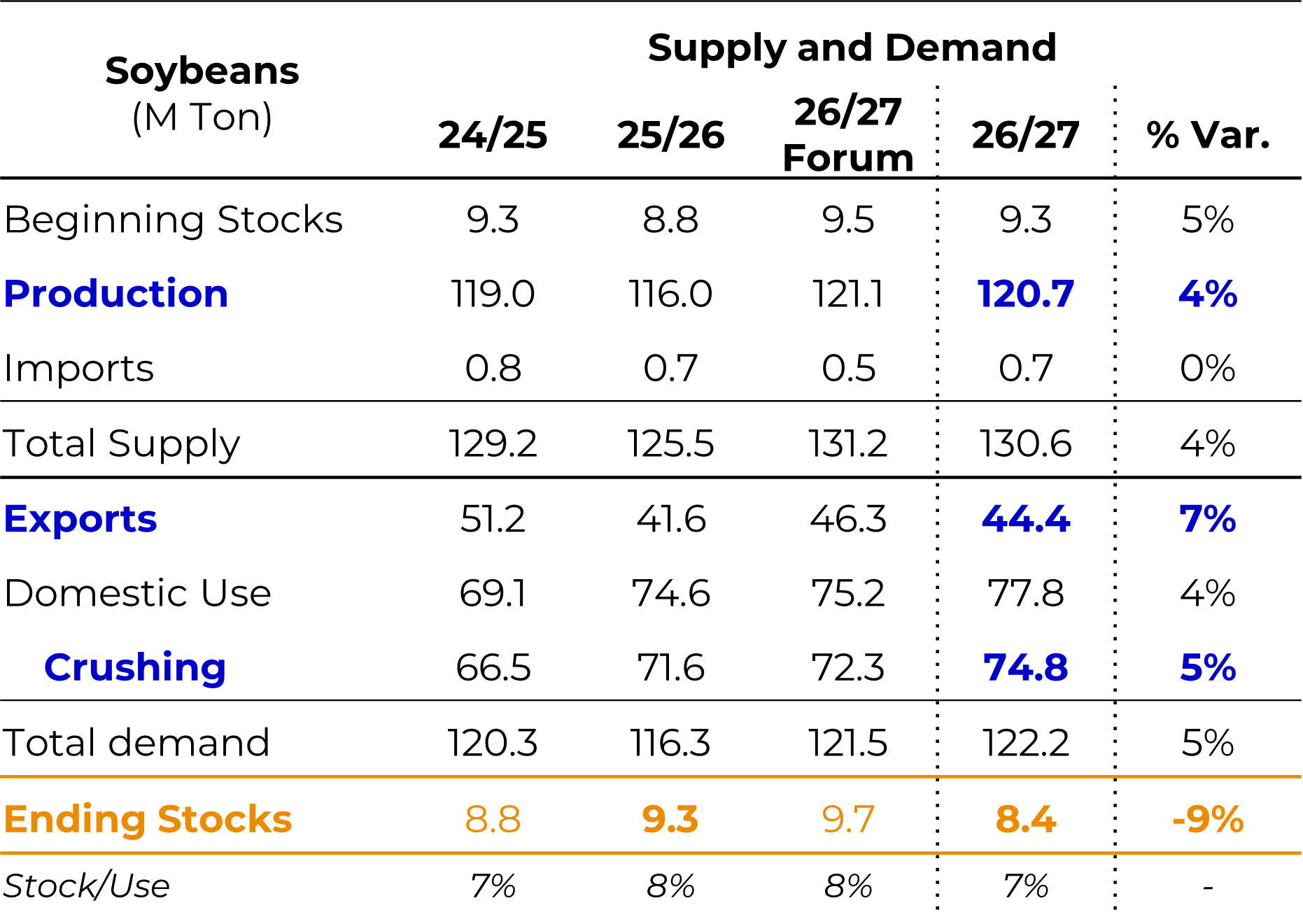
U.S. soybean acreage increased this season (2026/27), reflecting a more favorable price ratio regarding corn during the planting decision period.
Even with the possibility of a crop close to 121 million tons, the market remains relatively supported due to the very strong growth in crushing.
The main driver for soybeans today is biodiesel:
• blending mandates have increased significantly;
• demand for soybean oil has skyrocketed;
• crushing margins have reached historically high levels.
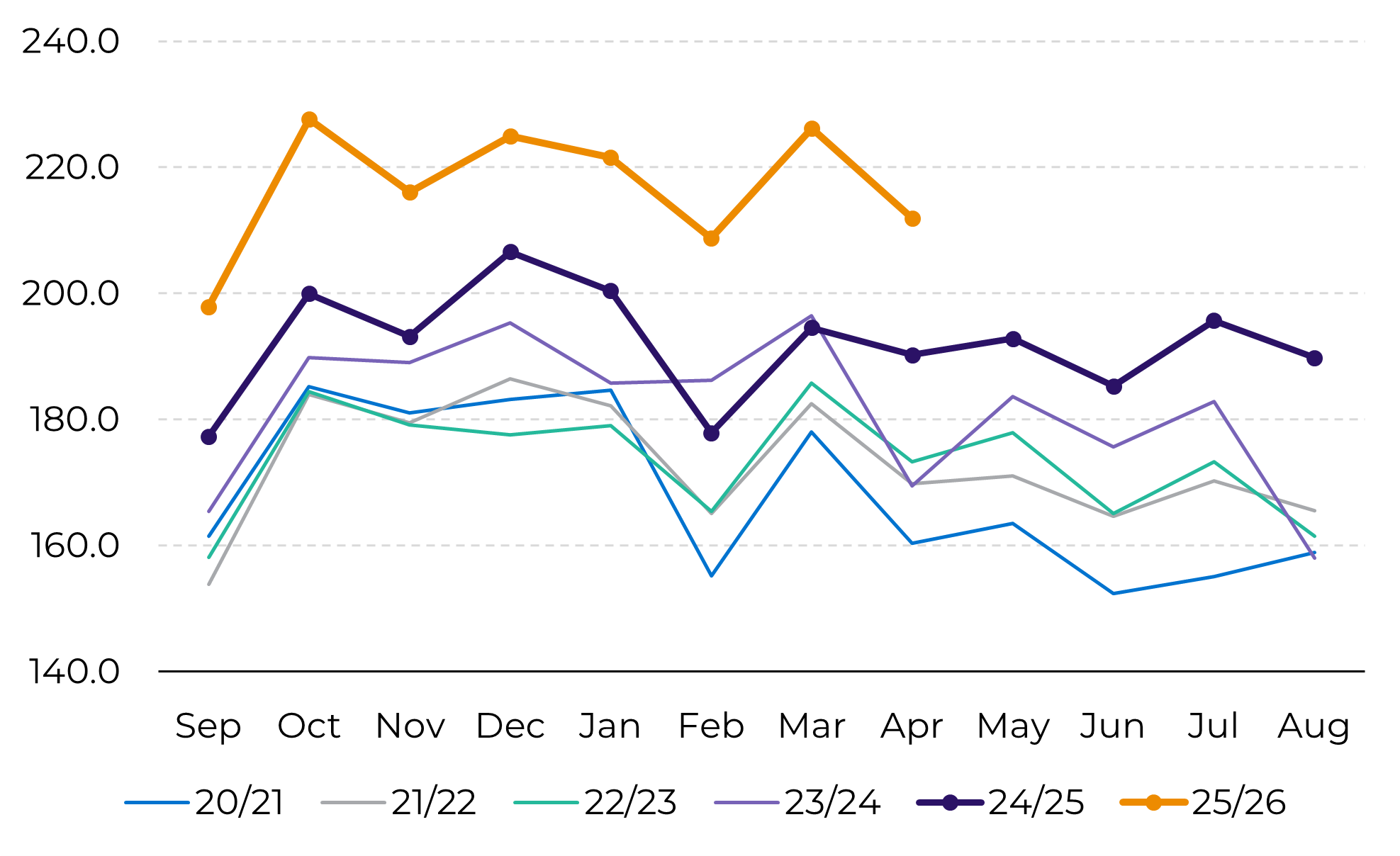
Soybean oil has become the main source of profitability for the U.S. crushing industry. This has shifted the market’s reliance from Chinese exports to domestic energy consumption.
Crushing operations are running near capacity and could continue to grow if further industrial expansion occur.
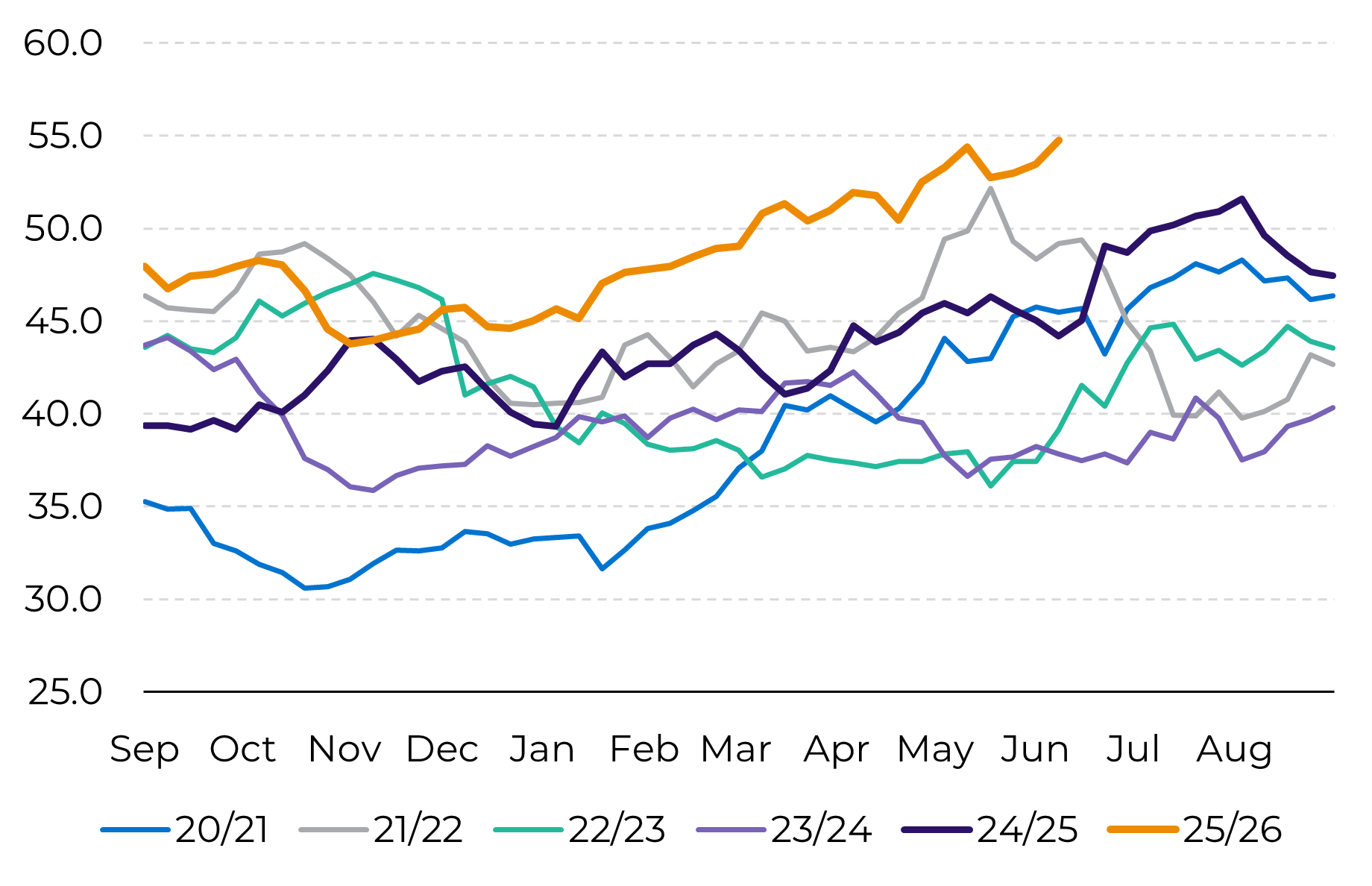
Chicago remains relatively stable in the range of US$11.50–12.00/bushel, considered consistent with the current supply-demand balance.
There is room for technical corrections, particularly in soybean oil, due to the high level of long positions held by funds, but without a structural shift in the trend at this time.
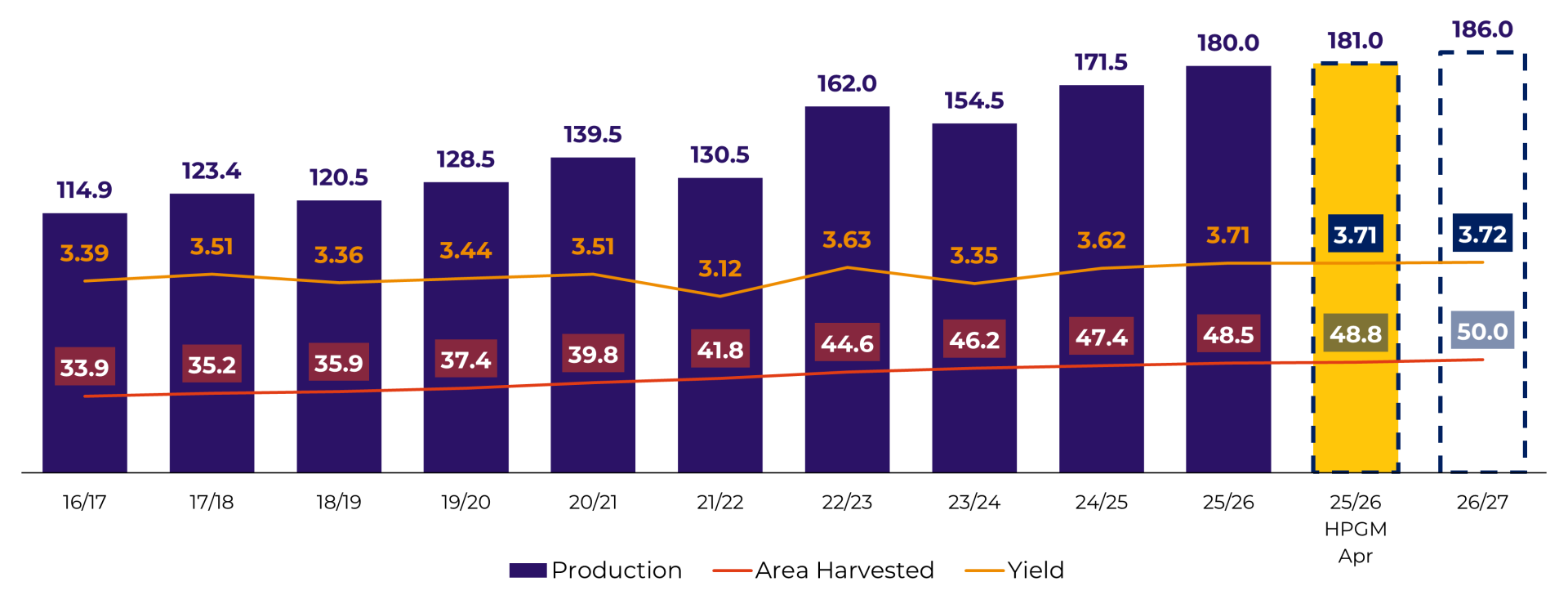
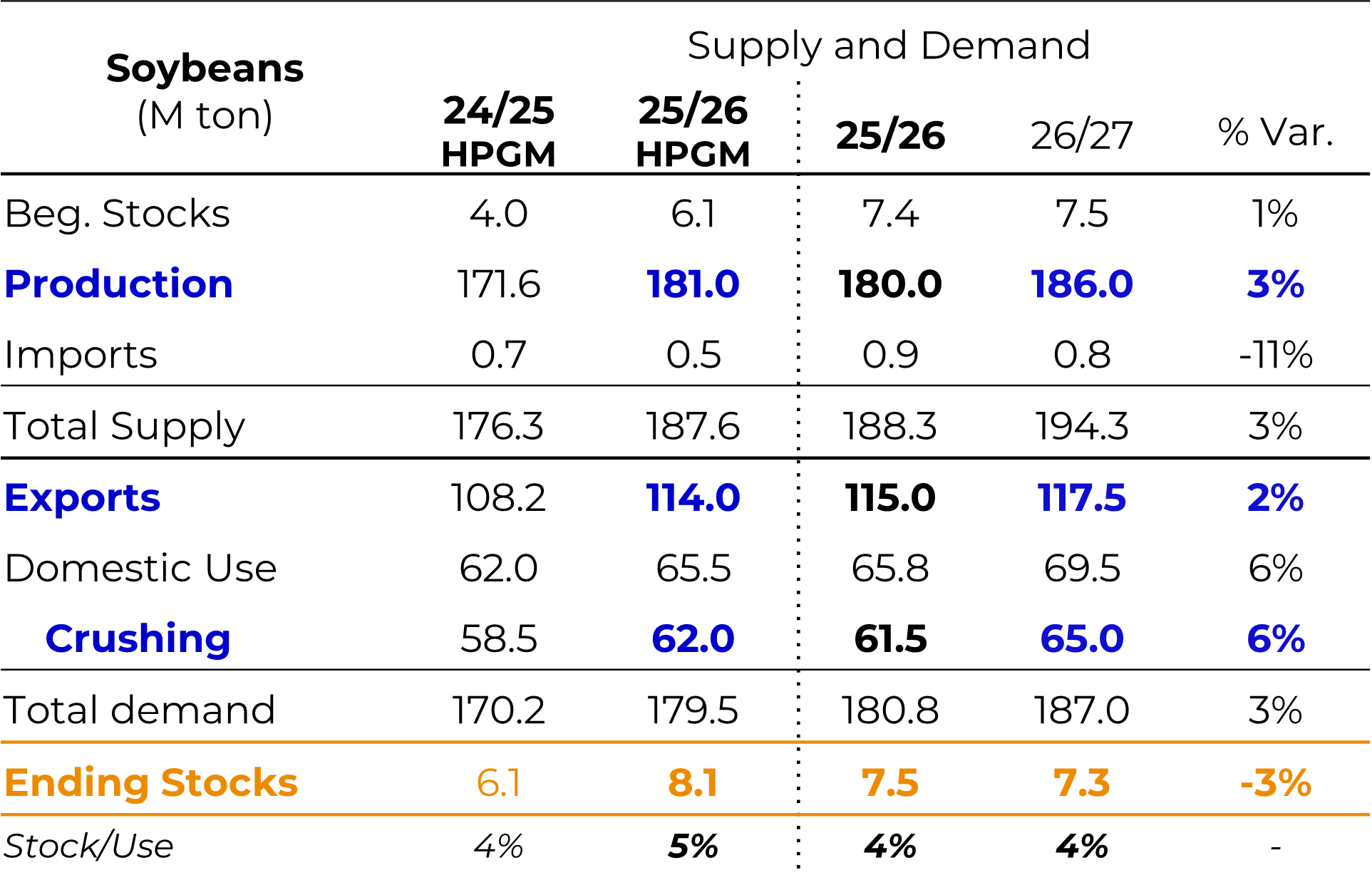
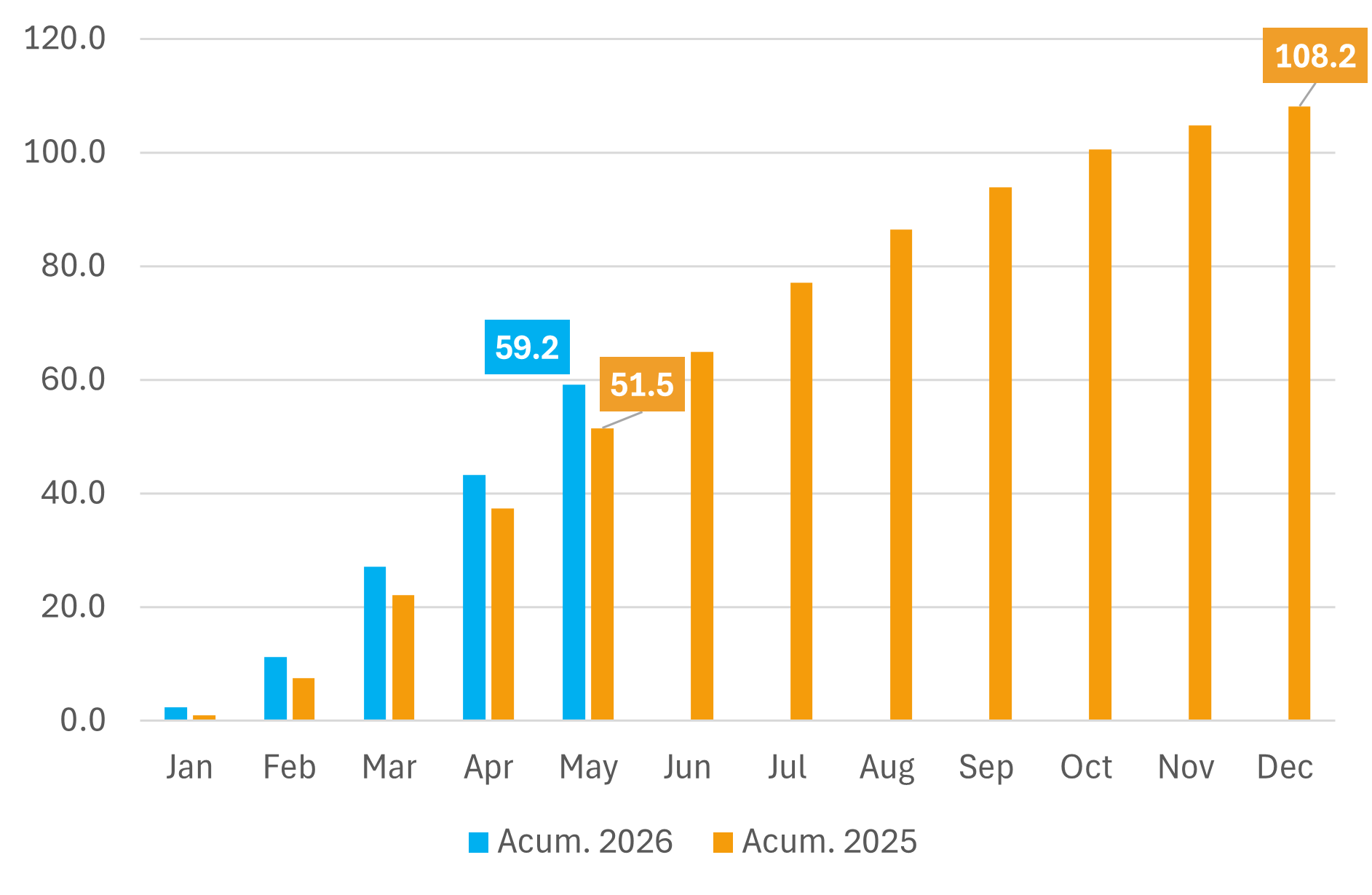
Brazil continues to consolidate its global leadership in soybeans:
• extremely high production;
• new export record;
• crushing sustained by biodiesel.
Despite this, there is caution regarding the 2026/27 season:
• possible impact of El Niño;
• tight producer margins;
• slowing growth in planted area.
Source: Secex, Shipping Agencies, Hedgepoint
Sales remain slow:
• prices considered unattractive;
• large volume available on the market;
• producers awaiting a clearer market outlook.
Domestic prices are still struggling to recover more consistently due to:
• the bumper crop;
• high availability;
• the appreciation of the Brazilian real.
Even so, Brazil is expected to continue leading the global soybean export market by a wide margin.
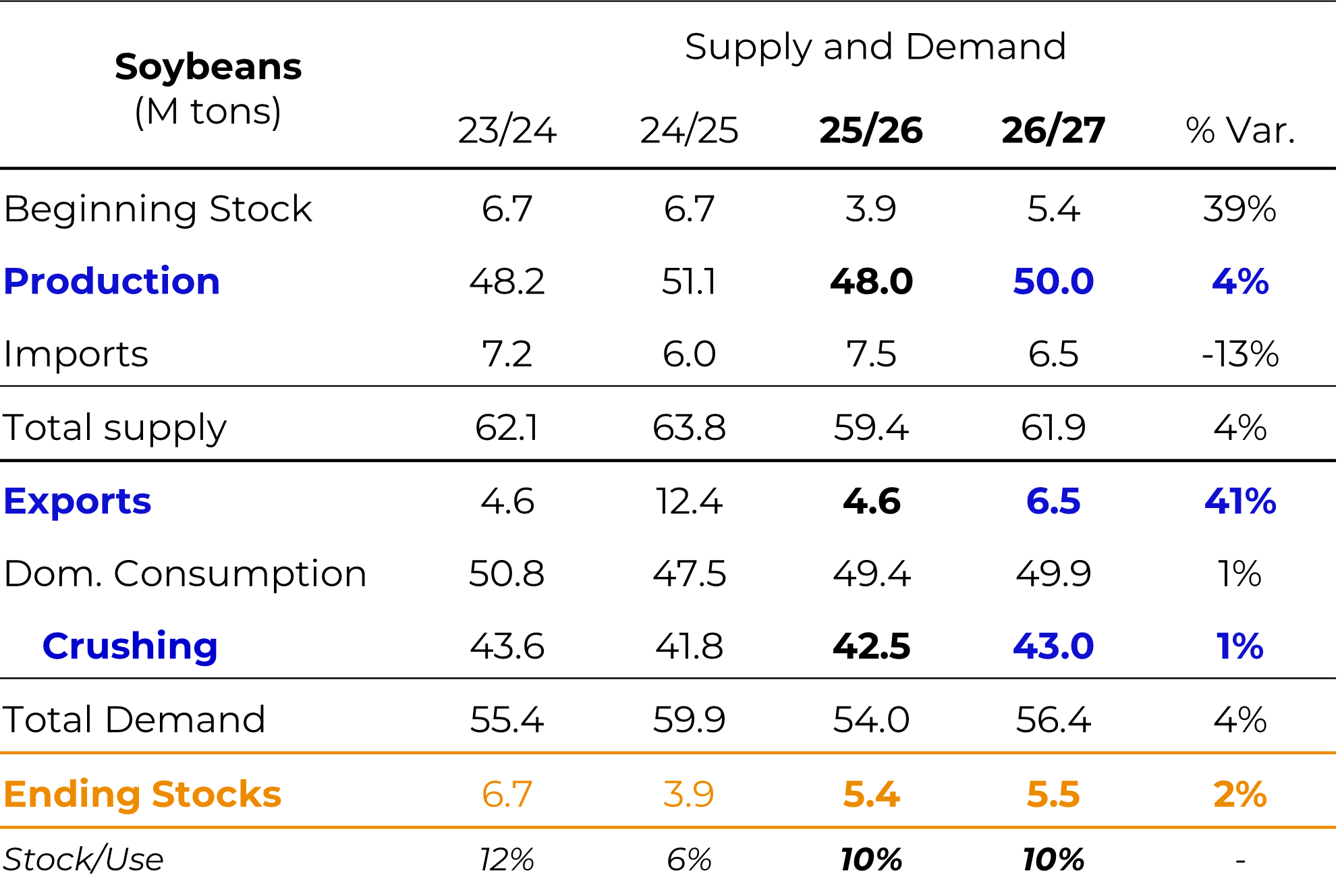
Argentine soybeans lost acreage to corn in the most recent crop year (2025/26), reducing total production despite good yields.
The extraordinary exports of the last cycle are unlikely to be repeated, especially since the U.S. has regained some of the market share it lost in China during the height of the trade war.
The market is closely monitoring Argentina’s “retenciones” policy. Potential reductions in export taxes could:
• increase Argentina’s competitiveness;
• stimulate exports;
• increase competition with Brazil and the U.S.
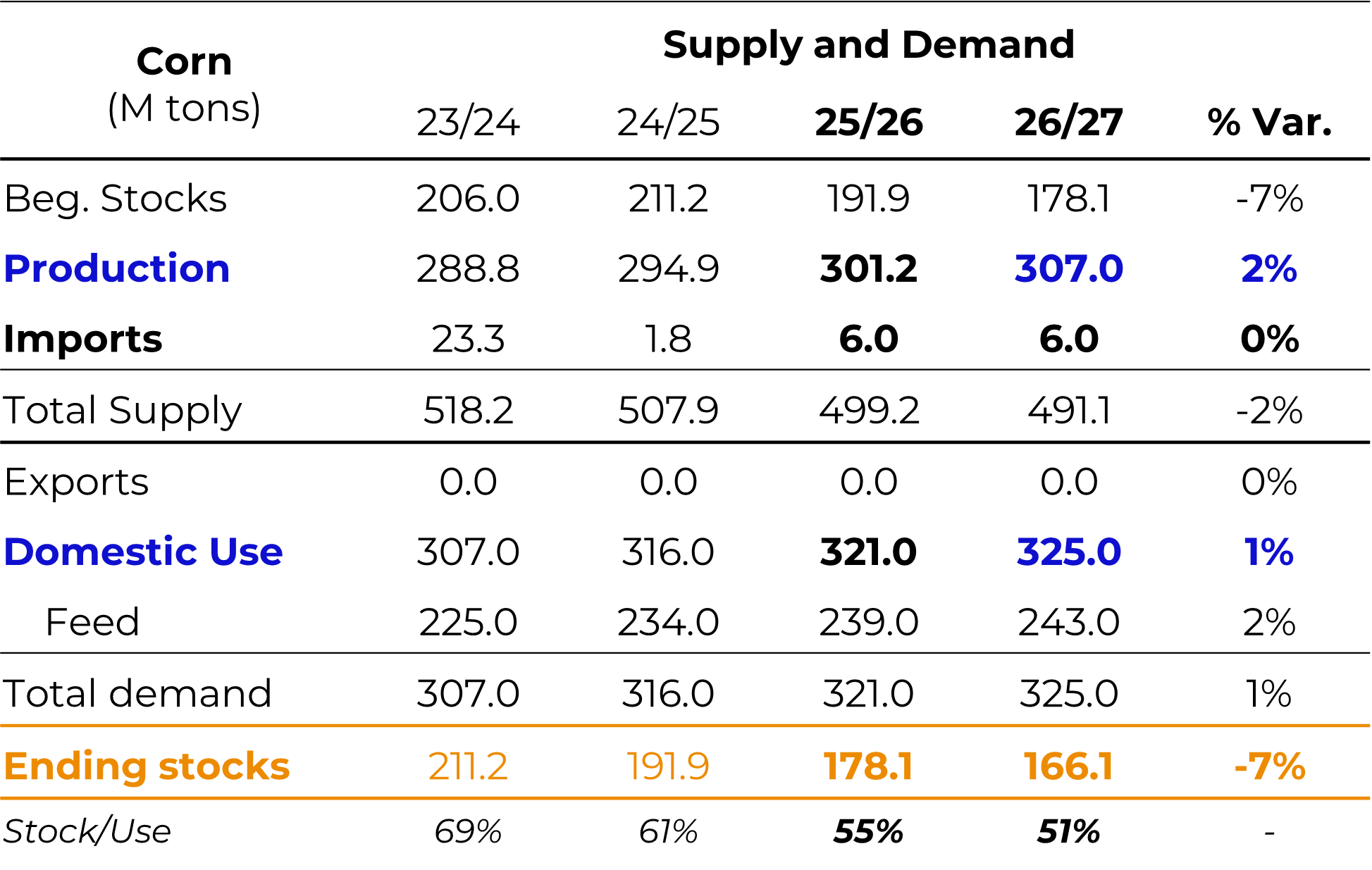
China continues to gradually reduce the corn stocks it has accumulated in recent years. Despite this, stock levels remain high, keeping the stock-to-use ratio close to 50%.
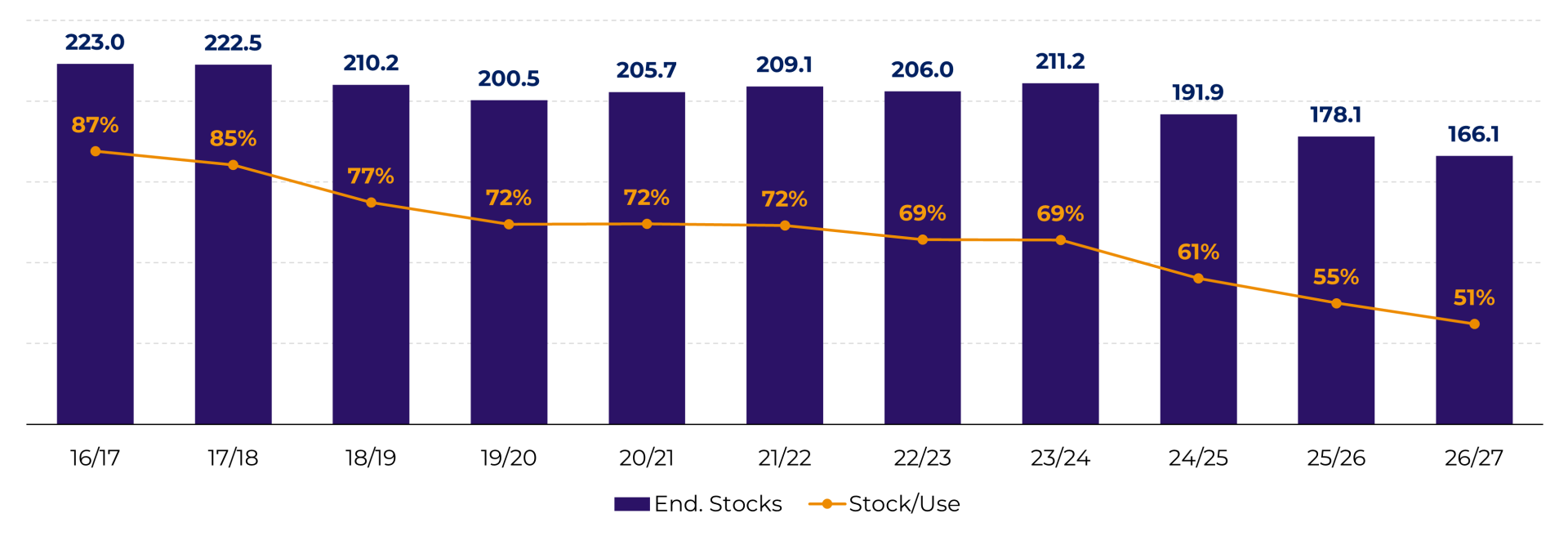
The expectation is for:
• a record crop of nearly 307 million tons;
• relatively low imports;
• continued policy of drawing down domestic stocks.
Unlike with soybeans, China’s current strategy is more focused on:
• reducing corn stocks;
• maintaining high soybean stocks.
This partially limits the upside potential for global corn.
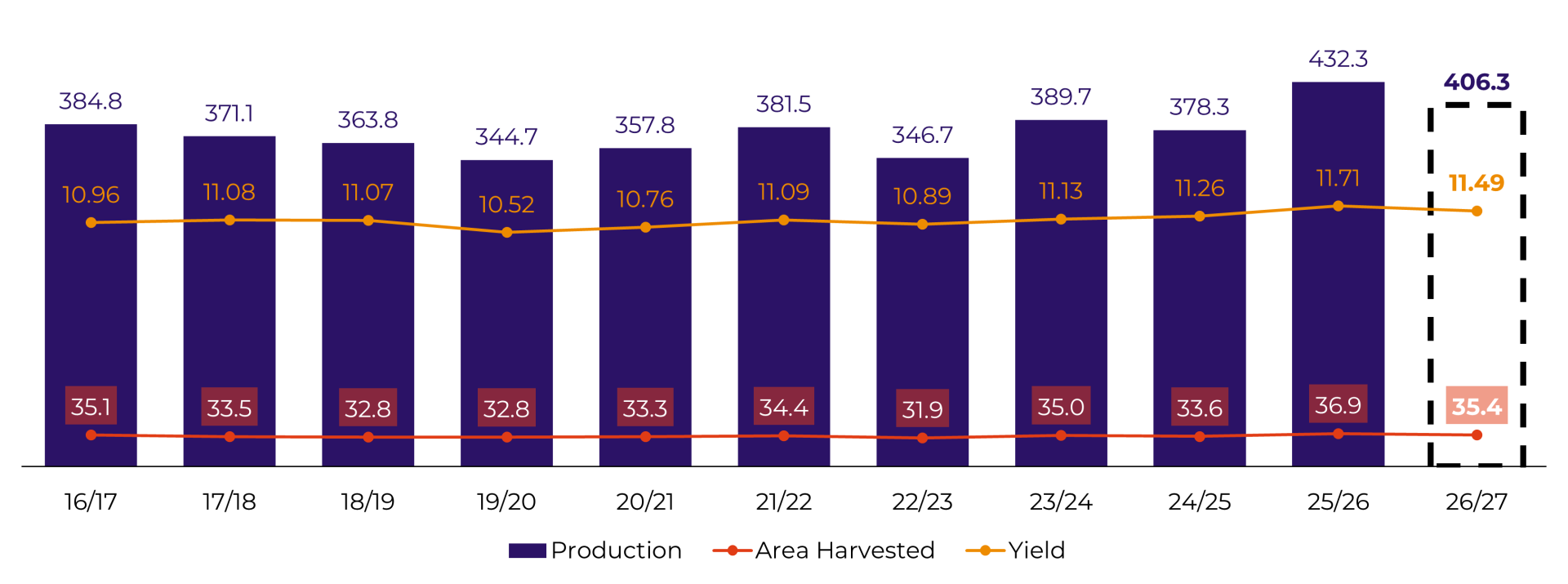
The United States remains the main benchmark for the global corn market.
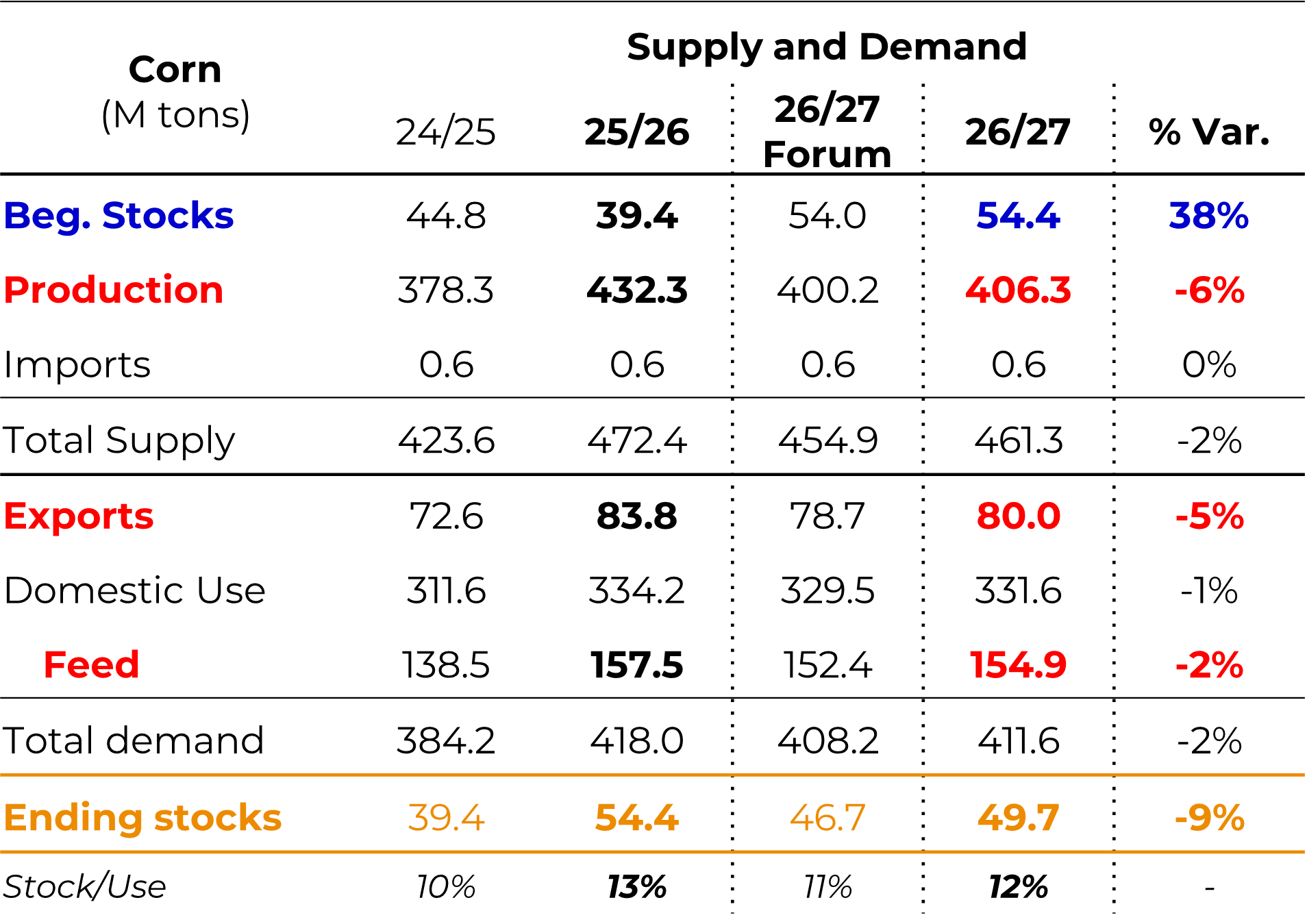
The planted area for the 2026/27 season declined compared to the previous year, due to the relative attractiveness of soybeans at the time of the planting decision. Even so, the country may still harvest a crop exceeding 406 million tons, which could be the second-largest production in history.
The most significant highlight is in exports:
• the pace of U.S. exports remains extremely strong;
• volumes already committed are approaching the USDA’s annual projections;
• there is a possibility of further upward revisions to export figures.
U.S. crop conditions remain positive:
• planting is nearly complete;
• high potential yield;
• favorable short-term weather forecast.
Currently, the market views the $4.40–4.50/bushel range in Chicago as relatively balanced given projected U.S. stock levels.
The main risk of volatility remains the weather during the U.S. summer.
Brazil is expecting a very large crop, close to 140 million tons. Despite some isolated moisture issues during the development of the second crop, overall indicators of vegetation and crop condition remain positive.
The main structural factor supporting Brazilian corn is the rapid growth of corn-based ethanol.
The country went from virtually zero industrial corn consumption for ethanol in 2017 to levels close to 28.5 million tons today. In addition:
• there are 27 operating plants;
• more than 30 new projects are under development;
• domestic consumption is expected to continue growing in the coming years.
The potential expansion of E32 could also further increase domestic corn consumption.
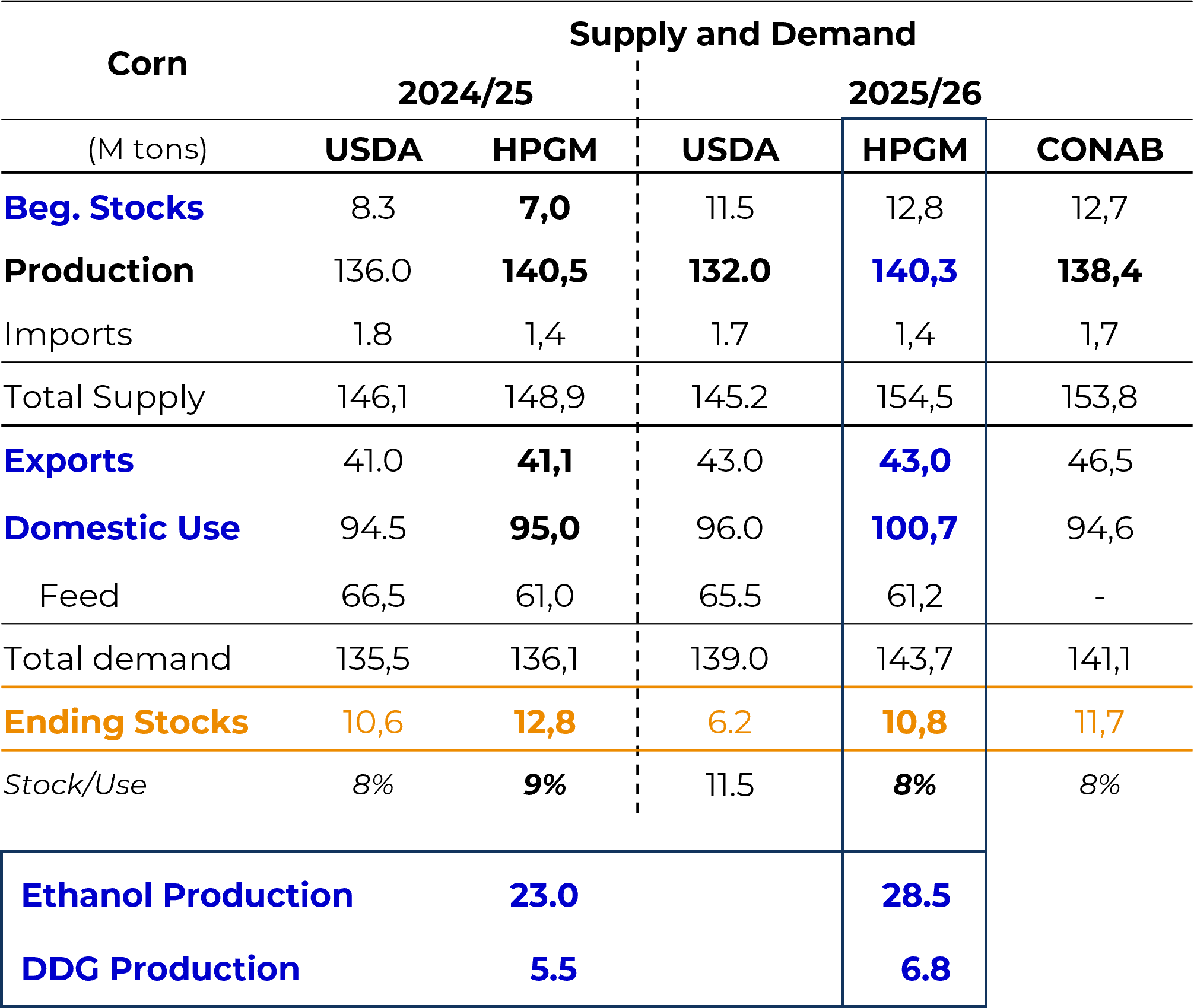
Source: USDA, Conab, Hedgepoint
On the other hand, significant concerns regarding exports remain:
• aggressive competition from Argentina and the U.S.;
• Brazilian corn is currently less competitive;
• geopolitical risks involving the Middle East.
Iran has been one of the main buyers of Brazilian corn recently, and any escalation of the conflict could affect demand from the region.
Domestic prices remain under pressure:
• abundant supply;
• expectations of a bumper crop;
• appreciation of the real limiting the recovery of domestic prices.
Argentina stands out as the main competitor to Brazilian corn in the international market.
The Argentine crop has developed very positively:
• significant increase in planted area;
• favorable weather;
• high yields;
• extremely competitive prices on the global market.
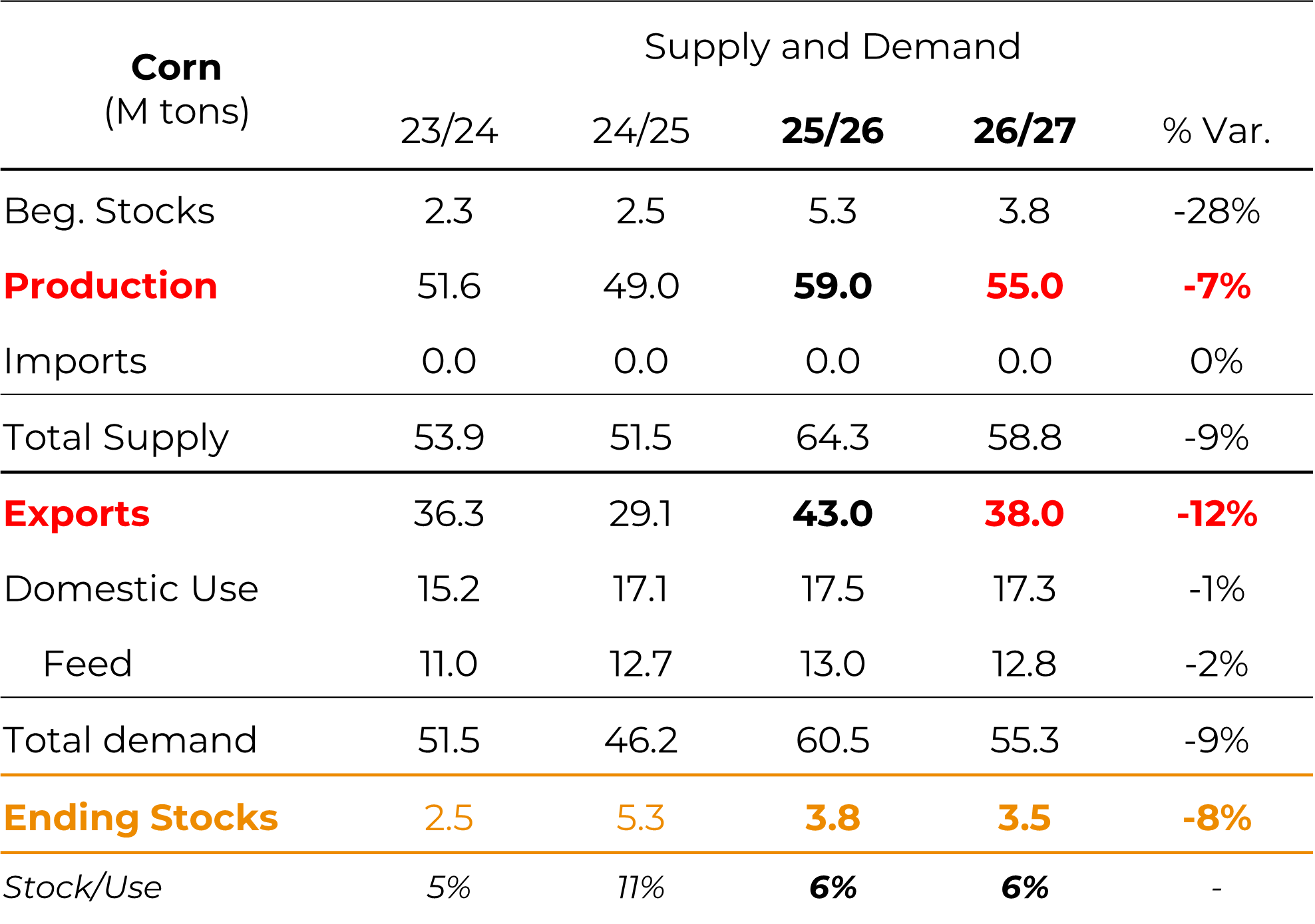
Argentine exports have already started off strong, exceeding the pace seen in recent years. Furthermore, there is a possibility of further upward revisions to the country’s production in upcoming USDA reports, as local estimates point to a production of up to 67 million tons (vs. the USDA’s 59 million tons).
The higher Argentina’s production:
• the greater the competition with Brazilian corn tends to be;
• the greater the pressure on Brazil’s export flows in the second half of the year.
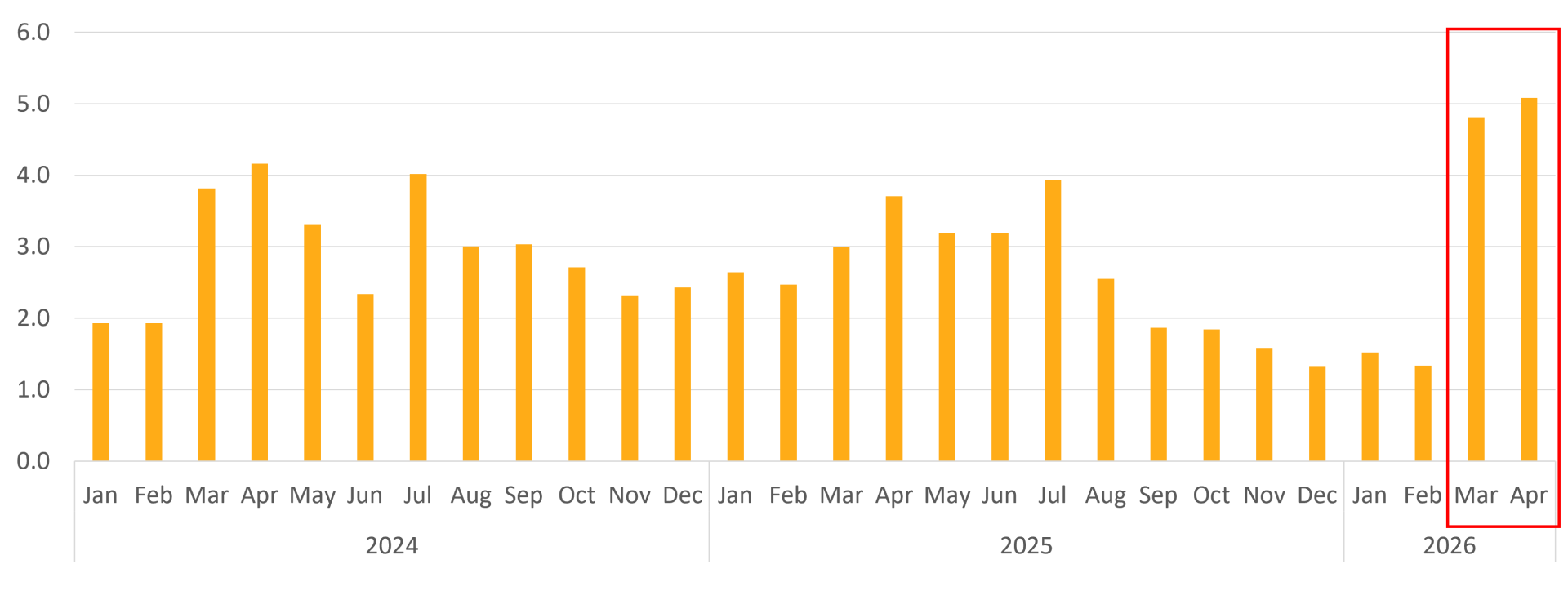
• strong growth in biodiesel in the U.S.;
• record crushing;
• rising soybean oil prices;
• global increase in biofuel mandates;
• climate risk associated with El Niño;
• potential production issues with Asian palm oil.
• extremely strong exports from the U.S.;
• reduction in U.S. acreage;
• rapid expansion of corn ethanol in Brazil;
• possible increase in ethanol blending;
• weather risks during the U.S. summer.
• global stocks still relatively comfortable;
• increase in planted area in the U.S.;
• Brazilian bumper crop;
• potential reduction in the geopolitical premium if the conflict is resolved.
• expectations of large crops in the US, Brazil, and Argentina;
• highly competitive Argentine corn;
• abundant global supply putting pressure on prices.
The corn and soybean markets remain relatively balanced in the short term, but are operating in an environment of high potential volatility.
The main current structural difference is the strengthening link between agricultural commodities and the energy market. The expansion of biofuels has become one of the main drivers of demand growth for both corn and soybeans.
For corn, the rise of corn ethanol in Brazil is structurally shifting the domestic balance and gradually reducing the country’s exclusive dependence on exports.
For soybeans, U.S. crushing driven by biodiesel has become the main factor supporting international prices, even with expectations of high crops.
The key factors to monitor in the coming months will be:
• weather in the U.S.;
• the evolution of El Niño;
• oil prices;
• conflict in the Middle East;
• export competitiveness among Brazil, the U.S., and Argentina.
Although global stocks remain relatively comfortable, the market is showing increasing sensitivity to climate and energy risks, maintaining a highly dynamic environment for price formation throughout the second half of the year.