Mar 23 / Lívea Coda

Energy risks override bearish fundamentals

  • Sugar prices surged on conflict escalation, energy spillovers, and fund short covering.
  • Iranian attacks on energy infrastructure lifted oil/LNG prices, boosting global inflation risks.
  • Central banks turned cautious: Fed on hold; COPOM cut 25 bp amid a cooling economy.
  • Energy-driven cost pressures and firmer ethanol parity may support sugar in the short term.
  • Although India has reported lower production prospects, yields in Thailand showed significant improvement.
  • Fundamentals remain bearish; support is fragile and conflict-dependent.

Energy risks override bearish fundamentals

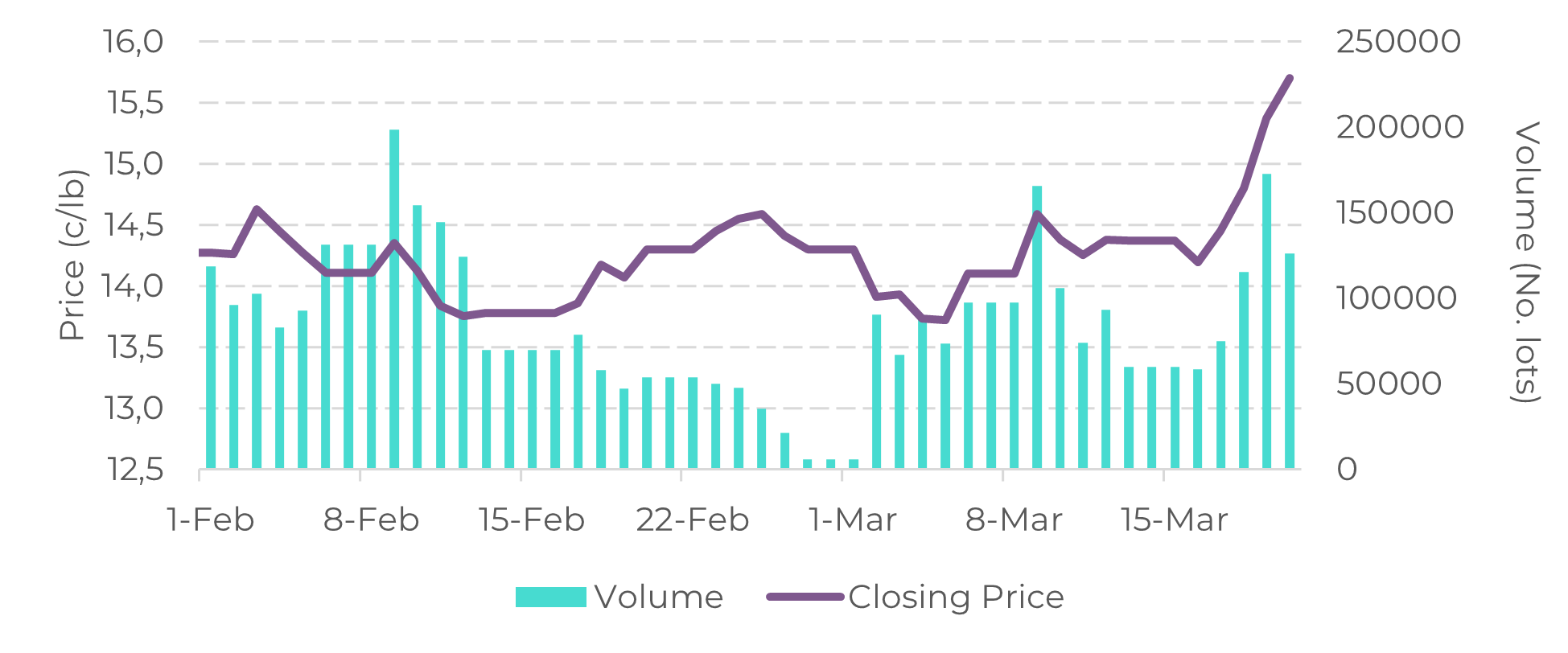
Sugar prices surged during the week amid the intensification of the U.S.-Iran conflict and its spillover into the energy complex, triggering technical buying and fund short covering. On Thursday, 19, this flow pushed the raw contract above the 15 c/lb level, with prices jumping 4.2% on the session, allowing a weekly closure at 15.7 by Friday. 

Figure 1 – Raw sugar: a technical movement with plenty of volume
Source: LSEG, Hedgepoint

The move was reinforced by news of Iranian attacks on Qatar’s energy facilities, which further deepened the energy crisis. According to QatarEnergy, roughly 17% of the country’s LNG capacity could be disrupted for at least five years. As a key LNG supplier to Europe and parts of Asia, the disruption raises concerns over renewed economic deterioration and inflationary pressures. Similar attacks on oil infrastructure also drove crude prices higher.

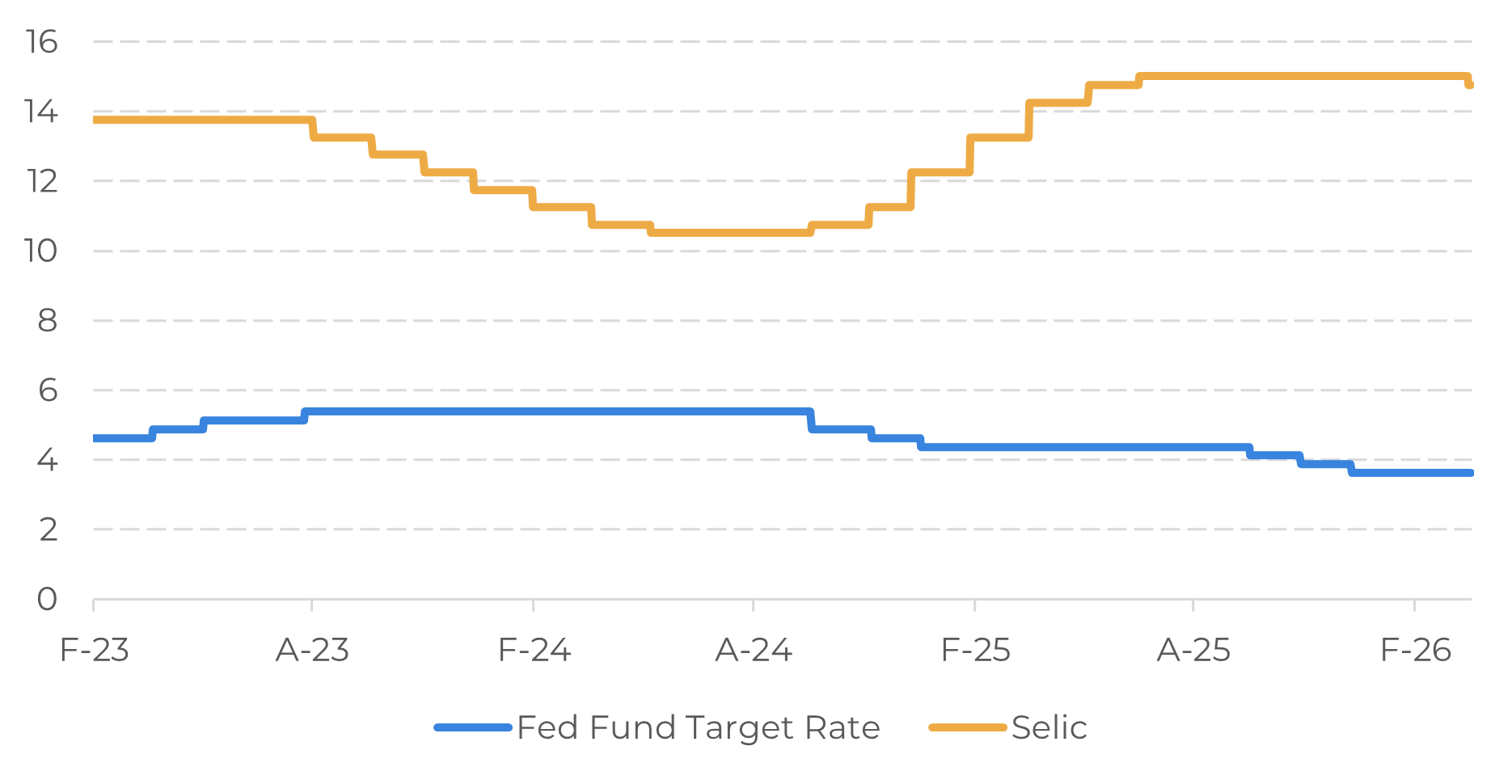
Against this backdrop, central banks have turned more cautious. The Fed highlighted risks of inflation running higher than previously anticipated, which could jeopardize market expectations of a 25 bp rate cut later in 2026 and therefore opted to keep rates unchanged on Wednesday (18). In contrast, Brazil’s COPOM delivered a 25 bp cut on the same day, lowering the Selic rate to 14.75%, citing a cooling economy despite inflation remaining above target. While the interest rate differential may still help keep the BRL supported, heightened geopolitical risk and elevated uncertainty continue to pose challenges for emerging markets.

Figure 2 – Interest rate differential between the US and Brazil (%)
Source: LSEG, Hedgepoint

In this context, we have previously highlighted two key channels through which sugar prices could find support. First, higher energy and fertilizer prices, if sustained, could lift production costs across the supply chain. Second, firmer ethanol prices in the Brazilian domestic market, driven by a potential pass-through of import costs by Petrobras, could raise the ethanol parity and, in turn, provide a higher floor for sugar prices.

It is worth noting, however, that neither of these factors implies a shift in sugar’s underlying fundamentals. As such, should the conflict de-escalate and part of the recent gains in the energy complex unwind, the associated price support would likely fade accordingly.

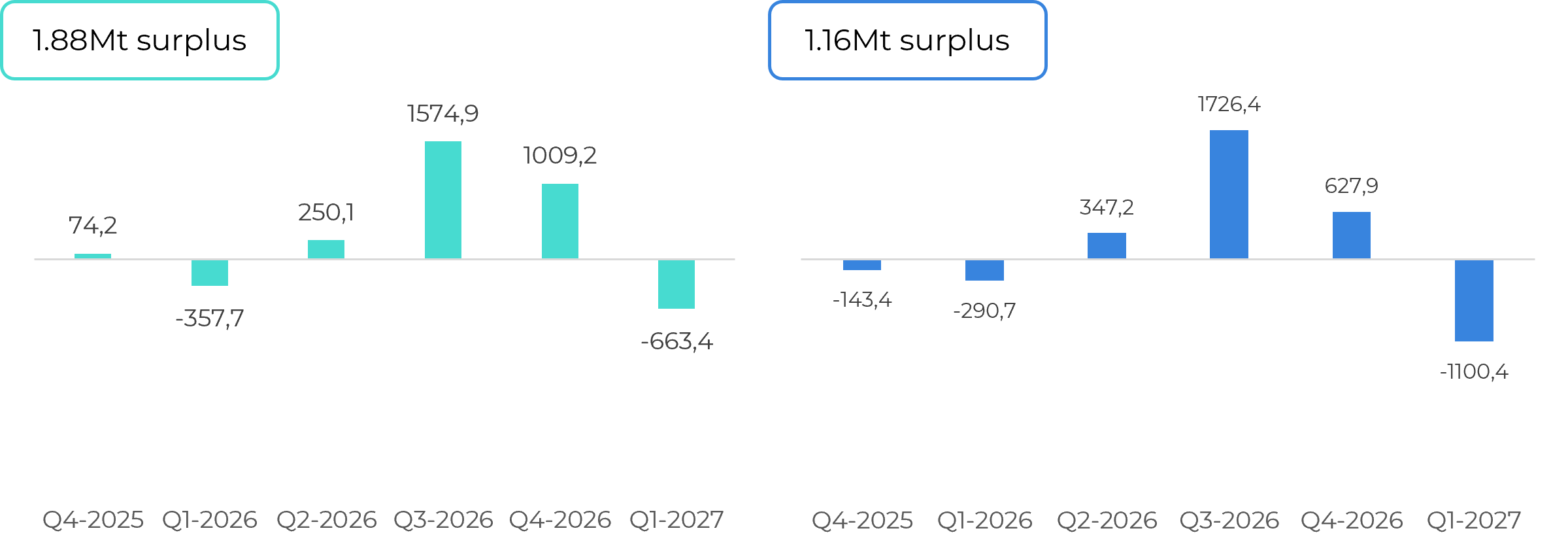
On the fundamentals side, a few developments emerged that, when combined, had a subtle impact on the sugar market. The first relates to India’s sugar availability, followed by an offsetting adjustment in Thailand. Our initial estimate for India’s 25/26 season assumed sugar production of 31.1 Mt, ethanol diversion of 3.7 Mt, and exports of 1.5 Mt. However, lower yields, partly linked to flowering issues in cane fields and difficulties in carrying out cultural practices due to weather, have led to a downward revision in output to 28.5 Mt, with exports reduced to just over 700 kt. As a result, the global trade surplus narrows from 1.8 Mt to around 1.1 Mt. Moreover, expectations that India could increase its participation in global trade in 26/27 are now at risk, not only due to the weaker recovery in 25/26 but also amid lurking El Niño risks. To keep a conservative stance, we now assume broadly stable production levels and, potentially, no exports from India in the next season. These revisions to India would lead our trade-flows to a balance from Q4-25 through Q1-27. But there are other updates.

In contrast, Thailand’s outlook has improved. Despite concerns around white leaf disease, yields are exceeding expectations, lifting production from an initial estimate of 10.5 Mt to around 11.5 Mt, adding roughly 1 Mt to global trade flows – bringing it back to the oversupply stance.

Figure 3 – Total Trade Flow (‘000t tq) – before (left) and after* (right)
Source: GreenPool, Hedgepoint
*After major adjustments to India and Thailand and some residual update to other countries realized data.

Finally, should prices find support on tighter Northern Hemisphere availability, Brazil retains the flexibility to adjust its sugar-ethanol mix, which could act as a cap on any fundamentally driven price rally.

Therefore, while the sugar market remains structurally bearish, prices may still find support from exogenous factors. Recent price spikes appear to be driven largely by external and fragile market dynamics, which increase short-term volatility – depending on whether the conflict intensifies or subsides – and have sparked debates regarding Petrobras’ pricing policy, potential increases in the ethanol blend in Brazilian gasoline, and other factors that influence price expectations for the sweetener.

Summary

Sugar prices jumped on intensified geopolitics spilling into energy markets, triggering technical buying and fund short covering, but the rally is largely exogenous and fragile. While higher energy and fertilizer costs and firmer Brazilian ethanol parity could offer near-term support, fundamentals remain bearish, with India’s lower output partly offset by improved Thai production and Brazil’s mix flexibility capping rallies. Any de escalation could unwind recent gains.


Weekly Report — Sugar

Written by Lívea Coda
livea.coda@hedgepointglobal.com


Reviewed by Laleska Moda
laleska.moda@hedgepointglobal.com

Disclaimer

This document has been prepared by Hedgepoint Schweiz AG and its affiliates (“Hedgepoint”) solely for informational and instructional purposes, without intending to create obligations or commitments to third parties. It is not intended to promote or solicit an offer for the sale or purchase of any securities, commodities interests, or investment products.


Hedgepoint and its associates expressly disclaim any liability for the use of the information contained herein that directly or indirectly results in any kind of damages. Information is obtained from sources which we believe to be reliable, but we do not warrant or guarantee the timeliness or accuracy of this information.
The trading of commodities interests, such as futures, options, and swaps, involves substantial risk of loss and may not be suitable for all investors. You should carefully consider wither such trading is suitable for you in light of your financial condition. Past performance is not necessarily indicative of future results. Customers should rely on their own independent judgment and/or consult advisors before entering into any transactions.
Hedgepoint does not provide legal, tax or accounting advice and you are responsible for seeking any such advice separately.
Hedgepoint Schweiz AG is organized, incorporated, and existing under the laws of Switzerland, is filiated to ARIF, the Association Romande des Intermédiaires Financiers, which is a FINMA-authorized Self-Regulatory Organization. Hedgepoint Commodities LLC is organized, incorporated, and existing under the laws of the USA, and is authorized and regulated by the Commodity Futures Trading Commission (CFTC) and a member of the National Futures Association (NFA) to act as an Introducing Broker and Commodity Trading Advisor. HedgePoint Global Markets Limited is Regulated by the Dubai Financial Services Authority. The content is directed at Professional Clients and not Retail Clients. Hedgepoint Global Markets PTE. Ltd is organized, incorporated, and existing under the laws of Singapore, exempted from obtaining a financial services license as per the Second Schedule of the Securities and Futures (Licensing and Conduct of Business) Act, by the Monetary Authority of Singapore (MAS). Hedgepoint Global Markets DTVM Ltda. is authorized and regulated in Brazil by the Central Bank of Brazil (BCB) and the Brazilian Securities Commission (CVM). Hedgepoint Serviços Ltda. is organized, incorporated, and existing under the laws of Brazil. Hedgepoint Global Markets S.A. is organized, incorporated, and existing under the laws of Uruguay. In case of questions not resolved by the first instance of customer contact (client.services@Hedgepointglobal.com), please contact internal ombudsman channel (ombudsman@hedgepointglobal.com – global or ouvidoria@hedgepointglobal.com – Brazil only) or call 0800-8788408 (Brazil only).
Integrity, ethics, and transparency are values that guide our culture. To further strengthen our practices, Hedgepoint has a whistleblower channel for employees and third-parties by e-mail ethicline@hedgepointglobal.com or forms Ethic Line – Hedgepoint Global Markets.
“HedgePoint” and the “HedgePoint” logo are marks for the exclusive use of HedgePoint and/or its affiliates. Use or reproduction is prohibited, unless expressly authorized by HedgePoint.
Furthermore, the use of any other marks in this document has been authorized for identification purposes only. It does not, therefore, imply any rights of HedgePoint in these marks or imply endorsement, association or seal by the owners of these marks with HedgePoint or its affiliates.

To access this report, you need to be a subscriber.