
A Quick Market Update
- Sugar remains weak, below 14 c/lb even with the July contract expiry lurking, with limited upside despite brief geopolitical-driven rebounds.
- Fundamentals unchanged: no tightness in the near term, with El Niño risk reflected only in structure (carry and firm V/H).
- Delayed UNICA data is reducing visibility; government figures show weaker crush in May’s second fortnight (-13% y/y) and sugar output (-25% y/y), but strong cumulative cane supply (+16% y/y).
- Macro adds pressure: a more hawkish Fed vs. still-high Selic narrows the rate differential slightly, supporting USD but not enough to materially shift BRL dynamics.
- Mills remain cautious sellers, with low hedging for 26/27 and weak prices below costs, keeping a cap on rallies; El Niño remains the key upside risk to watch.
A Quick Market Update
Sugar prices remain weak even with the approach of the July contract expiry, still trading below 14 c/lb, signalizing higher short-term availability. The week opened in a bearish tone, with easing geopolitical tensions reducing support from the energy complex. Prices briefly recovered midweek after renewed uncertainty around the US–Iran agreement, but gains were limited.
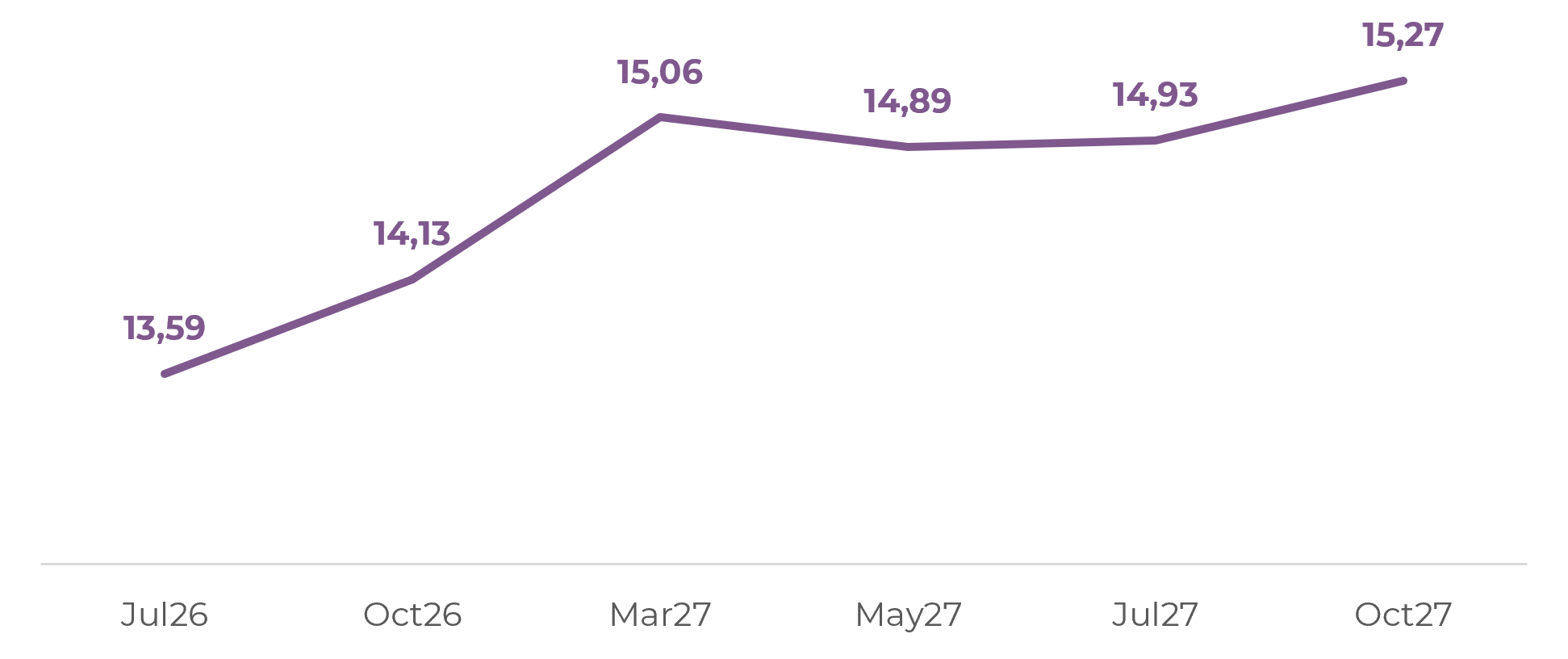
The main reason for sugar’s weakness, aside the correction in energy prices, comes from fundamentals, which have not changed significantly. The market continues to price in El Niño risk, reflected in a carry structure and a firm V/H spread, though no short-term supply disruptions are evident.
Raw Sugar Future Curve (c/lb)
Source: LSEG, Hedgepoint
A key factor behind the current lack of direction is the delay in UNICA reports, which has reduced visibility on the Center-South crop pace. In their absence, official data from the Agriculture Ministry has gained relevance. For the second half of May, cane crushing is estimated at 41.2 Mt, down nearly 13% y/y, mainly due to heavier rainfall and lost operational days, according to the Ministry. Sugar output fell sharply, down 25% y/y to around 2.2 Mt, reflecting both slower crushing and a lower sugar mix. Ethanol production, however, rose closely to 2% y/y to 2.1 B liters, with reduced anhydrous and higher hydrous volumes.
Despite the slower pace in the period, cumulative production remains strong, showing a 16% increase y/y, which maintains a bearish backdrop. While the market will likely reassess once UNICA releases its figures, current government data does not materially alter expectations, especially as it doesn’t share any insights into Total Recoverable Sugar (TRS) or yields. The recent rains might penalize short-term TRS and mix, but could still be positive for end-of-season cane yields. Weather conditions are also expected to remain near average in the coming months, according to Inmet, reinforcing the limited impact of El Niño on Center-South cane regions.
The other key highlight comes from the macro front. This past Wednesday marked the Federal Reserve’s first meeting under Warsh. Policymakers kept interest rates unchanged (at 3.5-3.75%) but signaled that a hike remains possible later in 2026, as inflation is still above the 2% target. Markets also noted a shift in tone towards a more hawkish stance, with the statement removing language that had previously suggested the potential for further rate cuts. A higher U.S. rates typically pull capital toward dollar assets and weaken emerging market currencies, but this effect is mitigated when countries maintain significantly higher rates, preserving the carry advantage.
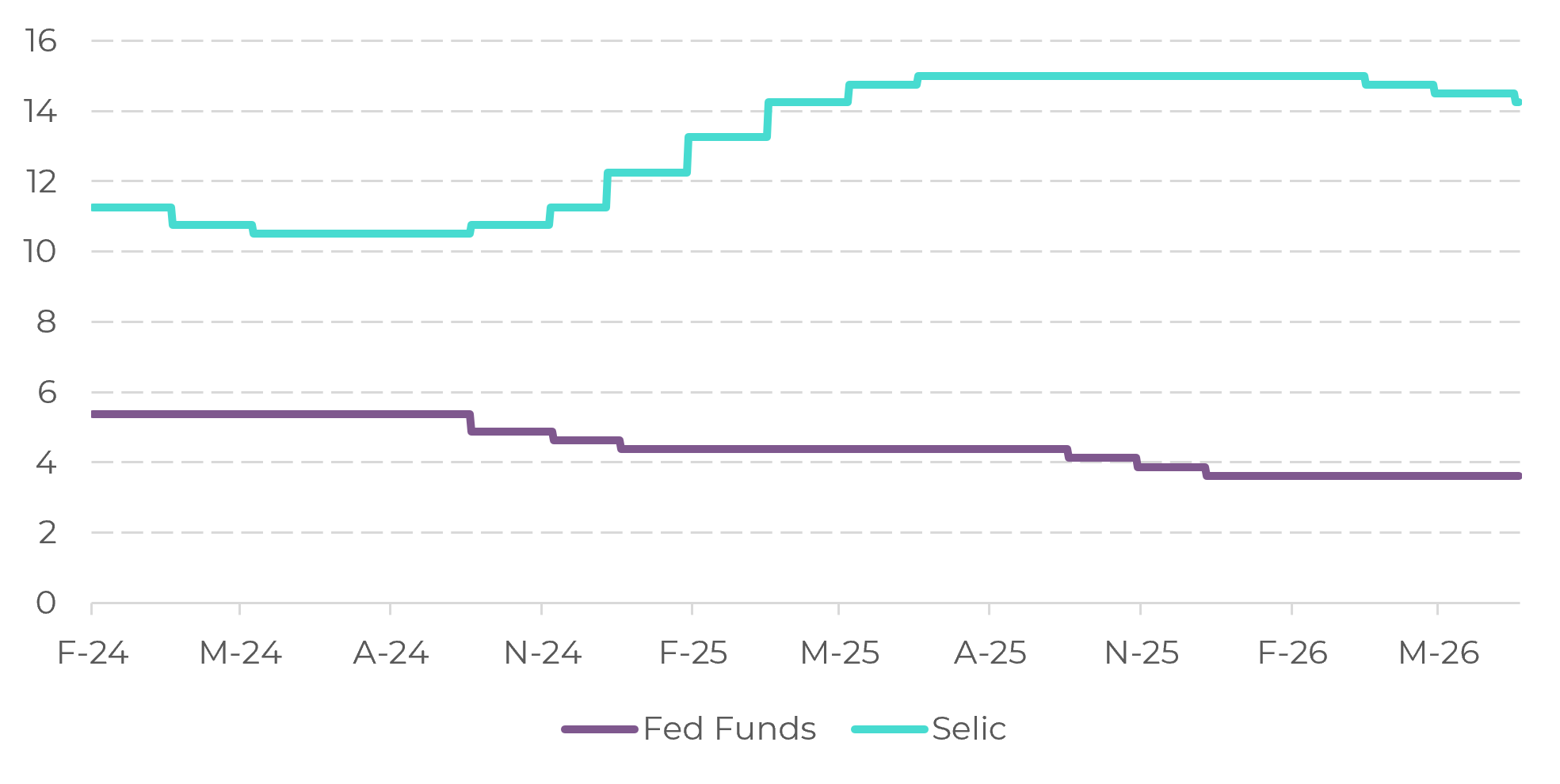
In Brazil, COPOM continued gradual easing, with a 25 bp cut taking the Selic to 14.25%. However, persistent inflation and external pressures, particularly oil, FX, and global tightening, made the Brazilian Central Bank switch the tone to a more neutral stance. The reduction in the interest rates differential could lead to a slight devaluation of the BRL, however, 25bp doesn’t change much the attractiveness of the carry trade. With Selic at 14.25% and Fed Funds at 3.5–3.75%, Brazil currently offers a positive interest rate differential, which tends to support the BRL in the medium term.
Interest Rate Differential | Selic versus Fed Funds
Source: LSEG, Hedgepoint
This could weigh on mills’ selling decisions, encouraging them to delay pricing and hold volumes for longer. It is widely noted that Center-South producers are less hedged in 2026/27 compared to last season, as current price levels remain below production costs. If the BRL continues to strengthen, this behavior is likely to persist, limiting forward selling and effectively capping any sustained bullish momentum.
However, in the short term, the narrowing rate differential and rising inflation concerns, linked to government support measures ahead of the election, have led to BRL depreciation, ending the week on June 19th at 5.16, a 1% devaluation[LR6.1] compared to the previous Friday. This weakening is still insufficient to improve sugar sales. Higher volatility is expected in the second semester, possibly switching the scenario.
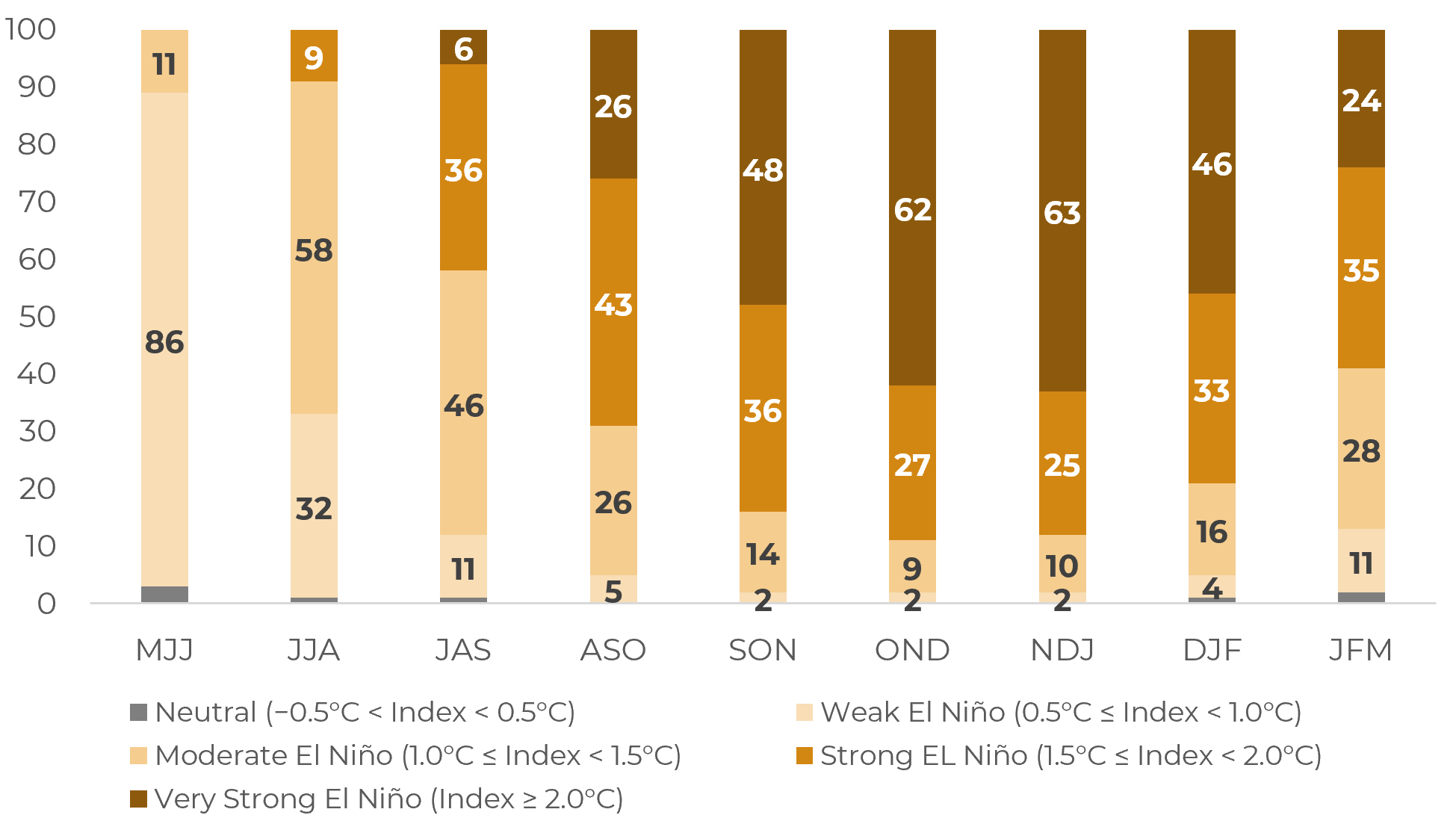
As discussed in previous reports, El Niño, and the potential drop in Northern Hemisphere supply in 26/27, remainthe main upside risk and key point to monitor for bullish sentiment.
ENSO Strength Probabilities (%) - June 2026
Source: NOAA
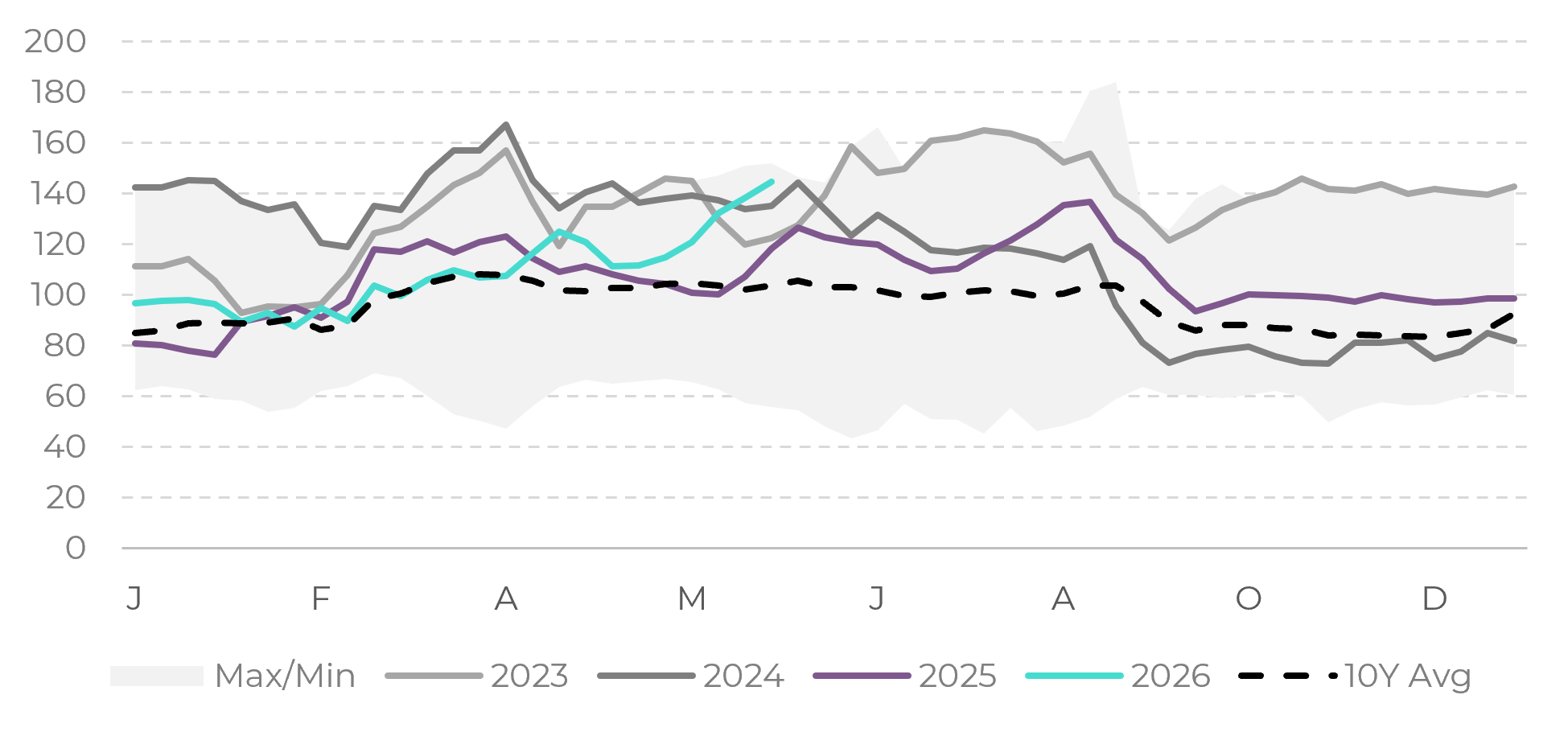
Weekly White Premium Seasonality versus the 10-year Average (Usd/t)
Source: LSEG, Hedgepoint
Summary
Sugar prices remain under pressure, trading below 14 c/lb as the July contract nears expiry, with limited support from macro and energy despite brief geopolitical disruptions. Fundamentals are largely unchanged: the market still prices in El Niño risk, but no near-term supply issues are evident. In Brazil, delayed UNICA data has reduced visibility, though government figures show weaker late-May crushing and sugar output; still, cumulative production remains strong, keeping the tone bearish.
On macro, the Fed held rates at 3.5–3.75% with a more hawkish bias, while COPOM cut Selic to 14.25% but turned more neutral. Although the rate differential still supports BRL in the medium term, its recent narrowing and rising inflation concerns have led to short-term BRL weakness. This has not been enough to improve sugar pricing, and with producers less hedged and potentially delaying sales, upside in prices remains limited.
Weekly Report — Sugar
Reviewed by Laleska Moda
laleska.moda@hedgepointglobal.com
Disclaimer
This document has been prepared by Hedgepoint Schweiz AG and its affiliates (“Hedgepoint”) solely for informational and instructional purposes, without intending to create obligations or commitments to third parties. It is not intended to promote or solicit an offer for the sale or purchase of any securities, commodities interests, or investment products.